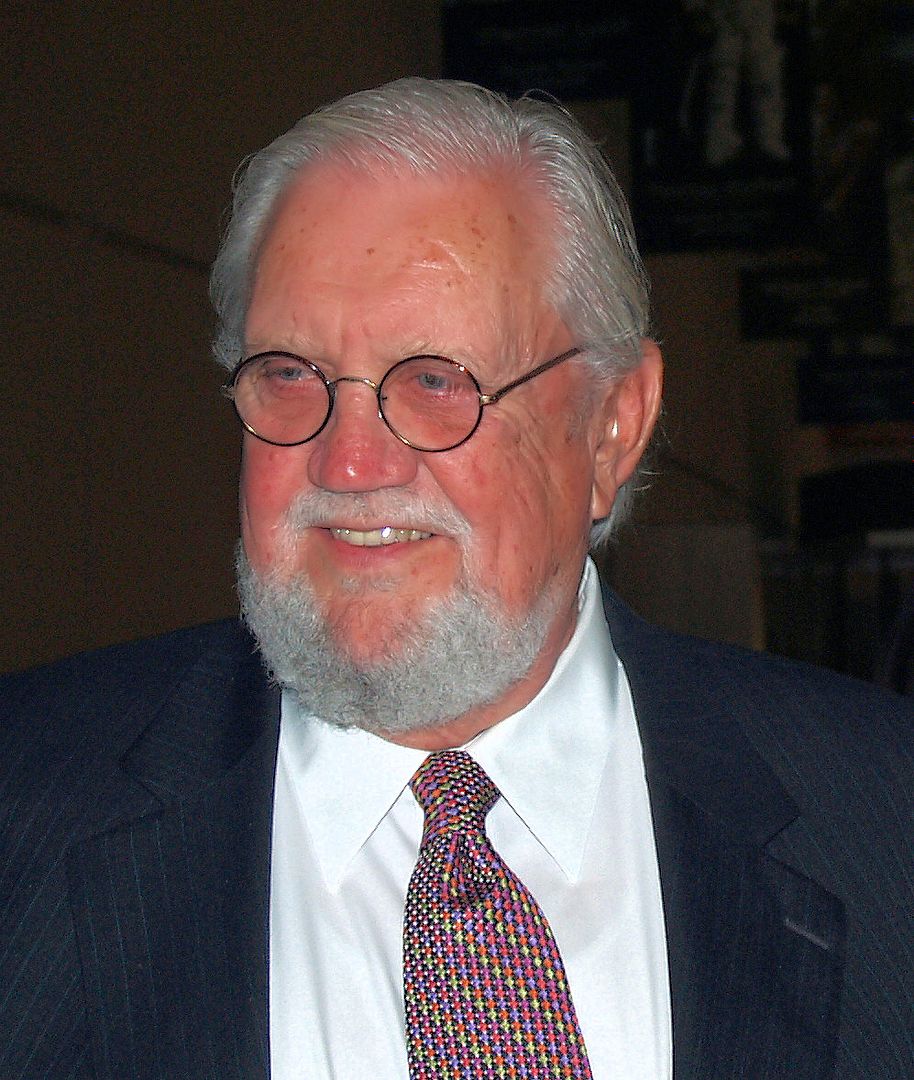
It came as a shock to me to read in Steve Lackmeyer's Oklahoman article that John Lampton Belt died Sunday morning, at the age of 76. Steve's article was published on-line on the same day, March 10, and it appeared in the print version of the Oklahoman on March 11.
Why is John Belt significant to Oklahoma City history? The answer is simple. John Belt is/was a person who found his comfortable place in preserving and enhancing a historic neighborhood in Oklahoma City, and he singularly established the Paseo District into what it has become today.
Steve Lackmeyer's Articles. After Steve's initial article on March 10-11, he wrote another for the March 12 Oklahoman, and both will tell you things about John Belt and his many contributions to our city, and no need exists for complete repetition here, except to note some snippets:
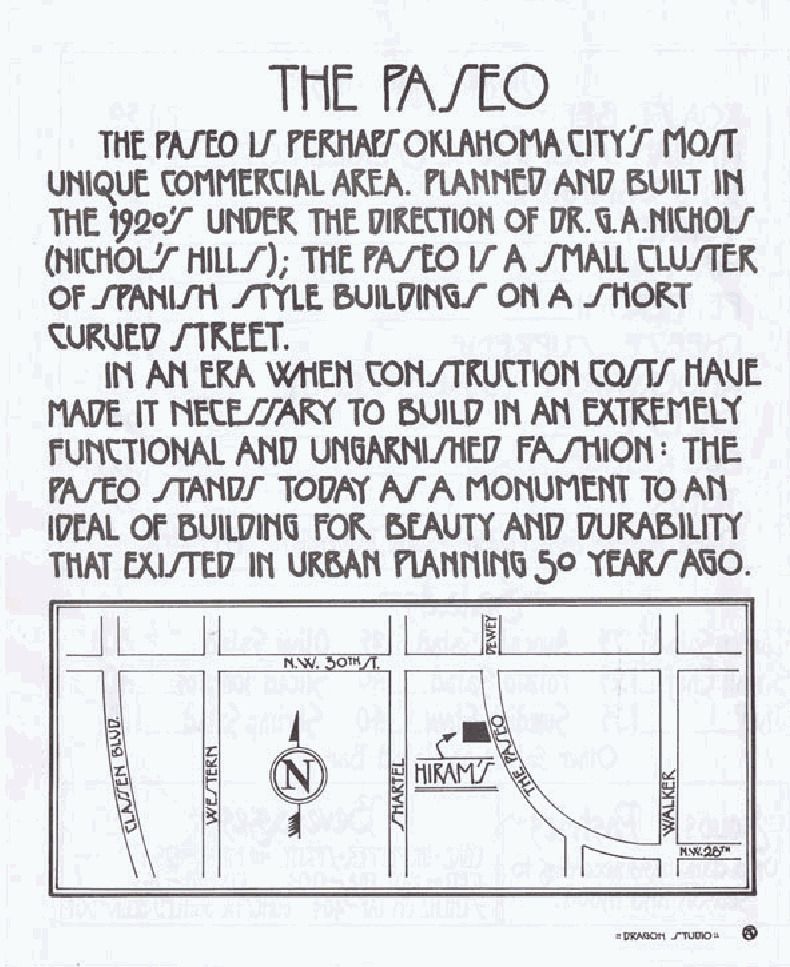
Belt may be best known for his efforts over three decades to revive Spanish Village, a faded commercial corridor, into Paseo, an arts district that is home to 20 galleries and working studios. The district, located between NW 28, NW 30, Walker and Dewey Avenues, also is home to gift and clothing shops, an event center, live theater, restaurants and bars.
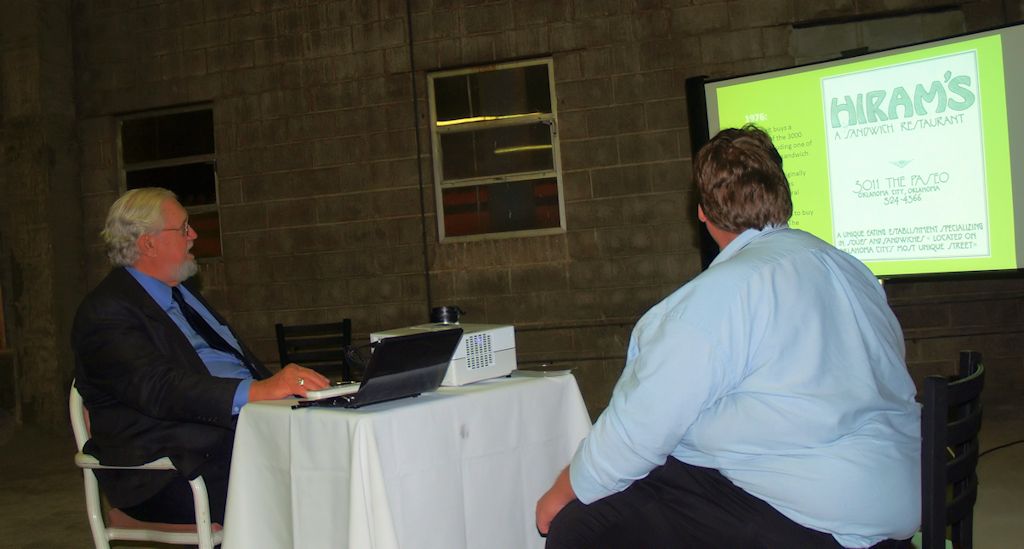
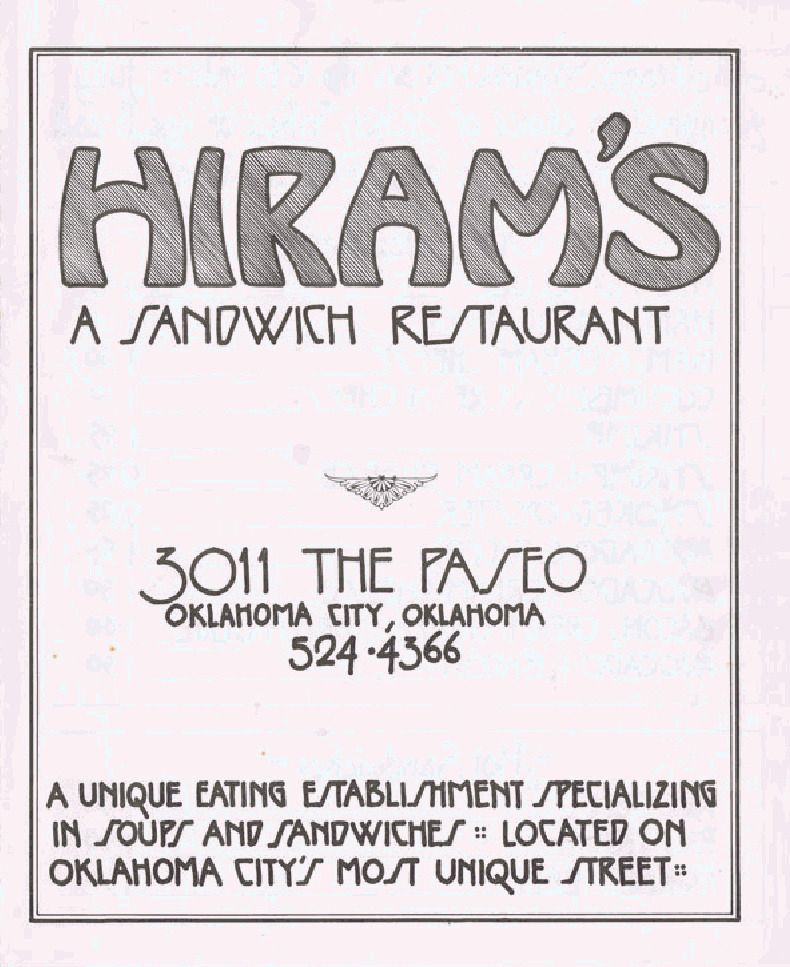
Belt’s efforts to revive Paseo started in 1976 when he was dismayed to learn a favorite sandwich shop where he often ate lunch was about to be closed by a neighbor who planned to buy the building and use it for storage.
In a quick cash upfront deal, Belt did the deal instead, and the restaurant stayed put. More deals followed. As Belt renovated one building after another in the former Spanish Village, artists opened up galleries and the neighborhood enjoyed a slow but steady rise from blight.
In 2010 the Paseo was named one of the Top Ten Greatest Neighborhoods in America by the American Planning Association, one of America’s Top Revitalized Neighborhoods by Forbes Magazine and in 2011, the BBC listed Paseo as one of the Most Beautiful Neighborhoods in the United States.
The above snippets are from Steve's first article. In the second, discussing the property which will be shortly shown below, he said,
At one of our many visits at the restaurant now known as Picasso's, I stared across the street at the forlorn former home of the Spaghetti Factory. The building was a stark white blank canvass in the middle of an otherwise colorful mix of pastels and tile roofs. The building also was the largest on Paseo Drive, and a reminder of what the rest of the strip looked like before Belt's first building purchase in 1976.
The owners were known to be tough negotiators when it came to striking a deal. This would not be a cheap buy for anyone — especially someone like Belt, whose heart was worn on his sleeve.
A couple months later, Belt called me back. Life is short, he explained, and he decided it was indeed time to get the building (once the Paseo Plunge) and bring it back to life after 20 years of dormancy.
Belt then moved quickly to turn the nondescript building into his next artistic masterpiece. I was amused as he had to submit the building designs to the Downtown Design Review Committee, which had been set up just a few years earlier.
How, I wondered, could this group really tell Belt what was and wasn't an appropriate fit for the area when he was the master planner of it all for more than 30 years?
Belt never used that card on the committee members — he respectfully but firmly haggled with the group over their proposed changes. And the project went forward, even without a firm plan on the building's ultimate use.
The building wasn't an easy renovation project. It was huge, without a lot of windows, and built so solidly it would likely withstand a 7.0 earthquake.
We talked about this dilemma a few times. He pondered setting up musical practice studios in the virtually soundproof basement. He considered a balcony coffee shop or restaurant. An arts center, retail complex or community gathering spot all were on the list.
As noted by his friends, John Belt almost always wore a suit and tie amid the more casually dressed “funky” folks who populate the Paseo. Yes, he was an attorney tied to pretty powerful interests in this town. But at heart, he was still the song-and-dance man who thrilled audiences in college, community theater, and briefly, in New York City. He was an artist at heart. And the Paseo, with all its colorful buildings, artists, attractions and events, is the masterpiece that John Belt, the artist, has given Oklahoma City to enjoy for generations to come.
In addition to Steve's articles published in the Oklahoman, in one of his OkcCentral blog posts, he presents a very fine 10 minute video published by OPUBCO, much of it featuring Mr. Belt's overview of the Spanish Village and its transition into the Paseo Distict, complete with the 1960s-early 1970s hippies period and its transformation after that to the modern Paseo District. I've shamelessly embedded that video here, below.
With respect to Mr. Belt, the Paseo Plunge was not the only place for the general public to swim in the 1950s-1960s. For example, Springlake Amusement Park had a fantastic swimming pool area and I think there were a few others as well. But, he can be forgiven for that minor error.
My Personal Privilege. Lots and lots of people have known John Belt far longer than I have but I regard it as a high privilege that I came to know him when I did. My first contact with him occurred by phone when at the JRB At The Elms art gallery back in 2006 or 2007 when I was doing research on the history of the Paseo area, originally called "Spanish Village," the construction of which began in 1929 by G.A. Nichols. While at the gallery with my wife, I spoke with John's wife, Joy Reed Belt, and I inquired about the basis for the Paseo's claim to be "the first commercial shopping district north of downtown Oklahoma City," as was stated in one of the Paseo's websites. She assured me that it was (notwithstanding my observation that Plaza Court at 1100 Classen Drive, built in 1927, was Oklahoma City's first suburban shopping center) and she suggested that I might want to speak with her husband. I said that would be great, she got him on the phone, and we spoke with each other for the first time.
Truth is, I don't remember much about that conversation ... I just remember that it happened. My first blog post about the Paseo occurred shortly thereafter, in early May 2007. It was followed by my second post later in the month about the 2007 Paseo Arts Festival.
Some time passing, in the pre-organization days of RetroMetro OKC, probably in 2009, Mr. Belt was the guest speaker at a brown-bag lunch at the Oklahoma City downtown library, and his presentation was fascinating. I was pleased that he recognized me and gave me kudos for my Paseo research. Enter ego bump number 1 for Doug Dawg.
More time passed. Sometime in 2011, October I think, John contacted me and wondered if I might do some updating on my prior Paseo posts and I said that I would if he would help, and he quickly volunteered. We had lunch at Picasso's and then he gave me a private tour of the former Paseo Plunge property that he had purchased; later, we had another meeting at his law office at NW 50th & Western ... the latter being perhaps more like an Oklahoma City museum than a law office. A very nice friendship was formed during this time and (unless my memory has totally failed me) I understand from my wife that John's wife said to her that John had referred to me as his "new best friend," which, of course, pumped up Doug Dawgz ego several more notches, whether deserved or not. I mean and let's get real, John Belt was a person who was making Oklahoma City history ... I was merely an observer who was writing about it.
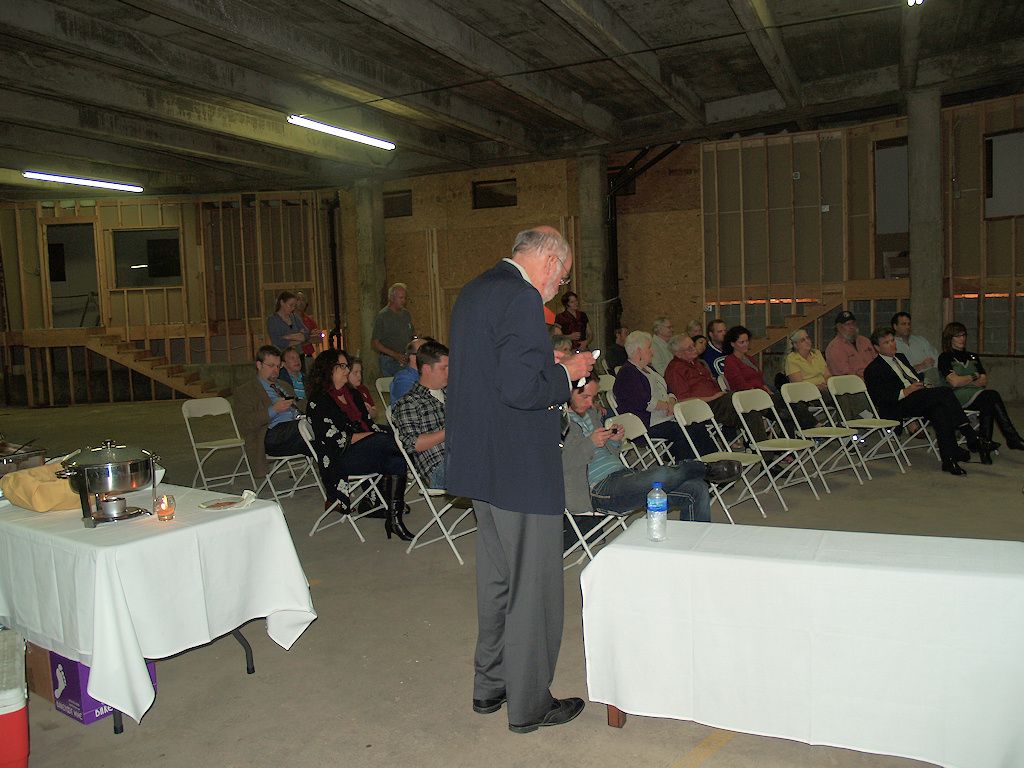
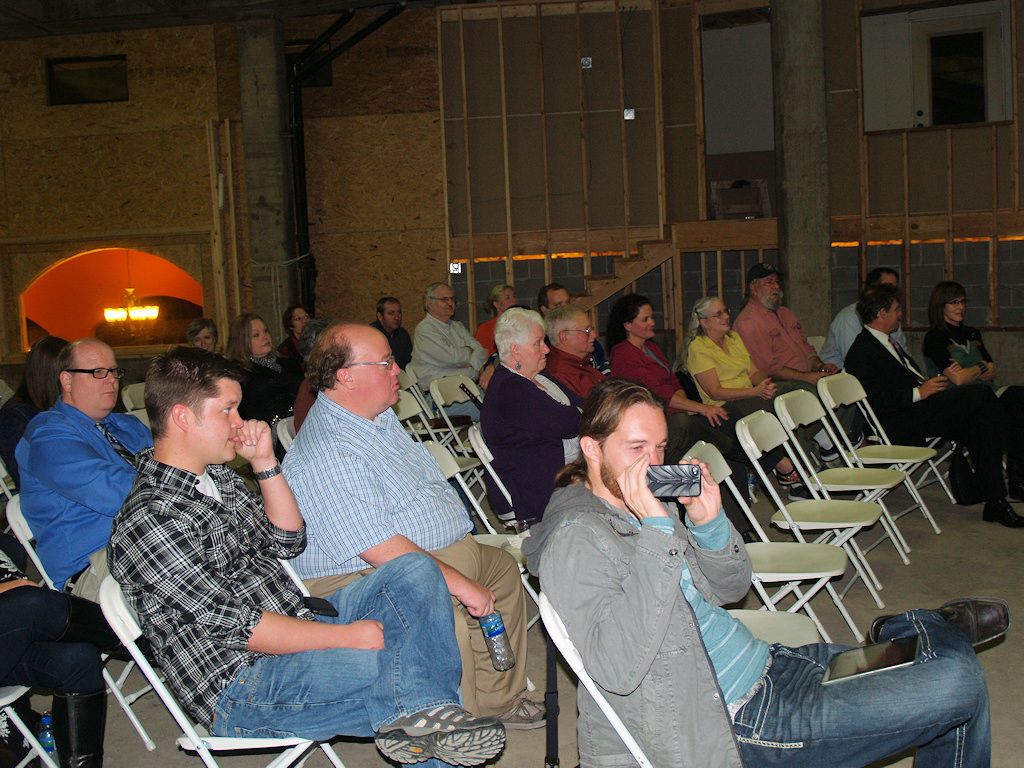
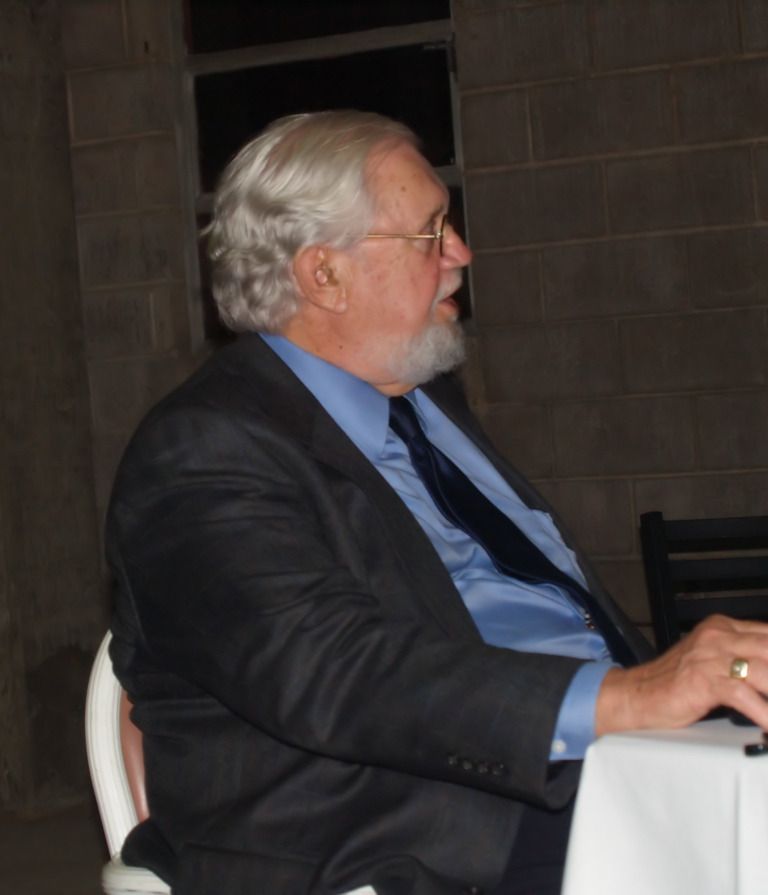
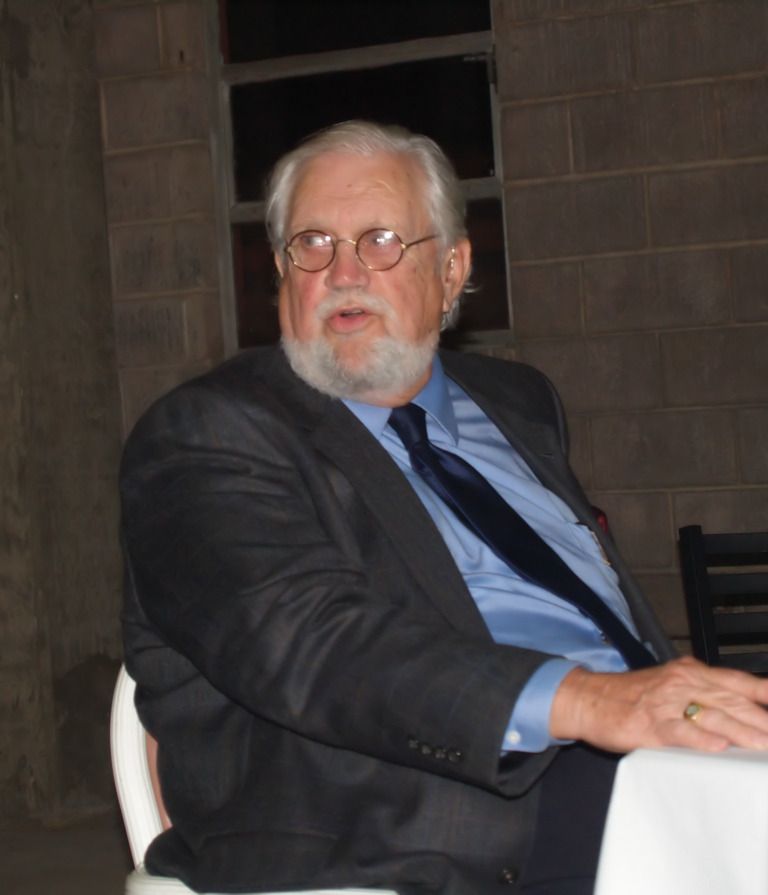
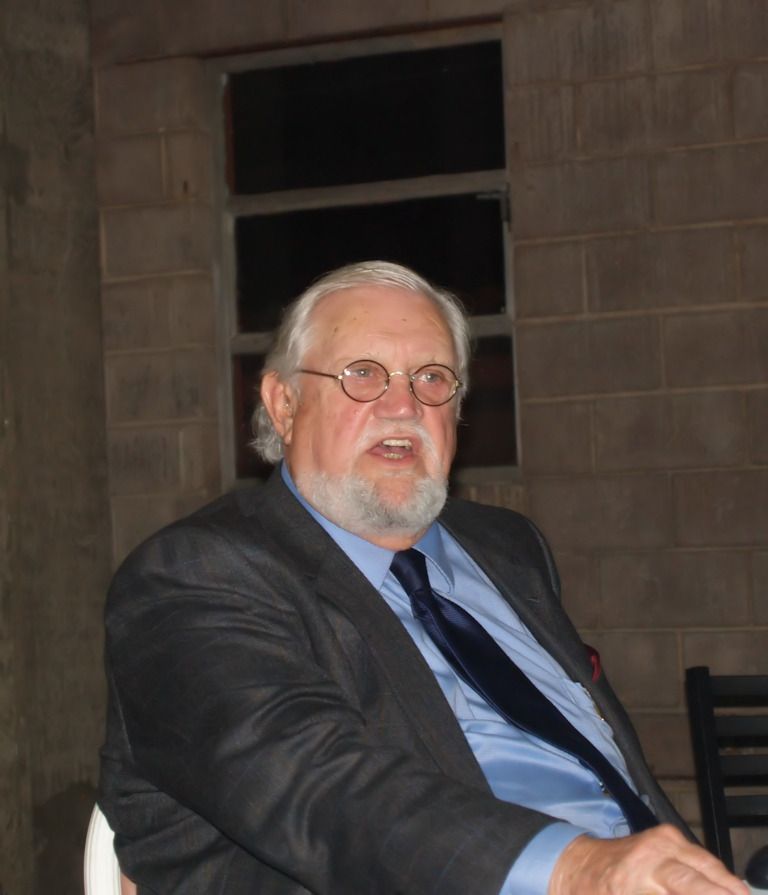
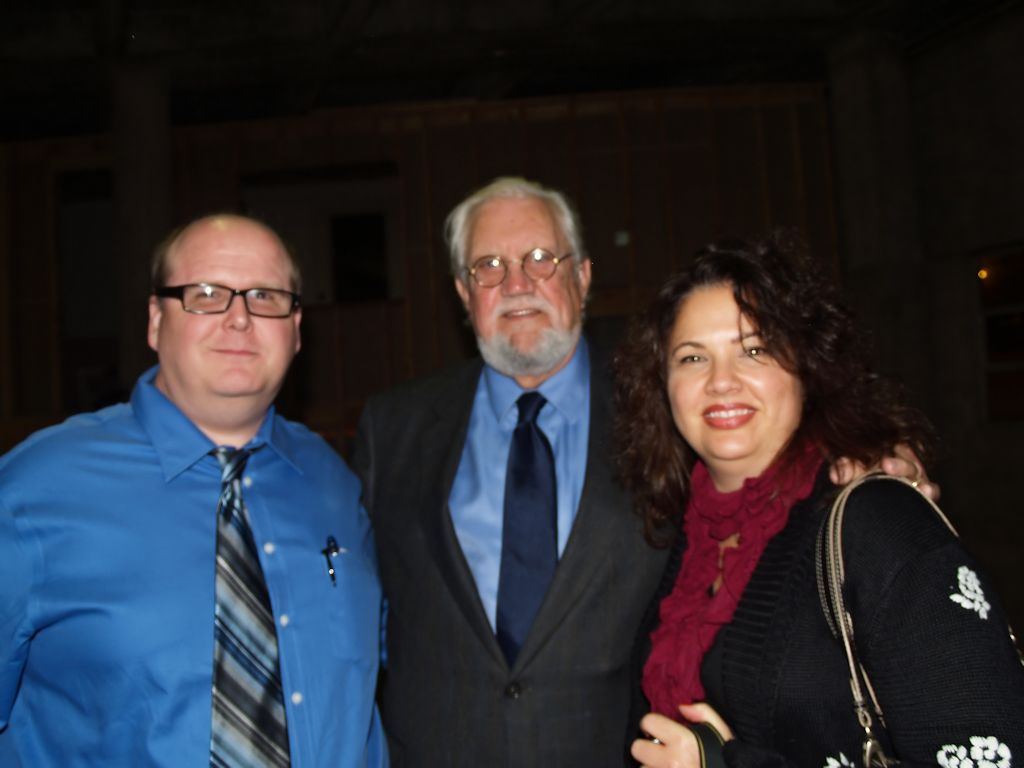
Then, on November 7, 2011, John hosted a meeting of RetroMetro OKC and made a splendid presentation at the formerly decrepit property that he had purchased and was completely reinventing at great personal expense, the old Paseo Plunge, and I took a number of photos of John and the re-purposed property. My original intention was to publish these photos more than a year ago, but I never did. It is fitting that I finally share those photos with you now as a tribute to John Lampton Belt, even if tardily done.
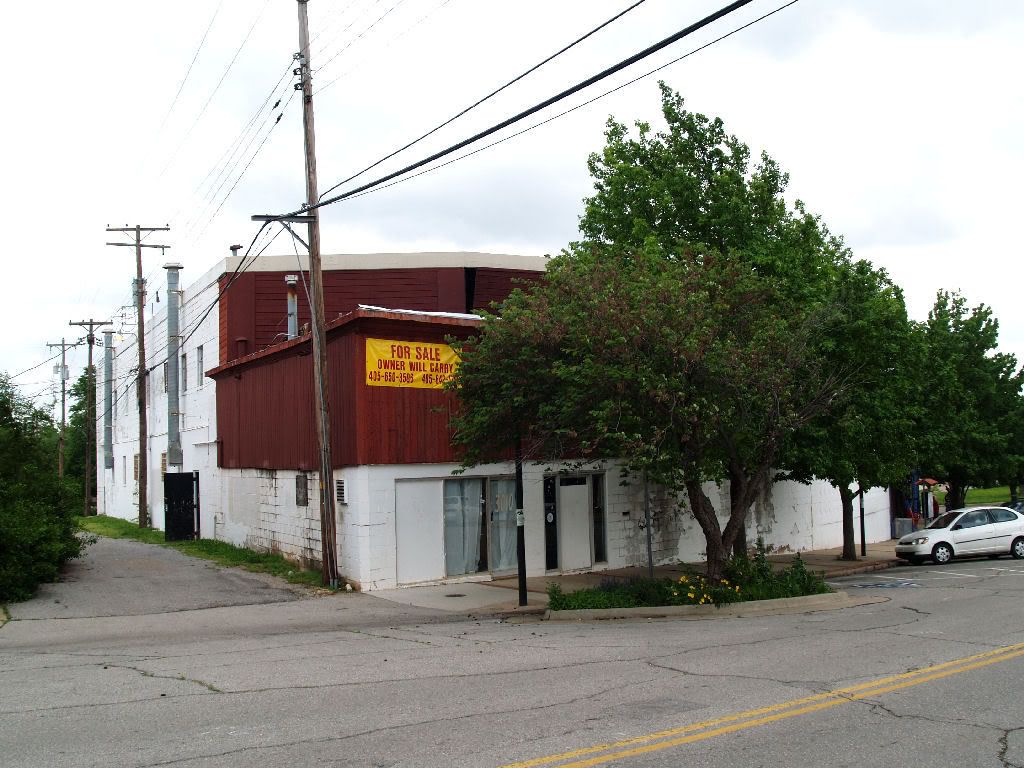
The Paseo Plunge. I've given some description of this property and its history in a May 2007 article. It is and was located at 3010 Paseo. First, I posted a few pics of what it looked like in early May 2007, one of which is shown below:
In a nutshell, the Spanish Village Bathing Pool opened in 1933 and was not originally within a closed building, and by 1934 it was named the "Spanish Village Plunge." By May 1944, it was renamed the Paseo Plunge. The pool closed by the early 1950s apparently in response to the 1949-1952 or so polio scare which resulted in the closing of swimming pools around the country. In the video above, Mr. Belt said that the polio scare was in 1957, but I think that he was mistaken about that. In any event, in July 1954, the revamped property reopened and became the Jamboree Surf Club, a private member club operated by Mike Samara. By that time the pool was surrounded on all sides by high walls to assure privacy but was still open-air at the top. A July 11, 1954, Oklahoman article said, "On the first floor of the main building are lockers and dressing rooms. On the second floor, on the same level as the sun deck, is a snack bar and lounge." A May 22, 1955, Oklahoman article said, "The Jamboree Surf club, rebuilt and enlarged from the old Spanish Village plunge, is one of the finest of its kind in the southwest. The concrete apron surrounding the large pool is divided into sunlit and shaded area. A spacious, elevated sun deck borders the pool on two sides." In May 1956, ads appeared in the Oklahoman again naming the pool the Paseo Plunge, open to the public, and those ads continued into 1960. The terminal date of the Paseo Plunge as a swimming pool has thus far eluded me.
By summer 1968, Sussy's Snack and Pizza Bar had opened at 3010 Paseo, and I am guessing that to be the time that the pool and property became totally enclosed, as well as re-purposed. A September 12, 1968, Oklahoman ad announced that "Sussy's Frozen Spaghetti with sauce" was available at that location.
In December 1977, the Spaghetti Factory grand opening occurred at the same location. At the time, one could have "dinner & disco" – spaghetti, pizza, and disco by the Wolfman." The Spaghetti Factory continued through 1989. A July 27, 1979, Oklahoman article described it: "Nestled in Oklahoma City's Paseo district, the Spaghetti Factory's long white exterior camouflages an inside decor which can best described as 'early nondescript.' ¶ A diner who walks through the front door is suddenly confronted with odd electronic devices on the wall, and what they are is anyone's guess."
By the time that I took the photo shown above in May 2009, the property had been unused for many years (Steve's 2nd article says for 20 years) and was on the market for sale. It was an eyesore and a huge blemish on the Paseo District that Belt had been earnestly developing for several years.
In that May 2009 article, I said,
At the moment, this former "pool" property has got to be one large negative to The Paseo today. It is large, it is empty, it is in disrepair, and it will take significant investment to change all of that.
The significant investment came from none other than John Lampton Belt who purchased the property under the name of Paseo Village on December 11, 2009. Lackmeyer's 2nd article gives some description of Belt's intention for the property.
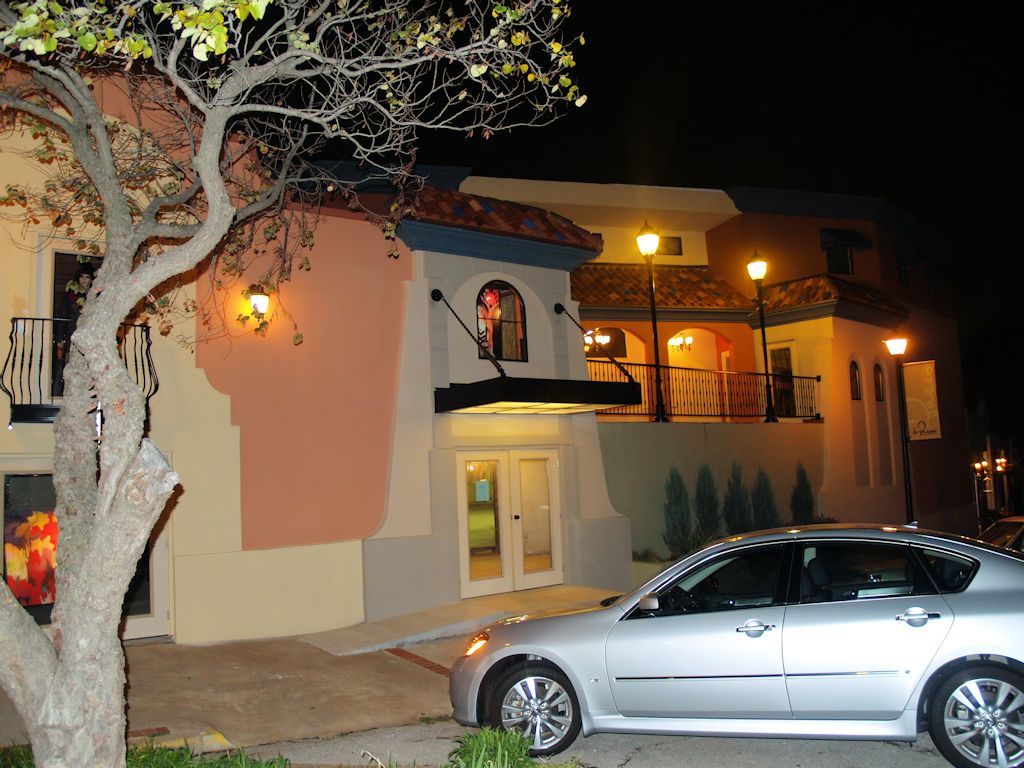
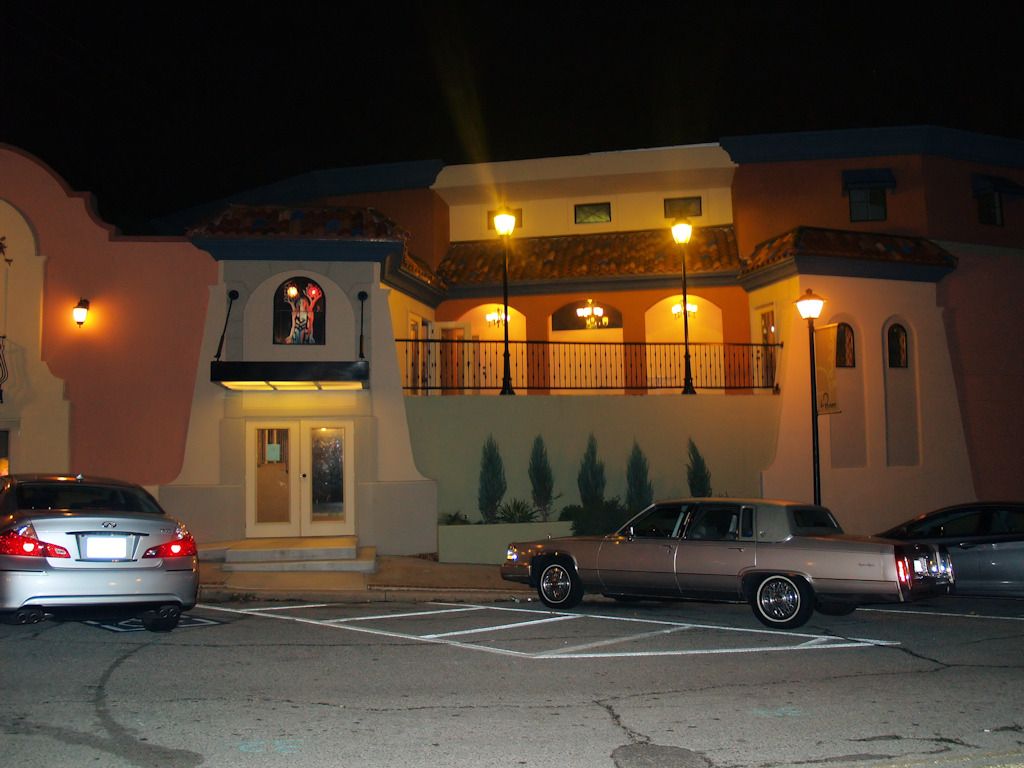
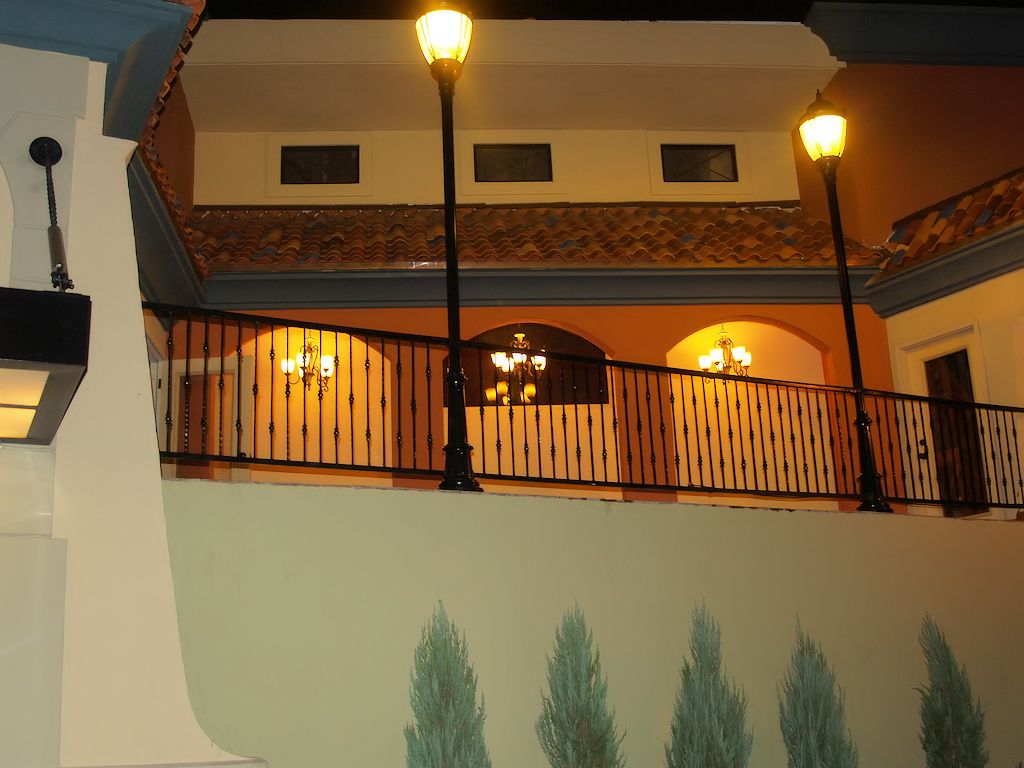
The New Paseo Plunge. By November 7, 2011, the Paseo Plunge had a new look:
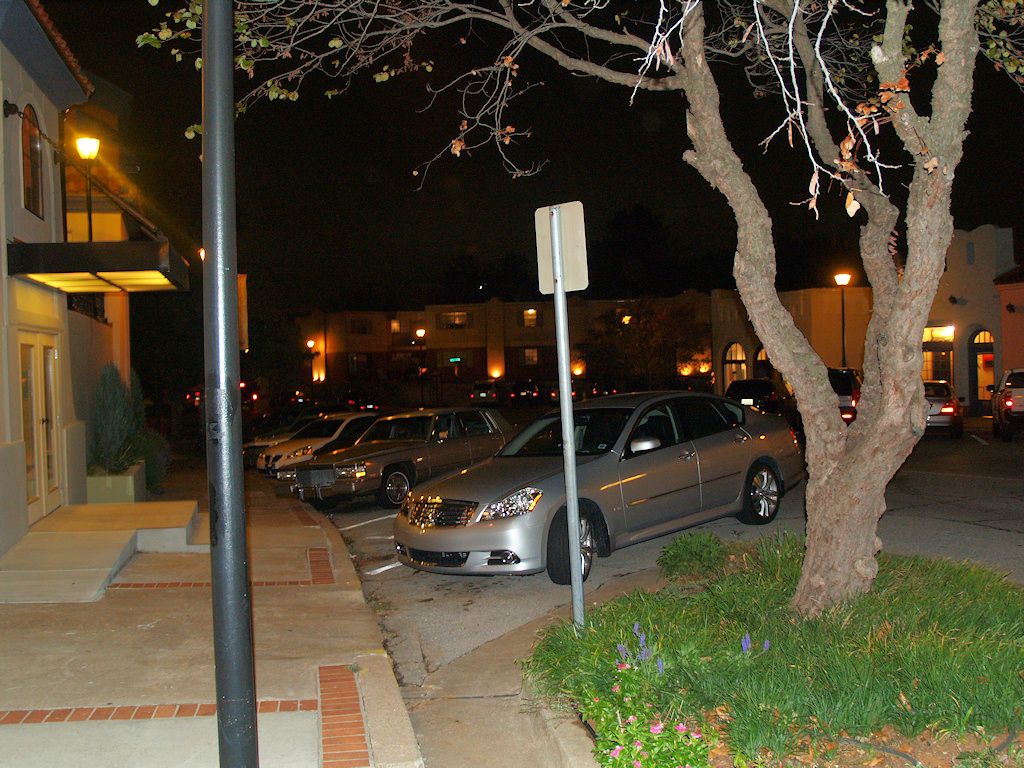
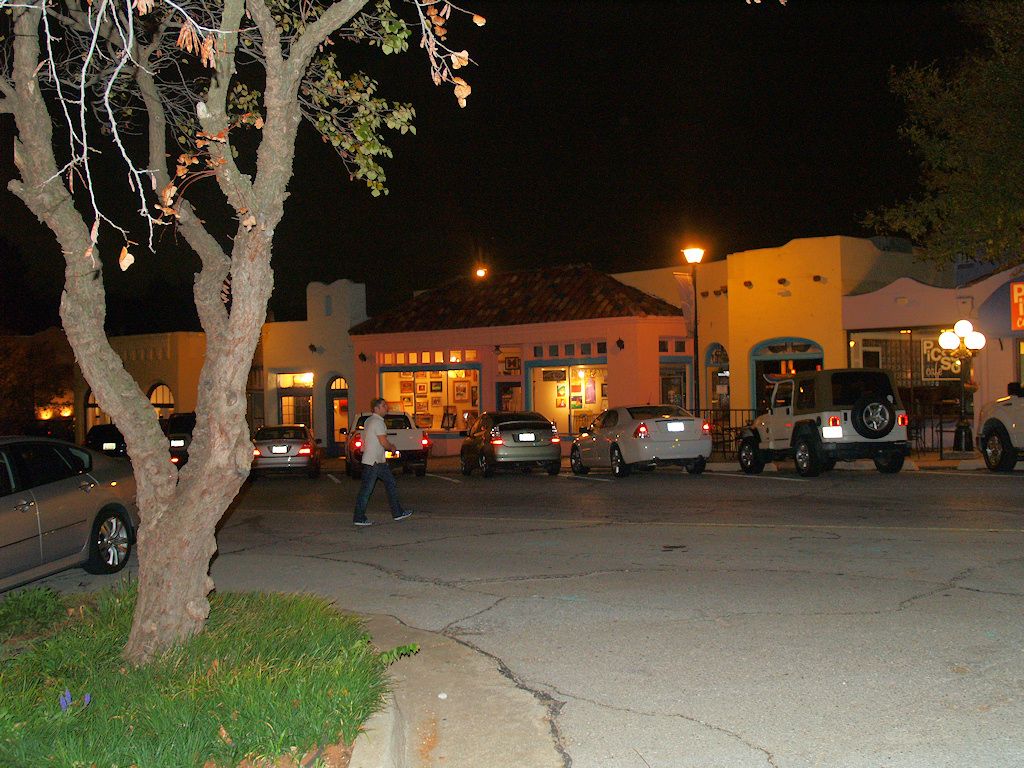
Mr. Belt invited RetroMetro OKC to meet at the work-in-progress of the Paseo Plunge on November 7 and have a gander at what occurred thus far and to see and hear him make a presentation of The Paseo's history. His investment and vision for this once decrepit property were staggering. More images from that meeting are shown below.
1 - Looking north from Plunge
2 - Looking south
3 - Looking west from Plunge
4 - Looking south at Plunge
5 - Looking east at Plunge
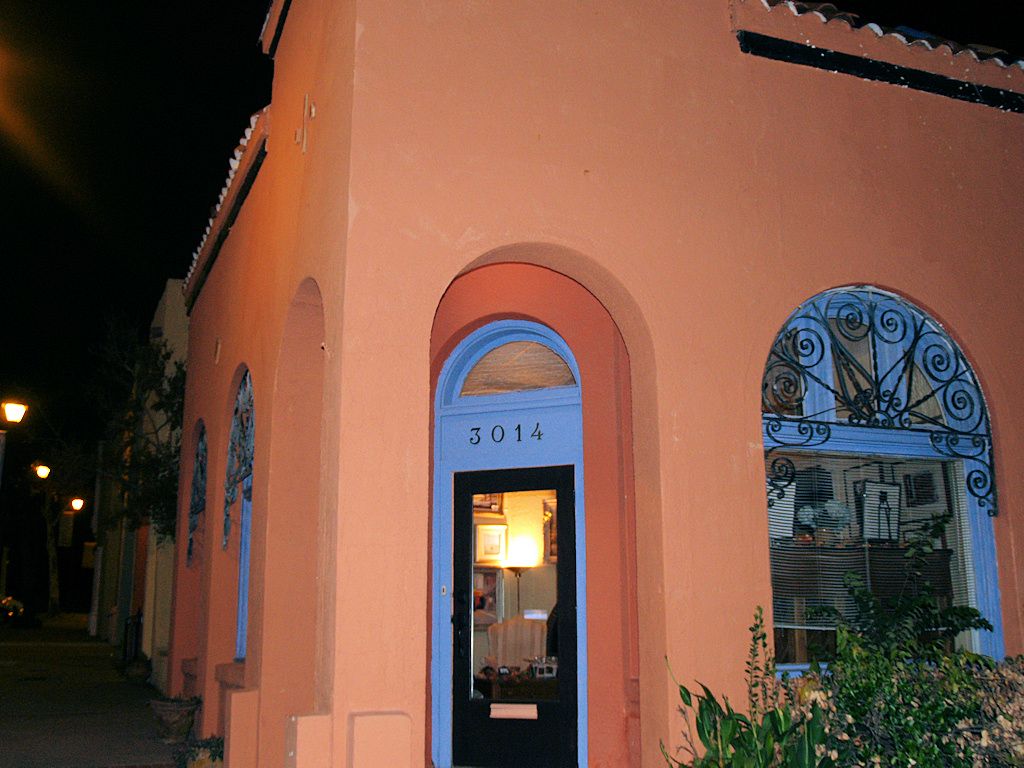
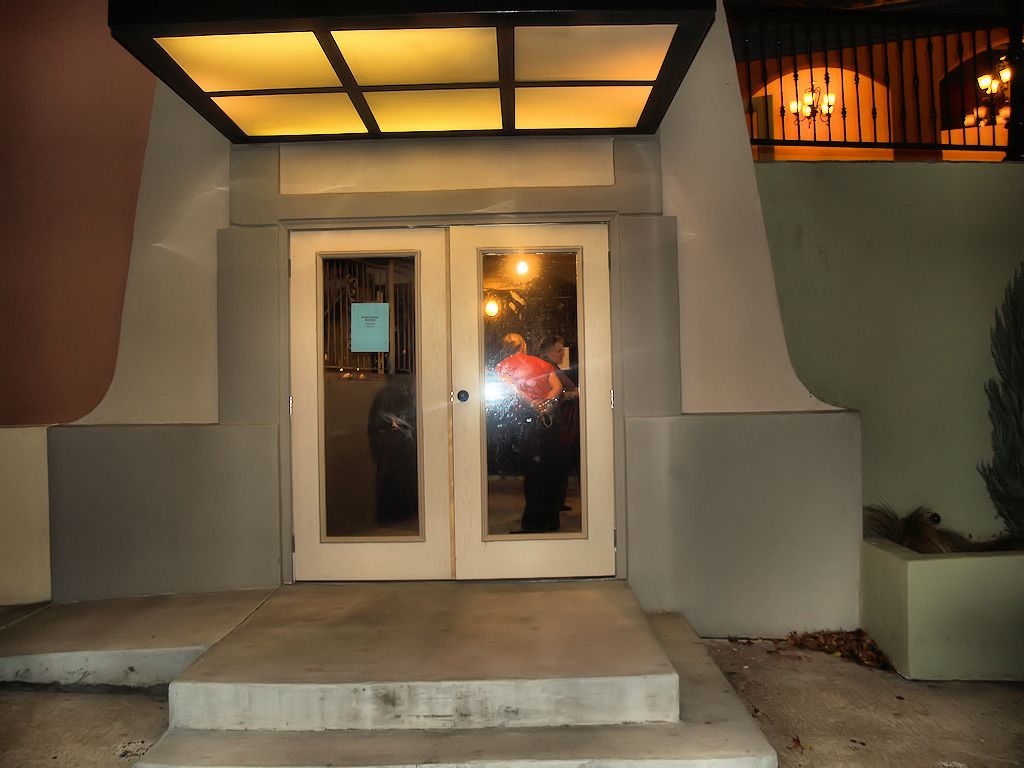
6 - Plunge Entrance
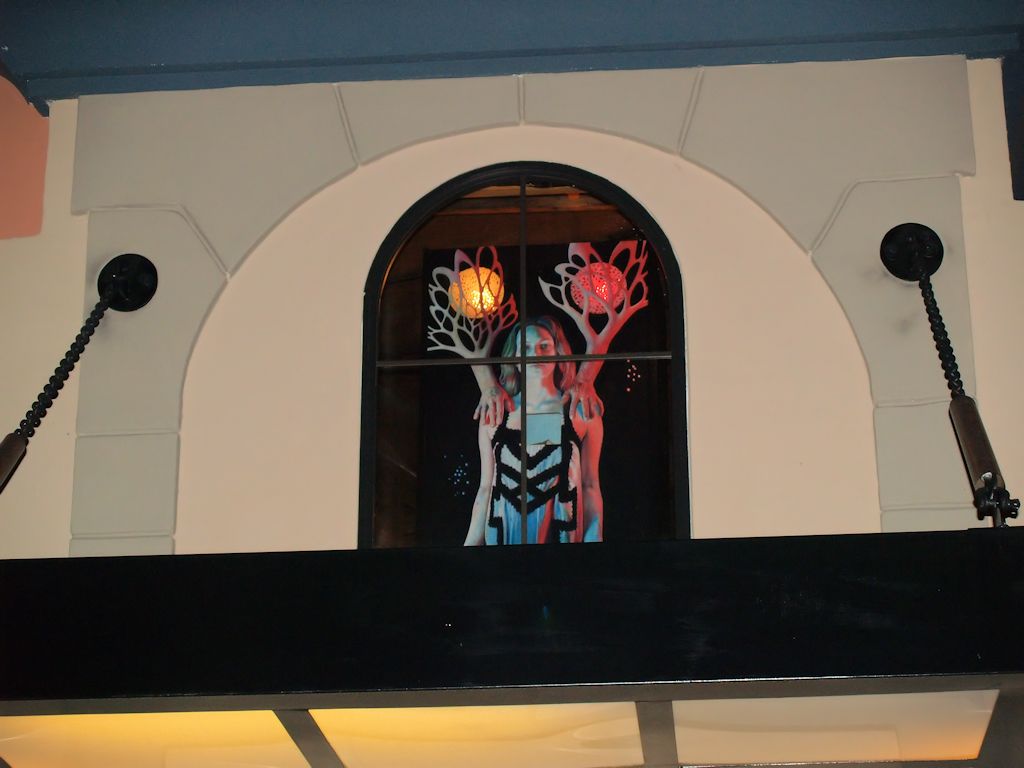
7 - Closer look at 2nd floor Inside view of the lighted window is shown in #12, below
8 - Art window above entrance
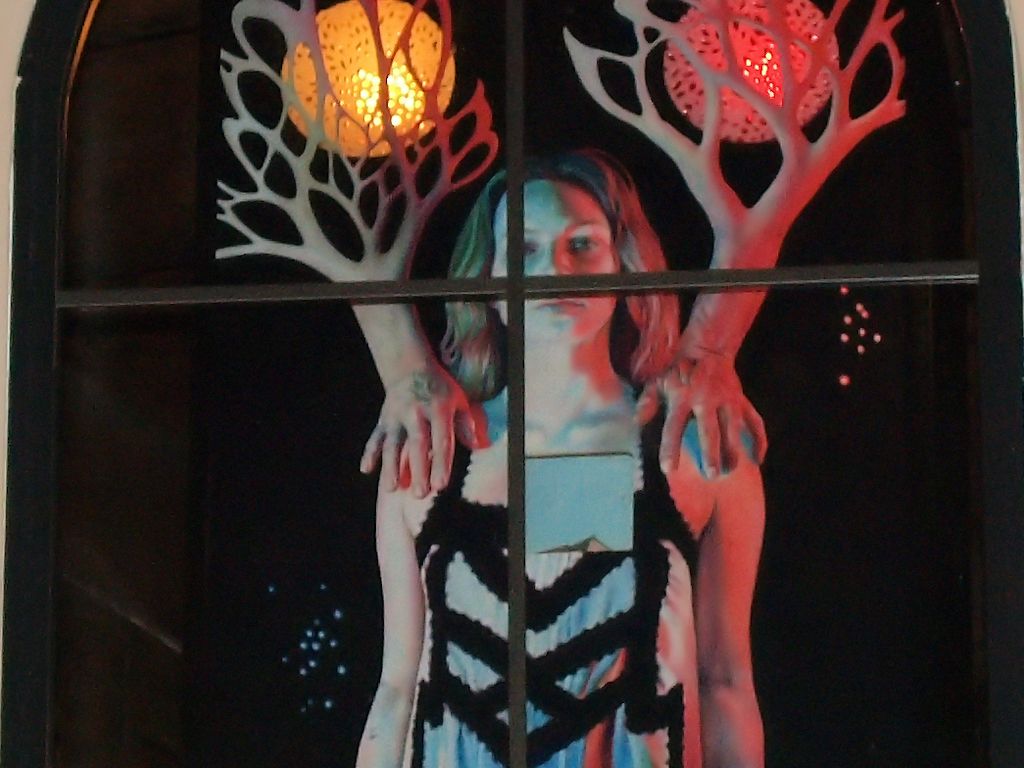
9 - Closer look at the art
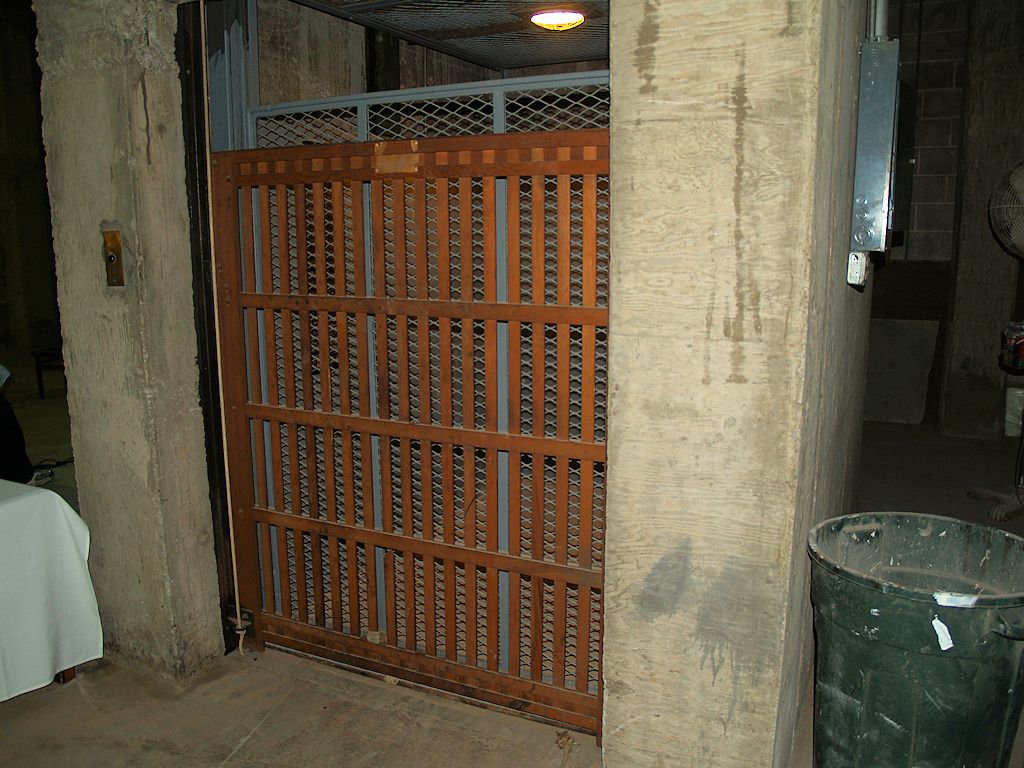
10 - Old fashioned freight elevator
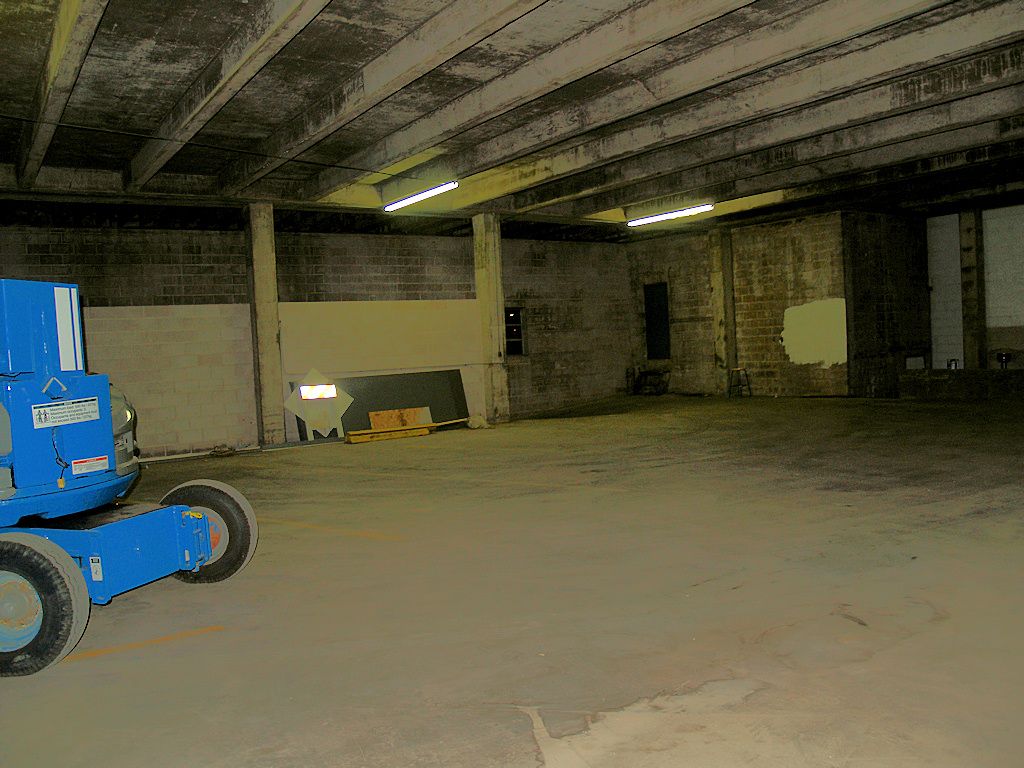
11 - Part of spacious 2nd floor
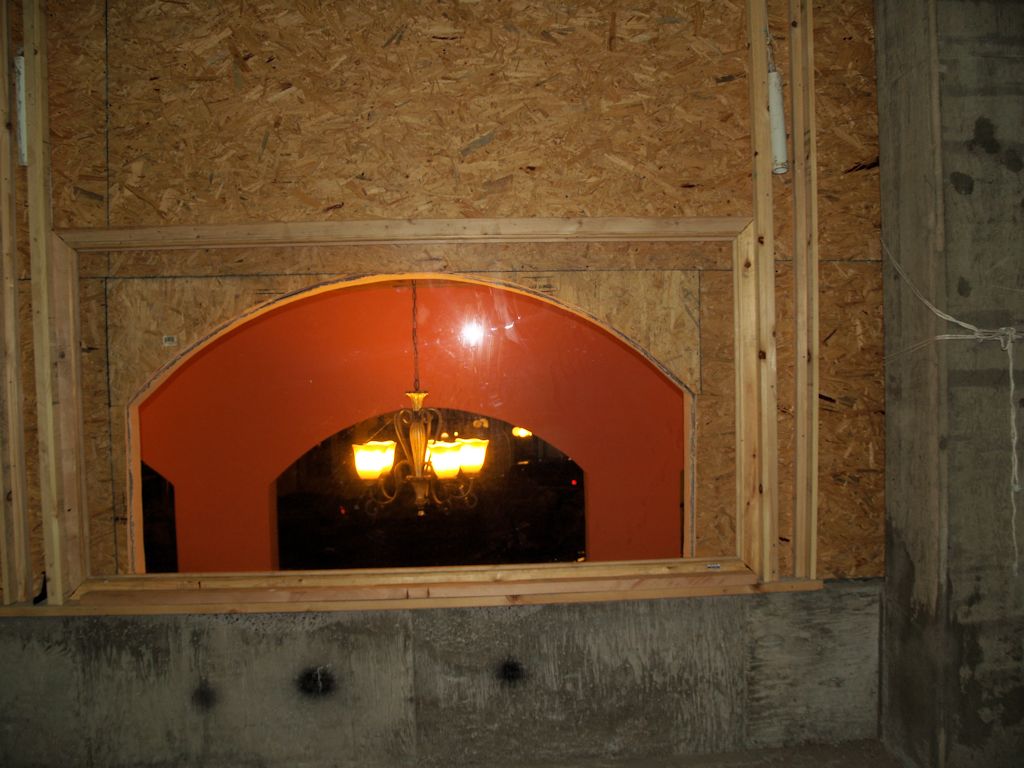
12 - Window looking west
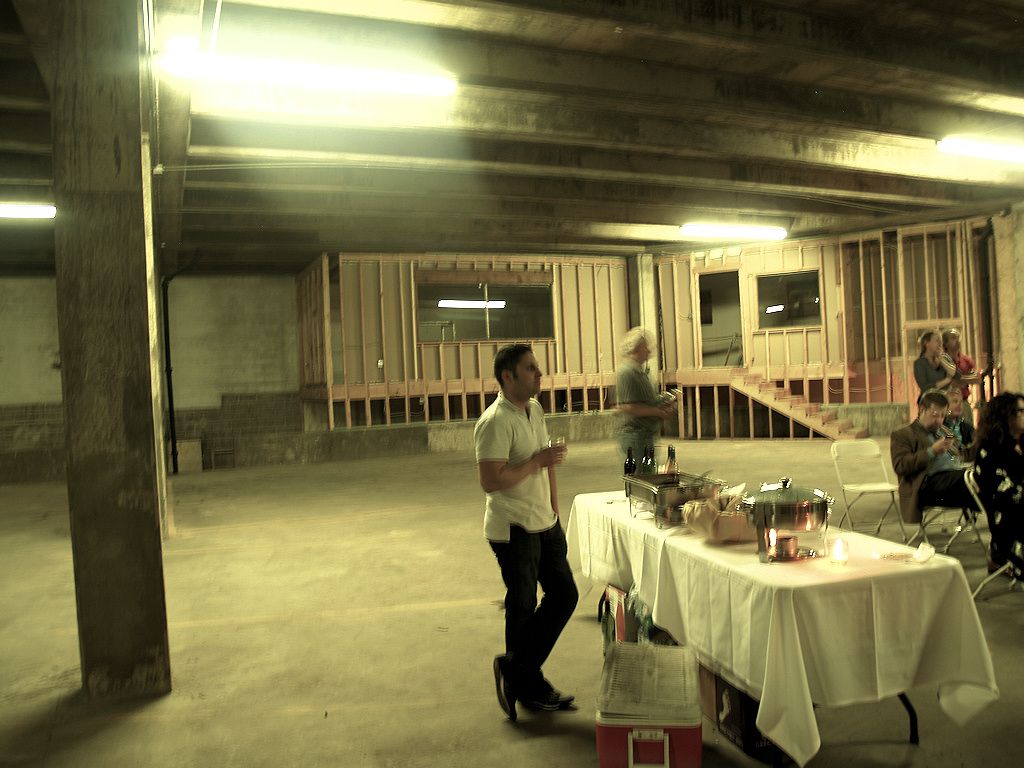
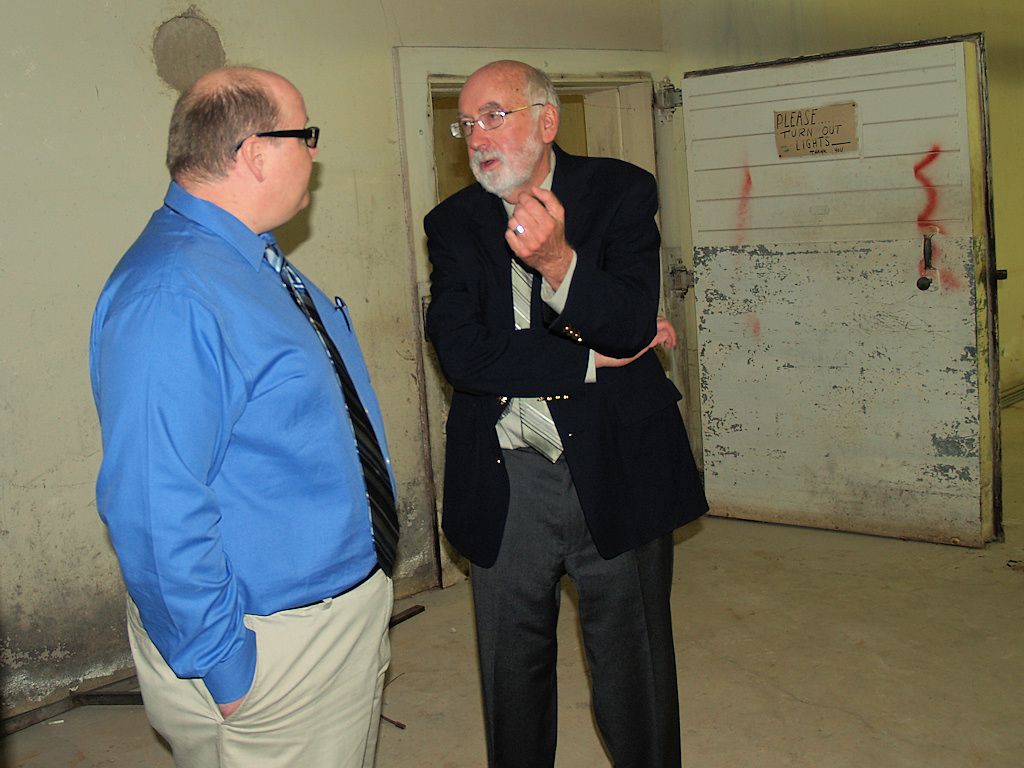
13 - Preparing for meeting
14 - Preparing for meeting
15 - RetroMetro starts to assemble
16 - RetroMetro meeting starts to assemble
17 - John Belt explains how he became involved with the Paseo - to save Hiram's, his favorite sandwich shop
18 - Hiram's sandwich shop
19 - Hiram's location
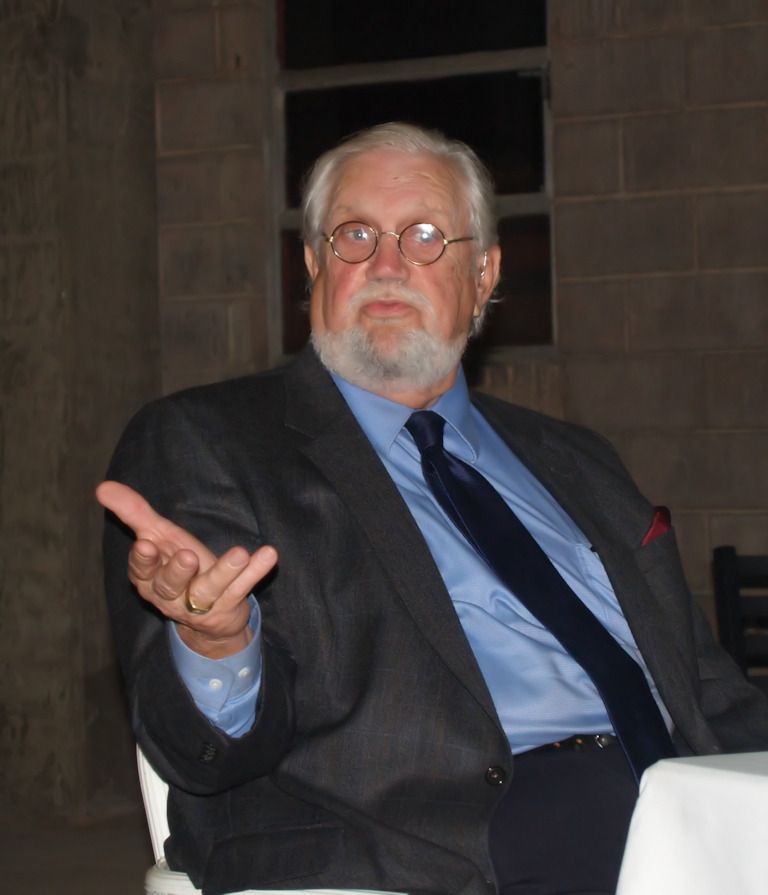
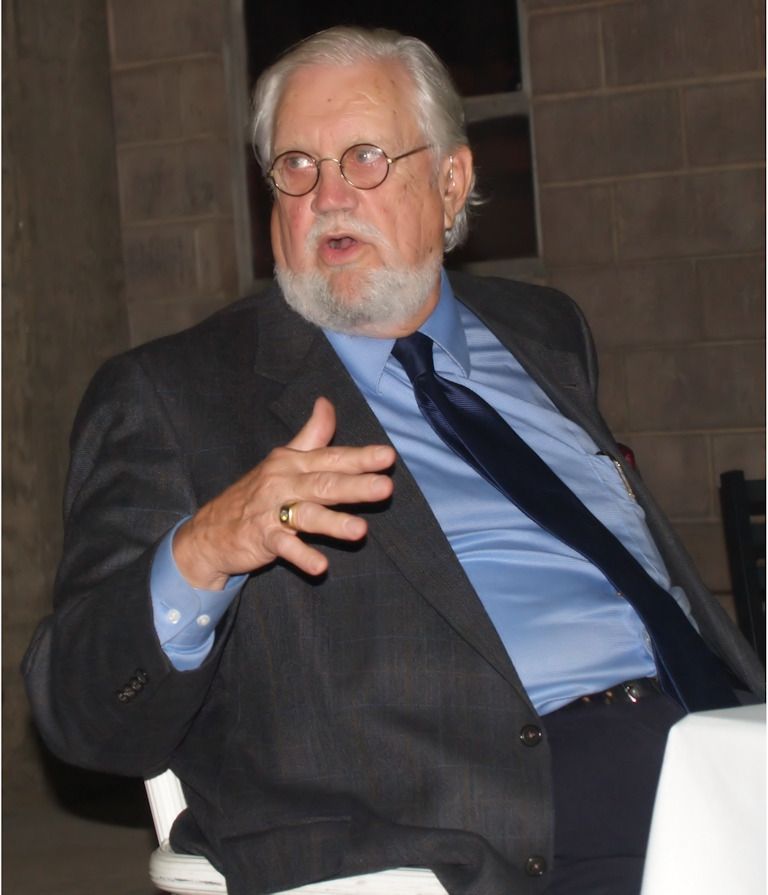
20 - Photos of John Belt during his presentation
21
22
23
24
25 - After presentation
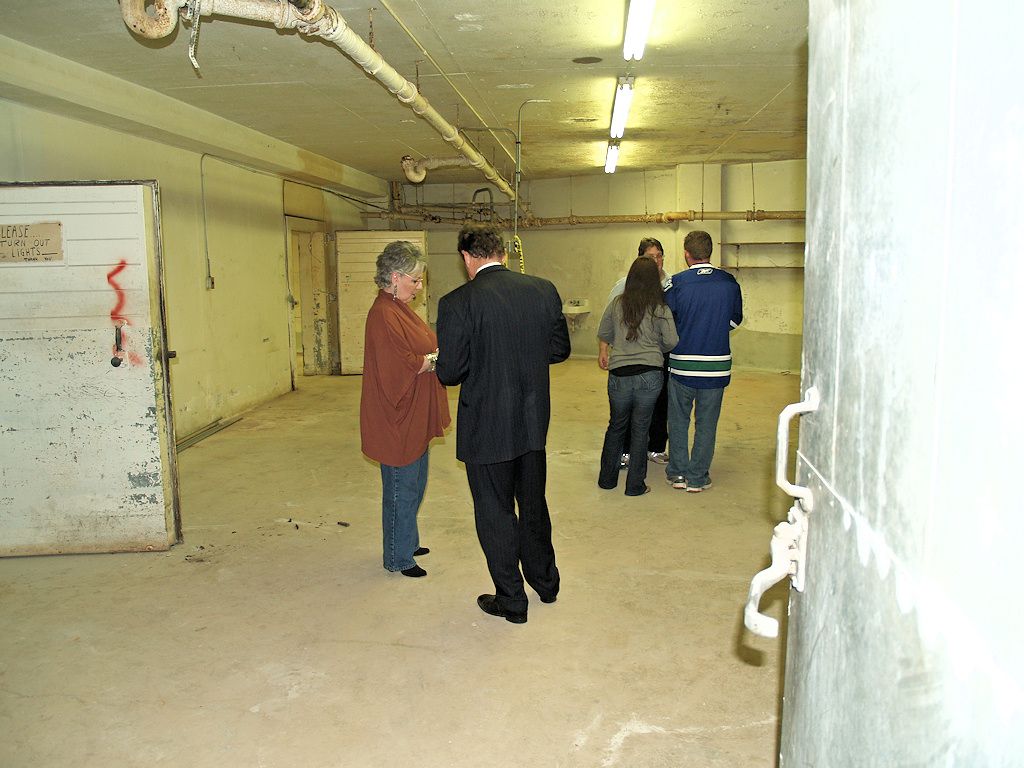
26 - In basement
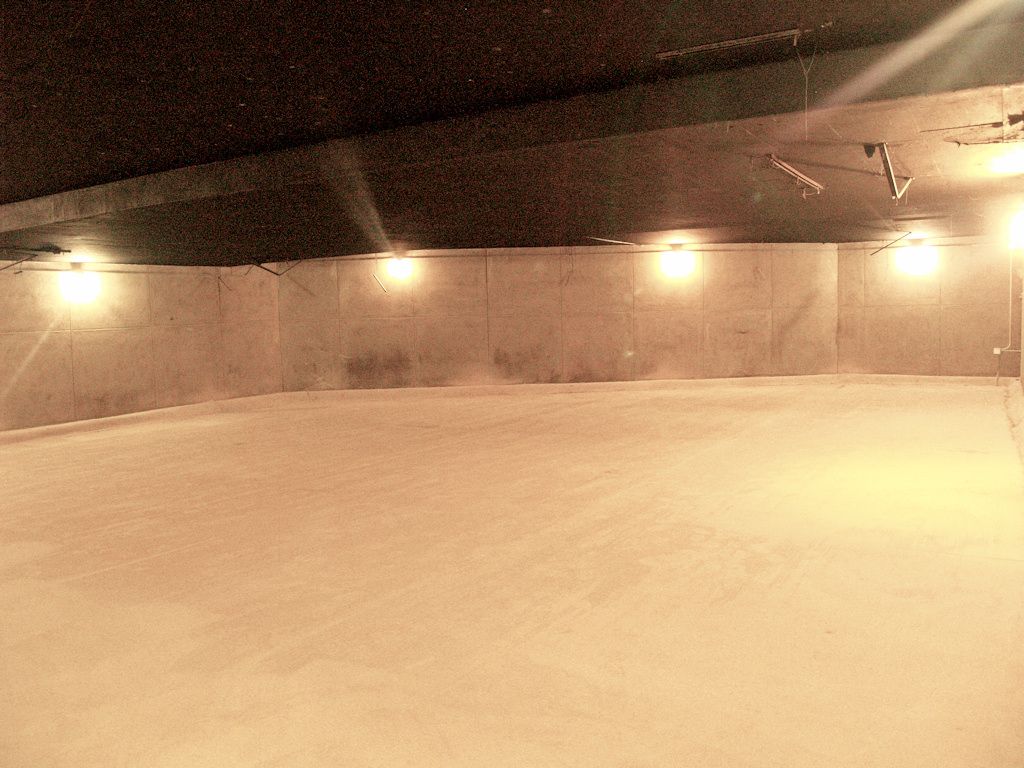
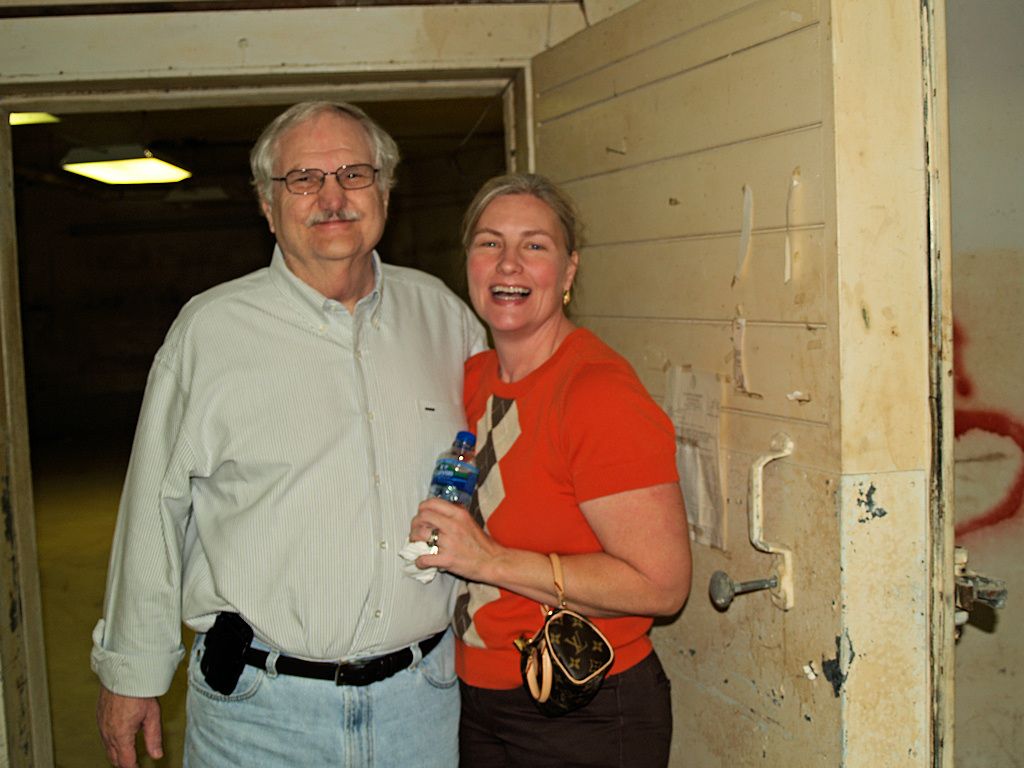
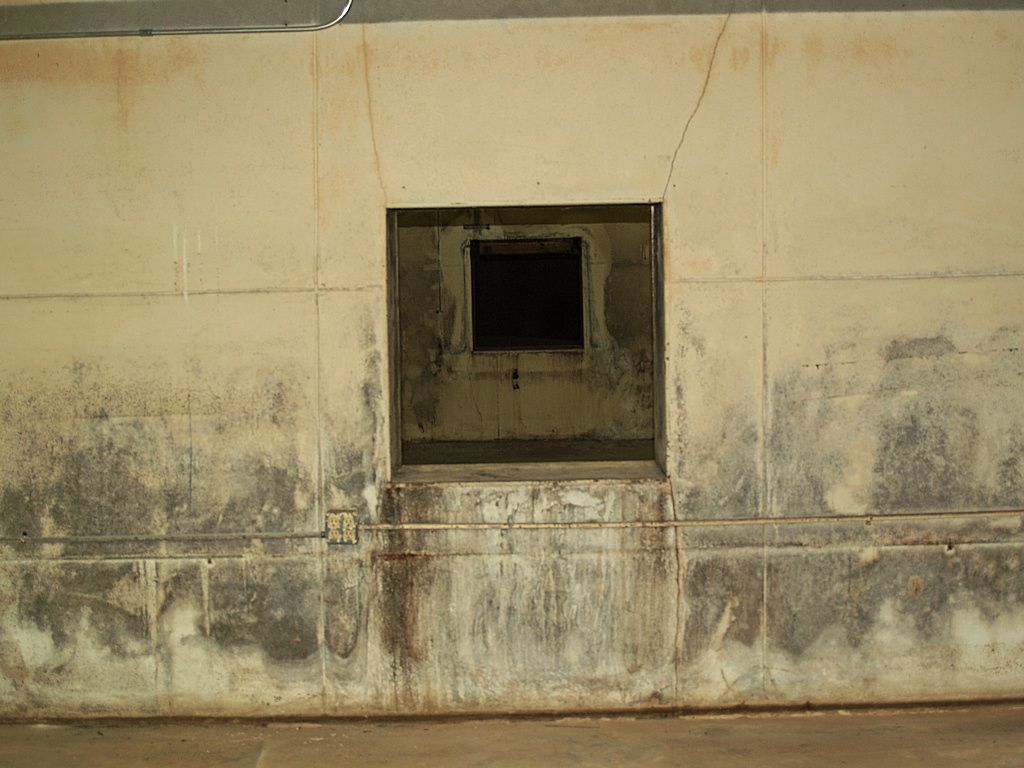
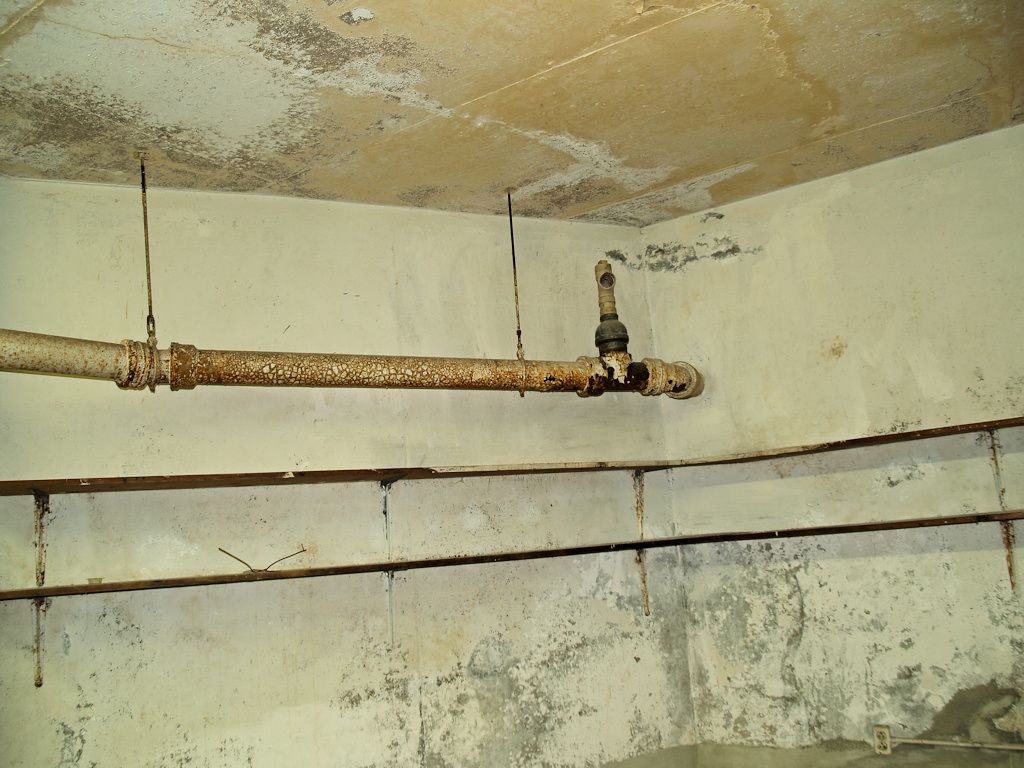
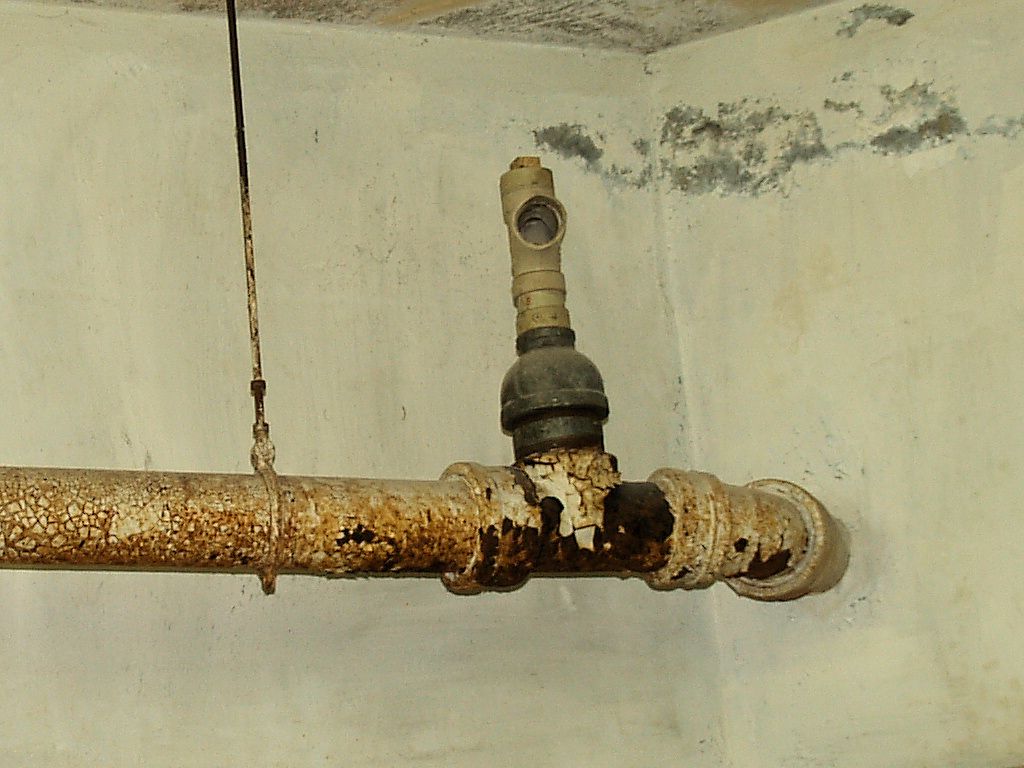
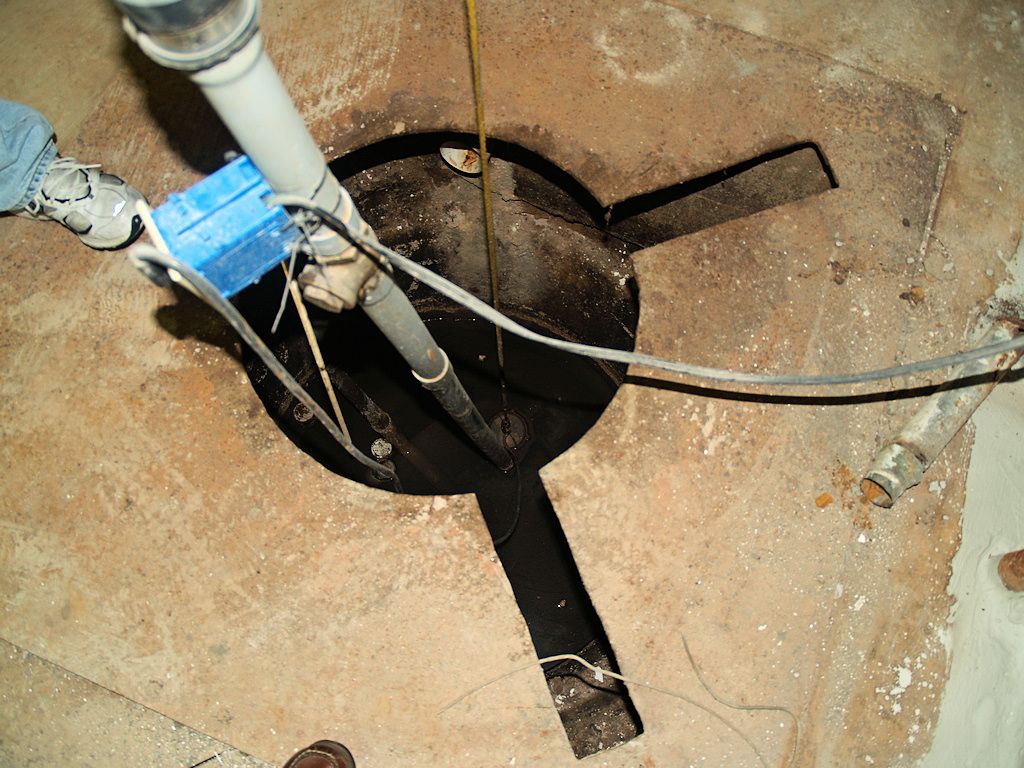
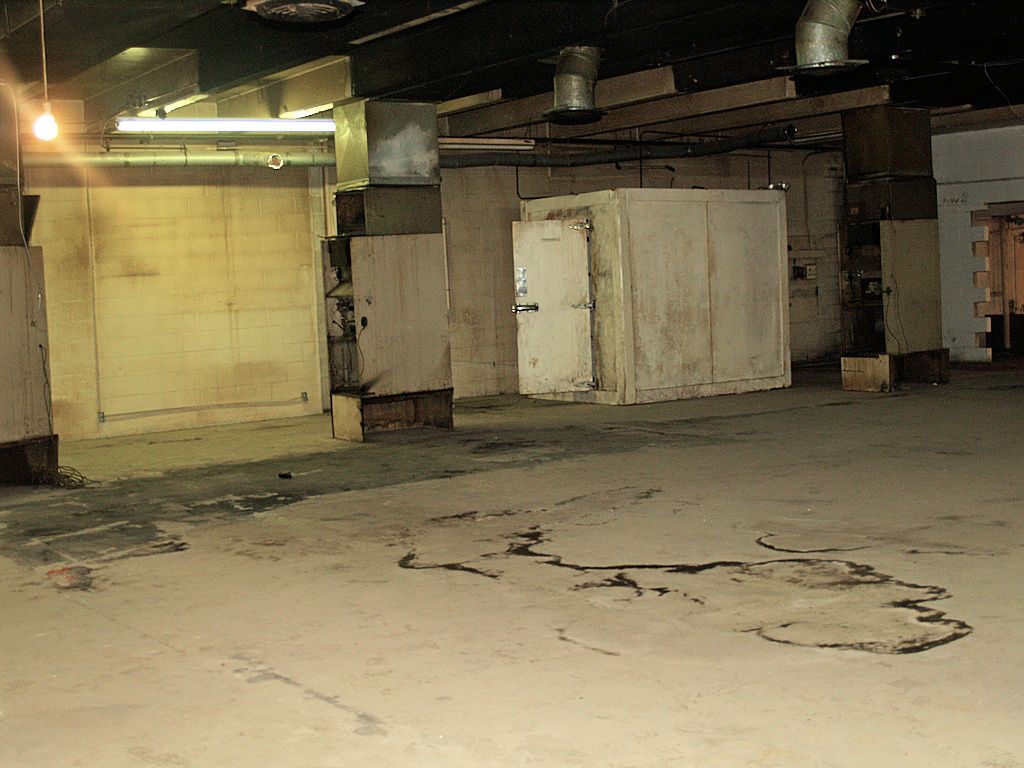
Photos 26-34 show the Plunge's basement, where the bottom of the pool originally was. Probably, during Sussy's Snack and Pizza Bar's tenure (1968- ?), much of this space was converted to large freezers to store frozen pizza for marketing outside the property and around the state. In photo 29, "pass through" windows between freezer rooms can be seen whereby pizzas would be passed from one room to the next. At great expense and difficulty, the floor had been leveled-out and solidified. As will be observed, much work remained to be done, e.g., old pipes and pumps.
27
28
29
30
31
32 - sump pump
33
34
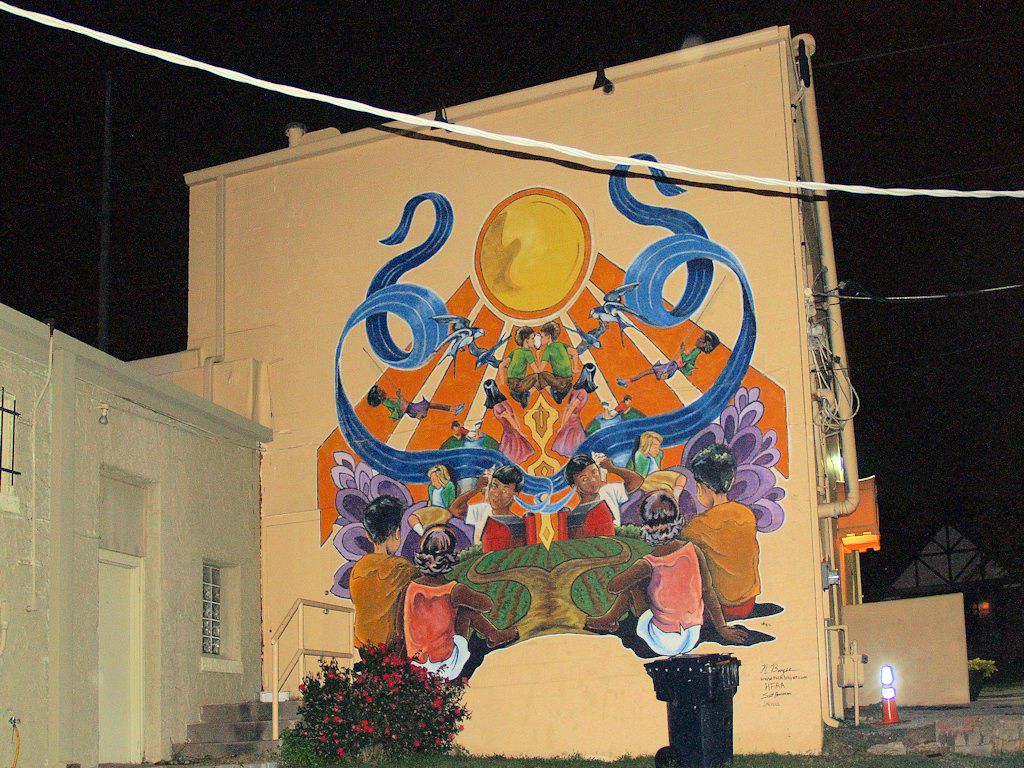
35 - Leaving the meeting and looking north at artwork on a building on the Plunge's north side, symbolic of Belt's influence in the Paseo District
I've not returned to the Plunge since the November 2011 meeting so I cannot report on changes since that time. A graphic rendering appears at http://www.paseoplunge.com/, shown below, the text simply reading, "The Paseo Plunge is currently under renovation in the beautiful and renowned Paseo Arts District in Oklahoma City, Oklahoma."
Hopefully, John Belt's survivors will do what they can to see that his vision for this property continues and that it becomes a reality and a fitting testament to his dreams and vision.
Oklahoma City will forever be in your debt, John Lampton Belt, for all that you dreamed and did. I'm not particularly a religious person, but, still, I say, "Thank you, John Belt, and may God bless you and look fondly upon your soul," just as we do here amongst the living.
Originally posted July 24, 2012; edited on August 20-25, 2012, to add interactive flash video of Bird Gee's real property interests in Oklahoma County and to complete this article.
July 19, 2012
110 Years Ago, Circa 1902
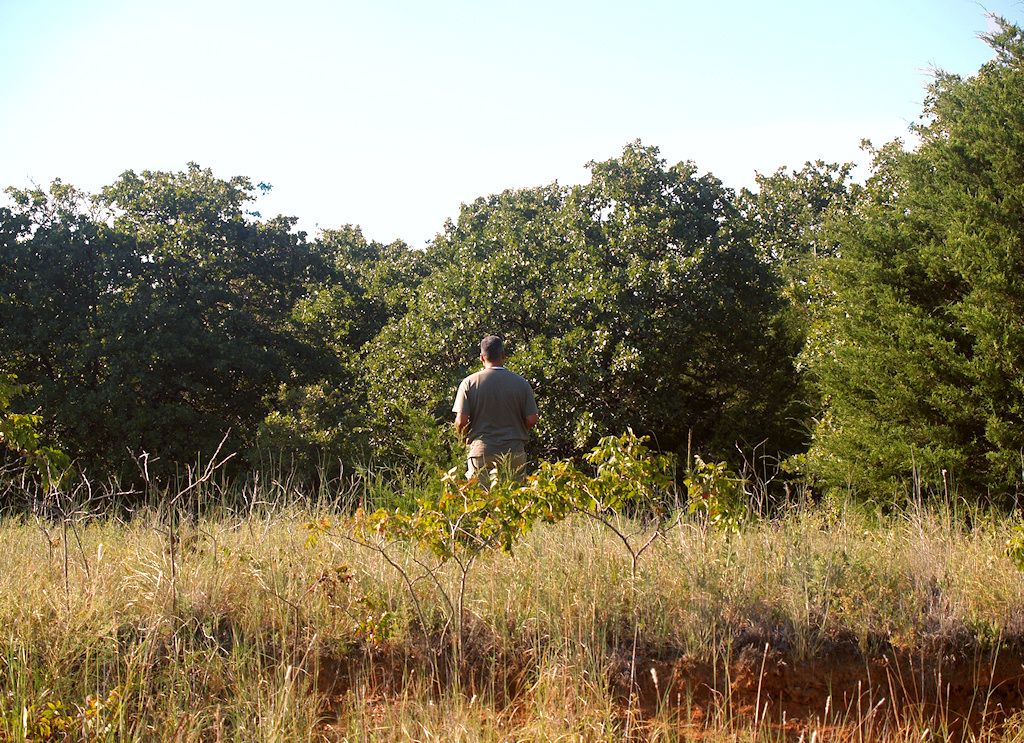
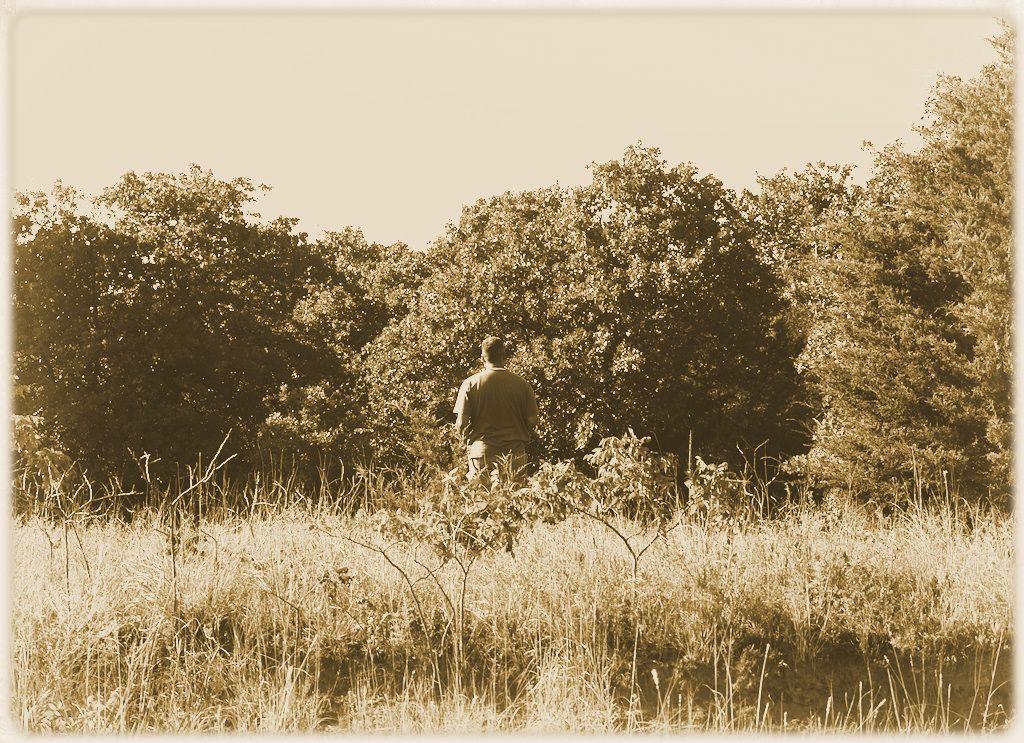
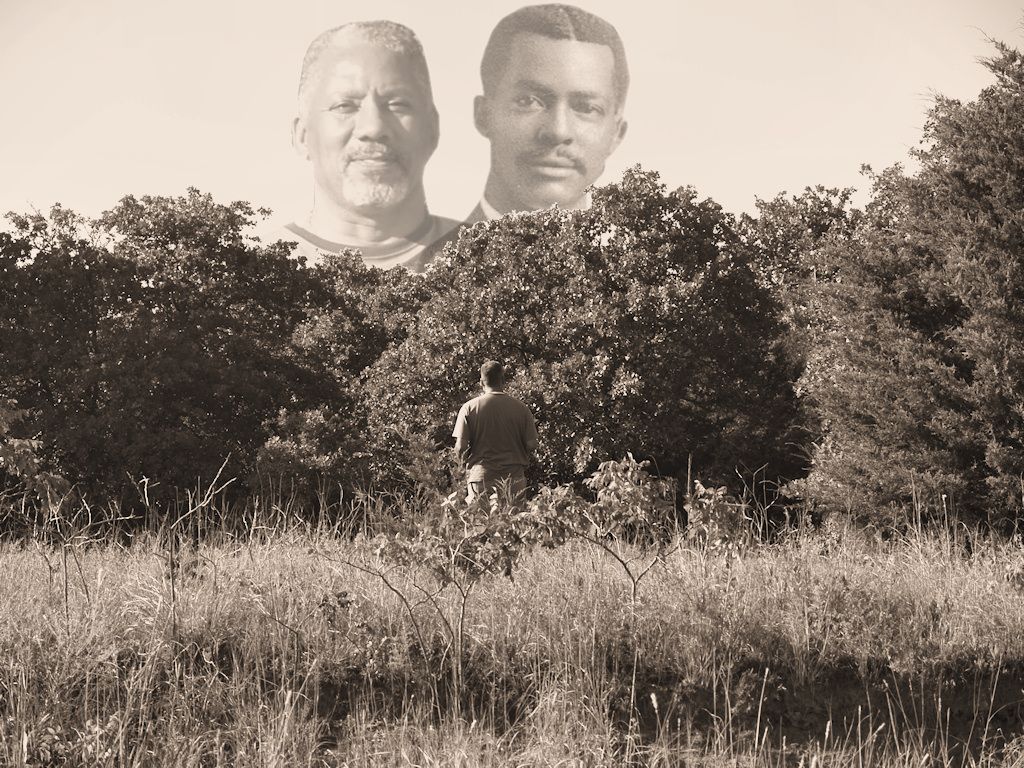
Looking into that field of black jack (scrub oak) trees up there and somewhat hidden by tall grass might be Bird Gee as he surveys 80 acres of property located in Pottawatomie Township that he purchased in 1903. Or, instead of Bird Gee, it might show his great nephew, Roland J. Miller, as he looked at the same property on July 19, 2012. Or and better still, dé·jà vu, it might show them both.
On June 24, 2012, I received an email from one Roland J. Miller — pasted into a word processing document using a 12 point font, the email was six (6) 8½" x 11" pages long, single spaced.
The kernel of Mr. Miller's post was that he was researching the time that a great uncle of his, named "Bird Gee," spent in Oklahoma City, and he wondered if I might be able to help. In closing his initial email, he said, "I realize that this may be of no direct interest to you, but I would really appreciate your assistance to make my research and impending visit [to Oklahoma and Oklahoma City] more fruitful."
Although I was somewhat suspicious — we all get crank emails, don't we, and, to boot, I'd surely never heard of anyone who had "Bird" as their sole first name — I nonetheless decided to have a look around and see what I could find, thinking it unlikely that a person would take the time to write six (6) 8½" x 11" pages in an email as a crank.
Guess what? I learned that Bird Gee was a real person and so is Roland aka Rolando Miller. His email led to my learning about the city's most notorious murder-mystery at the dawn of statehood, previously mentioned in this post about Marilyn Hudson. As if not more importantly, his email led to learning about Bird Gee, probably the most prominent black man in Oklahoma City during 1900 to 1910.
INTRODUCTION. The email exchange with Roland Miller provided an opportunity and the catalyst for making a most excellent new friend, Rolando Miller — inexplicably, just now, my fingers paused on the keyboard just when intending to type Rolando's name since they wanted to type, "Bird Gee." I'm thinking that maybe, just maybe, Rolando is actually Bird Gee who has just come back to the city for a brief visit to see what's different than when he left our town in 1913 or so. Oh — I see that statement makes me look like I'm crazy. I take it back.
It was my pure privilege and pleasure to welcome Bird Gee (oops!) Rolando Miller to Oklahoma City and to my home on July 19, 2012, and to join with him in researching Bird Gee's history in Oklahoma City during 1900 or so through 1913 by some drive-arounds in Oklahoma County and by researching the records of the Oklahoma County Registrar of Deeds.
So, what did we find?
Is Rolando Miller Bird Gee Reincarnated?
No, but he comes pretty darned close.
BIRD GEE REAL PROPERTIES IN OKLAHOMA COUNTY. The high quality flash video shown after the contemporary city map below is an interactive file which tours most of the properties owned by Bird and Nancy Gee in Oklahoma County, Oklahoma, during 1901 through 1913. The music background for the file is an old recording of Hesitation Blues by Jelly Roll Morton (1885-1941) who claimed to have invented jazz in 1902. Whether so or not, his tune seemed an appropriate background. The flash video shows relevant maps, plats, aerial and ground photos contained within the six areas shown in the following contemporary city map:
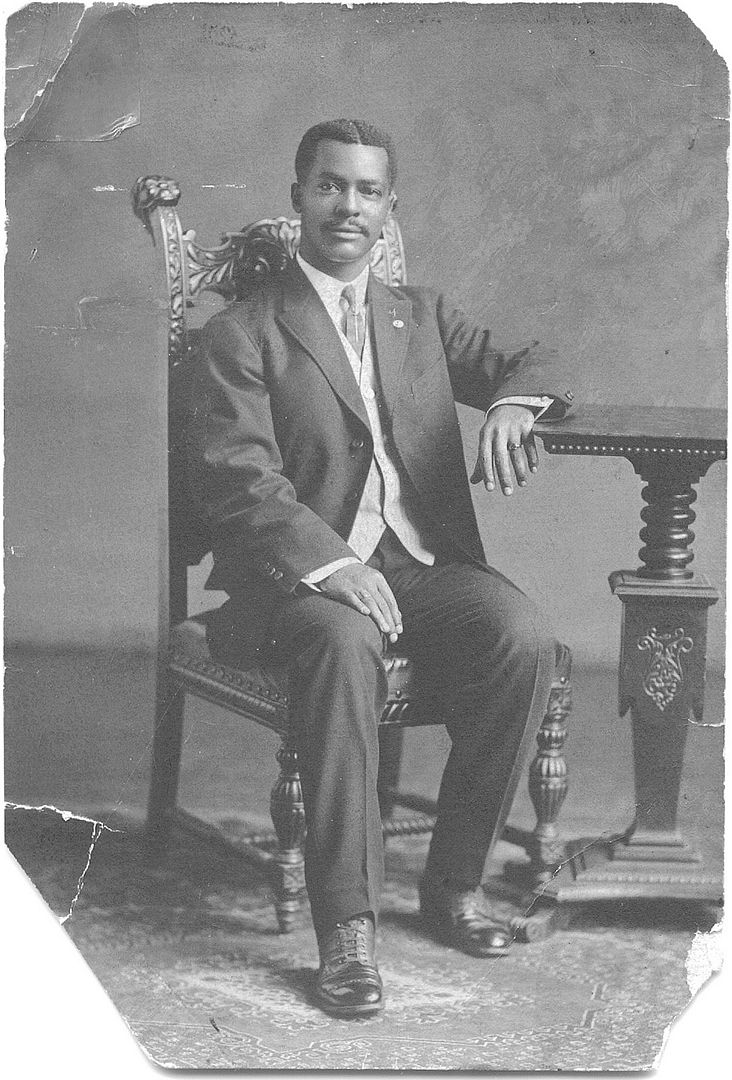
Click on the image of Bird Gee, below, to start the interactive flash video. It will load in a few or several seconds, depending on your internet connection speed.
Seeing the depth and breadth of real properties owned by Bird Gee, it is not surprising that an October 7, 1907, Oklahoman article said that he was "understood to be the wealthiest negro in Oklahoma City." At one point in time or another, he owned around 320 acres in Pottatawomie Township, 80 acres in Cass Township, 80 acres in Crutcho Township, and owned properties in Maywood Addition, west of Western and north of Reno, and a large chunk of lots and blocks in the original Dittmers Heights Addition (around NW 13-14th & McKinley). Four plats in Oklahoma County bear his name (Gee & Jones Addition in Crutcho Township; Gee's Addition west of N Western; Bird Gee's Amended Plat also west of N Western; and Gee & Weesner replat of a part of Dittmers Heights, above mentioned). A street in Crutcho Township still bears his name, "Gee Lane Road."
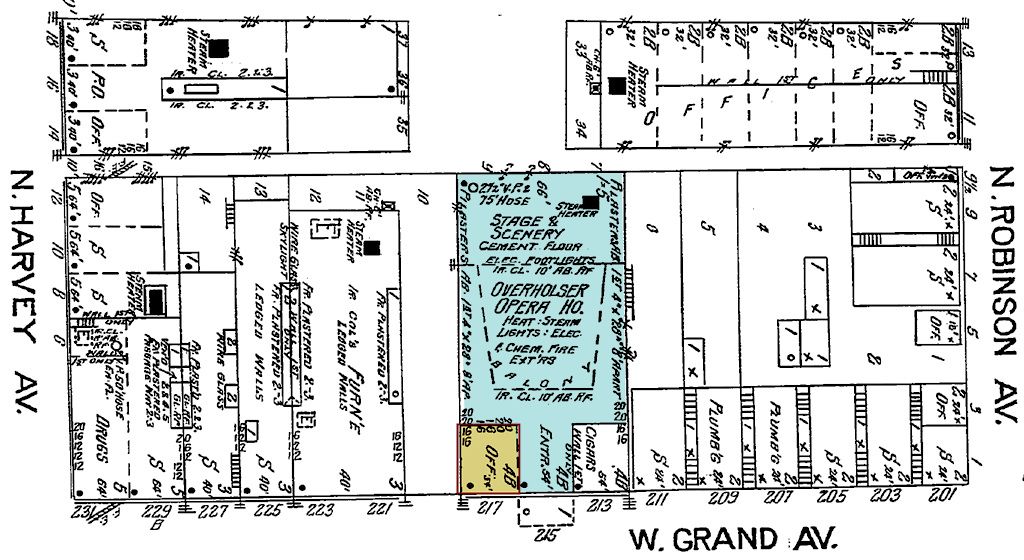
BIRD GEE BUSINESS LOCATIONS. Oklahoman archives reflect that Gee's primary business activity was in the sale or rental of real property. Ads during 1903-1904 show a business address for Bird Gee as "13th & McKinley" but in 1904 his business address moved downtown and had these addresses: 117 W. Grand (1904); 217 W. Grand (1905); 325 W. Main (1906); and 210 W. California (1906-1910). By 1906, the ads read, "Bird Gee Realty Co." These business locations are shown in the map below -- old street locations and current uses are also shown.
The 1905 address was immediately next to and perhaps a part of the Overholser Opera House, as shown in the 1906 Sanborn Map, below. Click on the map for a larger image.
Quite evidently, Gee not only lived in what would come to be regarded as a "white" area, he did business smack in the middle of downtown rubbing elbows with the likes of the Overholsers, at least through 1910.
OTHER BIRD GEE BUSINESS INTERESTS. Although real property sales and rentals were clearly his mainstay, Gee was also a notary public (as reflected by documents filed with the Registrar of Deeds), an undertaker (as reflected by a May 3, 1907, Oklahoman article which described his lawsuit for unpaid services as such), and a bail bondsman, evidenced by a pair of 1907 and 1909 Oklahoman articles.
The Tegeler Murder Trials. It was Gee's experience with his bail bond business, combined with the growth of Jim Crow laws in the state and city, which likely led to Gee leaving the state in 1912 or 1913.
Oklahoma became a state on November 16, 1907. Before that, territorial legislative sessions imposed no requirements of racial separation in business, residential, or personal matters, even if the attitude prevailed in the white population that African-Americans were in all ways inferior to the whites.
As a forerunner to statehood polemics, see this September 11, 1904, Daily Oklahoman article/editorial which assumes that Indian Territory might be granted statehood (apart from Oklahoma as we know it). It reads, in part:
Muskogee, I.T. When Indian Territory gets statehood doubtless it will at the time of its legislative convention pass a Jim Crow law, and that is going to cause a big howl from the minority of the population of the Territory. The negroes here, especially the freedmen, have by virtue of being land holders, brought themselves to believe they are entitled to all the privileges of the white man. This will continue until some form of local self government comes and the feeling at that time is likely to be so intense that a very stringent law of this character will be enacted. * * * But the white population recognize the fact that there must be some such law to protect the public and it likely that both political parties will agree to such a bill.
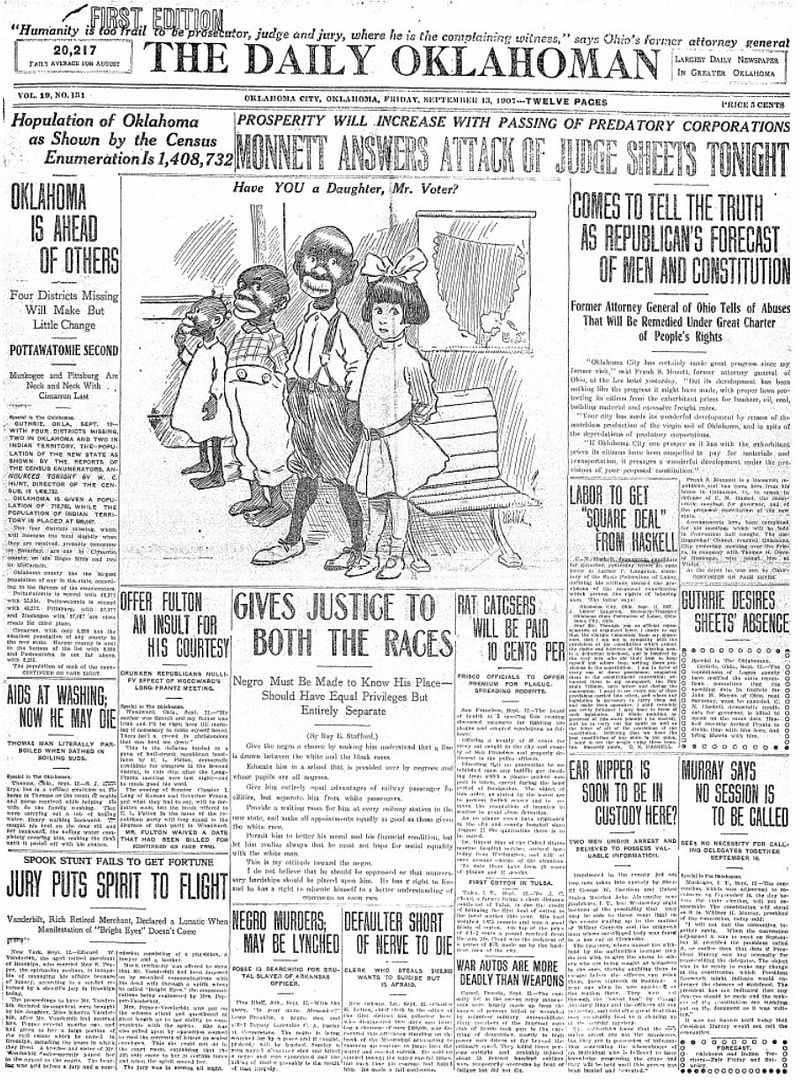
Of course, Indian Territory was not admitted as a separate state, by itself. When statehood to both Oklahoma and Indian Territories became the real deal in 1907, the Oklahoman was in your face as to its position which was, pure and simple, separation of whites and blacks. To its credit, the Oklahoman played no games by masking where it was coming from, but to its everlasting discredit, it was coming from the awful and dreadful position of white supremacy. Beyond a couple of front page caricatures, I'll not further elaborate since I'm thinking the caricatures speak for themselves as to the posture of the Oklahoman at the time. See History of Jim Crow Laws In Oklahoma City for more.
September 13, 1907 "Have YOU a daughter, Mr. Voter?"
After Oklahoma became a state, several Jim Crow laws were quickly enacted in the areas of public accommodations, transportation, public education, and marriage. Residential restrictions would soon follow at the municipal level. The Daily Oklahoman was one of the cheerleaders leading the Jim Crow charge. It was a very ugly time for the history of Oklahoma and the city of Oklahoma City and that's putting it mildly. Bird Gee had no real property sales or rentals ads in the Oklahoman after 1910 -- his business activity in the city had markedly dwindled and most of his properties had been sold.
Throw into that racial travesty Bird Gee's bail bond business and, most probably, Bird Gee's last Oklahoma straw is found. As briefly discussed previously in this blog post about Marilyn Hudson and without much elaboration here,
In 1907, Rudolph Tegler was charged with the murder of James R. Meadows, as was Meadow's wife, Lila. Lila was acquitted. Rudolph was tried three times. The first time, he was convicted, but that conviction was reversed on appeal. The second trial in 1910 resulted in a hung jury.
Mike O'Brien aka M.C. McGraw was a key defense witness in that 1910 trial. After that trial, O'Brien was charged with perjury, was found guilty, and was sentenced to 10 years in prison.
O'Brien appealed the conviction. While the appeal was pending, Bird Gee was said to have posted bond for O'Brien's release and, in any event, O'Brien was released. During the appellate process, O'Brien disappeared, and that resulted in his appeal being dismissed in 1912.
O'Brien having become a fugitive, Gee was then called to make good on his appeal bond for O'Brien, but he did not do that.
In 1912, Gee was then charged with perjury for falsely stating his worth in the appeal bond and he was taken into custody.
While in custody, Gee filed an application for a writ of habeas corpus which was denied by the trial court. The Oklahoma Criminal Court of Appeals affirmed the trial court's decision to deny the writ.
Notwithstanding, bond was posted to secure Gee's release from custody.
Gee was tried on that perjury charge in 1912. He was acquitted, as is further discussed below.
After Gee's initial arrest, bond was posted by Dr. John Threadgill and D.M. Phillips, both white and commercially successful, to secure his release. Dr. Threadgill built the Threadgill Hotel on Broadway around 1903. D.M. Phillips was an "alderman" (city council member) in 1904. For some reason, Gee was again taken into custody and a later bond was posted for his release by T.H. Traylor, W.H. Slaughter, and Bird's wife Nancy. Dr. W.H. Slaughter would later build "Slaughter's Hall" in Deep Deuce.
During Gee's trial, the evidence showed that Gee's bond was conditioned upon Dr. John Threadgill likewise posting bond for O'Brien's appearance which Threadgill never did. The jury was out only five (5) minutes before returning its finding of not guilty. See this link for the Oklahoman's coverage of Gee's perjury charge and trial.
After the 1912 perjury proceedings were concluded, Bird Gee left Oklahoma City for good, in 1912 or 1913, presumably never to return. By this time, Gee would have been about 68 years old -- whether Nancy Gee was still living when he left the city is not clear but she was alive as of her co-posting of Gee's appearance bond on May 2, 1912.
BIRD GEE AS A PERSON
Bird Gee's great-nephew, Roland Miller, reported in email to me that Gee was one of eight children born to Elijah and Ritter Gee, that he was born during slavery (May 1844) in Missouri, and that Bird reunited with his parents and siblings in Highland, Doniphan County, Kansas, circa 1863. Bird served as a private for the Union Army during the Civil War, and returned to Highland, to reside up to 1886.
Roland said that while in Highland, Doniphan County, Kansas, Bird Gee blossomed as an entrepreneur and community leader. He said that Gee was a farm owner, hardware store merchant, tobacco store merchant, oil land prospector and real estate agent. He was also on close terms with George Washington Carver who, Roland says, "Also while improving his business skills, personal wealth, and communiy status, he worked at local orchards along with George Washington Carver who came to Highland to attend the local Highland College but was refused admittance when college administrators became aware that he was African-American," and in the same email, Roland said, "In Ness County [Kansas] the Gees and Carver owned neighboring properties, and on at least one official event Carver was a witness for Bird Gee."
As to matters pertaining to race relations, Roland said, "Bird was one of the five complainants included in the Civil Rights Cases of 1883 (State of Kansas vs. Stanley Murray), which was escalated to the U.S. Supreme Court, deliberated upon and not favorably awarded the fair judgement it deserved, and essentially opened the floodgates for Black Codes and Jim Crow Laws imposed in the oppressive years preceding the pre-Civil Rights Acts of the mid-20th Century."
Roland provided the following transcript of an article appearing in the April 6, 1876, Kansas City Chief which described federal trial court proceedings under the then existing civil rights law:
Kansas City Chief, April 6, 1876 In the name of the United States versus David Stanley and Murray Stanley, before U.S. Commissioner, C. W. Shreve, on Thursday of last week, U.S. District Attorney, Geo. R. Peck, appeared in behalf of the plaintiff, and Col. F.M. Keith and R.M. Williams, for the defendants. The complaint charged the defendants - keepers of a hotel in Hiawatha, Kansas - with violating the act of Congress known as the Civil Rights Bill, which guarantees to all citizens equal rights, regardless of color, or previous condition of servitude. The testimony on both sides went to show that Bird Gee - and, by the way, a gentleman - was, in October last, refused the privileges extended to other guests of the house, simply because his skin did not happen to be quite as white as other guests of the house. One witness (Murgatroyd) testified that he was sitting at the table at which Gee was sitting, when another regular boarder, named McCowen, came in and sat down in his regular place at the table. McC. saw the "nigger" immediately and at once left the table, and reported at the office that there was a "nigger" at the table. This brought young Stanley into the dining room where he placed himself behind Gee's chair, and proceeded to persuade him to leave the table, and finally tell him that "he would have to go out." By this time, this witness began to get mad, and aware that "he was just getting ready to leave the table himself." The attempt of the correspondent of the St. Joseph Gazzette to create the impression that it was a "put up job," and that Gee did not find out that he had been insulted until 5 months after the occurrence, falls still born, when one of the attorneys for the defense admits that Gee talked with him about prosecuting the case only a "day or two" after the affair, and was that the U.S. District Attorney was the proper person to prosecute it, and that he had already been talked to by he other party about the matter. This fact may account for the "surprise of the landlord" when he was arrested. District Attorney Peck made a good impression for himself in the management of the case, which did not seem to be characterized by any spirit of persecution, but simply a desire to get at the facts of the case, and vindicate the majesty of the law. Both of the defendants were held to bail in the sum of $1000 each, to appear before the U. S. District Court, at Topeka, on the 10th of April.
Roland also supplied the following transcript of an article which appeared in the Kansas City Chief on September 14, 1876:
New York City, September 2, 1876. Ed. Chief: -- Please permit me space in your columns, to give to the many readers of the Chief a few thoughts on the condition of Kansas and the Eastern States. It was not infrequently said by Kansas men, during the drouth and grasshopper infliction, that tbe Eastern States could stand it better than Kansas; but I beg leave to differ with them. In 1873, 1874, and 1875, Kansas had partial and almost total failures in a great many districts. With the advice of the Chief to keep a stiff upper lip, they have worried through. Many left the State for other parts, giving it the name of the grasshopper country. Well, it was very discouraging; but a question asked by the Chief is still unanswered: Where will you go to better yourselves? That Is a hard question. You can't go East, for they have a partial drouth there, and it is felt more forcibly than the failure in Kansas. The manufactories are all suspending; thousands of men are out of employment, walking the streets who are dependent on labor for support. Starvation is staring them in the face. The great cry with them is, they are living under the Republican administration, and want a change. They all want change - when they feel round, they have none. Improve your lands in Kansas, and stick to it. The population here is something like raising a crop of wheat and renting land to stack it. There are a good many young men that are thrown out on their own resources. There must be room for them. Christ commanded Adam to go multiply and replenish the earth, but we believe It has been misconstrued. They are multiplying and punishing the earth. The staple products of the State of New York, are cheese and hops. Cows are kept on hay only; if that fails, it is worse than a corn failure in Kansas. All branches of business are feeling the great pressure. Oysters are selling at the docks at from 30 to 80 cents per hundred. A Democratic candidate made a speech in the city, a few days since. He said this is and should be a white man's government, for the white men and their posterity. It is well to note such expressions made by a party, in anticipation of being placed in power. I am yours, BIRD GEE.
"Where will you go to better yourselves?" Apparently Gee considered the matter further and he and his wife, Nancy, migrated to the "Unassigned Lands," still part of Indian Territory, on or shortly after the April 22, 1889, Land Run, they initially residing in Edmond. About that, Roland said,
My official documentation for Bird Gee is sketchy after 1888, with the exception of a few documents for land ownership and businesses. I wish I had more information regarding his community involvement in OKC. From what I accumulated about him, he doesn't seem like the kind of person to settle into mediocrity or a rut. My sister and I jokingly talk about how he must have come off as brash and arrogant to those who wanted to force him into a role of acceptance, when every indication is that he was proud, self-motivated, and not self-limiting and didn't concern himself with conforming to the projected limits and expectations of others.
The "migrated to Edmond, OKT (circa 1888)" remark is obviously a mistake (obviously, since the Land Run didn't occur until April 22, 1889) but there is no reason to doubt the content of Gee's pension affidavit (below) that he resided in Edmond from 1889 to 1900.
As we've seen, Gee certainly did not settle into mediocrity when migrating to Oklahoma. He achieved remarkable if not amazing business success here during the first decade of the 1900s. But, in the end, he learned as well that racial bigotry was very much alive in Oklahoma City and Oklahoma, and he left our city and state to move to Texas.
As to his arrival and duration in Oklahoma County, Roland reported to me that Gee submitted a claim for a Civil War pension affidavit dated April 11, 1900, part of which reads as follows:
"Affidavit of Claimant dated April 11, 1900. State of Oklahoma, County of Oklahoma ss: In the matter of Pension Claim No. 1177369 of Bird Gee On this 11th day of April A.D. 1900, personally appeared before me a Notary Public in and for the aforesaid county duly authorized to administer Oaths, Bird Gee aged 56 years [which would place his date of birth in 1844], whose Post-office Address is Edmond in the county of Oklahoma And Territory of Oklahoma, who, being duly sworn declares that he is the claimant in the above case. He has resided, since his discharge from service, in the following places:
From June 1865 to 1876 - Highland, KS
From August 1st to September 1st 1876 - New York City
From September 1876 to August 1878 - Philadelphia, PA
From August 1878 to November 1880 - Chester Town, MD
From 1881 to 1885 - Leavenworth, Kansas
From December 1885 to October 1886 - Highland, Kansas
From 1886 to 1889 - Beeler, KS
From 1889 to the Present 1900 - Edmond, Oklahoma Territory
I was unable to find documentation as to Bird Gee's residence in Edmond. Roland said that ancestry.com showed Gee's residences and occupations as:
1902 Dittmen [sic Dittmer] Heights 1903 Oklahoma City Real Estate 1905 Oklahoma City Real Estate 1906 Oklahoma City Real Estate 1907 1413 N. McKinley, Oklahoma City 1908 Oklahoma City 1911 1413 N. McKinley, Oklahoma City 1912 1413 N. McKinley, Oklahoma City Real Estate 1913 1517 Gregg, Houston 1917 1202 ½ San Felipe, Houston Real Estate 1920 206 Broadway, r rear, 2nd Ward, Houston Real Estate
A January 9, 1909, Oklahoman article is indicative of Gee's prominence in the local black community. With regard to an upcoming visit to the city and state by W.P. Vernon, the article states:
One of the greatest gatherings of colored people in the southwest will take place in the auditorium on February 4, when W.P. Vernon, the negro appointed registrar of the treasury by President [Theodore] Roosevelt will deliver an address under the auspices of the Oklahoma Negro Business league. * * * The Rev. William H. Jernagin, pastor of the Tabernacle Baptist Church of Oklahoma City, is chairman of the committee which will receive the negro so honored by President Roosevelt, and escort hm through the state. Bird Gee of Oklahoma City is another member of the committee and will have general supervision over the arrangements.
About this, Roland Miller commented that,
Bird Gee's sister, Nancy (Gee) Bruce, married Henry Bruce (second marriage, no kids) -- the younger brother of Blanche Kelso Bruce who was the first African-American to serve as "Treasurer" of the United States and is the only African-American to have his name appear on a U.S. Treasury note. So, when Bird was hosting the negro Treasury appointee, it wasn't his first encounter with someone from that office.
Whether Bird Gee found greener pastures in Houston after leaving Oklahoma City, I don't know but my hunch is that, for a decade or so, during the first decade of the 1900s, Gee reached his greatest level of business accomplishment. His certificate of death shows that he died about ten years after he left Oklahoma City in Houston on March 20, 1923. The certificate shows an incorrect date of birth as being "unknown 1858," as opposed to 1844.
Roland reported to me that Bird Gee dropped out of his family's communication for some unknown reason. Roland said,
In my uncle's [Loren's] book, and according to our family oral history, Loren mentions that Bird Gee returned to Kansas City (Wyandotte) in the early 20th century to visit his sister and family. Uncle Loren also mentions that Bird Gee became very embittered when his claim for Native-American citizenry was denied and, after departing his visit to Kansas, was never heard from again. I haven't been able to find the date of his visit but it was probably around the time of death of his sisters Nancy (Gee) Bruce (around 1910) or Martha Hubbard (1913).
When commenting upon how thoroughly Bird Gee managed to integrate himself into Oklahoma City's white residential and business environment in the 1900's (which I had not expected to see), Roland had this to say:
I'm not surprised that Bird moved so easily in circles with whites or any ethnicity. It seems that is something that is taught to all of us descendants of the Gees - although it is still up to the individual to embrace and embody. In my immediate family, our father made sure we observed etiquette, look people in the eye when speaking to them, spoke clearly and respectfully, and were educated within the requirements of the family - not the lower expectations of educational institutions. In fact, on the few occasions we didn't receive daily homework assignments, dad would promptly visit the administrators of the school and ask what the hell was the matter with them. We were over prepared for our grade levels and learned multiplication and were reading books well before local requirements. It's funny when I think back to how the teachers would have to really interrupt us from reading around the entire "Dick and Jane" book when the class was supposed to take turns reading book excerpts. They finally decided to assign my brother and me to separate classrooms to minimize disruption. We were all taught, at early ages, that we were no better or worse than anyone else and that the only thing that separated us from the fate and situation of others was preparation, opportunity, and circumstance.
I'm sure that Roland will eventually give much more information about Bird Gee in his own website on the Doniphant County, Kansas, Museum, still in its beginning stages (the county is in the northeast tip of Kansas, north of Kansas City), or elsewhere, when he is ready to do so. Roland and others are taking steps to restore St. Martha's AME Church (1882-1998) there as a county museum. See photo 1, photo 2 and photo 3, the latter showing Roland and another family member.
BUT WAIT, WHAT ABOUT A BIRD GEE PARK?
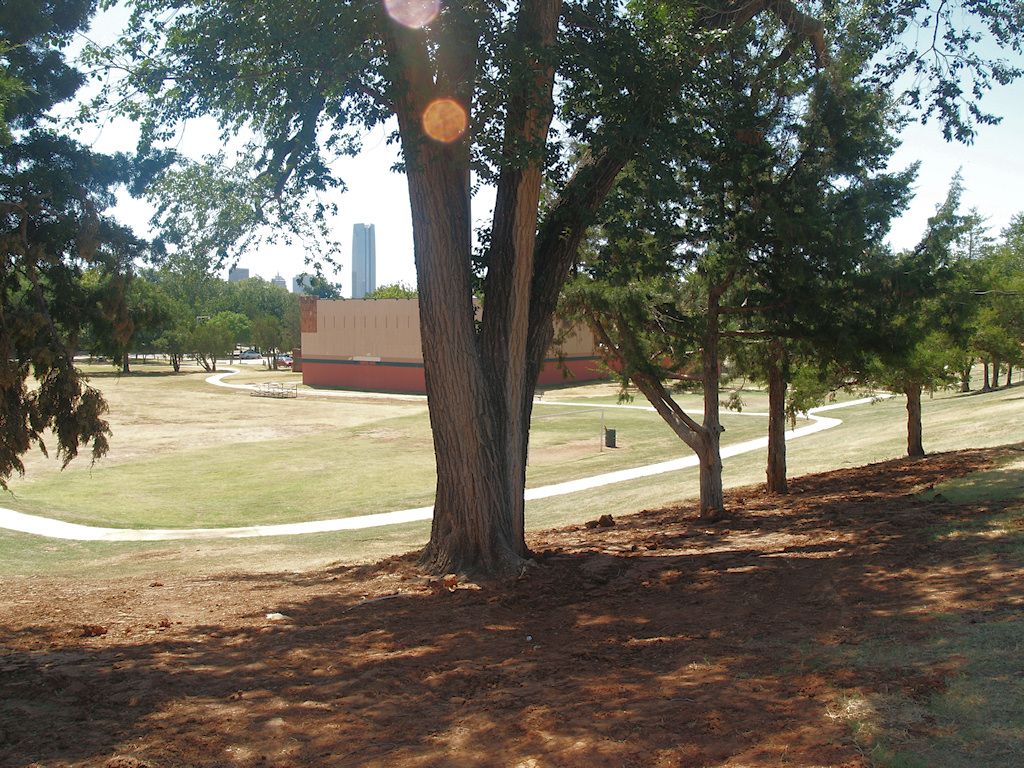
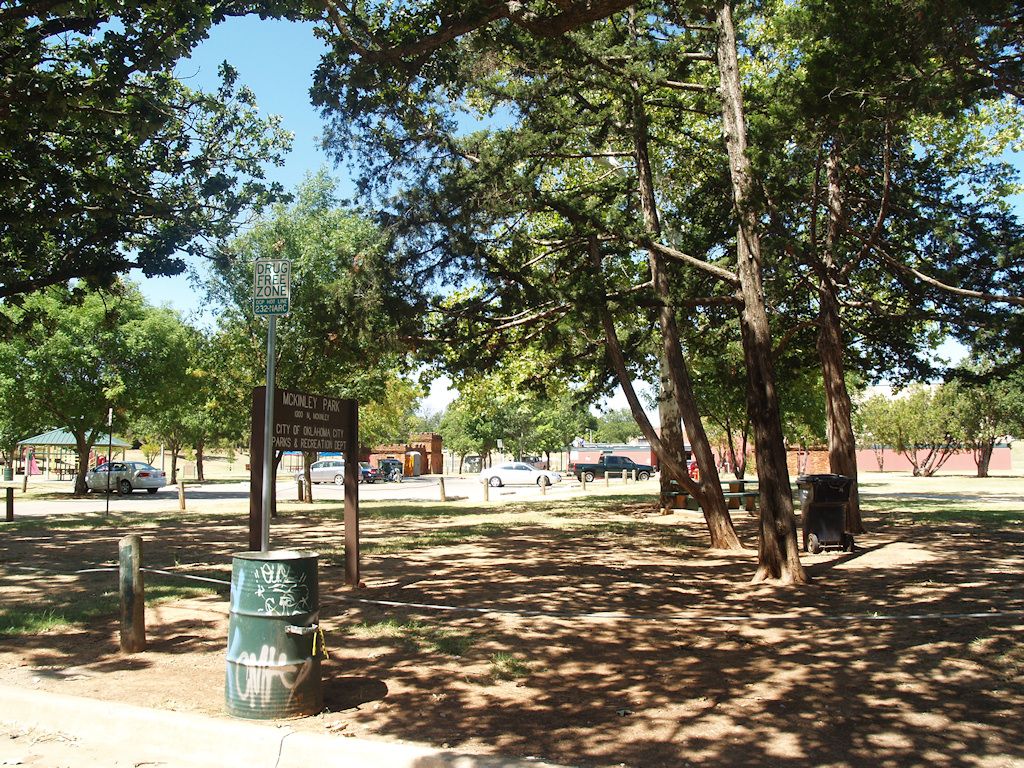
While doing our drive-around on July 19, the first thing we did upon leaving my home in Mesta Park was drive to NW 13th & McKinley, less than a mile from my home. The physical address that Roland Miller had earlier supplied as a Gee residence was not in my head (1413 N. McKinley) when we did that. So, arriving in the area, I incorrectly told him that the property's location was on the north side of McKinley Park. He took a look at McKinley Park, shown below, and said, "Well, maybe we could get the park renamed to be "Bird Gee Park," and I concurred to that goal.
Problem is, my head was not then on straight -- odd numbered addresses are on the west side of north/south streets in Oklahoma City, so 1413 N. McKinley would not have been on the park's property but would have been across the street on the west side of McKinley.
Even and after recognizing my initial error, I said to myself, "Well, so why not? Why not rename the park to become Bird Gee Park?" After all, Gee replatted the area right across the street, he had two plats bearing his name a few blocks south, he owned large acreages in southeast and north central Oklahoma County as well as other tracts, and, as the October 7, 1907, Oklahoman said, he was "understood to be the wealthiest negro in Oklahoma City," and he has not heretofore been recognized in the annals of African-Americans in Oklahoma City's early days. All things considered, renaming McKinley Park to become Bird Gee Park seems to me to be a fair and reasonable tribute to "the wealthiest negro in Oklahoma City" circa 1907.
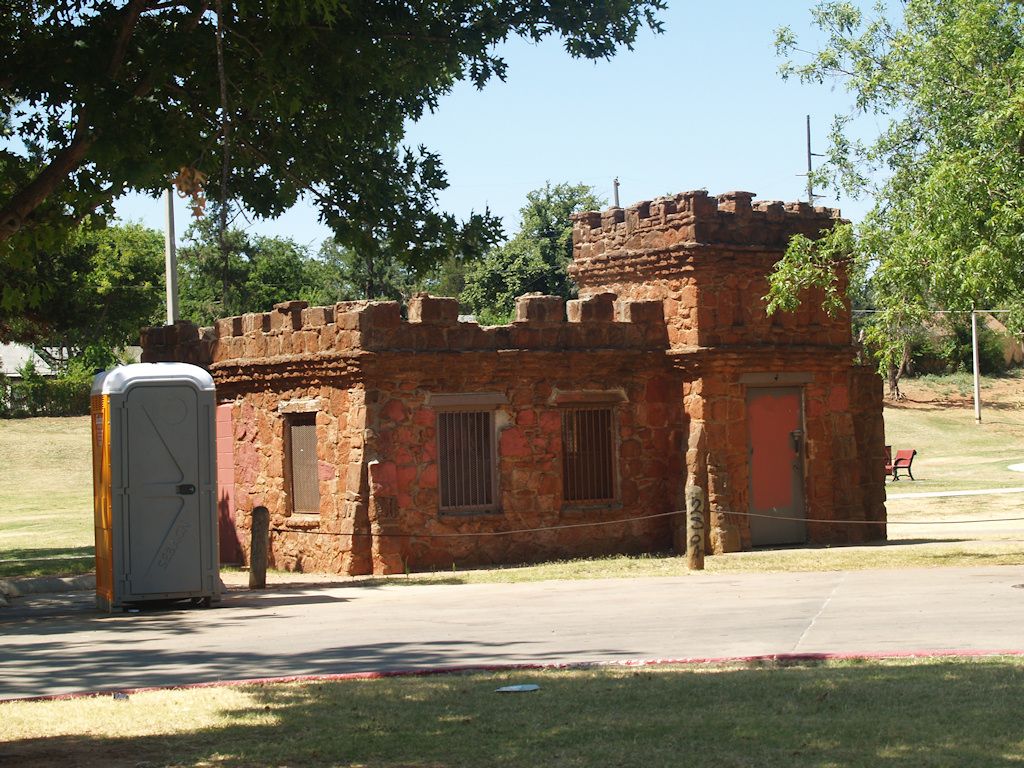
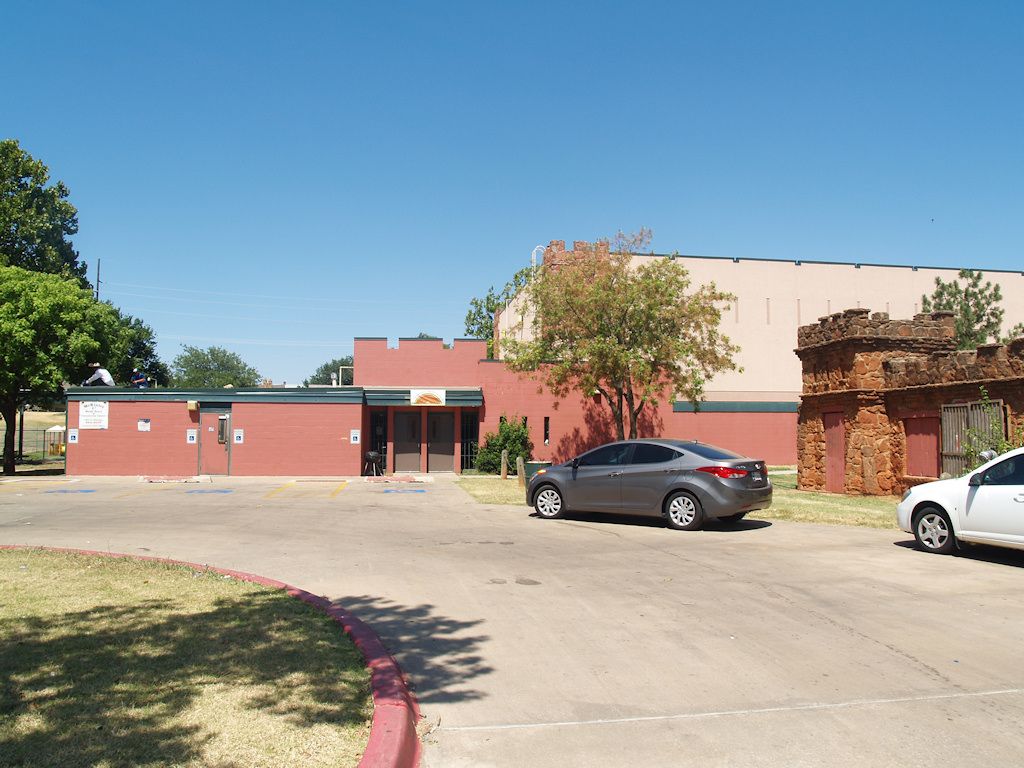
So, let's have a closer look at McKinley Park ... click on images below for larger views.
VIEWS OF McKINLEY PARK TODAY
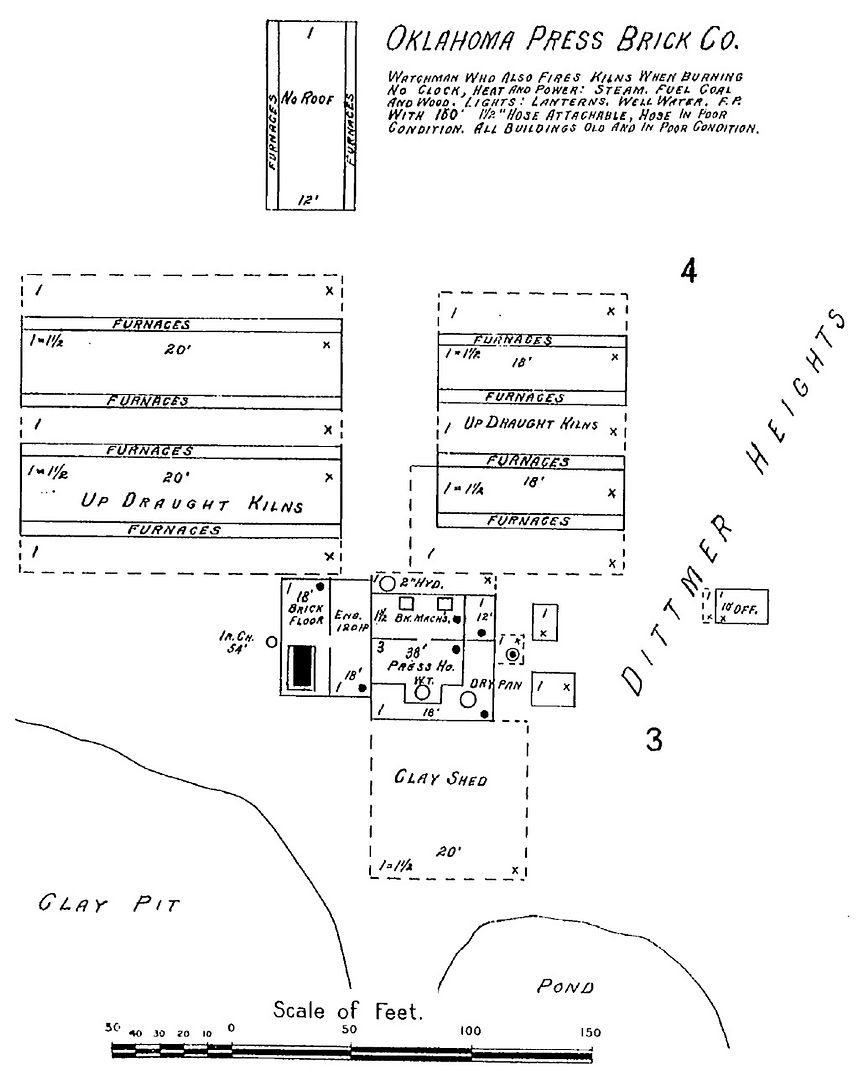
The park sits in the original Dittmer Heights Addition, Blocks 3 and 4. The original use of the area was not a park but was the home of the Oklahoma Press Brick Company, as shown in the 1906 Sanborn map, below.
After the brick company stopped its operations, McKinley Park was formed over the former brick company operations.
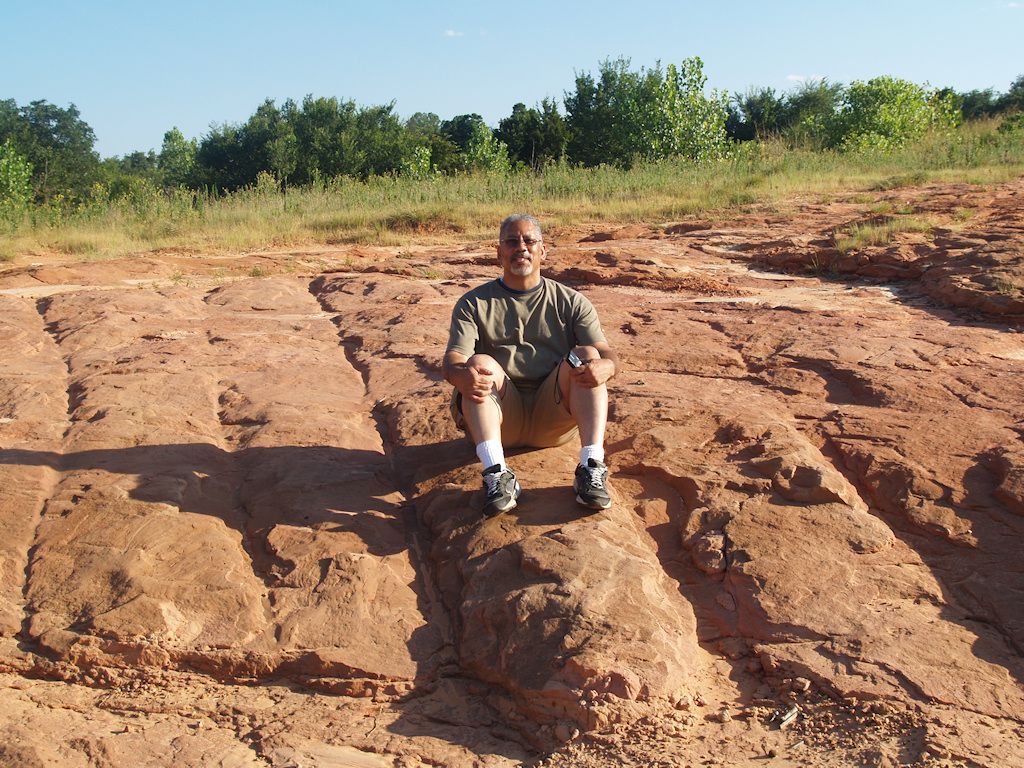
Roland was surprised in our July 19 county tour to find lots of red dirt and rock formations in eastern Oklahoma County; I told him that the same was commonplace in western Oklahoma. On our tour, I looked for rose rocks but didn't find any. The same red dirt/rock is present in McKinley Park, where the brick company once existed. I gave him a pair of rose rocks as a souvenir of his visit here.
Roland Miller's quest to fill in the blanks about his great-uncle Bird Gee is not yet done, but I'm pleased to have been able to fill in at least some parts of Bird Gee's time in Oklahoma City and County, parts of which may well be some of the most substantive pieces of Bird Gee's history.
As importantly, because of Roland Miller's search for information about his great-uncle, it is now evident that Bird Gee was, during the first decade of the 1900s, one of if not the most prominent African-American businessman who lived in our then young city during the first decade of the 1900s.
Additional Resources. Aside from information supplied by Roland Miller, most of this article is based upon information taken from the following sources, some containing more detail than I have described above. Click on any link for more detailed information.
The TLO Summer of 2026 Oklahoma News Quiz
-
Before we power down the TLO content machine for the Labor Day holiday, we
figured we’d leave you with The TLO Summer of 2026 Oklahoma News Quiz – 10
que...
Operation Scissortail - Our Latest Book!
-
[image: devon book cover]
We are very happy to announce the release of our latest book, "Operation
Scissortail," a narative history of the construction o...
Saturday in the Park..on a 113 degree day
-
For those who don't know, there is a reason I've gone very quiet at such a
pivotal moment for Downtown OKC. I accepted a position in Cleveland, Ohio
and I...

 It came as a shock to me to read in Steve Lackmeyer's Oklahoman article that John Lampton Belt died Sunday morning, at the age of 76. Steve's article was published on-line on the same day, March 10, and it appeared in the print version of the Oklahoman on March 11.
 13 - Preparing for meeting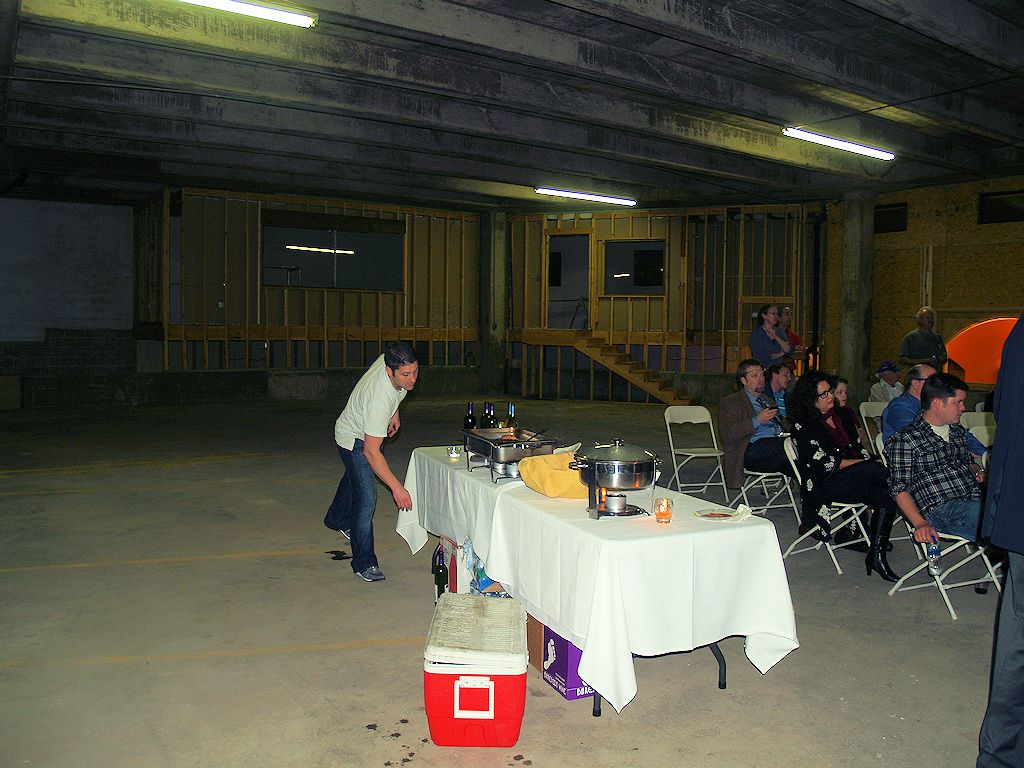








 Posts
Posts


