skip to main |
skip to sidebar
Also, see ... Part 2, Commercial Buildings Part 3, Churches
Part 4, Theresa's ScrapbookINTRODUCTION. Way back on October 8, 2007, I posted a "Preview..." of a larger article yet to come, giving several pics and some clues about a particular Oklahoma City family and the legacy left by a couple of its members, without further identification. I said then that, "All this, and much more, will be shortly revealed!" Now, more than 7 months later, here I am, late as usual! After that October 2007 post, I quickly proceeded to get caught up with the Oklahoma Centennial and quite a number of other things, e.g., the Sonics situation and 1st National Center, and I also had to focus on getting the Arcadia Images of America: Springlake Amusement Park book done. Now, at long last, I resume the project begun 7 months back ... The Reinhart Legacy, of which this Part 1. That legacy is quite vast and I'm not sure how many separate articles will be needed for it to be complete, but, beyond this, there are 3 other articles There is just that much to show and tell.
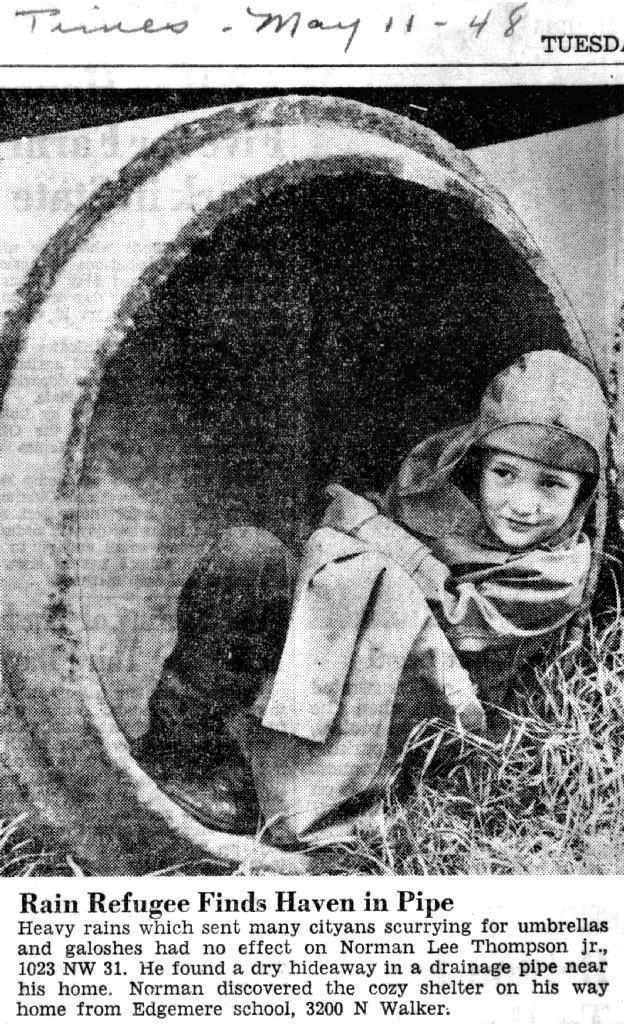
But, first things first. Before I get engrossed with this family's detail, I need to once again give credit where it's due ... to Norman Thompson, a huge benefactor of other articles here (e.g., Springlake Amusement Park and The Leo Sanders Collection). Norman is a member of this family, he being a great nephew of Martin and a great grandson of John Martin, Martin and Theresa's father, both shown below. I told him that I would like to take a photo of him, but, he said, nothin' doin'! But, he did give me this clipping from a May 11, 1948, Oklahoma City Times article, instead:
Norman Thompson In A Drainage Pipe

Norman said that, although the image was indeed him in a drainage pipe, the caption under the photo was wholly contrived by the newspaper person who asked him to get inside the pipe for a good photo-op -- Norman wasn't seeking shelter from the rain at all! Norman supplied me with photos and heirlooms from the Reinhart side of his family ... he thought I'd be mainly interested in his great uncle, Martin John Reinhart, but, in fact, I was equally and wholly enchanted by the journal kept by Martin's sister, Theresa Reinhart, during her teenage years in the mid-1910s. Doug Dawgz promise is that you will be, too, in a later Reinhart article!
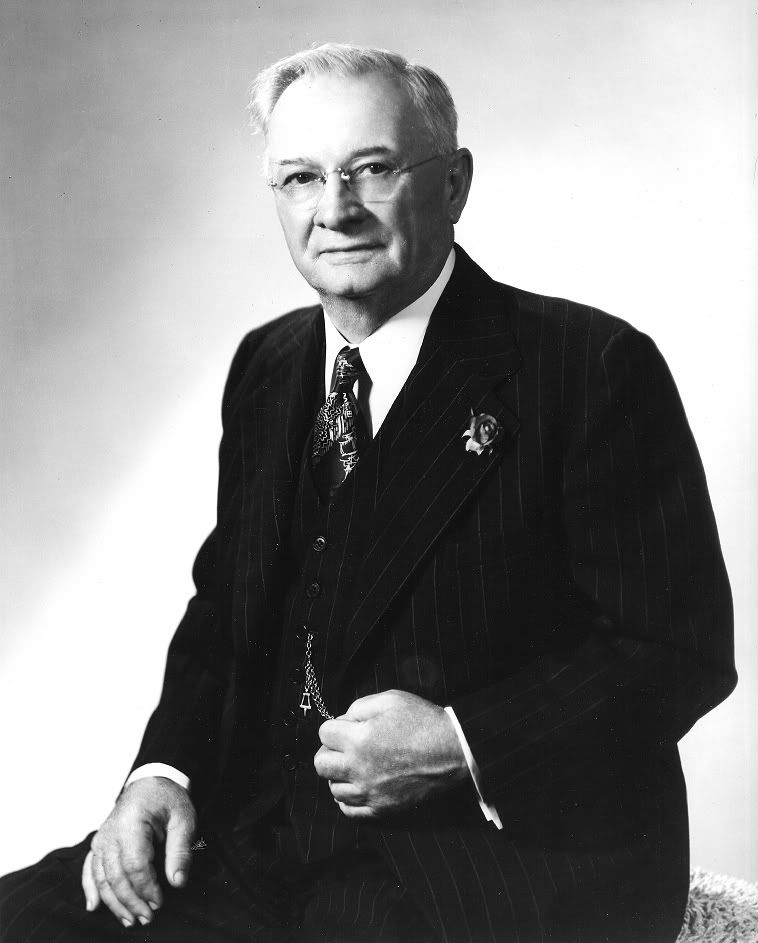
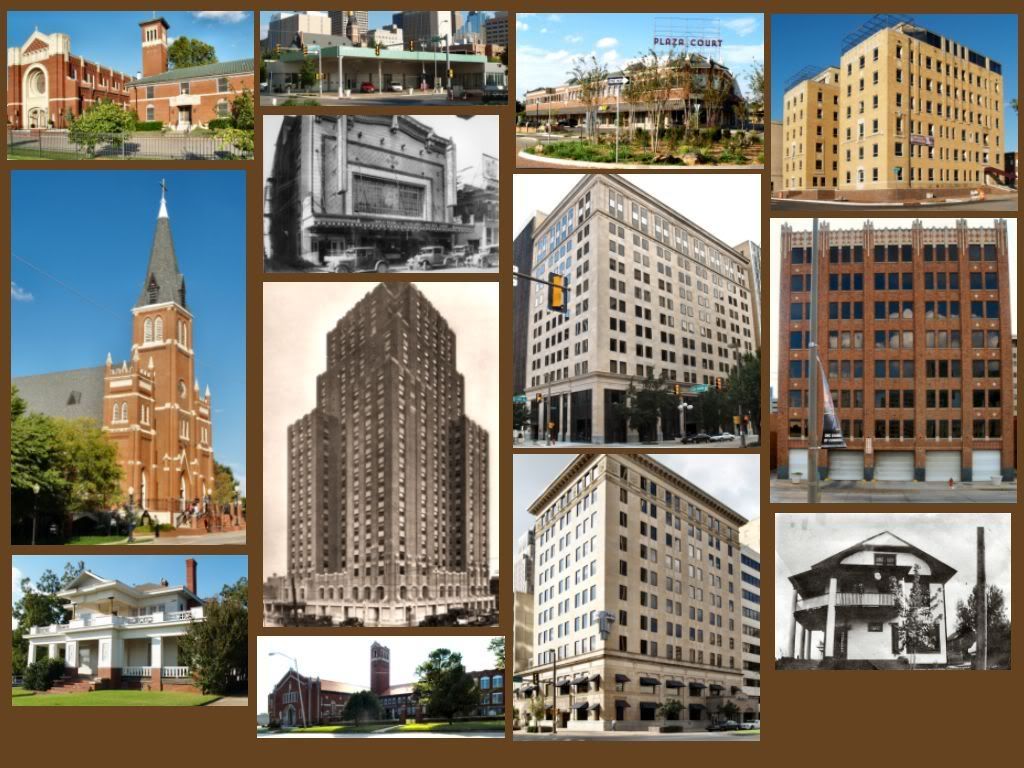
In the "Preview" post, the "builder" was identified generally as being he who built a heck of a lot of buildings in Oklahoma City, many of which are still standing (e.g., 100 Park Avenue and Plaza Court). The name of that contractor is Martin John Reinhart, principal mover and shaker in the Reinhart & Donovan Construction Company.
Martin John Reinhart
(in this article, click on images for larger views)

Some of the Buildings Associated With Martin Reinhart

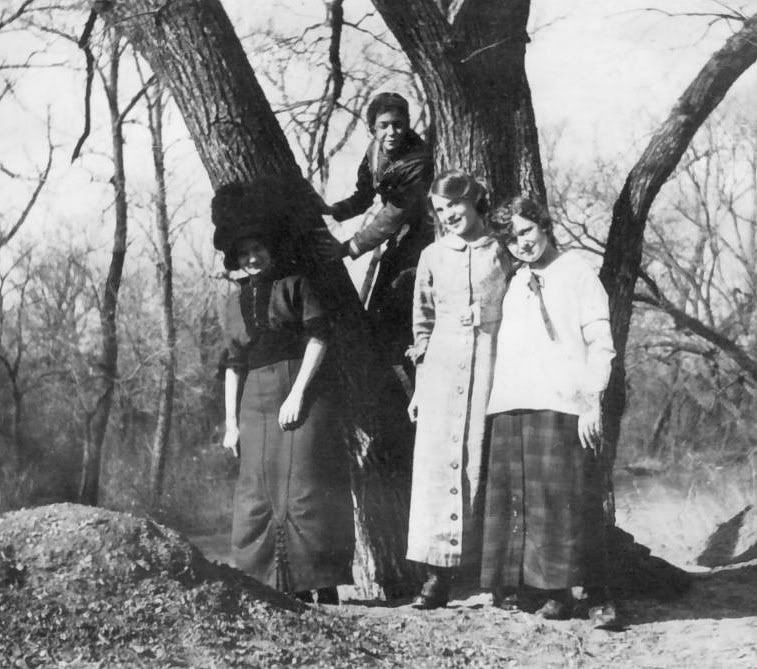
The second Reinhart family member generally identified in the Preview post was a teenager growing up in Oklahoma City in its early days. This child's name is Theresa Reinhart, Martin's youngest sister (of four), 17 years younger than Martin:
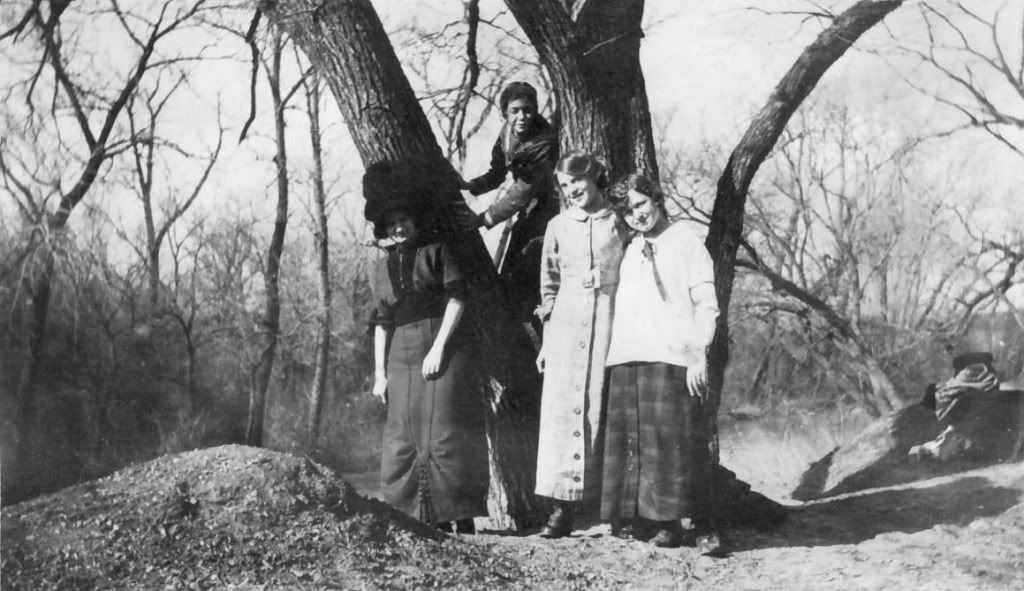
A Family Picnic on January 14, 1914
Theresa is probably 3rd from the left

A Closer View

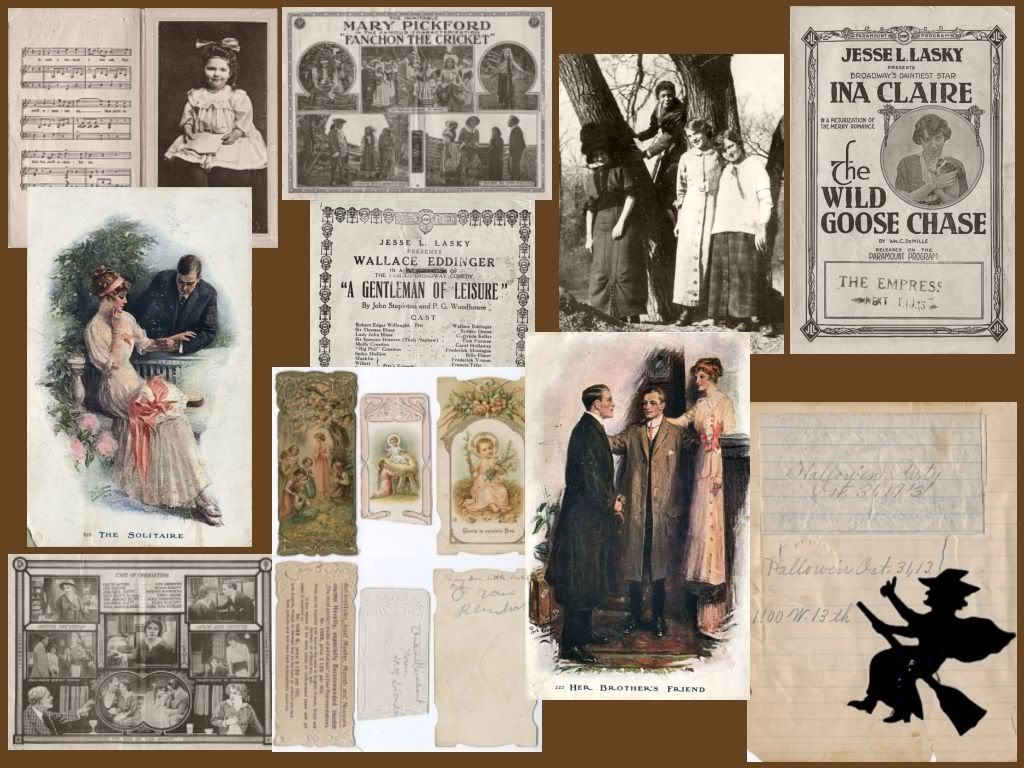
A collage of some items in her legacy is shown below:
A Few Items Contained in Theresa's High School Journal

THE FAMILY. Although the focus of this series of articles is on Martin and Theresa, brother and sister, some family background is in order. Norman advises that,
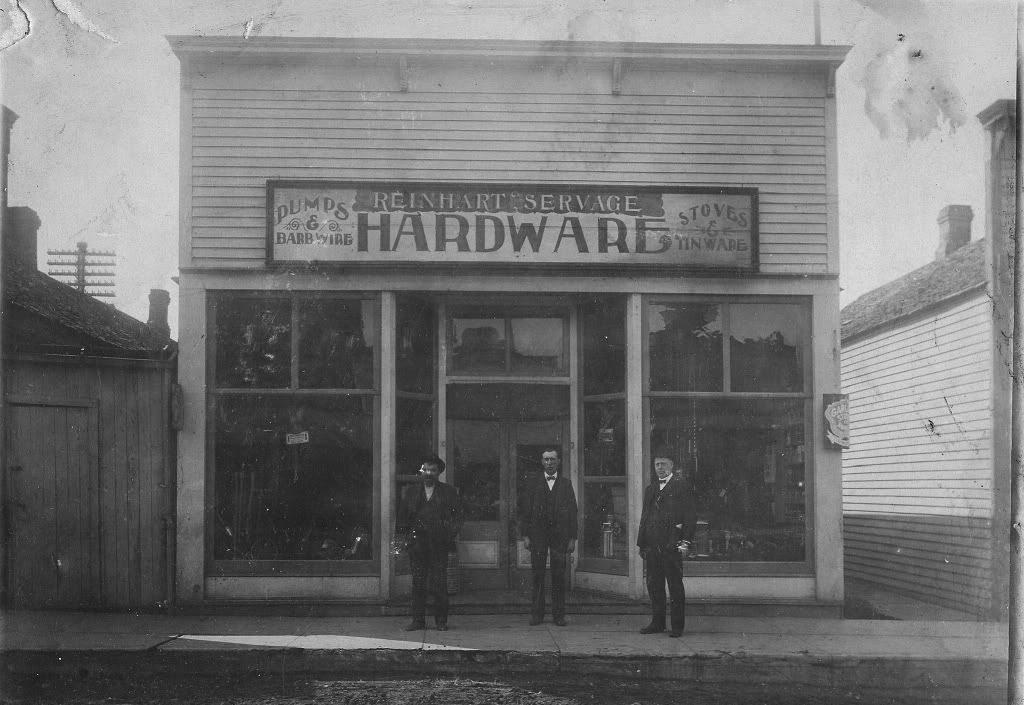
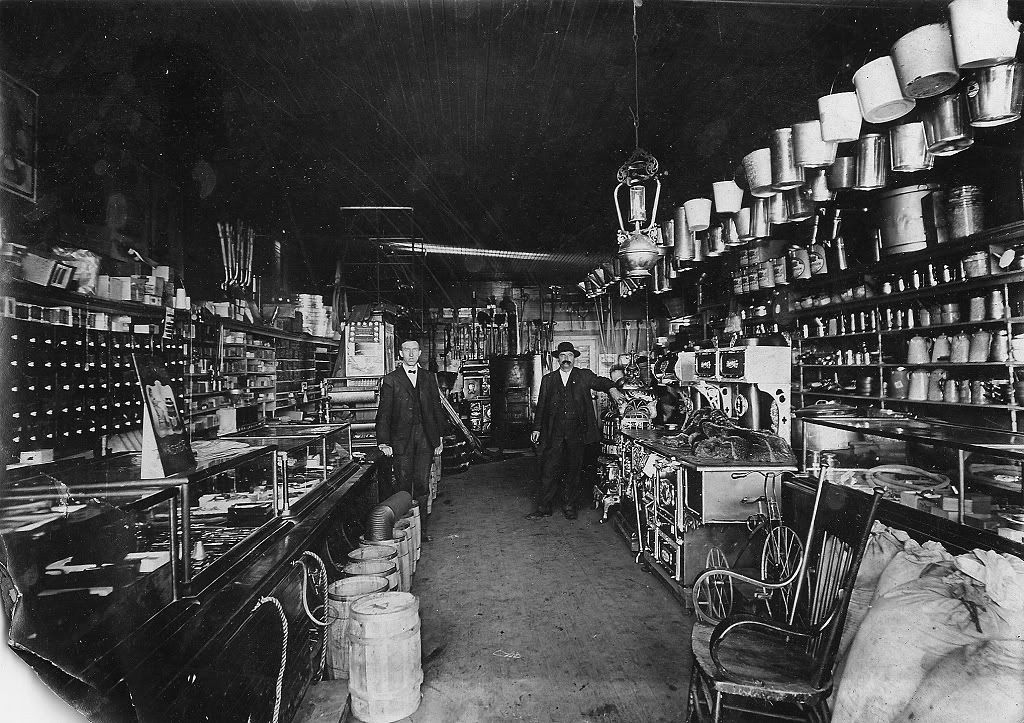
The first Reinhart of this family came to the USA from Alsace-Lorraine, Germany, because of persecution against Catholics. They purchased a farm in Peoria, Illinois, where they manufactured bricks. John Reinhart inherited the farm and soon discovered coal. In 1880 he married and moved to Storm Lake, Iowa. He purchased some large farms and opened a hardware store. I can't identify those in the photograph below of the Storm Lake hardware store, but maybe Norman will chime in and help us out!


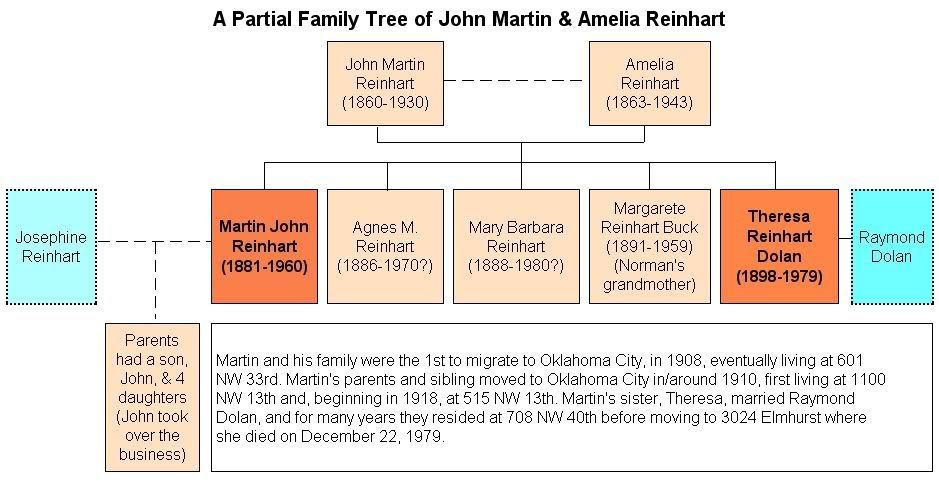
Since the father, John Martin, and the son, Martin John, have such similar names, it's easy to get confused (as, sometimes, articles in the Oklahoman did when referencing Martin). Henceforth, when referencing the patriarchal "father," I'll call him, "John," and when referencing his son, I'll call him, "Martin." So, let's get the family tree straight for clarity. Martin and Theresas' parents were John Martin and Amelia Reinhart, and a "map" of their family tree is this:

Martin and his family were the first to migrate to Oklahoma City, in 1907 or 1908. Before moving, Martin was an engineering instructor at Iowa State University and he came to Oklahoma City with a new reinforced concrete process which would, of course, be invaluable in the construction company that he would come to lead and in the building of a new American city and in which process Rinehart & Donovan contributed greatly.
Two years later, in 1910, Martin's parents, John and Amelia, and Martin's sibling moved to Oklahoma City. It was from John's capital that the company Reinhart & Donovan would be formed, with son Martin as its principal leader. I'll get into that more in Part 2, not yet written.
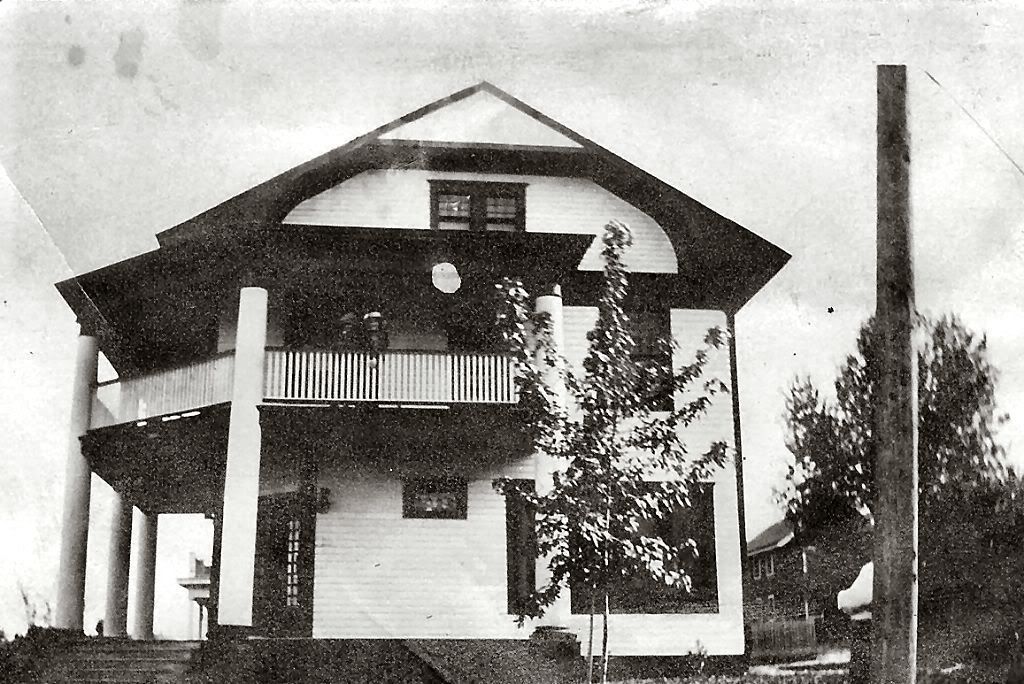
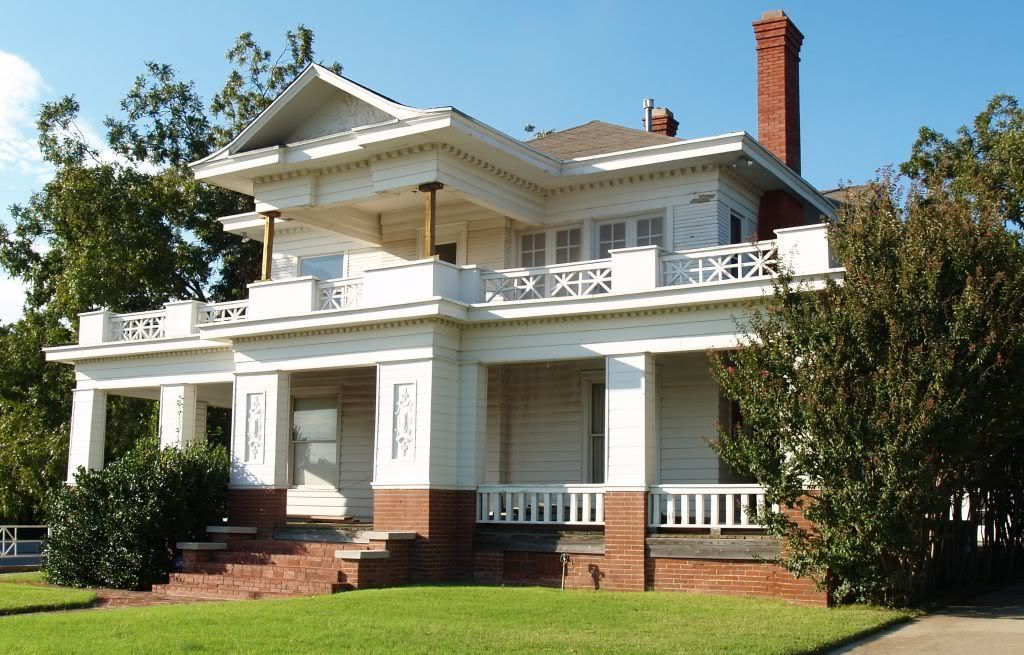
Martin did not live in either of his parent's Oklahoma City homes, but Martin's sister, Theresa, did. The 1st home of John and Amelia was at 1100 NW 13th (now a vacant lot just west of Classen), and in 1918, they moved to their 2nd and last home at 515 N.W. 13th Street, both shown below:
1100 N.W. 13th

A recent photo of 515 NW 13th Street

Today, the 2nd home is owned by lawyer Elaine Schuster, Doug Dawgz law school classmate and friend, and you will see a few inside pics of this home in a later Reinhart article which focuses on Theresa.
As for Martin and his family, they eventually lived at 601 NW 33rd, shown in the County Assessor's 2004 photograph below:

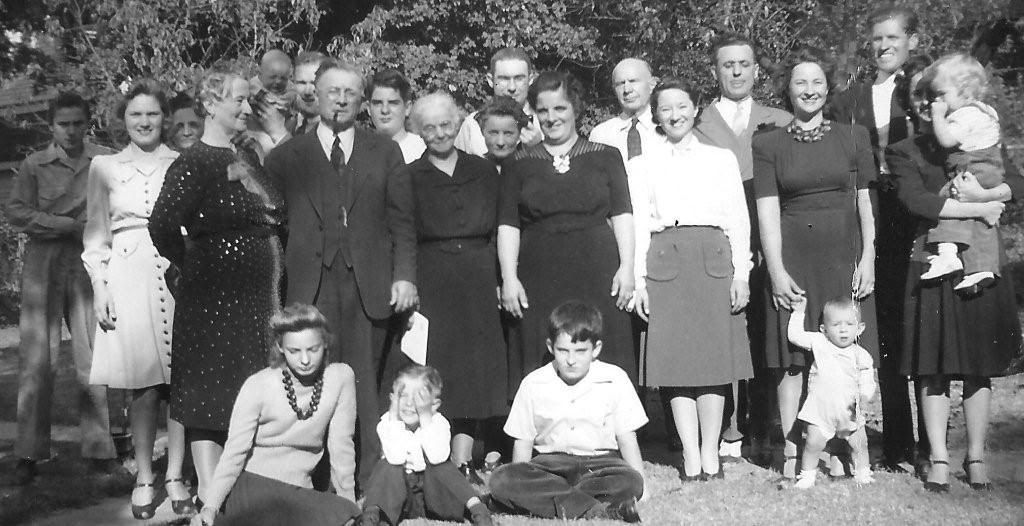
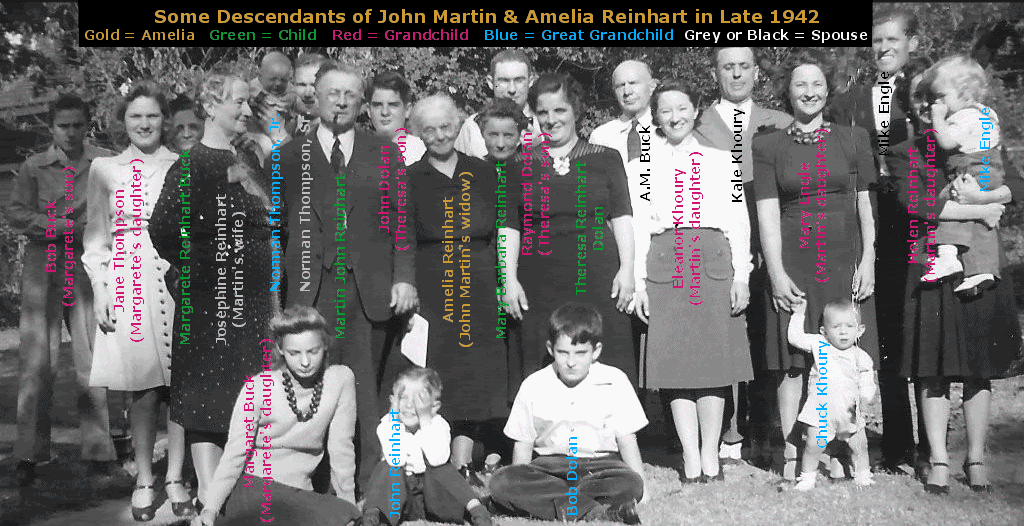
I'll wrap up this introductory Reinhart article by showing a photo of the Reinhart family in 1942 when Norman Thompson (in the back row, 3rd from the left) was just a babe in his daddy's arms:

Same photo but with names imposed

A great amount of detail about Martin & Theresas' contribution to Oklahoma City history will appear in subsequent Reinhart Legacy posts. Martin's contribution is more "physical" -- buildings he built and the like -- while Theresa's is every bit as powerful because it sees, and shows, Oklahoma City through the eyes of a child growing up during the 1910s and thus provides a rare historic glimpse of our town -- not a "look back" as we ordinarily do, but a "look now" through Theresa's eyes which takes us back in time.
Go To Top
... Click here to read the full article and any comments ...
 This article complements and substantially expands upon my earlier 1st National article found here. A 3rd article, 1st National, 75 years later, is here.
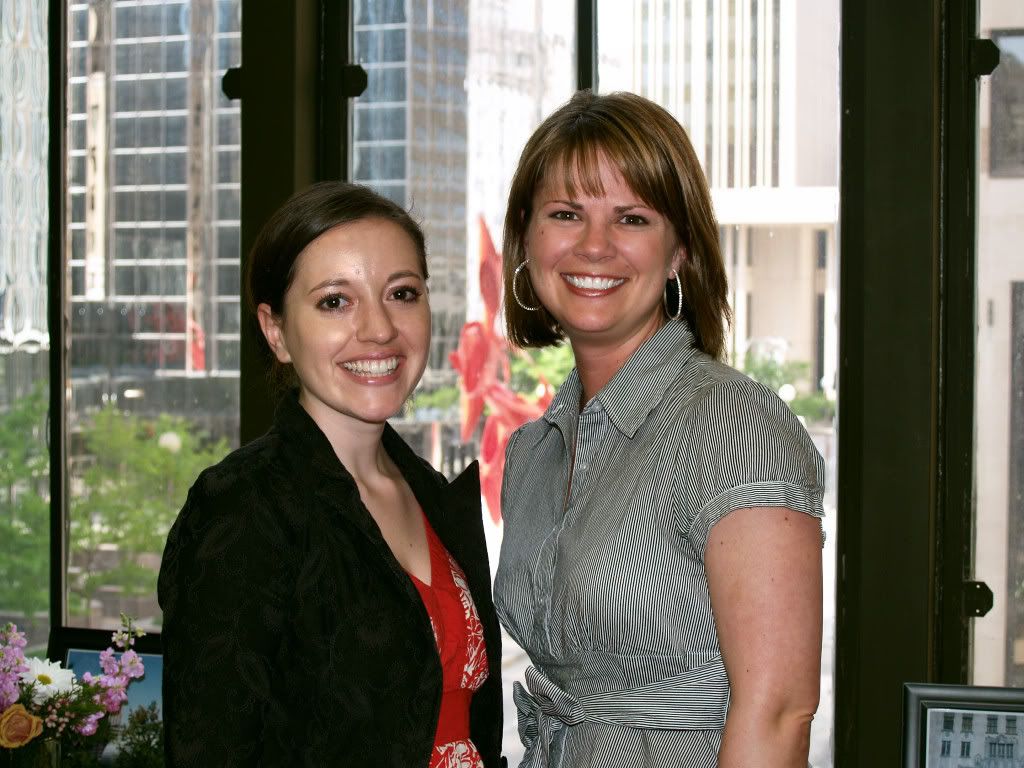
An unexpected and flattering invitation was received last week from Alaina Harris, Account Executive with Saxum, handling public relations for the First National Center, and Emily Dobson, Property Manager for Milbank Real Estate Services which manages the First National Center ... Doug Dawg was invited to "come on down" and take a look through archival photographs and other delights to be had in the First National Center, and to bring my camera! Not a problem, I'm there! And so it was that on April 29, 2008, my every 1st National desire (almost ... I'll explain shortly) was handled most elegantly by these two charming ladies whose lovely photograph appears below ... and ... as usual, unless otherwise stated, click on an image for a larger view.
Alaina Harris (left) and Emily Dobson (right)
Looking Northwest from Emily's 3rd Floor 1st National Office

After getting a cup of coffee and introductions being made at The Buzz (I was amazed that Alaina had actually read, and remembered, the description I give myself as being "formerly Big Daddy D" ... and I explained those origins), we ventured up to Emily's 3rd floor office to sort of get a "lay of the land." Around her office were photographs of times gone by ... and sorry about the glare from the glass ...
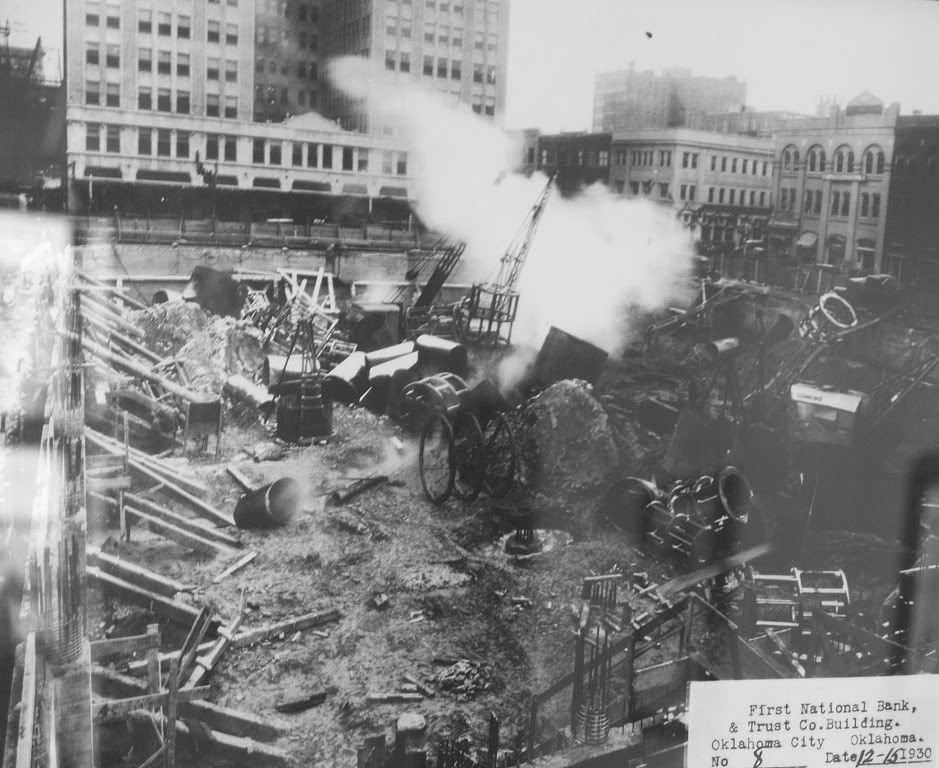
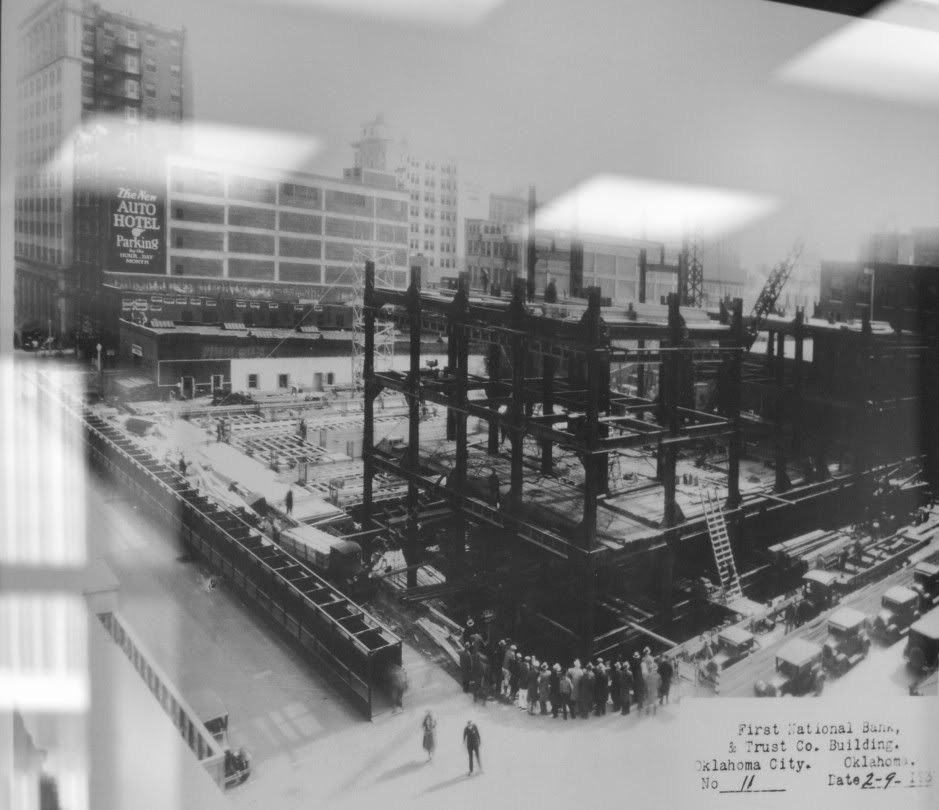
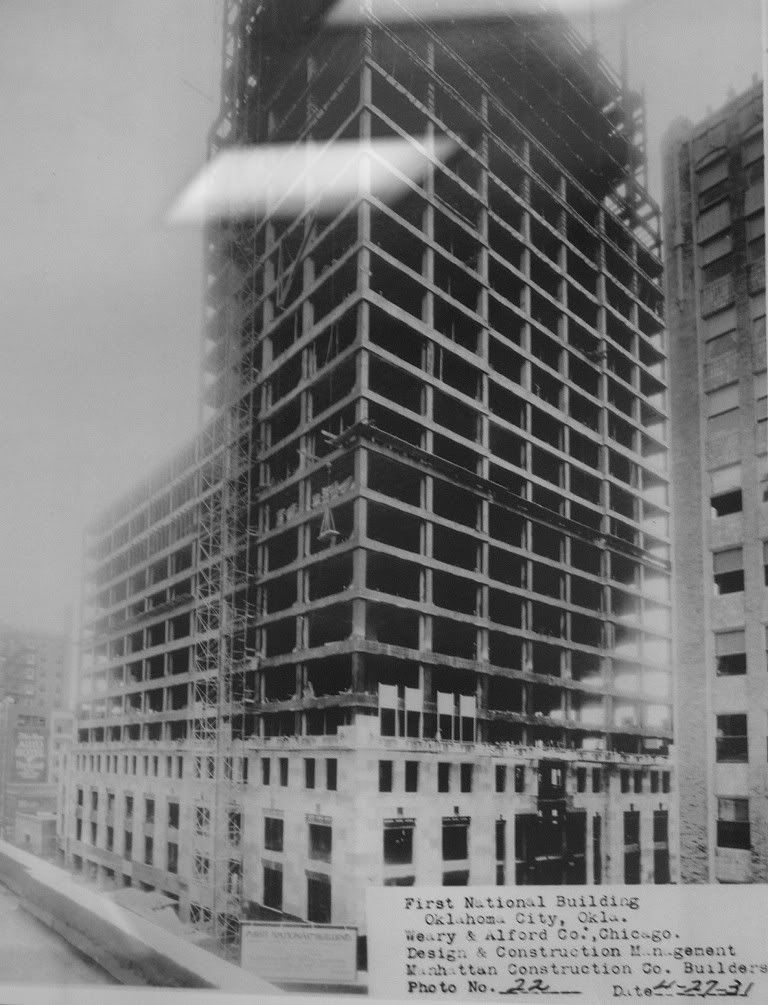
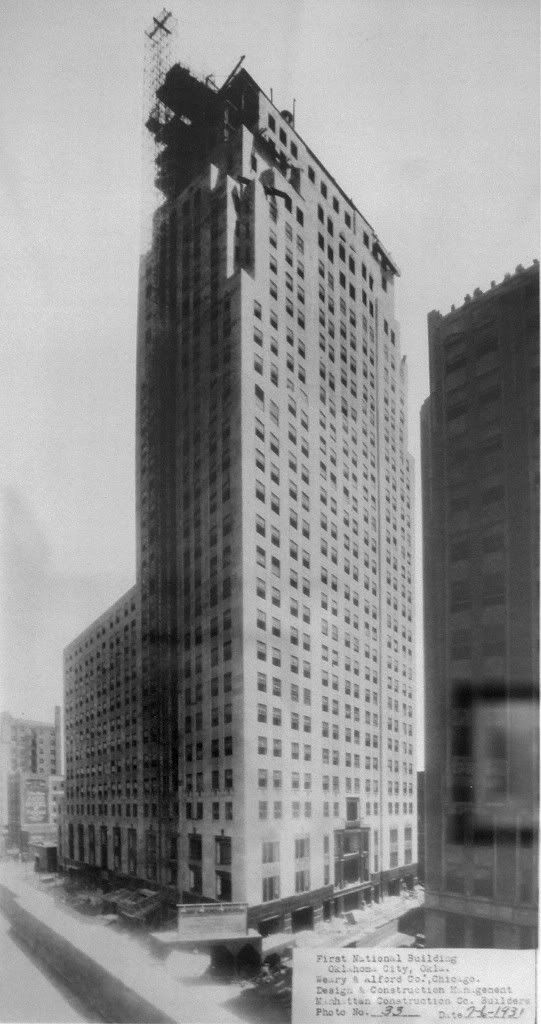
Construction Photos In 1930-1931


Well, that's certainly a good start ... where do we go from here! I wanted to know if we could trek on up to the former home of the Beacon Club at the top of the building ... and that was my only disappointment, alluded to above ... no, that could not be done due to Oklahoma Department of Labor restrictions ... but I was promised that as soon as that could be done, I'd be there! (Now, just between you and me, I've navigated plenty of unsafe places to take photos, and I'd have relished the opportunity to do so on this occasion ... and I tried asking again ... no go!)
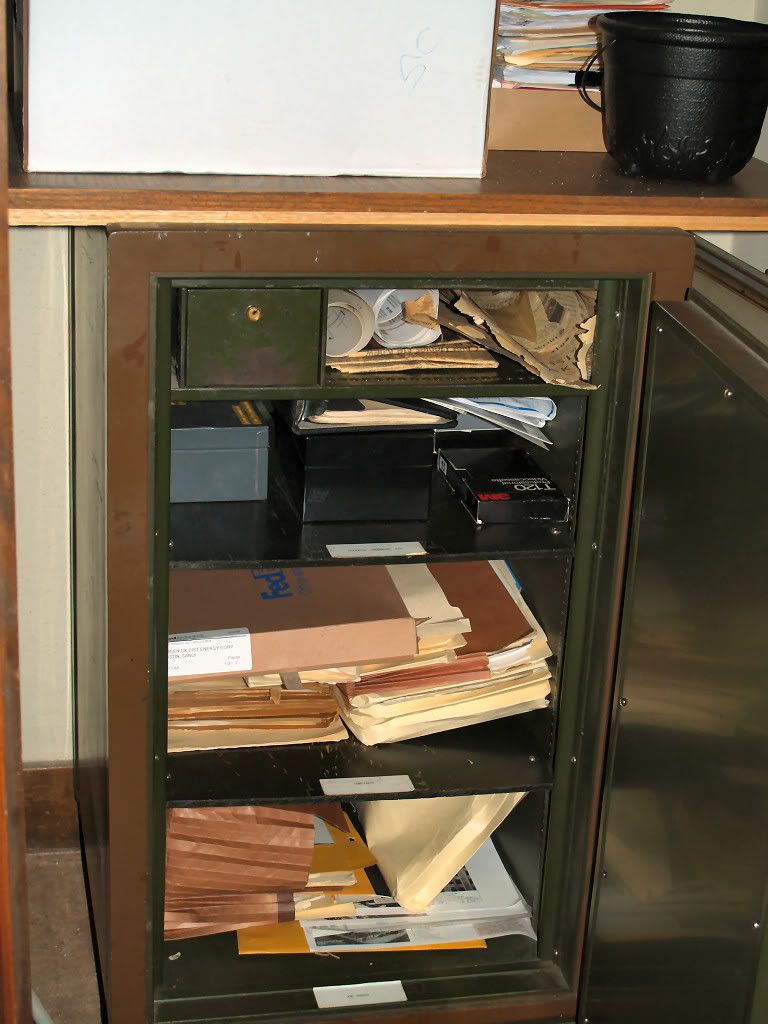
We walked into an adjoining room and saw "the safe" ... the repository for the photographic history of the 1st National Center ...
The Safe

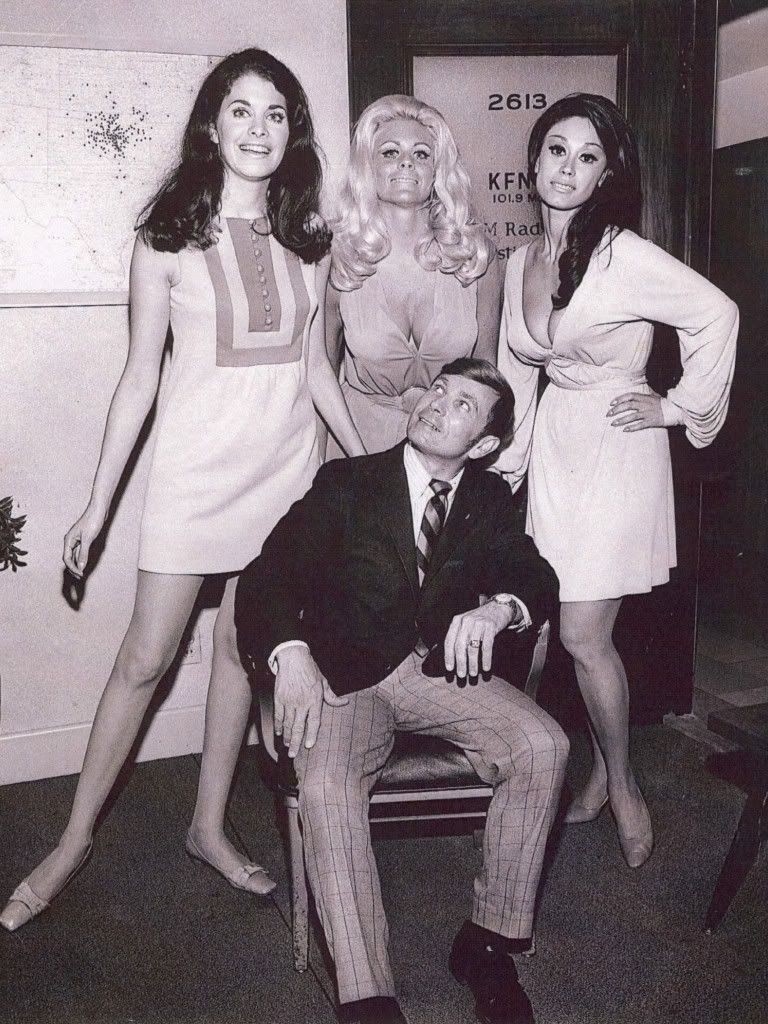
The ladies had anticipated some of my desires by copying several photographs for me, like this one of the door of suite 2613, below ...
I may be wrong, but isn't that Mamie Van Doren,
center, above the disk jockey whose ship had just come in?

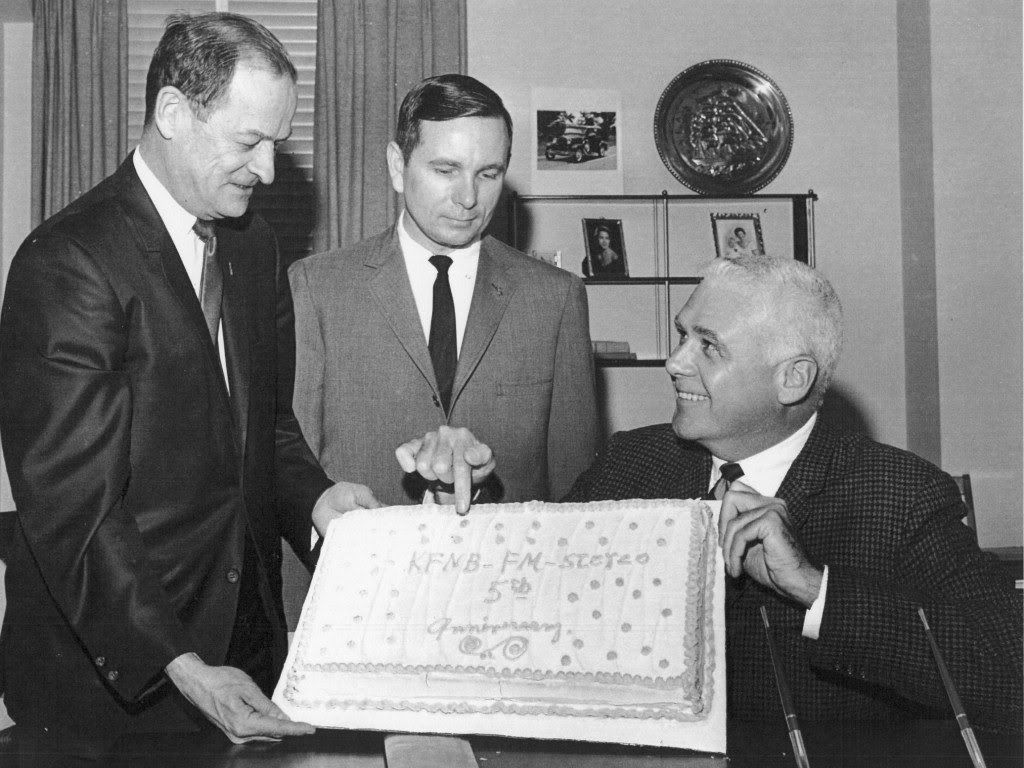
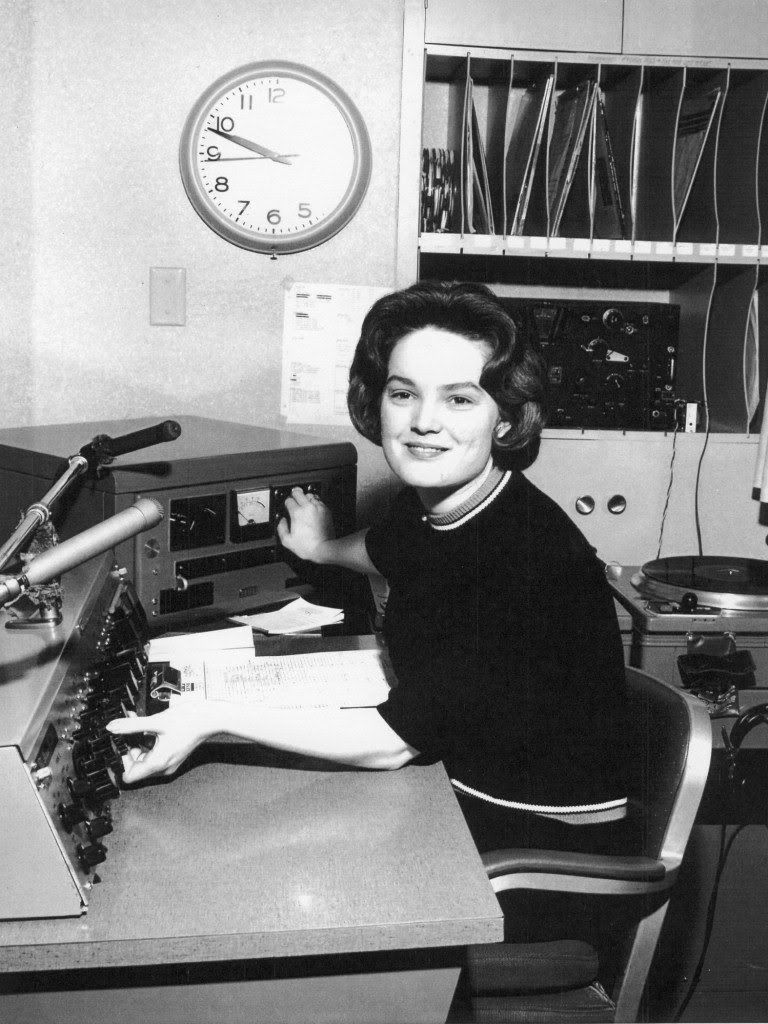
Woah! The 1st National Center must have been a cool place for a dude to work when this picture was taken of (among other things) the door of Suite 2613, KFNB-FM Stereo Radio, 101.9, it being the tenant there at the time! Actually, the "tenant" was the First National Broadcasting Company, owned by those who owned the bank. After getting FCC authority in 1961, the station began operating in 1962 as Oklahoma's 1st "stereo" station and its antenna was naturally on top of the building. Operations continued until 1978 when the station was sold to a San Antonio investor and the station became KLTE in 1979. The call letters are KTST today. A couple of Oklahoman ads appear below, followed by a pair of photos from First National's archives.
Larger images not available for the ads
1966 Oklahoman ad

1973 Oklahoman ad


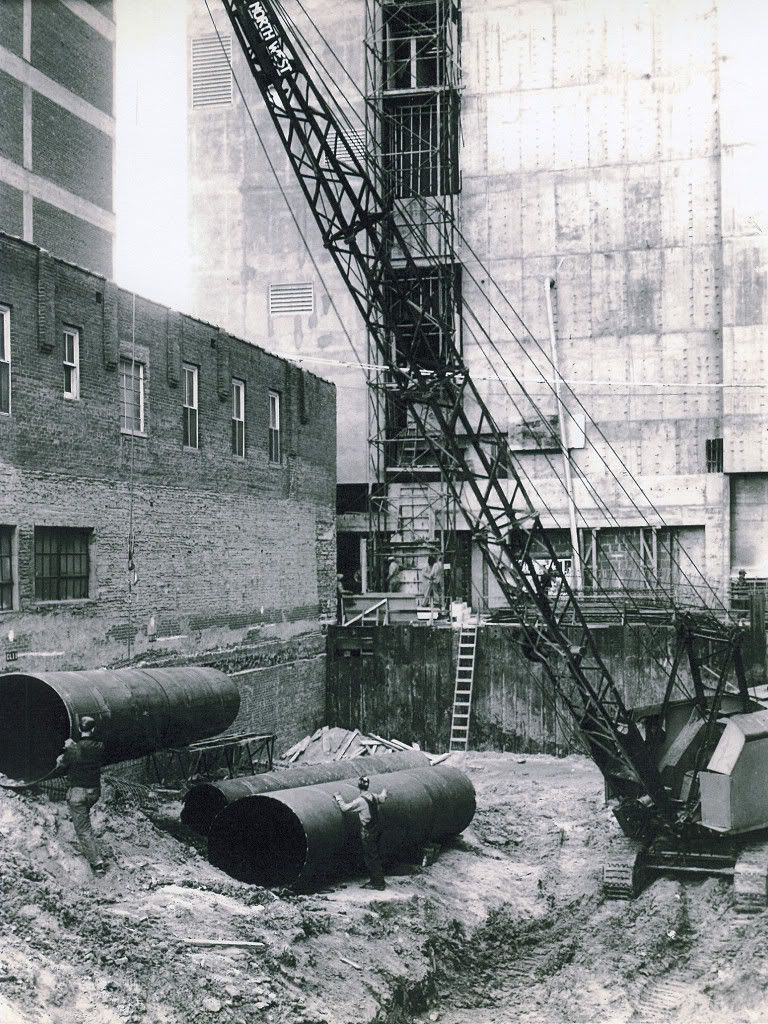
Here are a pair of 1930 construction pics ...


Monroe Schells [sp?] in March 1961 (name was hard to read)
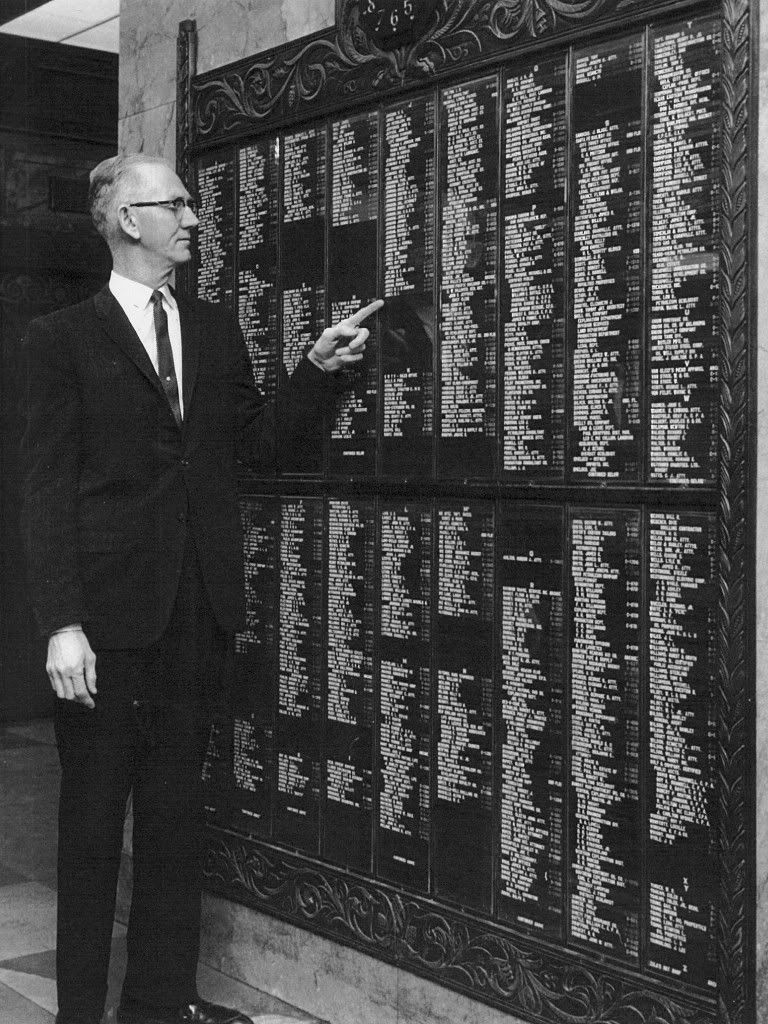
Possibly looking at his name in a very full directory

A few photos of First National employees
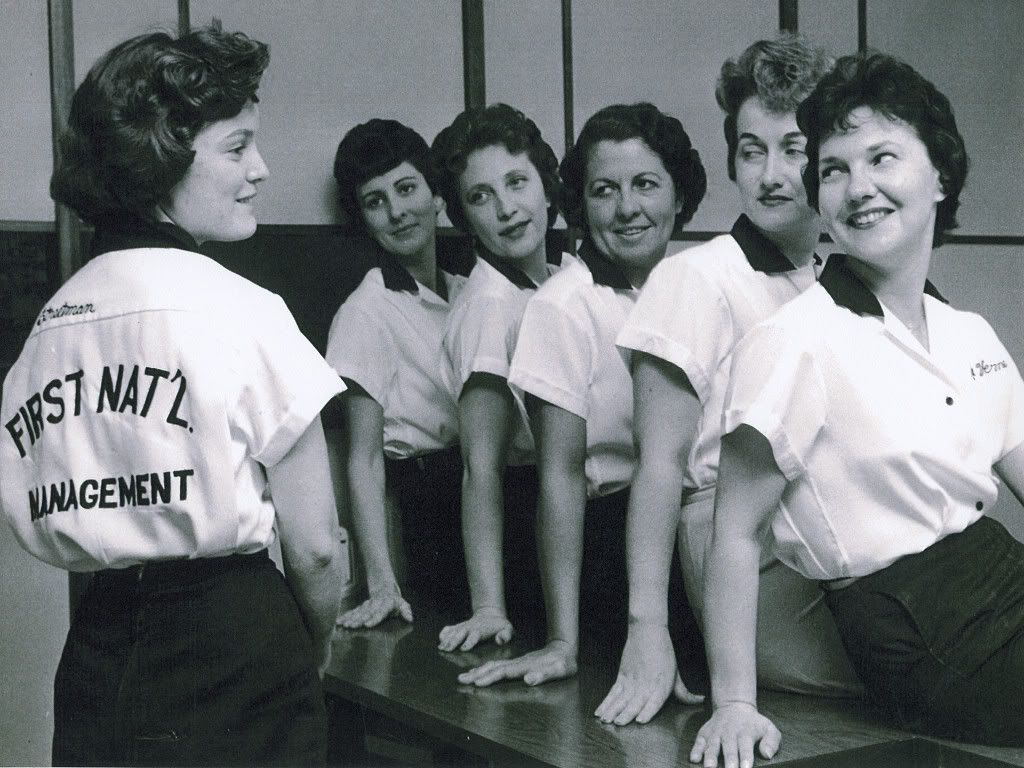
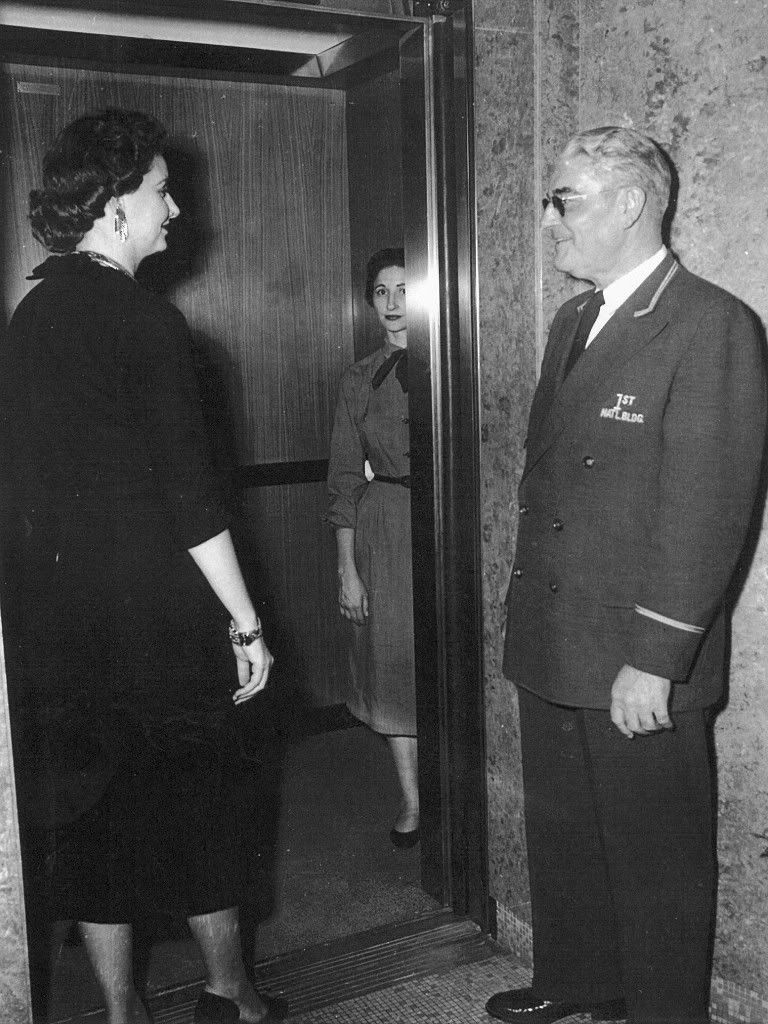
First National Management Corp. Uniforms ... 1950s?
Notice the presents on the floor and the ladies' corsages
A sports trophy case may be in the background

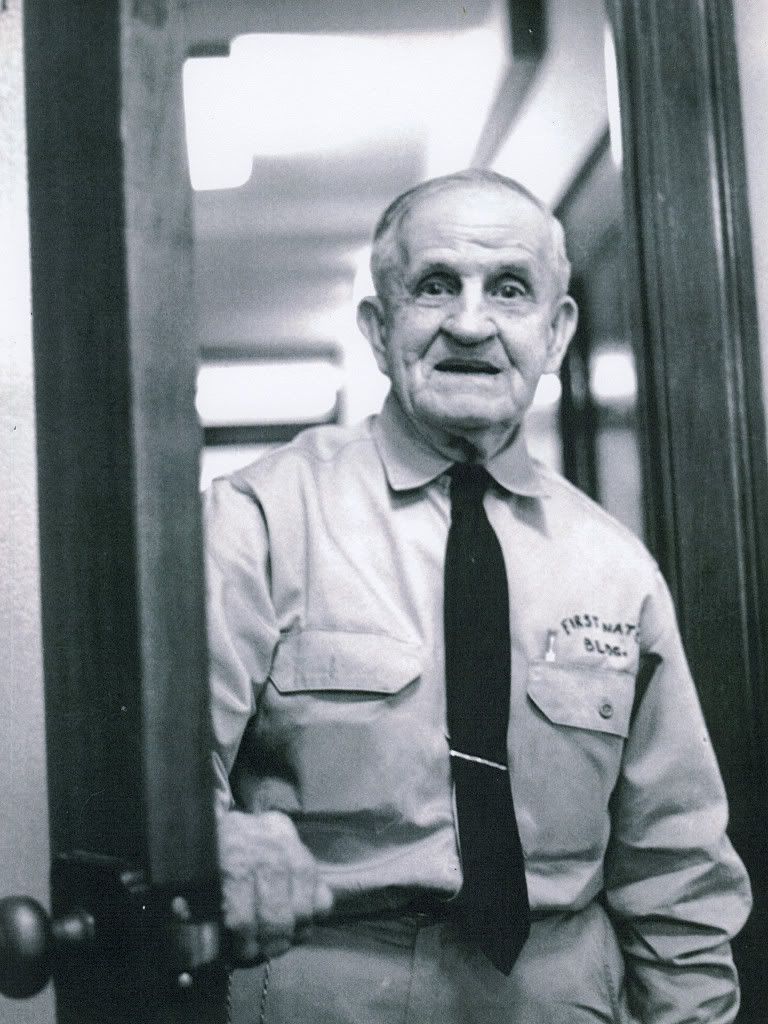
Bill McGee

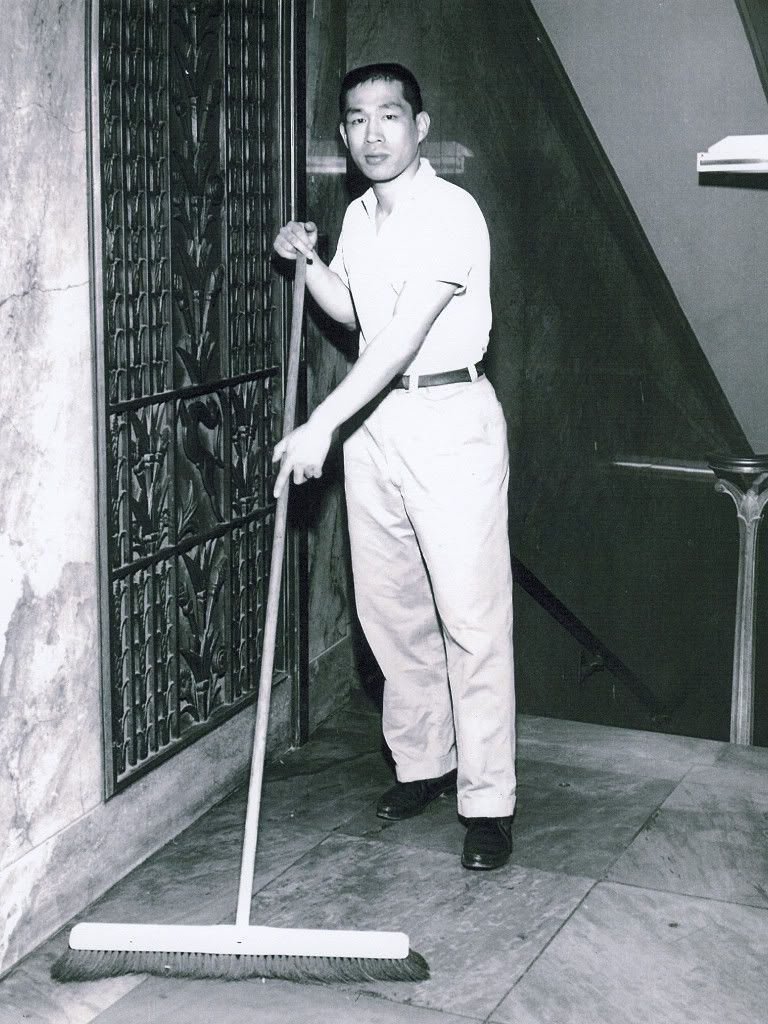
Kiyoshi Kawahito in March 1963

First National had organized employee sporting groups
Below, a September 1960 ladies bowling team ... left to right,
Sammie Streetman, Bebe McCall, June Hunger, Orlene Blue, Pat Palmer, & Laverne Van Schuefer [sp?]

Bebe McCall, Secretary to Mr. Sprankle

With apologies to all if I have this wrong,
I think this shows Joe Littlefield in May 1958

Some photos showing changes in and about ...
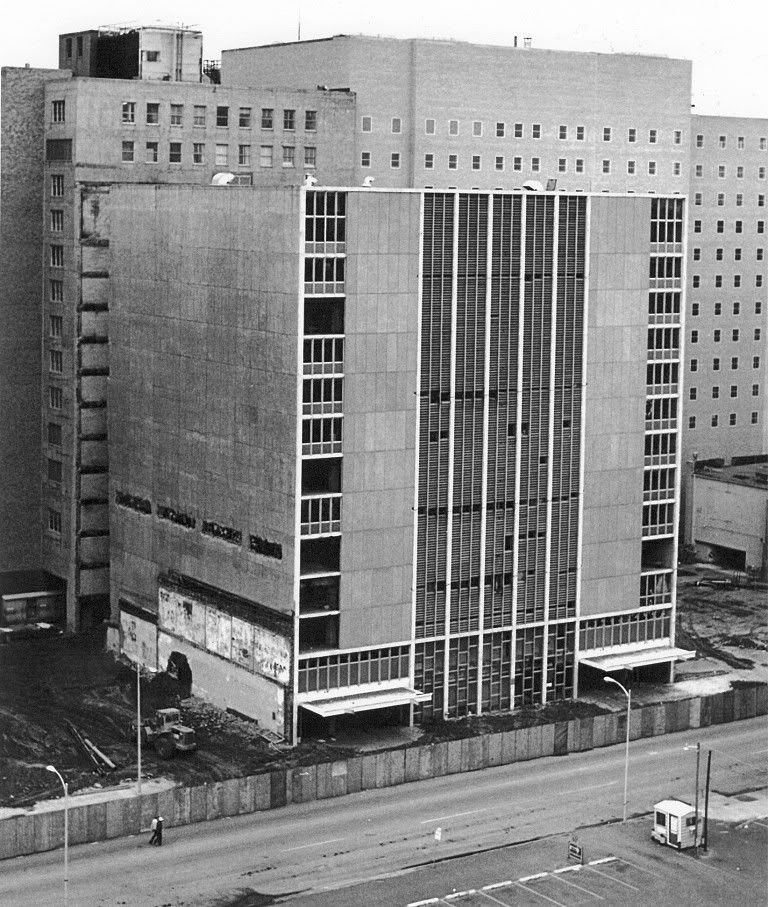
After the 1957 east side expansion ... notice the old
"Auto Hotel" which would go in the next eastbound expansion

The parking garage on Main Street demolished
in 1970s Urban Renewal period


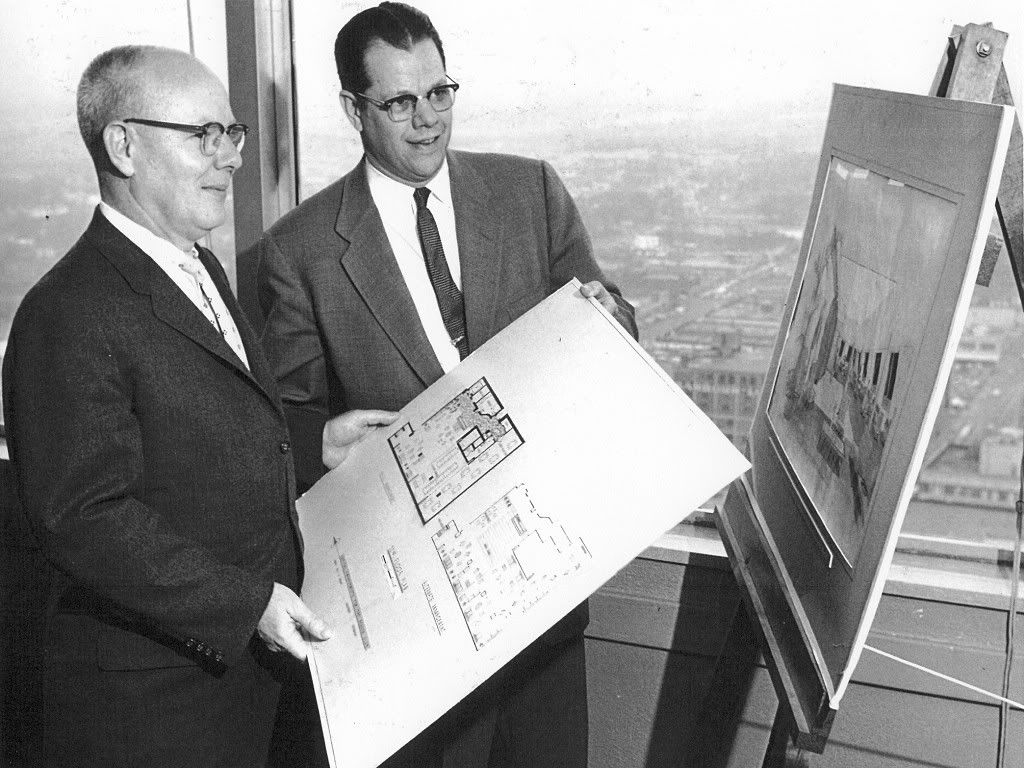
Planning for expansion of the Beacon Club (date unknown)
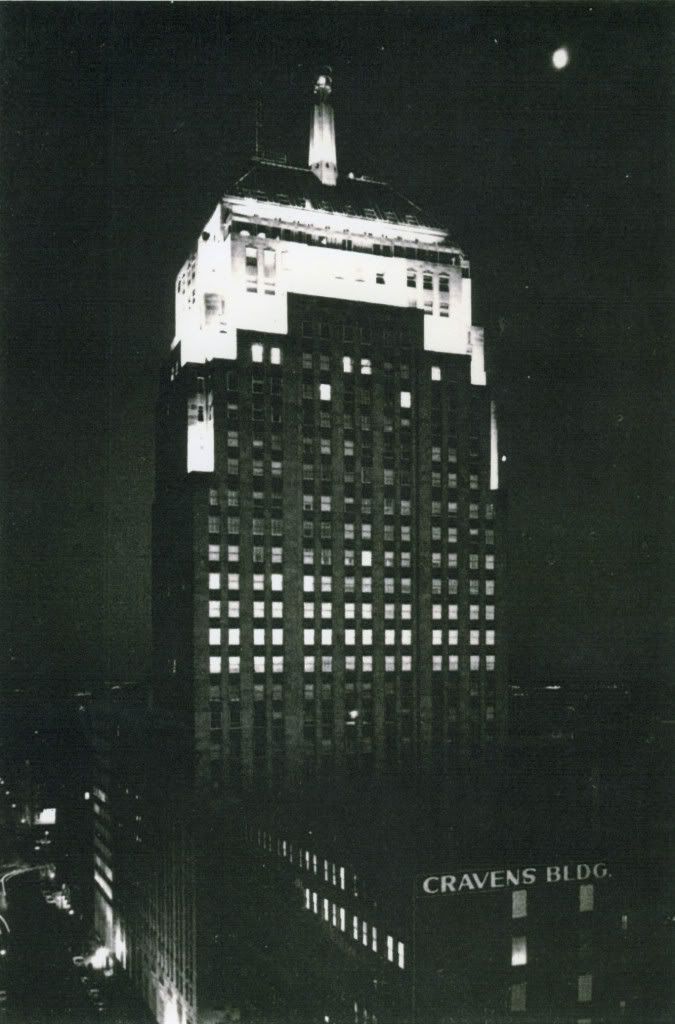
The Beacon Club, named for the building's "beacon" (visible for 50 miles) to warn airplanes, opened in late 1941 on the 31st floor, and would eventually occupy the top 3 stories. But, with the building's decline and it having no apparent prospects for revitalization, the club moved to the Oklahoma Tower in 1997. Maybe it will return to its namesake home, one day!

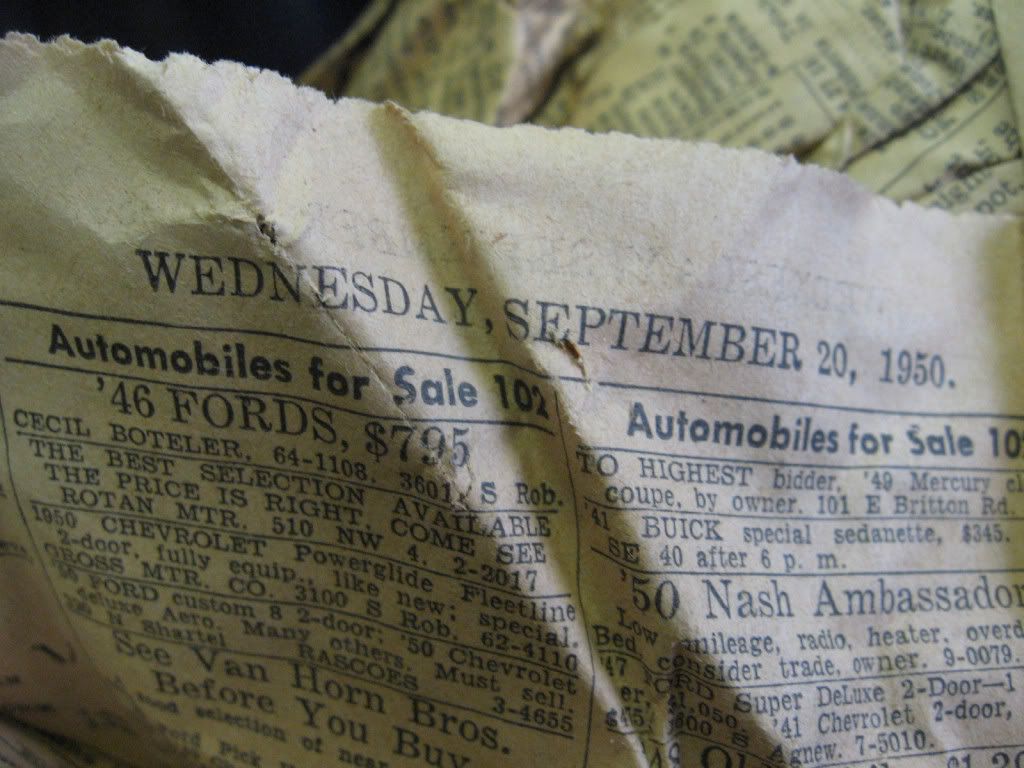
When construction stared recently in the entry/arcade area, an old newspaper was discovered under the tile. Though not in prime shape, it is usable enough to see a date ... the tile was added in the same year, 1950, as were the escalators to the Great Banking Hall ...


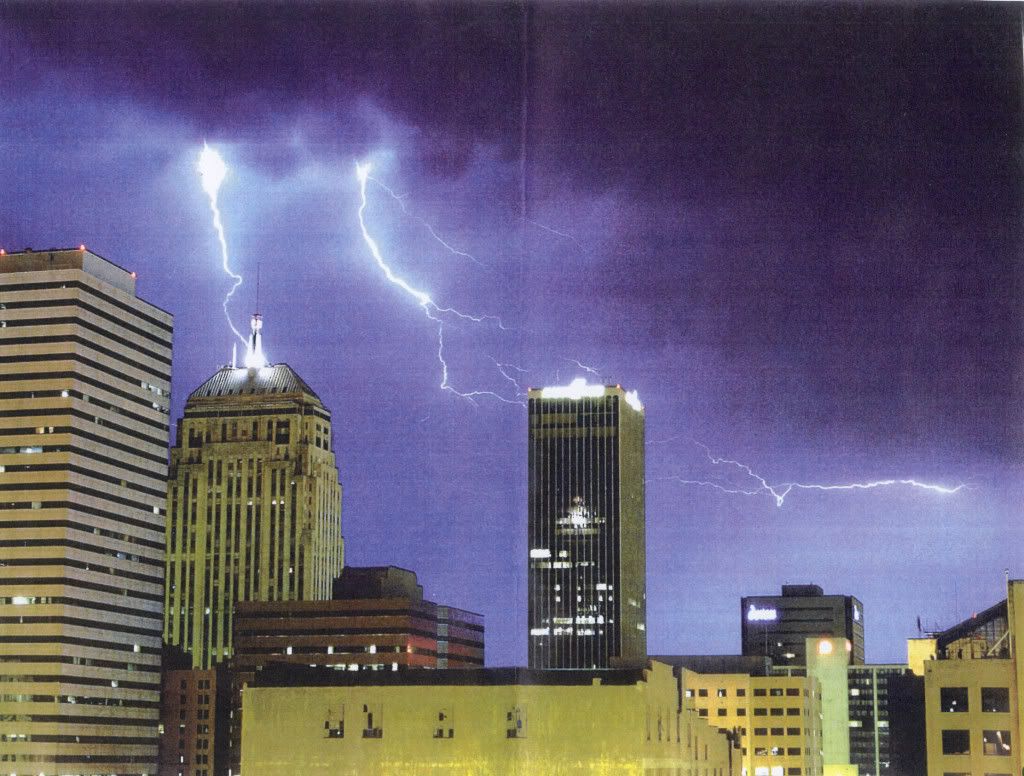
The last image I got from the archives on this trip (yes, I'm hoping for more!) was this cool photo, not really historic, but showing the 1st National and other buildings during an August 2004 lightening storm!

I was also furnished some very neat PDF files which contain some archival-type photographs. The extracted images appear below ...
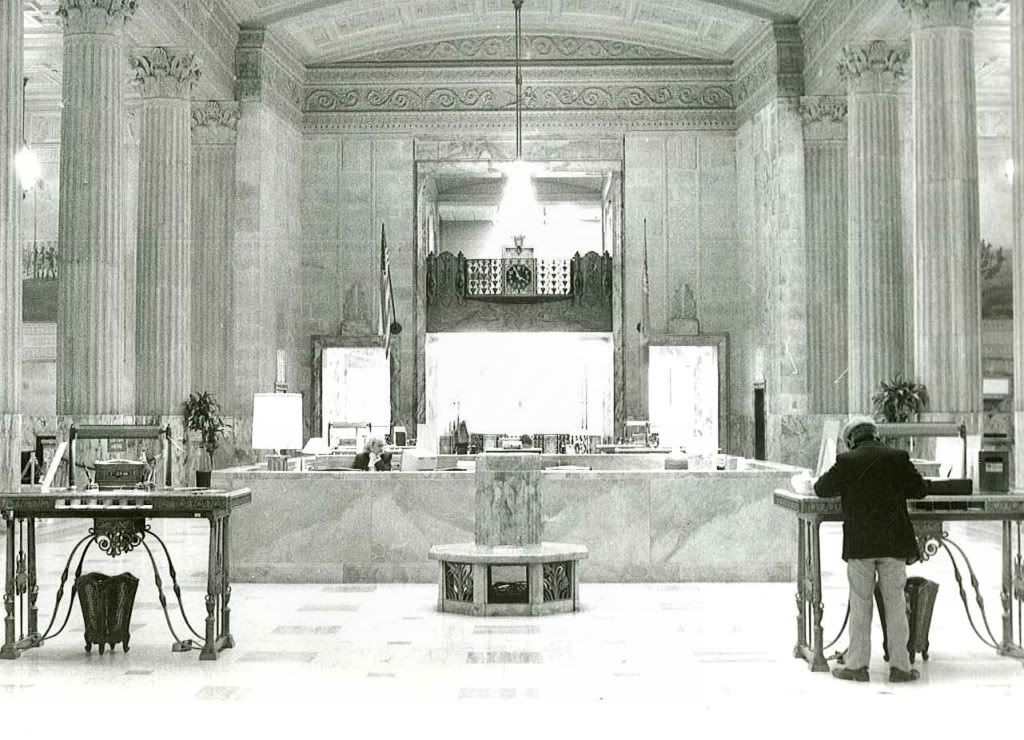
The Great Banking Hall (undated)


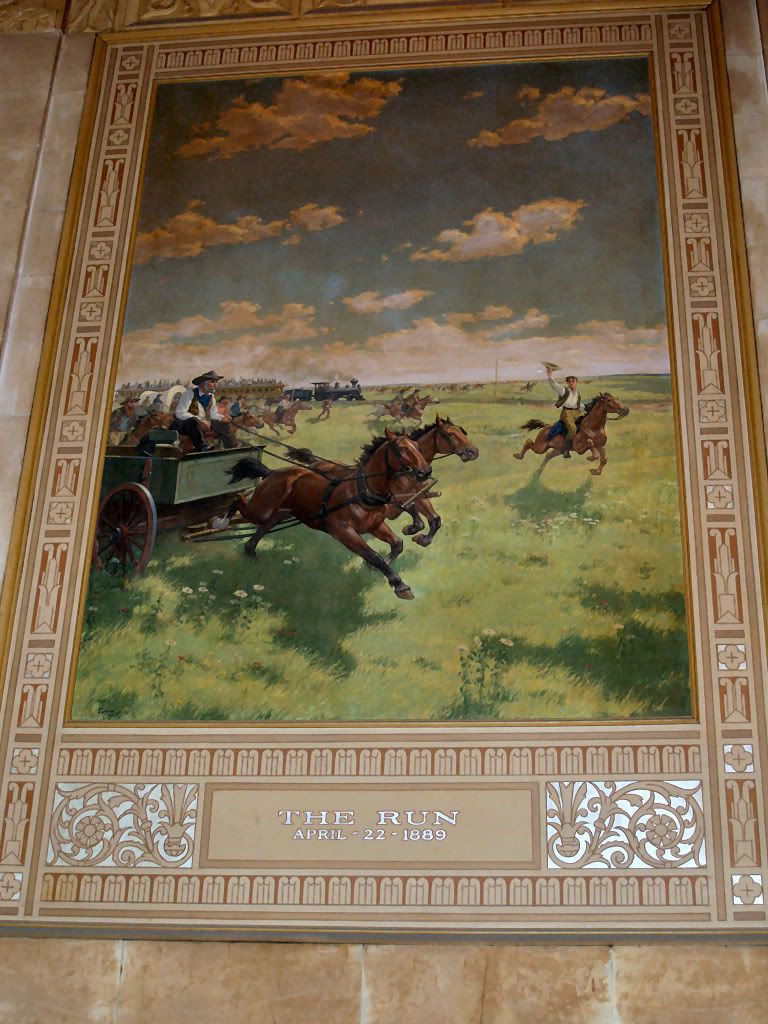
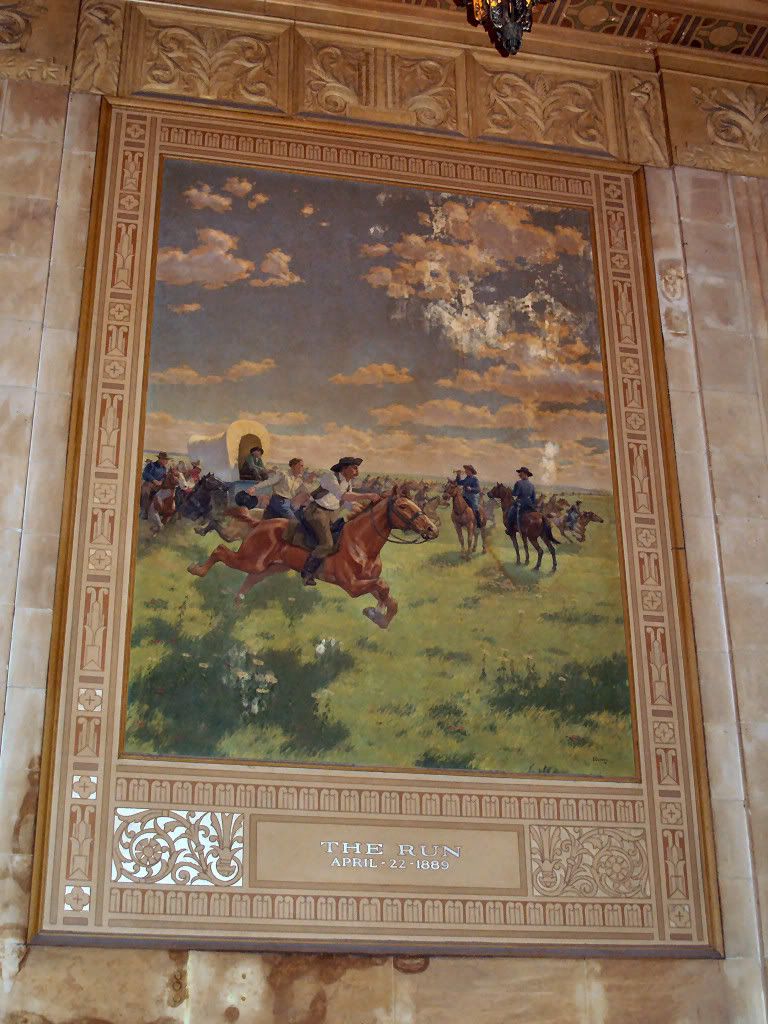
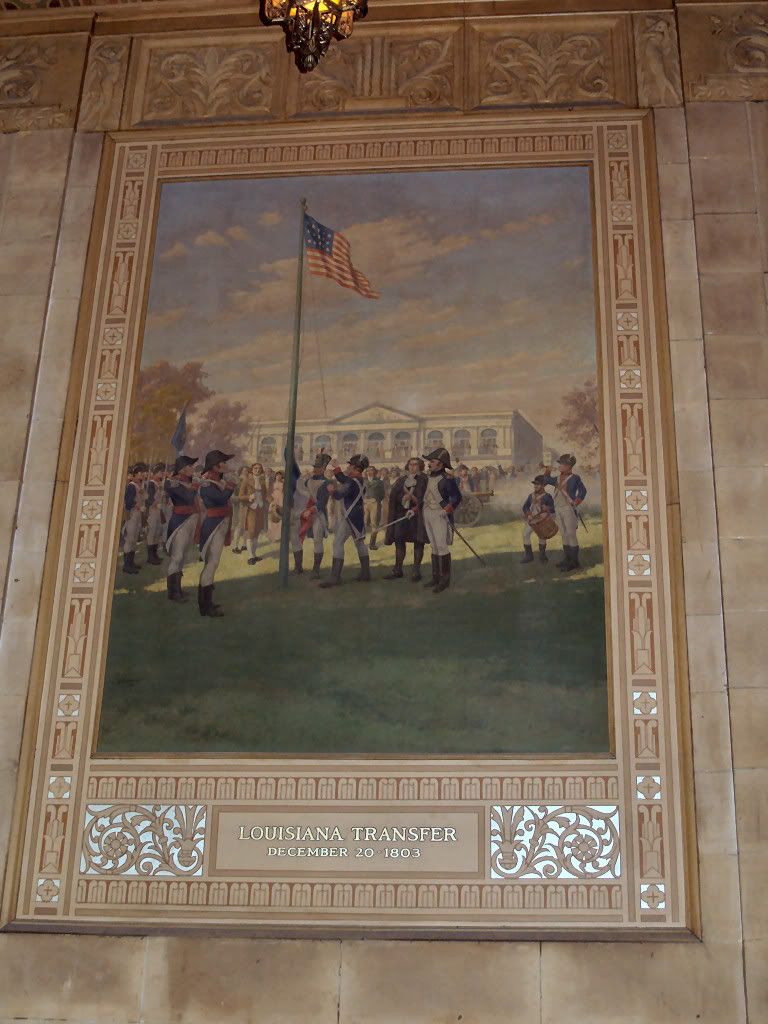
Murals in the Great Banking Hall
In 1949, First National made a brochure in honor of Oklahoma City's 60th Anniversary, and the images below are in it, as are the "coin" images which appear later in this article.
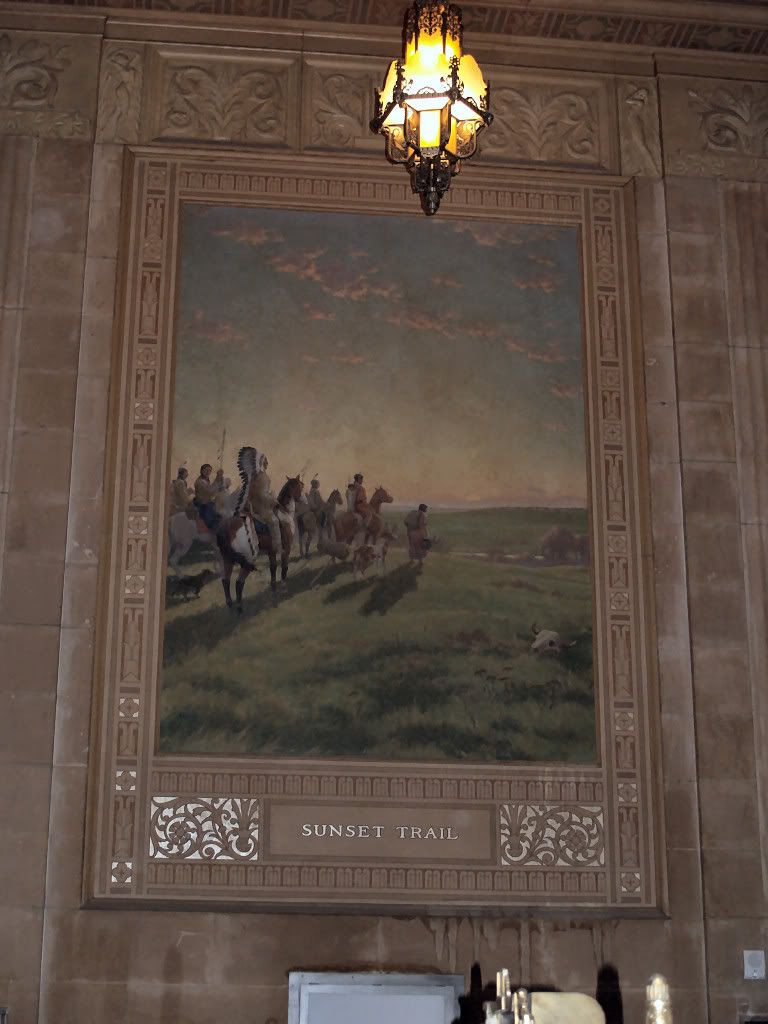
Except for the 1st image below (apparently gratuitously included in the brochure in honor of the occasion), the murals shown below were painted by Edgar Spier Cameron (1862-1944) at the 4 corners of the Great Banking Hall. From Illinois, Cameron's biography is at this Smithsonian website from which the circa 1902 image shown below was found (and with credit to the Smithsonian for the image).
Larger image not available

The Murals (see below for photos I took)


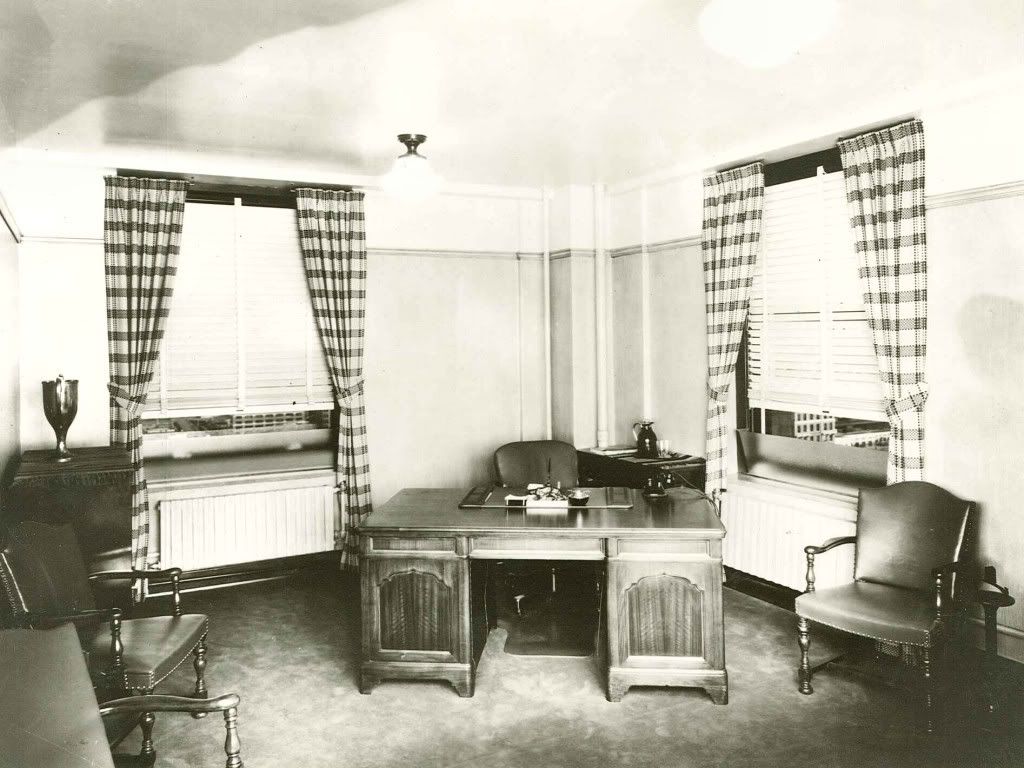
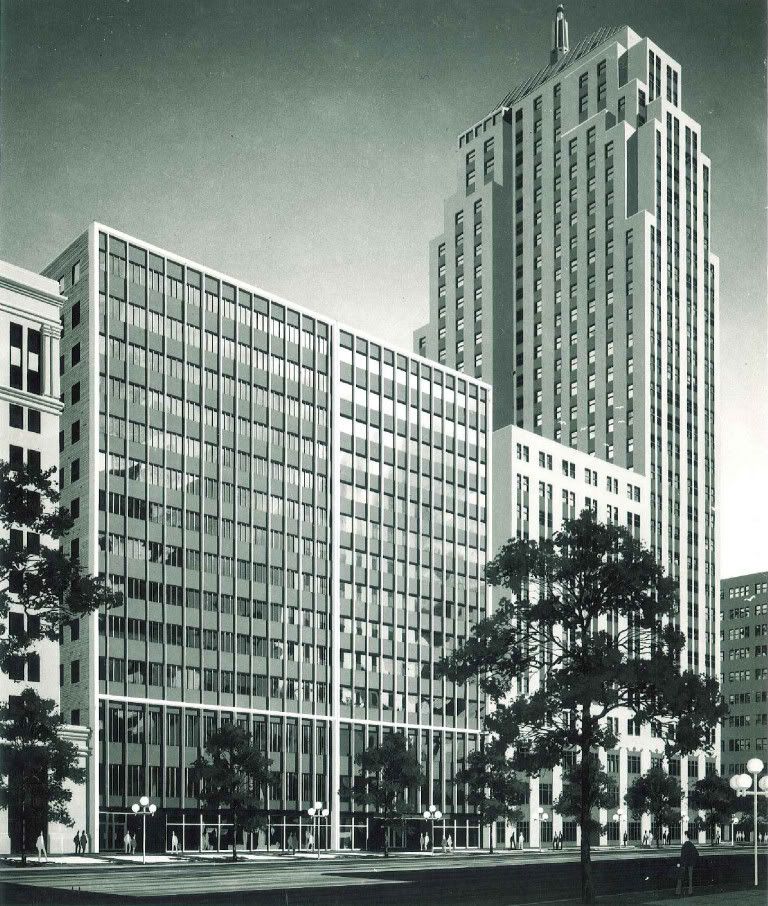
A couple of other images extracted from PDF files show Suite 1810, perhaps in the 1940s, and an artist's rendering of the east-most expansion in 1972.


Coins
Extracted from PDF files furnished to me, the following show replicas of coins which are part of the bank's lobby decor, together with explanations. These images do not have larger views.


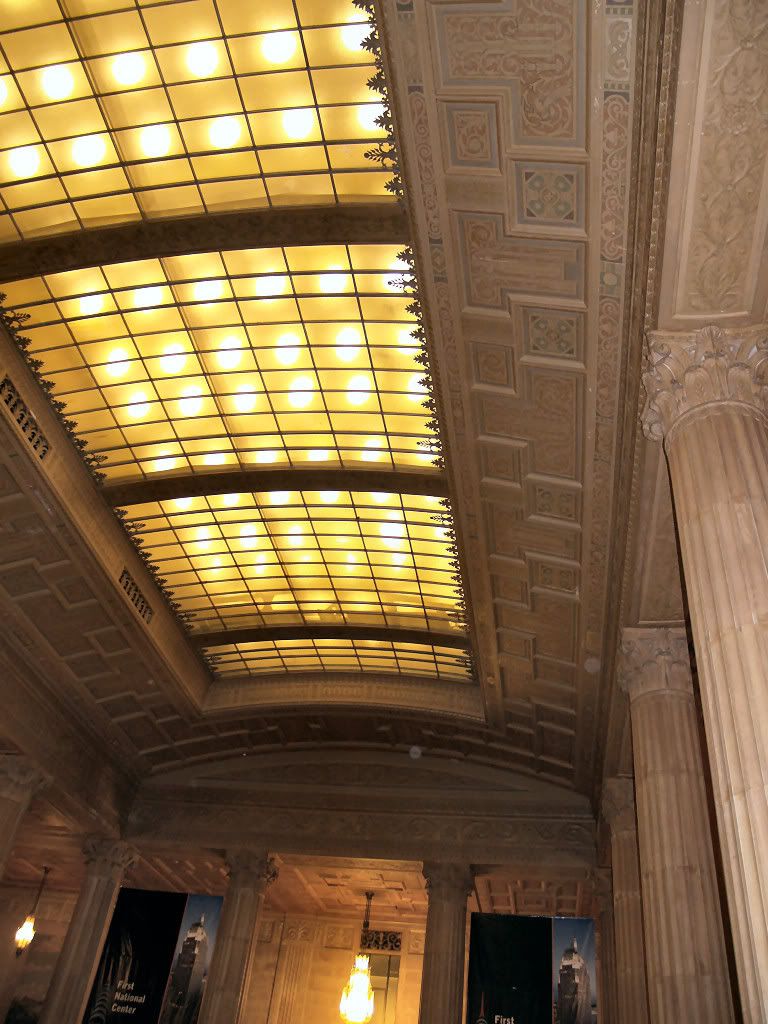
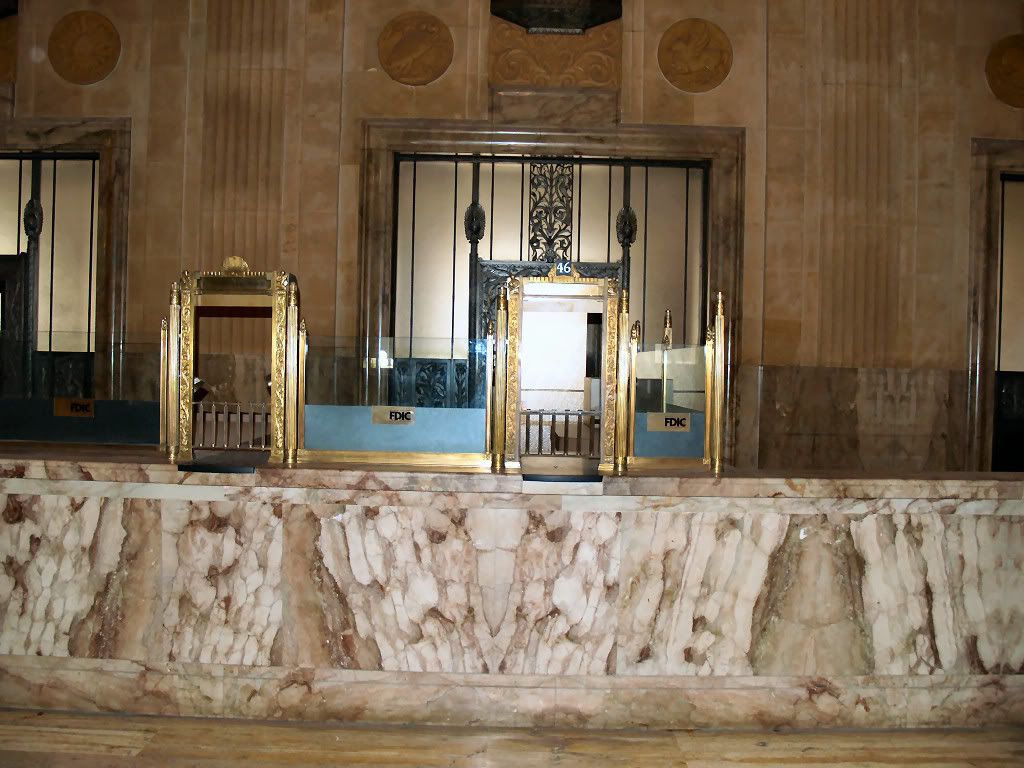
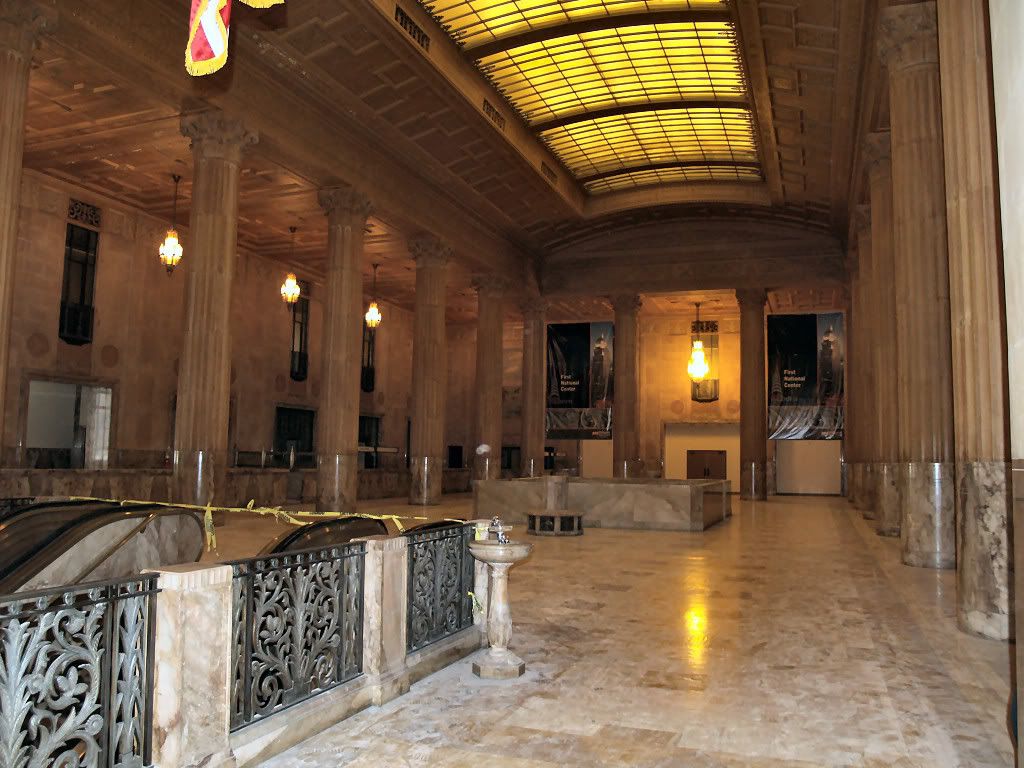
The last part of my visit was to take some photographs myself of the Great Banking Hall ...
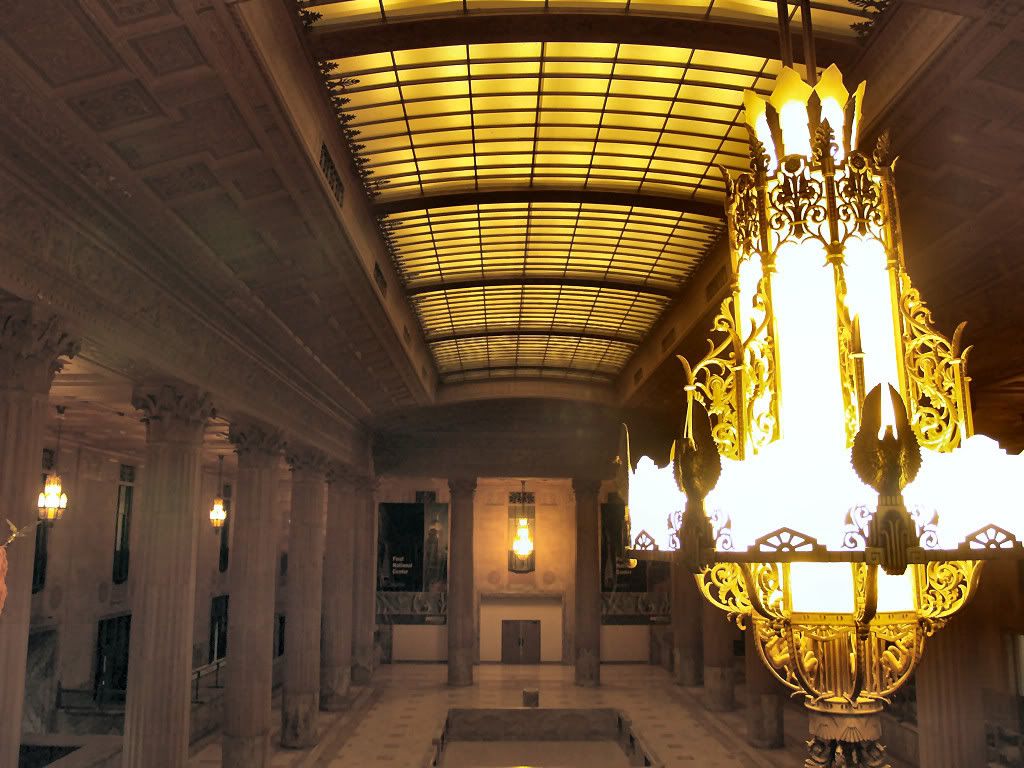
From the 3rd Floor Balcony
Alaina Harris reports that the overhead was originally a skylight but that in 1959 the skylight was covered with a tar and gravel roof, that decision being made in lieu of replacing the 4,000 lights that comprised the skylight.


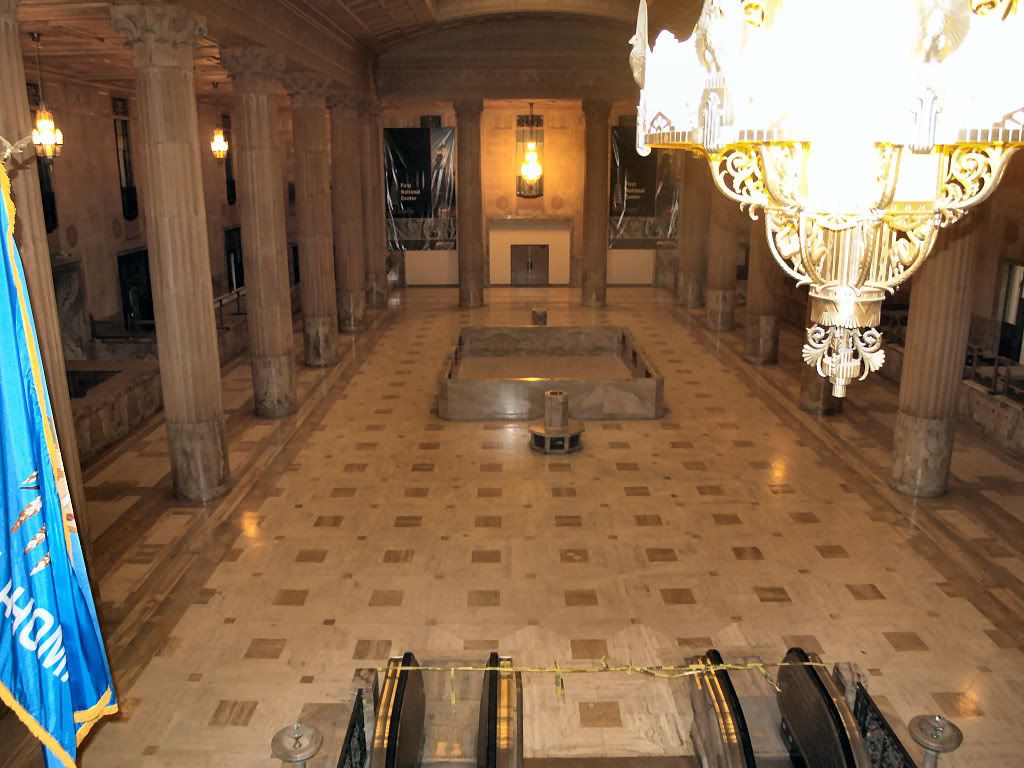
From the 2nd Floor Great Banking Hall
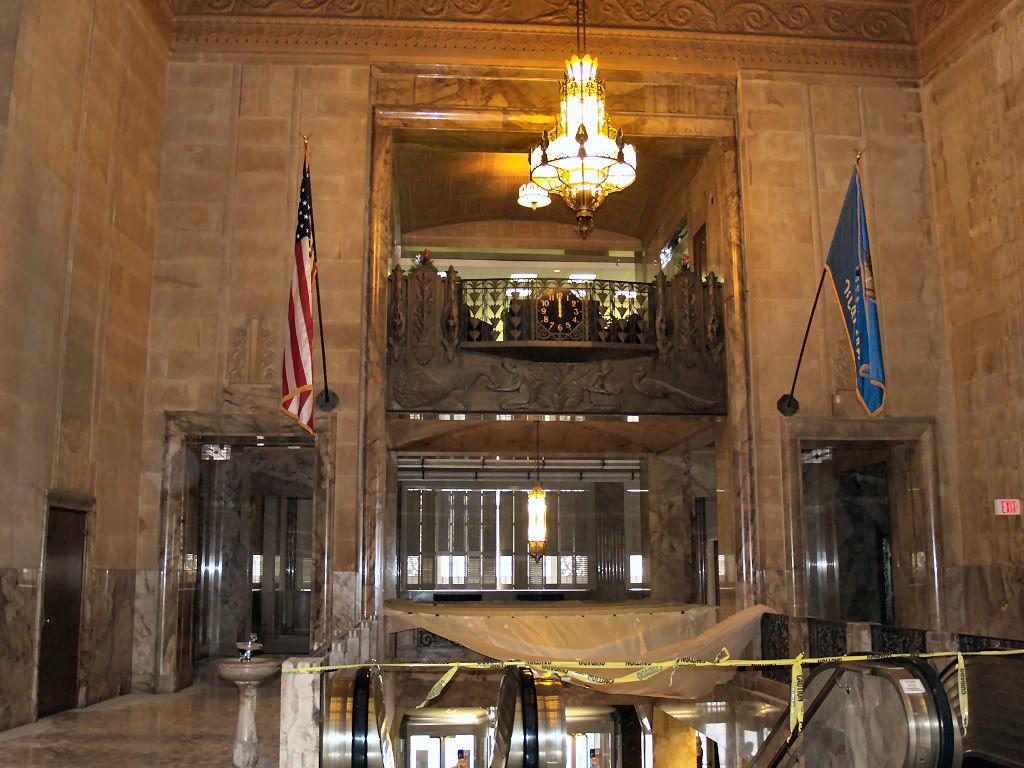
Looking Toward the 3rd Floor Balcony

Walking Around


The Murals


I had a magnificent afternoon and, once again, thanks to my gracious hosts, Emily Dobson and Alaina Harris, for making this contribution to Oklahoma City's history possible! Kisses to you both!
Go To Top
... Click here to read the full article and any comments ...
|














 Posts
Posts


