Well, circa September 2008 we thought, and we were euphoric about, what the City Council told us that we were getting ... WOW! The City Council really CAN deliver something really really special ...
... but, turns out, the somewhat off-color video below is more closely akin to the reality of what we were told, even though it didn't translate that way at the time and even though we wanted to believe (and I did) ...
Silly me. But there might be some value in the handy self-destruct function. The Journal Record broke the story on the same day that the Ghouls Gone Wild parade occurred downtown, October 22. The city's Trick-or-Treat basket of goodies to OKC citizens may well come tomorrow at the City Council meeting ...
OKC Council to decide on pedestrian bridge cost By Brian Brus Oklahoma City reporter Posted: 06:03 PM Friday, October 22, 2010
OKLAHOMA CITY – City Council members will decide Tuesday whether to approve a slight increase in the contract price for the Core to Shore Interstate 40 pedestrian bridge in response to rising construction costs.
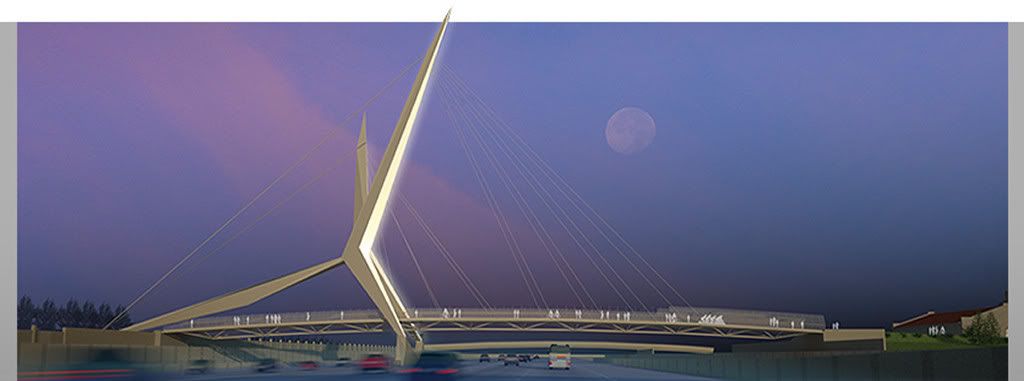
While the overall construction cost for the Skydance Bridge near a planned massive central park has increased $1.58 million and the design fees have risen by $180,000, the bridge itself has been reduced in scope to fall within budget.
In mid-2008, Obelisk Engineering Inc., doing business as Butzer SXL, entered into a contract with Oklahoma City municipal government to provide the conceptual design of the pedestrian bridge. A Consultant Review Committee report ranked MKEC Engineering Consultants and Butzer Design Partnership as the top-rated firm for what became known as SkyDance Bridge.
“This iconic bridge is a pivotal element in the city’s efforts to provide a strong pedestrian connection between the downtown core and the Oklahoma River as outlined in the city’s Core-to-Shore plan,” City Manager Jim Couch said to council members in a memo.
The bridge at SW Ninth Street and Harvey Avenue is expected to be one of the most visible elements of extensive redevelopment of 750 acres between the downtown district and the Oklahoma River. City leaders set projects in motion several years ago to coincide with the relocation of Interstate 40.
Since the contract was signed, the estimated construction cost for the project increased from $5.22 million to about $12.8 million.
“The significantly increased estimated construction cost exceeds the city’s budget authorization for this project and, accordingly, the engineer/architect has been directed to redesign the bridge to remain within the $6.8 million estimated construction cost budget,” the upper limit originally approved for the project, Couch said.
Given the economic limitations, the engineer/architect’s efforts on the original design have been stopped at 85 percent of completion and a second option has been commissioned instead. The original work will be maintained on file in the event additional funds become available for possible completion, Couch said.
The original SkyDance Bridge concept involved a sculpturelike cable stay structure that was integral to the bridge. The redesign will incorporate a trussed bridge with a self-supporting sculptural “bird” concept, Couch said.
Public Works Director Dennis Clowers said construction is scheduled to begin in March in order to match work on I-40 by the Oklahoma Department of Transportation. The city has already let a contract to lay the foundation for the center pier of the bridge. The project is being funded by a series of general obligation bonds approved in 1989, 1995 and 2000.
What will happen tomorrow? Will City Council do what is right and find a way for the original story it told us in September 2008 to become reality? Or will it just present us with another handy cell-phone with a self-destruct function?
What will happen? Who knows. But my 2 cents are ...
About Being Pedestrian. If the revised version is a totally pedestrian "pedestrian" bridge, one which was touted to be an iconic symbol of and for the city, then junk the artistic aspects of project entirely in favor of something that doesn't grab attention but is based purely on function, not art or iconic beauty.
There is no point in spending a heck of a lot of money on a project like this if the project does not inspire as was originally intended. It would be better to make no architectural statement at all, one that does not draw attention to a mediocre artistic attempt which, of course, leaves a mediocre impression to those who might be driving under it on the new crosstown. Out-of-towners would rightly scoff at the city's attempt at art, and locals would be constantly reminded about a once esteemed city project which failed to live up to expectations and promise.
To The City Government. Stop showing us pretty things that you say that we can have when a reasonable certainty does not exist that you can deliver on your promise and our resulting expectation. Just how do you think that this possibly atrocious experience will give confidence in the Core-To-Shore and MAPS 3 promises that have been given with a gusto?
To Voters: Consider using the handy self-destruct function on the new SumsingTurbo3000 cell phone that we got sold in September 2008, more than two years ago. That may be the only good idea to come out of this horrible black-eye that we apparently just got ... not a black eye from the national media, but a bludgeoning from our own.
One more thing. When is the Oklahoman going to report something on this ... this is Bryan Dean's Oklahoman turf, is it not?
The Oklahoman didn't report on the fantastic Friday evening Ghouls Gone Wild Parade, and it didn't report on this, either. The Journal Record at least gave us a three or four days lead time with its story on Friday, October 22, and the Oklahoma Gazette posted an article on it it on Monday, October 25. As of Tuesday, October 26, the same day that City Council considers this matter, the matter has not been reported on in the Oklahoman.
The Oklahoman? Where are you, and where are your intrepid City Hall reporters? Did the Oklahoman purchase bulk orders of the SumsingTurbo3000 and mandate use by its city hall reporters? If so, what's up with that? If not, why the silence? Why the foot dragging? Why the absence of information from our city's mainstay daily newspaper?
Who Says OKC History Geeks Don't Know How To Have Fun?
Retro Metro OKC Halloween Stars Shown Below In Order of Appearance: Carolyn Cuskey, Dean Schirf, Justin Tyler Moore, Rachel Mosman, A.J. Kirkpatrick
Retro Metro OKC Halloween Stars Shown Below In Order of appearance Steve Lackmeyer, Marc Weinmeister, Norman Thompson, Catherine Montgomery, Doug Loudenback
THE DIRECTOR'S CUT Retro Metro OKC Halloween Stars Shown Below In Order of appearance Rachel Mosman, Dean Schirf, Steve Lackmeyer, Carolyn Cuskey, Justin Tyler Moore
Of course, the above and all of this post is just for fun, as is Halloween. The more serious work of the dancing stars in the above movies can be seen at Retro Metro OKC's website and a more serious treatment of Halloween history in Oklahoma City is here. This post, as I said, is just for fun.
The Oklahoma City Council established Saturday, October 30, as the preferred day for kids to "trick-or-treat," but, of course, that means that we'll need to have goodies on hand for two days and not just one. Like, duh, the Oklahoma City Council is so very important and has the status to change the time-honored date (and name) of All Hallows Eve, right? Right. So, those inclined to welcome small trolls and goblins with gifts to ward off the "trick" part of the quid pro quo will need to be prepared on both Saturday AND Sunday ... just a word to the wise.
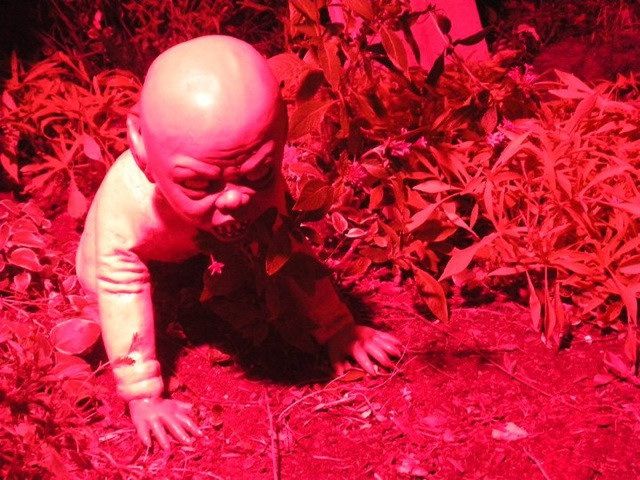
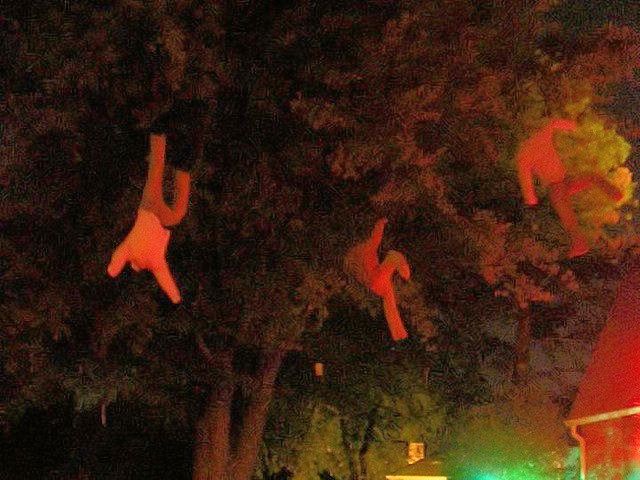
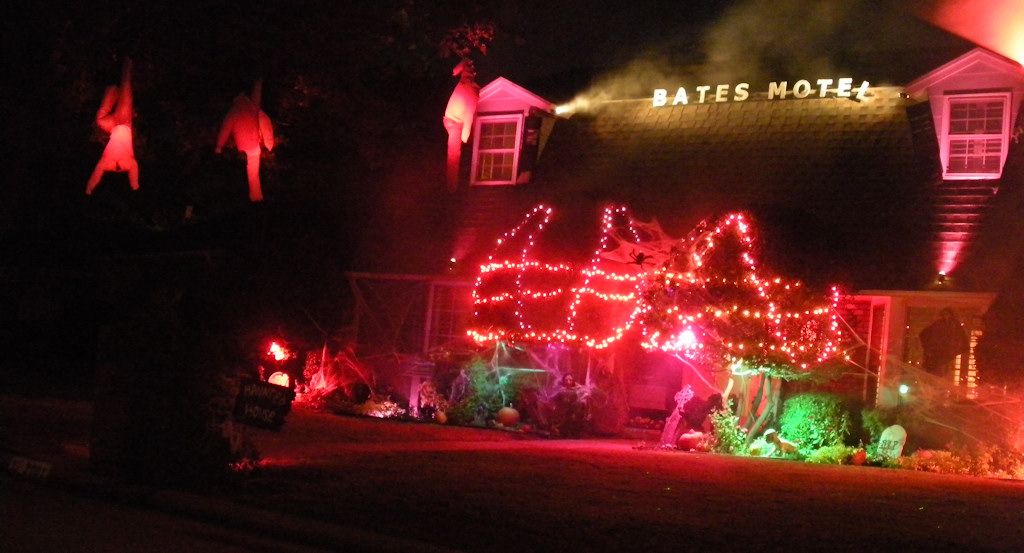
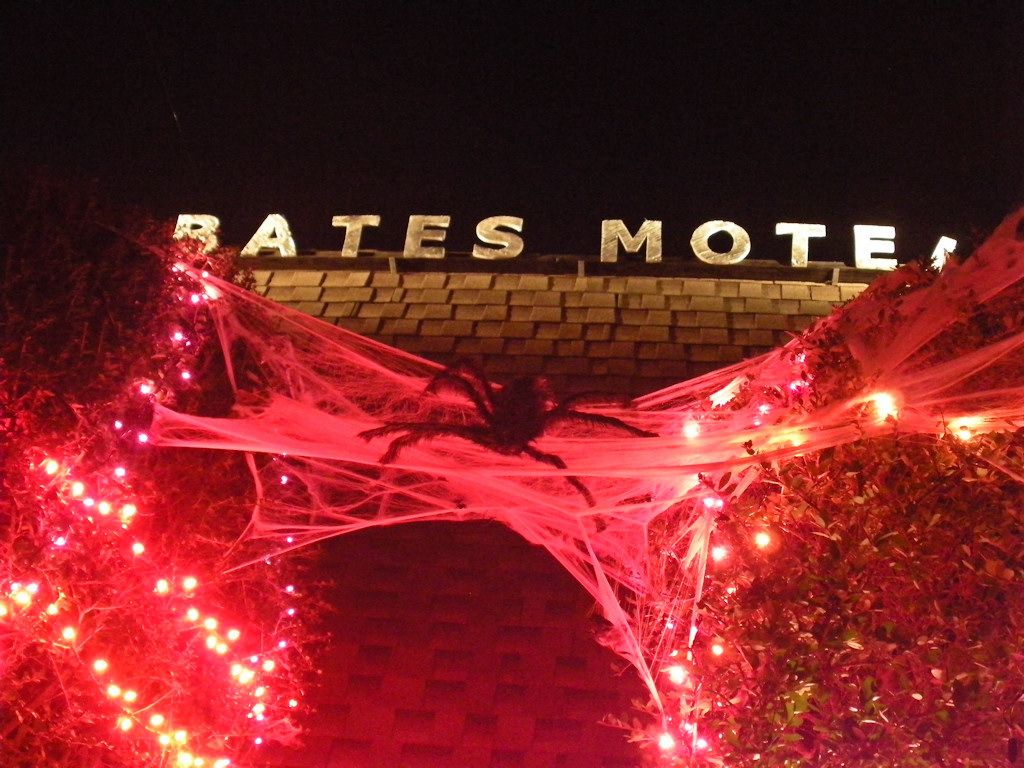
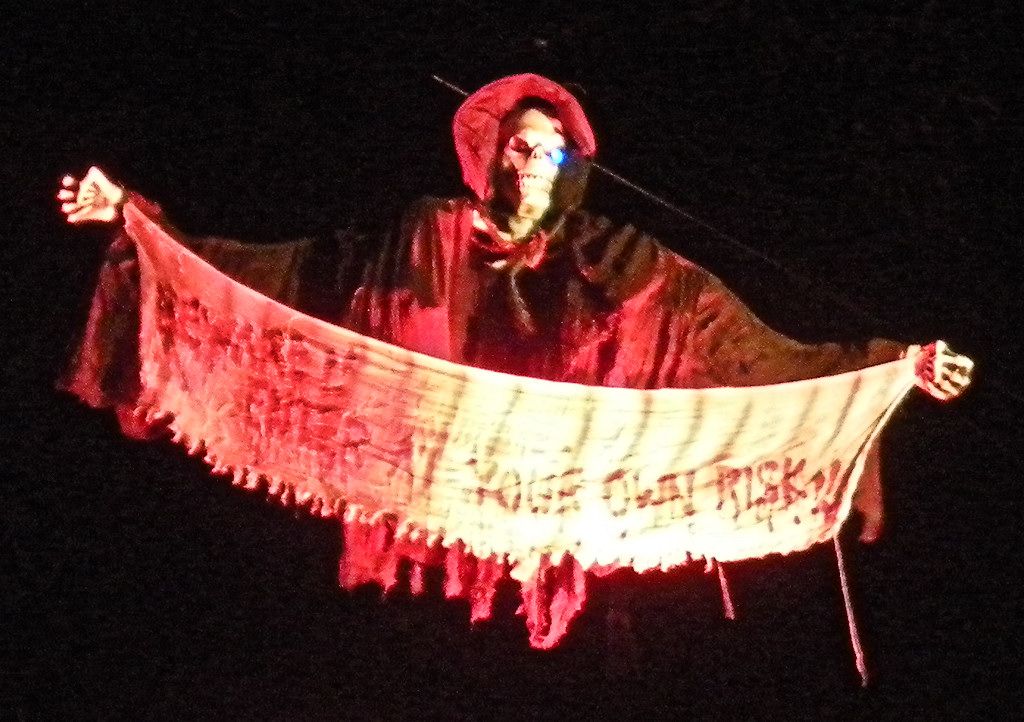
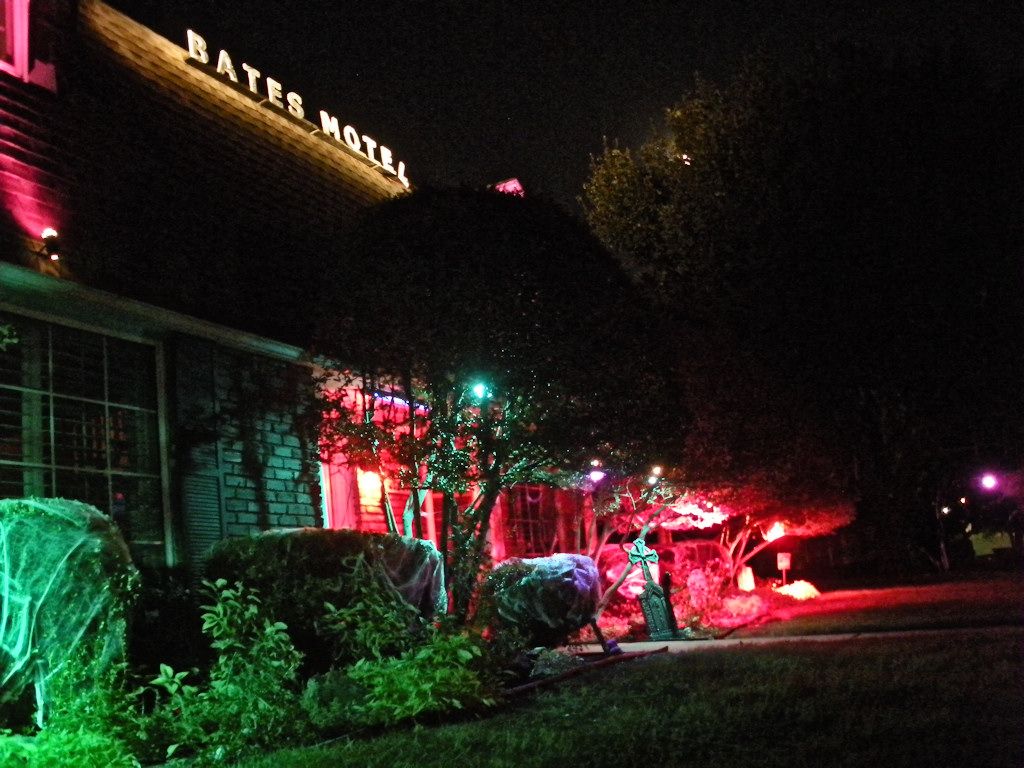
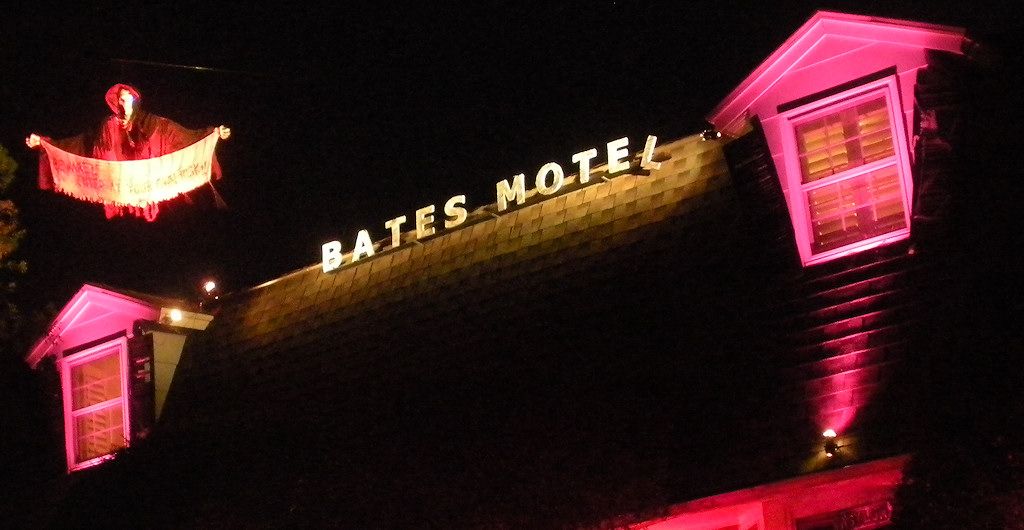
Aside from the annual parade of kids who unhesitatingly open their arms wide open to the dark side, this post describes a few events that Doug Dawg recommends and shows some neighborhood photos which place great value on cobwebs, tombstones, skeletons, and the Bates Motel. So, let's get started.
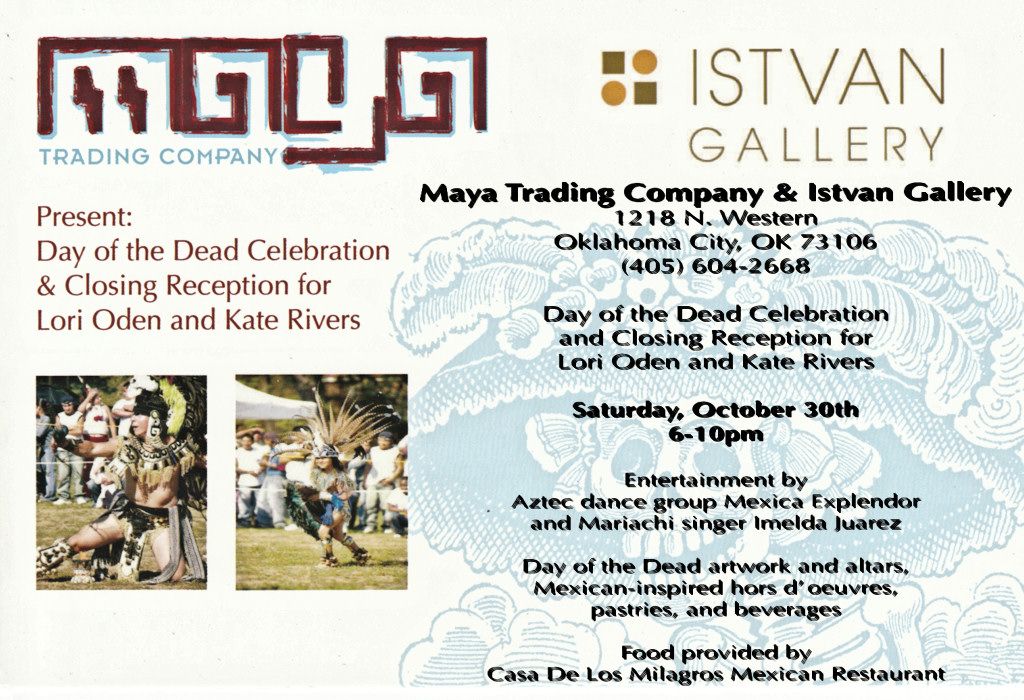
DAY OF THE DEAD. Blending in with the unconnected Anglo tradition of All Hallows Eve is the Latino tradition of the Day of the Dead. And, right here in Oklahoma City, that tradition will be celebrated, also.
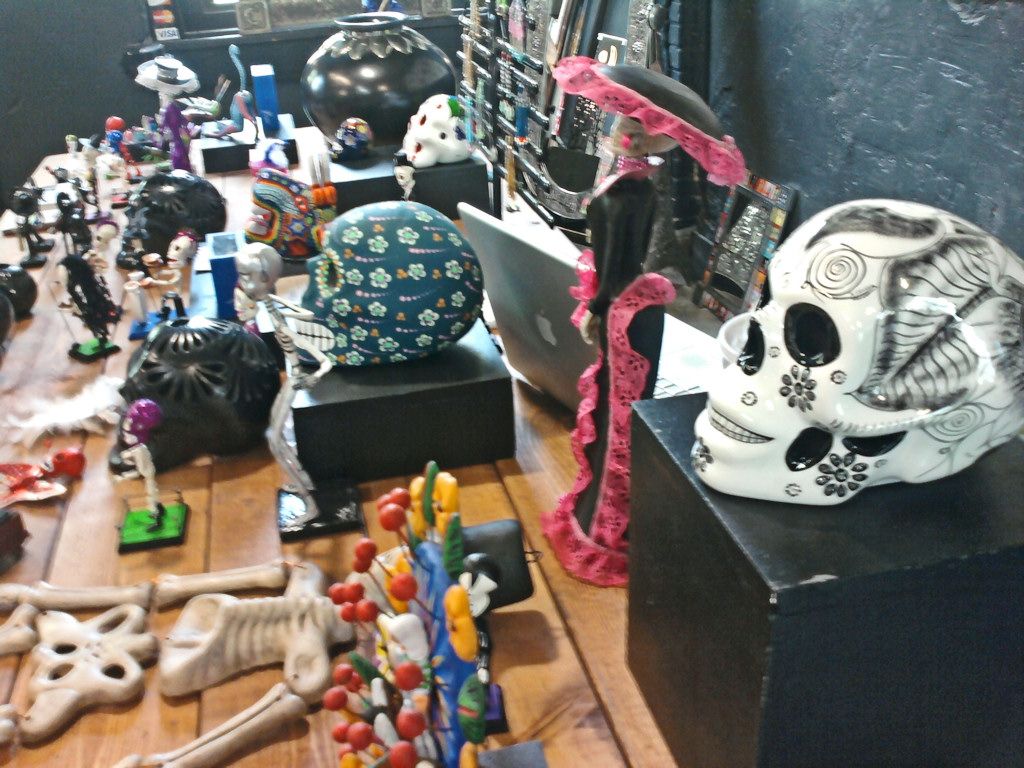
MAYA TRADING COMPANY & ISTVAN GALLERY
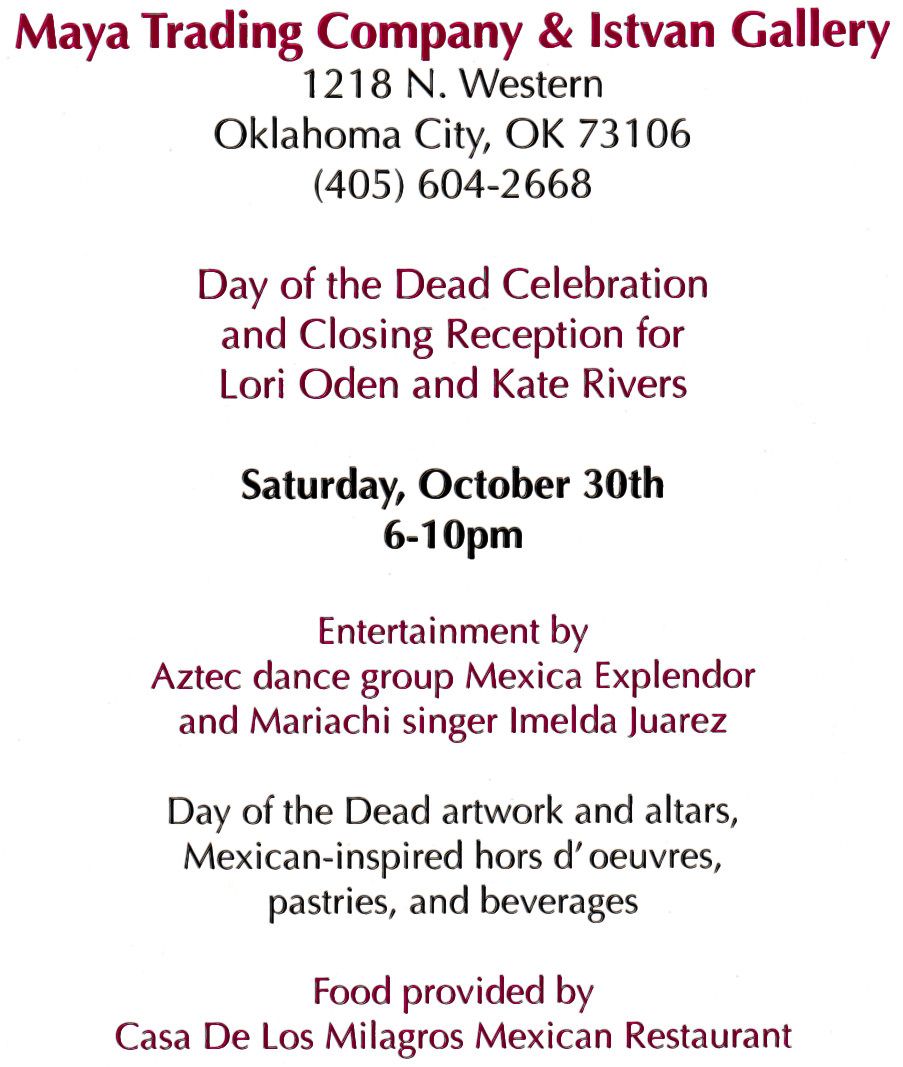
Both at 1218 N. Western, these classy galleries are joining efforts to host a Day of the Dead celebration on Saturday, October 30, 6-10 p.m.
I wrote about Maya Trading Company on May 15, 2010 -- but click here for its website and here for its Facebook page. Read about Istvan Gallery at its website. If you've not been to these exceptional art venues in Oklahoma City, you've been missing out -- this event is a great time to fix that.
This event promises to be extraordinary, even if you'll need to figure out how to handle the simultaneous Saturday home-parade of trick-or-treaters thanks to our City Council's wisdom. Get a home-sitter to handle the walking gremlins and YOU go to this event, you should.
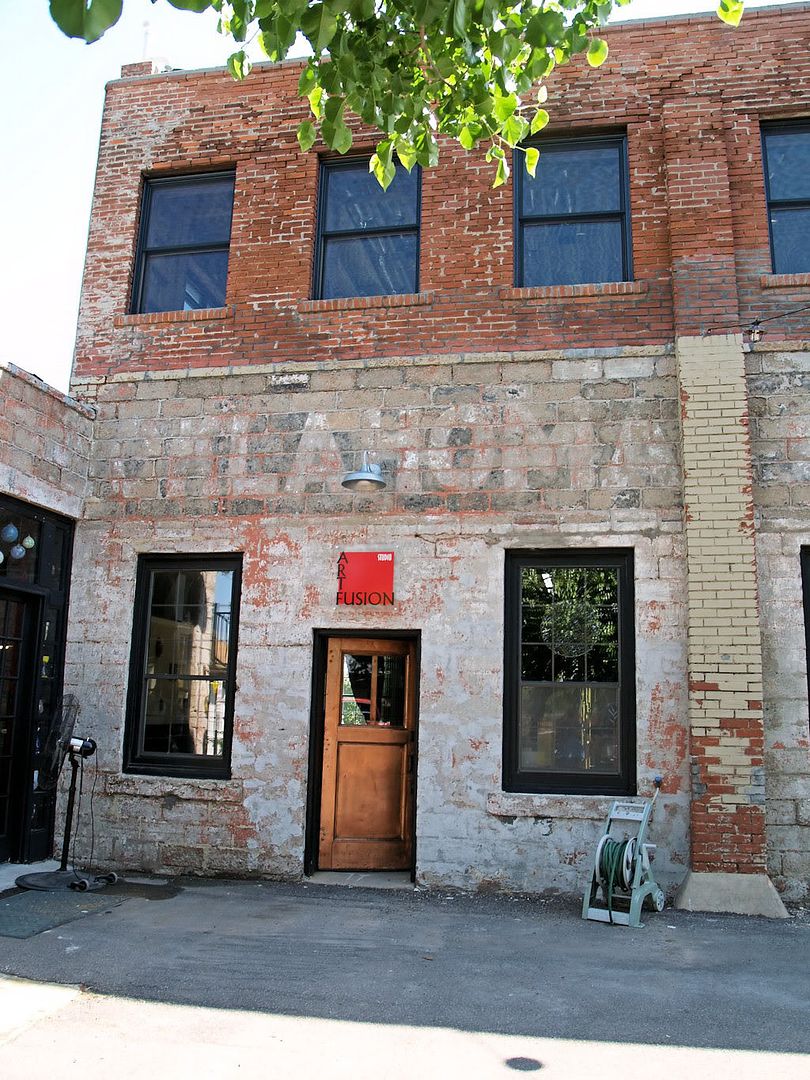
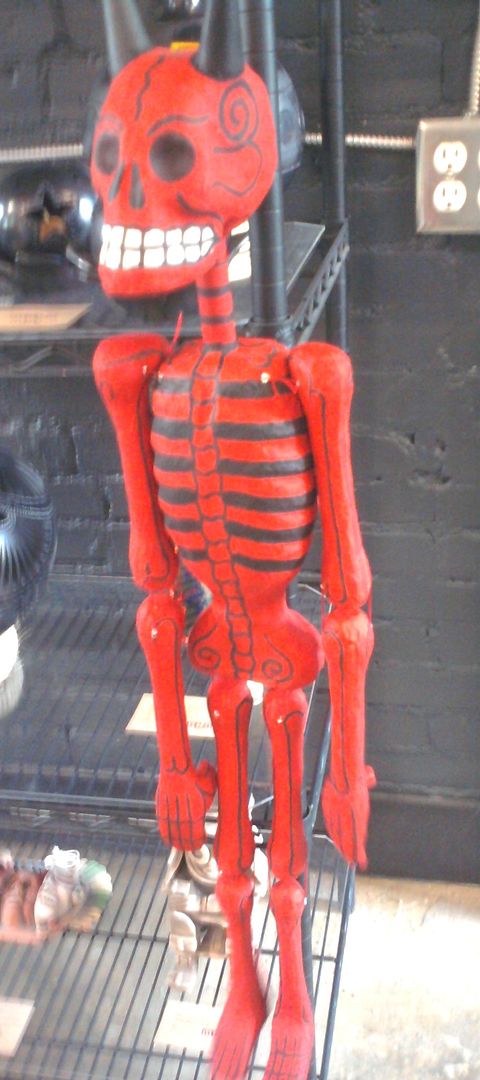
I dropped by the Maya Trading Company venue for a few minutes this afternoon -- unfortunately, I didn't have my "good" camera with me but my cell phone's camera did reasonably well. The photos here don't really show the breadth of native Mexican art for you to see (and/or purchase), but they'll do for now. The top photo, above, shows some of the huge table of goodies that are waiting, but there are many more than are shown here.
As you can see, you get fed and entertained for free, too. What a deal.
By the way, Day of the Dead and All Saints' Eve are not the same. The Latino holiday focuses on gatherings of family and friends to pray for and remember friends and family members who have died. The celebration occurs on November 2 in connection with the Christian Church holidays of All Saints' Day (November 1) and All Souls' Day (November 2). The Day of the Dead is, in fact, a time of celebration.
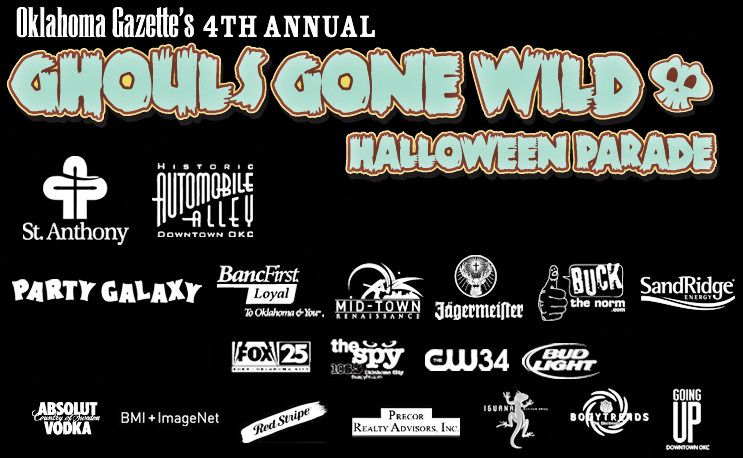
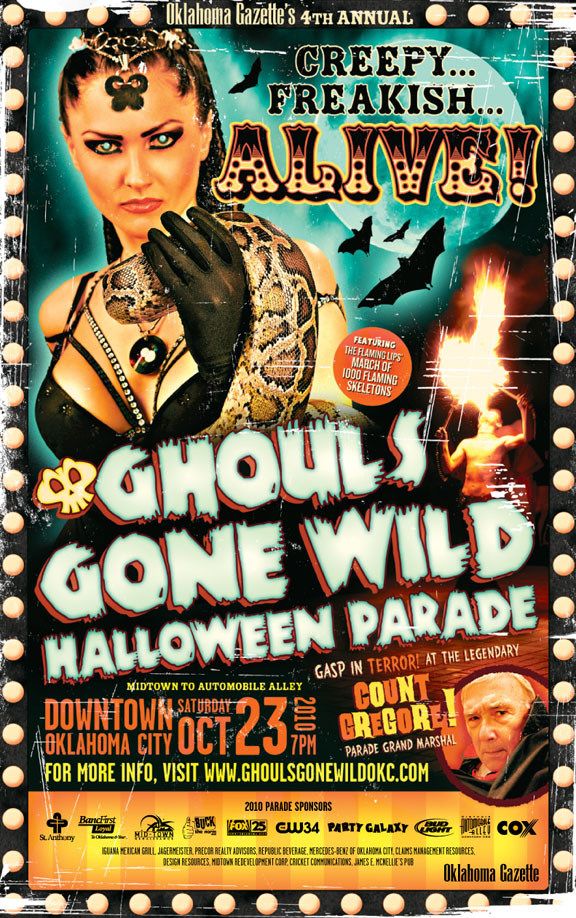
According to the Gazette, the mission of the parade is "to celebrate artistry, creativity and diversity in Oklahoma City." The same source says, "It has grown by leaps and bounds, increasing the number of participants, spectators and sponsors each year. Crowd estimates for the 2009 parade were around 55,000 attendees! There were 84 parade entries, including dancers, bands, classic cars, arts groups and local businesses."
This year's list of sponsors is indeed pretty impressive, the largest donor-supporters being St. Anthony's and the Automobile Alley association. Perhaps the wide range of corporate and individual sponsors will be of sufficient importance to the Oklahoman to give the event more press coverage than it has deigned to do in the past. We shall see.
This year's Grand Marshal is the legendary Count Gregore and, of course, the Flaming Lips will again host its March of 1000 Flaming Skeletons. If you want to be one of them, go to the this instruction page and follow directions.
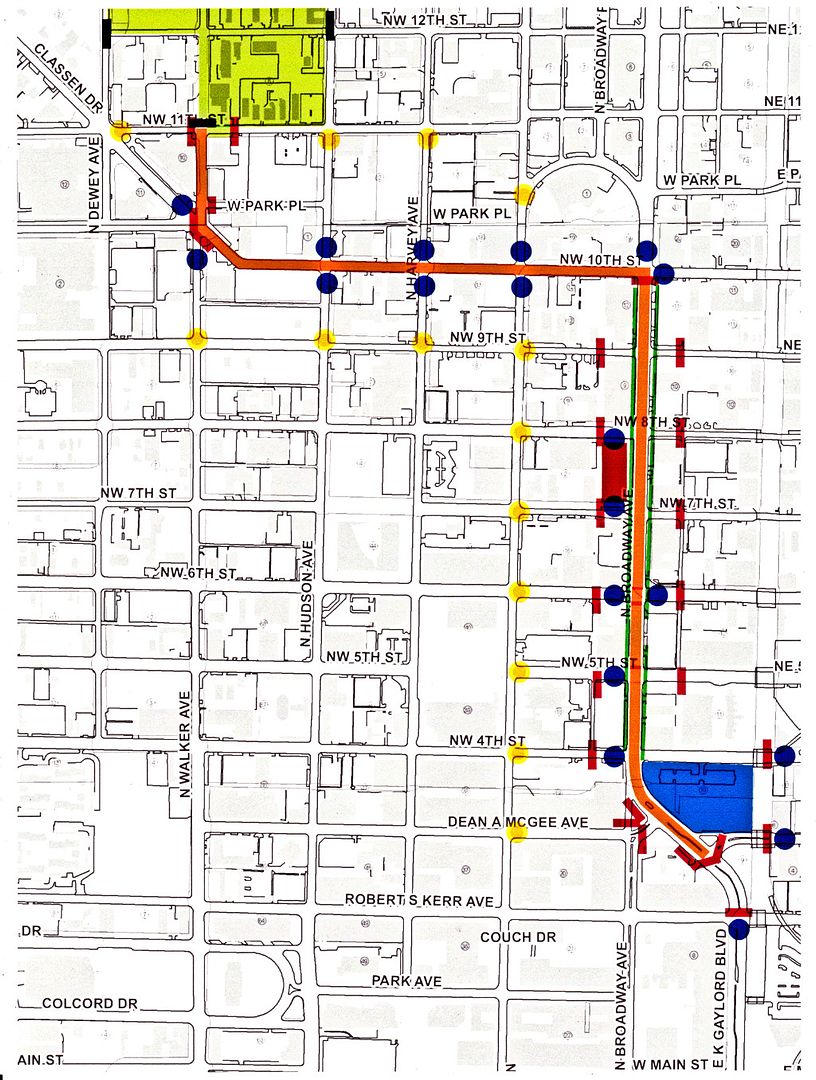
Here's the route of the mile-long parade ...
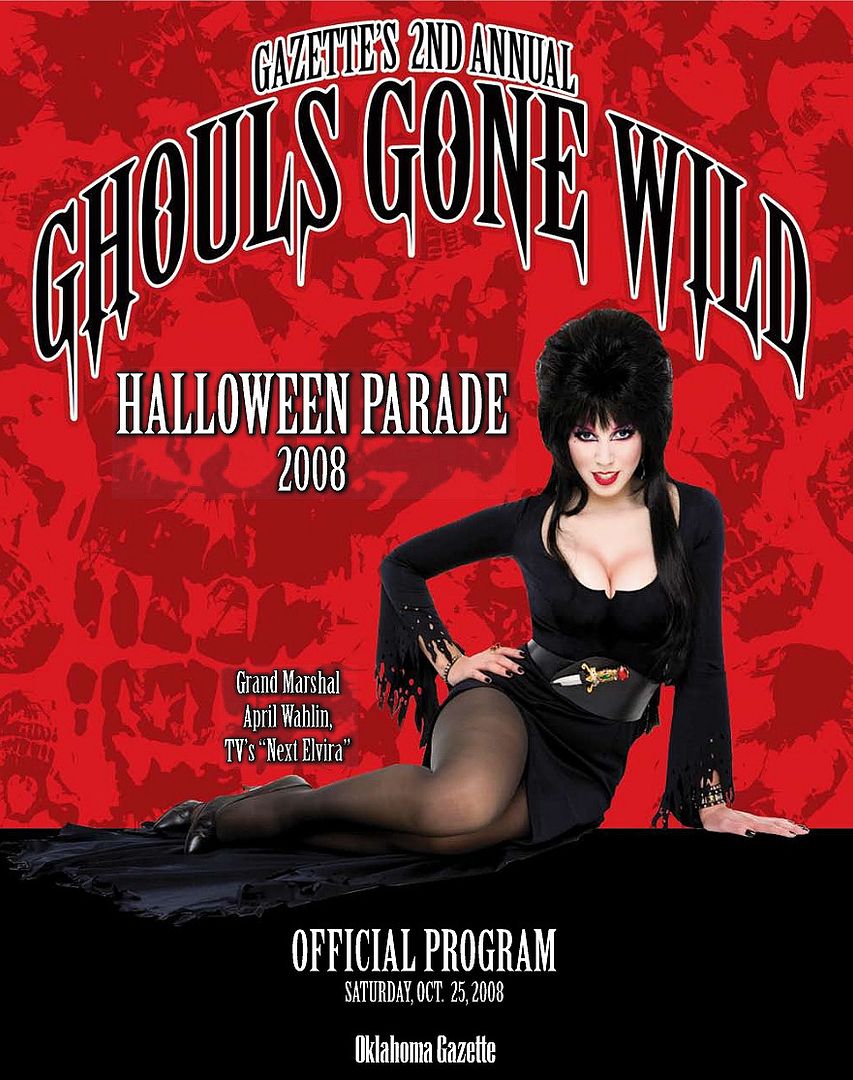
The Gazette sometimes puts together a downright sexy poster describing the event. Click on the thumbnail at the right for a better view of 2008 Gazette's poster girl and Grand Marshal, San Deigo's April Wahlin, a contestant in and perhaps the winner of Fox television's reality show, The Search for the Next Elvira.
As you can see below, a sexy poster is upon us this year, too. Be still, my troubled old-man's heart. Oh, for the days of youth to be revisited yet again ... but I can probably pass on the python. Just sayin' ...
HOME PHOTOS, ETC. Below are 2010 photos taken by fellow Retro Metro Okc'er Justin Tyler Moore of Abandoned Oklahoma fame of his home in Quail Creek.
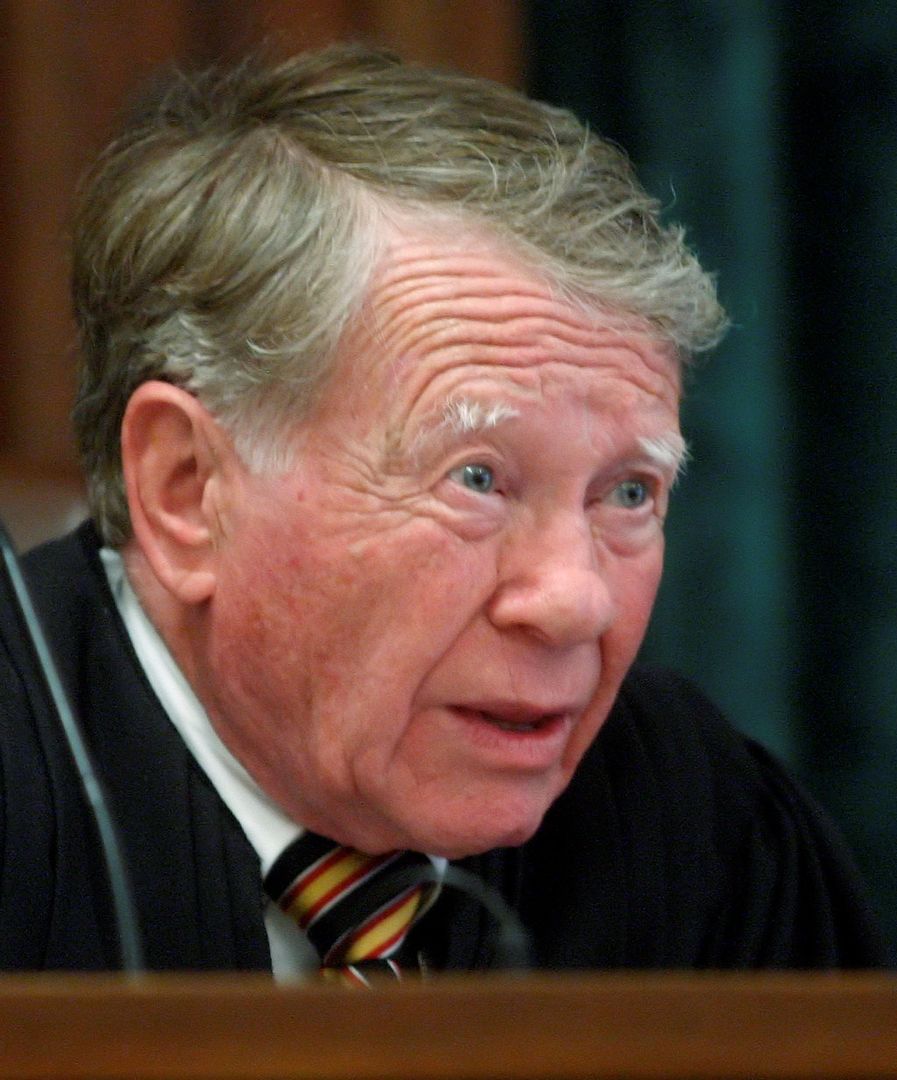
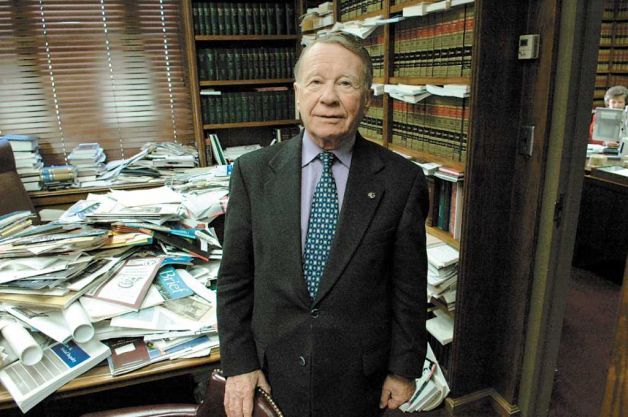
Oklahoma Supreme Court Justice Marian Opala died early this morning, October 11, at his home in Warr Acres. This man had a small frame, shorter than even my 5' 7" height, but he was a giant in the Oklahoma legal community, widely respected among Oklahoma lawyers, probably more than any other member of the Oklahoma Supreme Court in my brief time as a lawyer (1968-present). But he was also a humble man, one who never presumed that he was superior to any other man or woman; he loved America; and he loved his profession and enjoyed mingling with the lawyers who made it up, for no other reason than just doing it and the satisfaction that it gave him in doing so.
While I still had an office downtown, it was not uncommon at all to see him on Harvey east of the Oklahoma County Courthouse, or inside of it, just being there and commensurating with his brothers and sisters in and about the law. Never boastful or ego-driven, but always of the sharpest and keenest legal mind, amongst all of his peers, he is the Oklahoma Supreme Court Justice who will be most sorely missed at both a personal and professional level. I was not a personal friend so I cannot speak from that perspective. I did enjoy those occasional Harvey Street conversations, though, and I am familiar with many of his written opinions while serving as an Oklahoma Supreme Court Justice, and I am well aware that my opinion of Justice Opala is nearly altogether if not universally shared by my peers. For the remainder of this article, I will simply quote what others have said about him on this, the day of his death.
Below, credit the Journal Record, January 24, 2005
By M. Scott Carter The Journal Record Posted: 09:59 AM Monday, October 11, 2010
OKLAHOMA CITY – Oklahoma Supreme Court Justice Marian Opala has died.
Opala, 89, died Sunday evening, said Mike Mayberry, deputy director of the Administrative Office of the Courts. Opala – who held the courts’ District 3 seat – had previously served as Chief Justice of the court from 1991 to 1992. He was appointed to the court in 1978 by then-Governor David Boren.
Born in Lodz, Poland in 1921, Opala became a United States citizen in 1953. He graduated from Oklahoma City University’s School of Law in 1953, and later, earned as BSB degree in economics from OCU in 1957. He earned a Master of Laws degree from New York University in 1968.
Governor Brad Henry praised Opala, calling him a professional and dedicated jurist.
“With the passing of Justice Marian Opala, Oklahoma has lost a judicial giant,” Henry said in a media statement. “During his many decades of service to this state, Justice Opala was always a consummate professional and a dedicated jurist. With his hard work, legal expertise and passion for the law and public service, Marian Opala helped make Oklahoma a far better place than it was when he first arrived here as an immigrant many years ago.”
Oklahomans, the governor said, will miss the justice.
“We are saddened by Justice Opala’s passing and will miss him very much, but we will never forget his lifetime of service or his love of this great state. Our thoughts and prayers are with Justice Opala’s family and his many friends.”
Outgoing House Speaker Chris Benge said Opala’s life “proved the continuing reality of the American Dream.”
“As an immigrant to the United States, he rose to the highest ranks of our legal profession,” Benge, R-Tulsa said. “That he did so in Oklahoma is a source of great pride for our state. From his days fighting Nazis as part of the Polish underground to his work on the Oklahoma Supreme Court, Justice Opala’s life was committed to justice. He was a remarkable man who leaves a remarkable legacy.”
Opala began his legal career as assistant county attorney in Oklahoma County; he entered private law practice in 1956 and served as a referee for the state Supreme Court from 1960 to 1965. From 1969 to 1977, Opala was the court’s first administrative director.
Okla. Supreme Court justice Marian Opala dies SEAN MURPHY, Associated Press Writer Published: 10:35 a.m., Monday, October 11, 2010
OKLAHOMA CITY (AP) — Marian Opala, a Polish immigrant who served for more than three decades on Oklahoma's Supreme Court, has died. He was 89.
Opala died about 1:30 a.m. Monday at an Oklahoma City hospital after suffering a stroke over the weekend, said Mike Mayberry, an official with the Oklahoma Administrative Office of the Courts.
Police discovered Opala unconscious at his Warr Acres home Saturday after he didn't respond to telephone calls and knocks to his door, Mayberry said. He underwent surgery Sunday.
The vacancy left by Opala's death could provide outgoing Gov. Brad Henry a sixth appointment to the nine-member court, if the process is completed before his term ends in January. Henry, a Democrat, is expected to name a fifth appointment when he receives three nominations to replace retiring Justice Rudolph Hargrave.
Born in Lodz, Poland, in 1921, Opala joined that country's resistance movement against German occupiers during World War II. He was captured and imprisoned by the Nazis before being liberated by members of Oklahoma's 45th Infantry Brigade.
Opala emigrated to the United States in 1949 and became a citizen in 1953. After a legal career that included stints as the director of the state's court system and a member of the Workers' Compensation Court, Opala became the first foreign-born member of the state's highest court when he was appointed in 1978 by then-Gov. David Boren. Voters approved Opala in 1980 for the remainder of his predecessor's term and retained him for six-year terms in 1982, 1988, 1994, 2000 and 2006.
"Oklahoma has lost a judicial giant," Henry said in a statement. "With his hard work, legal expertise and passion for the law and public service, Marion Opala helped make Oklahoma a far better place than it was when he first arrived here as an immigrant many years ago."
Opala served as the court's chief justice in 1991 and 1992. In 2004, he was vice chief justice when his colleagues approved a rule change that for the first time made it possible for the sitting chief justice to succeed himself for another two-year term.
The previous rule historically called for the vice chief justice to succeed the chief justice. Opala filed a lawsuit arguing the rule change before he would have again ascended to the top spot violated his rights to due process and equal protection. The case eventually was dismissed when the U.S. Supreme Court refused to consider it.
"The figures told me that my chance would be microscopic," Opala said in 2006. "But I had to do it because I felt that I had a just cause."
Current Chief Justice James Edmondson described Opala as a "magnificent man with a shining intellect, a great sense of humor and an indomitable spirit."
Oklahoma City University President Robert Henry, a former judge with the 10th U.S. Circuit Court of Appeals who was friends with Opala for more than 30 years, described him as a "consummate gentleman."
"He knew more law than anyone I have ever known," Robert Henry said. "He had a Polish accent, but he spoke slowly and precisely, almost as if the sentences just sprang out fully formed.
"I also think he represented the American dream. He rose from a poor immigrant to chief justice of the Supreme Court of Oklahoma and an internationally known legal expert."
In a quote Opala provided for his Oklahoma Hall of Fame induction ceremony, he said: "My life is devoted to the service of others. As long as I am physically and mentally able I will devote my life to God, the people of Oklahoma, and the noble profession of law."
Oklahoma Supreme Court Justice Marian Opala has died
Oklahoma Supreme Court Justice Marian Opala has died, a court administrator confirmed this morning.
FROM STAFF REPORTS Oklahoman Published: October 11, 2010
Oklahoma Supreme Court Justice Marian Opala has died.
Mike Mayberry, deputy court administrator for the administrative office of the courts, confirmed Opala, 89, has died but said he had no other details.
Opala had been a justice on the Supreme Court since 1978. He came to Oklahoma in 1949 and was a renowned legal scholar, having taught at several Oklahoma colleges. He received many awards for judicial excellence.
Opala was born on Jan. 20, 1921, in Lodz, Poland. He had just enrolled in law school when Nazi Germany invaded his homeland in 1939.
He joined the Polish underground and later was a prisoner of war. He emigrated to the United States at war's end and attended Oklahoma City University, receiving a law degree in 1953, the year he attained U.S. citizenship. He also earned a bachelor's degree in economics from OCU and a master's degree in law from New York University.
After service as assistant district attorney for Oklahoma County and private practice, he served on the Oklahoma Supreme Court staff and was the first administrative director of the state court system. He also served on the State Industrial Court and on the Workers' Compensation Court.
First appointed to the Supreme Court in November 1978 by Gov. David Boren, he was elected and re-elected to that position through the 20th Century. The only foreign-born member of the court, Opala served as chief justice in 1991-92. He taught law at OCU, University of Oklahoma, and University of Tulsa. One of his main interests remained First Amendment rights under the U.S. Constitution. He received the Herbert Harley Award from the American Judicature Society in 1977. He was inducted into the Oklahoma Hall of Fame in 2000, and Freedom of Information, Inc., of Oklahoma, established the Marian Opala Award in 2002.
Former Gov. George Nigh and others reacted this morning to the news that Supreme Court Justice Marian Opala has died.
FROM STAFF REPORTS Oklahoman Published: October 11, 2010
Gov. Brad Henry said that with the death of state Supreme Court Justice Marion Opala, Oklahoma has lost "a judicial giant."
"During his many decades of service to this state, Justice Opala was always a consummate professional and a dedicated jurist," Henry said in a statement released this morning. "With his hard work, legal expertise and passion for the law and public service, Marion Opala helped make Oklahoma a far better place than it was when he first arrived here as an immigrant many years ago."
Bob Blackburn, director of the Oklahoma Historical Society: "It was always a highlight on my calendar to know that I was going to have lunch or a meeting with Justice Opala. You would have to schedule breakfast or lunch with him months in advance because he was in such demand. He was a master at conversation, full of wit and with a life story that sounds like a John Ford movie. He was a very charming man. Justice Opala represents the spirit of Oklahoma. He was thankful for the opportunities received when he got here, he had open arms for others and he was an optimist thinking that tomorrow will be better than today."
Former Gov. George Nigh: "He was a very decent man. Not only was he was interested in the court, but he was interested in serving the community. I think he brought an awareness that regardless from where you came you had the opportunity to serve. Here's a case of a guy from Poland serving on the Oklahoma Supreme Court."
Unfortunately, Justice Opala came to be less in favor by his peers on the Oklahoma Supreme Court. He was in rotation to become Chief Justice again in 2005 but his peers broke their own precedent without his participation and refused to appoint him, and that led to Justice Opala to file age discrimination litigation in federal court. Although the litigation failed, the Oklahoma lawyers that I know almost if not altogether felt that Opala was, shall we say, stabbed in the back, by his fellow Supreme Court members. A Journal Record article alluded to in the 1st article posted here, above, read this way:
Okla. Supreme Court Justice Marian Opala talks about his suit
Journal Record, The (Oklahoma City), Jan 24, 2005 by Janice Francis-Smith
Justice Marian Opala knew his lawsuit would surprise a lot of people. After all, it's not every day a judge sues his fellow justices on the Oklahoma Supreme Court.
But he did expect those in the legal profession to understand his motivation.
I sued to establish a constitutional principle, said Opala. There's no evil or unethical ingredient in a lawyer wanting to establish a constitutional principle. No one in total control of one's faculties would accuse a lawyer of being unethical for wanting to establish a constitutional principle, do you agree?
For several years, Oklahoma Supreme Court justices with more than six years' experience have each taken their turn as chief justice, serving a two-year term in the top post. Opala last served as chief justice from 1991 to 1992.
In November, the other eight justices on the Supreme Court changed the rules to allow Justice Joseph M. Watt to serve a second consecutive term as chief justice, succeeding himself. Opala, who would have been the next to serve as chief justice under the rotation, called the rule change unprecedented.
He filed a lawsuit in federal district court, charging his fellow justices discriminated against him based on his age. Opala is 83 years old. The youngest justice on the court is 52 years old.
Opala speaks slowly and clearly, as one would expect from an adjunct professor to three of Oklahoma's law schools. His faint foreign accent is difficult to place because it's actually a convergence of my native Polish, my acquired British and acquired Okie, he said.
He came to Oklahoma in 1949 and became a U.S. citizen in 1953, the same year he graduated from Oklahoma City University School of Law. In 1957, he earned an economics degree from OCU, and in 1968 earned his master of law degree from New York University School of Law.
In addition to the many honors awarded Opala over the years, the Oklahoma Bar Association and Freedom of Information Oklahoma have each named one of their annual awards after him.
The fact that I was born 20,000 miles away from here does not make me less or more human or different, he said, noting that he and one of his colleagues born in rural Oklahoma nearly always voted alike.
However, Opala did concede that his history has contributed to his passion for the law, even to the point of filing a lawsuit against the justices he works alongside every day.
Judges owe their utmost allegiance to the majesty of the law and not to institutional interests, said Opala. I'm very much committed and in love with this nation's constitutional order. That's what fires me up. - We protect everybody. We protect the government from abuse by individuals, we protect the individual from abuse by the government, and we protect corporations from abuse by both. That's our system: protect everybody, not just some people. And that's the job I love.
When I grew up, I was not protected by a constitutional order such as ours, said Opala. I grew up between Hitler and Stalin, neither of whom cared about the law. That's the reason for my passion for the orderly process of law. Who else but a foreigner would have that passion?
What other Oklahoma Supreme Court Justice than Marian Opala would have had the backbone to file litigation against his peers who denied him his rightful office? I challenge anyone, lawyer or lay person, to name just one.
For other information, see Michael Bates' Batesline and this Wikipedia article. There is much more that could be said about this extraordinary member of the Oklahoma Supreme Court but the above should be sufficient for now ... that, and to note that none of the praise noted above which was forthcoming in today's press came from a sitting member of the Oklahoma Supreme Court, even on the occasion of the death of this Oklahoma giant ... that omission, as lawyers and judges would say, "is duly noted." The day after, on October 12, some kind remarks were forthcoming.
The above video is substantially the same as that originally posted here on December 6, 2006, anticipating Oklahoma's 2007 Centennial. But, things have changed in Oklahoma City between December 2006 and September 2010. Below, a 3 ½ minute video shows some of the developments which have transpired in less than 4 years of time ...
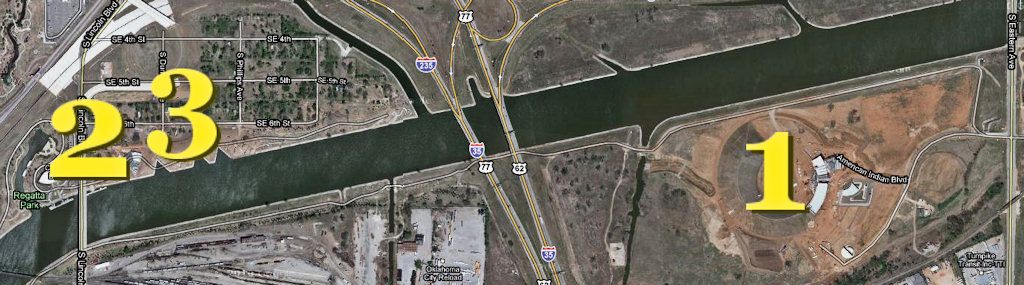
Photos in the above video were taken by me between 2006 and September 2010 — the video's background sound is from the stunning Mountain Magic video presented by the Chickasaw Nation at www.oklavision.tv. The photos, and many others, are shown below in greater clarity and resolution, sans music. The items which I've chosen for this review of changes to the city's core between December 2006 and September 2010 are broadly shown in the pair of maps below -- generally, the area is a rectangle about 2 miles square between Martin Luther King Jr./Eastern on the east, Western on the west, and 15th Streets on the north and south:
Thumbnails of the 26 items I've selected for this article are shown in the following table which presents items along the route shown above, beginning at the American Indian Cultural Center and ending with the Central Business District. Click on a thumbnail image or link to move to a particular item. At the beginning of each group, a "regional" title is shown which links to a brief discussion of the area involved. At the end of each completed group, a link is present to return to the index shown here.
This article contains only projects which were either (a) in progress but not done in December 2006 or (b) were started after December 2006 and are either done or in progress. Note is made at the article's end of items promised but not yet started.
Quite possibly, I've unintentionally left something out ... feel free to leave a comment and I may add it to my list. Detail for the items below is being populated in the next day or so.
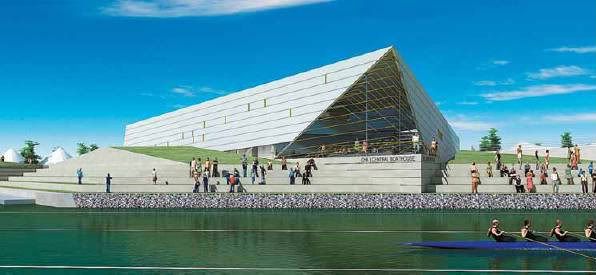
Beginning with and extending westbound from the American Indian Cultural Center on the Oklahoma River, exiting developments have occurred during the past 3 ½ years. In addition to the three projects shown here which are already underway, another boathouse, shown at right, is still raising funds, $3.5 million of the $8 million tag being pledged as of May 2010. This one is for the University of Central Oklahoma women's rowing team facility, $3.5 million in pledges having been received from alumna Martha Burger ($500 thousand) and Chesapeake Energy ($3 million). Burger is Chesapeake Energy's senior vice president of human and corporate resources, so this project, too, has a Chesapeake connection and will be called CHK Central Boathouse. A University of Oklahoma project is also in development. St. Anthony's Hospital has also joined the "Boathouse Row" bandwagon by entering into a 5-year agreement. According to a July 2, 2010, Oklahoman article by Corbin Hosler, "Olympic athletes training in Oklahoma City will soon be receiving free health care and access to St. Anthony Hospital physicians." In another Oklahoman article, this one by Steve Lackmeyer (May 18, 2010), he proclaims in his headline, "River of Dreams Comes True," obviously drawing on the fictional baseball experiences portrayed in the movie, Field of Dreams, but this story isn't a Hollywood movie but is, in fact, real.
It is real that the US Olympic Committee has designated Oklahoma City as an official Olympics and Paralypmics training site for rowing, canoeing, and kayaking. That was done in August 2009, and other high-profile designations for the city and its downtown river have occurred since then.
None of this would have been possible, of course, but for MAPS 1 which transformed the segment of the North Canadian River between Meridian and Eastern/MLK Jr. from an area that had to be mowed twice a year while avoiding the occasional television set which had been trash-dumped there into the remarkable national and international rowing venue that it has since become.
It is also worth mentioning that nothing I'm writing about in this article has anything to do with the Oklahoma River projects which are included in MAPS 3 — they will be icing on the cake when they happen — this article is fundamentally about projects done or started within the past 3 ½ years. For much more about Boathouse Row, see Mike Knopp's blog and riversportokc.org.
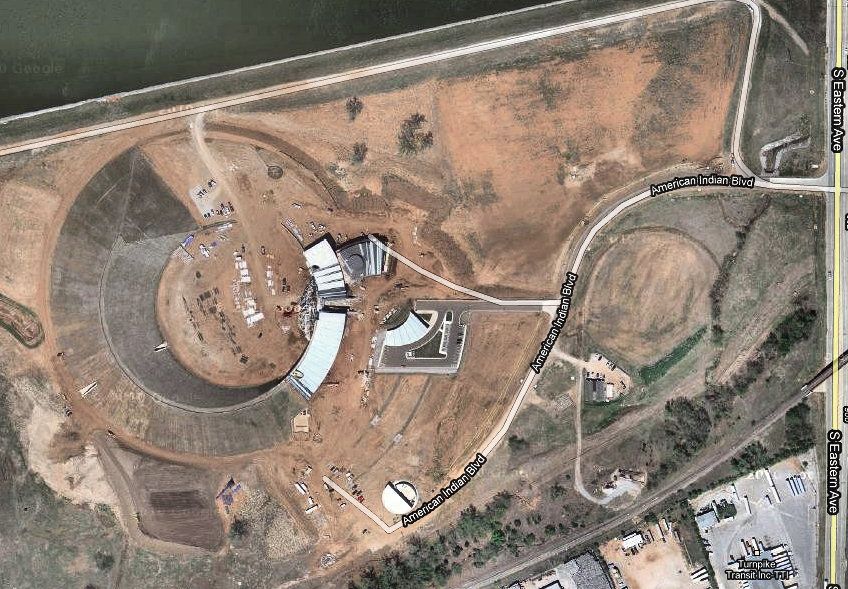
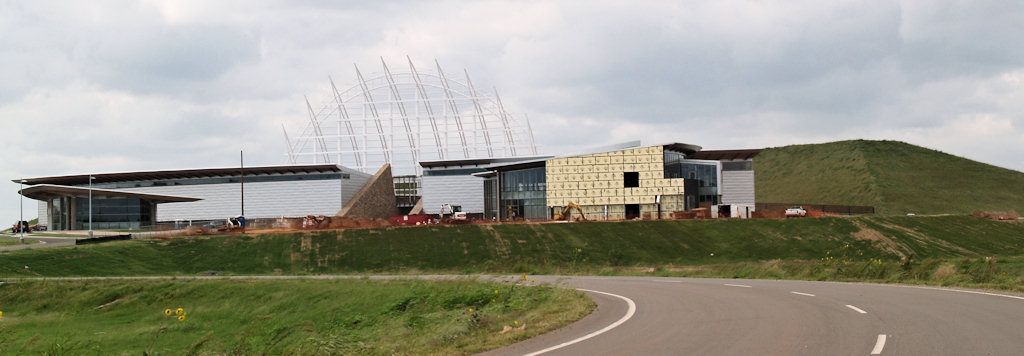
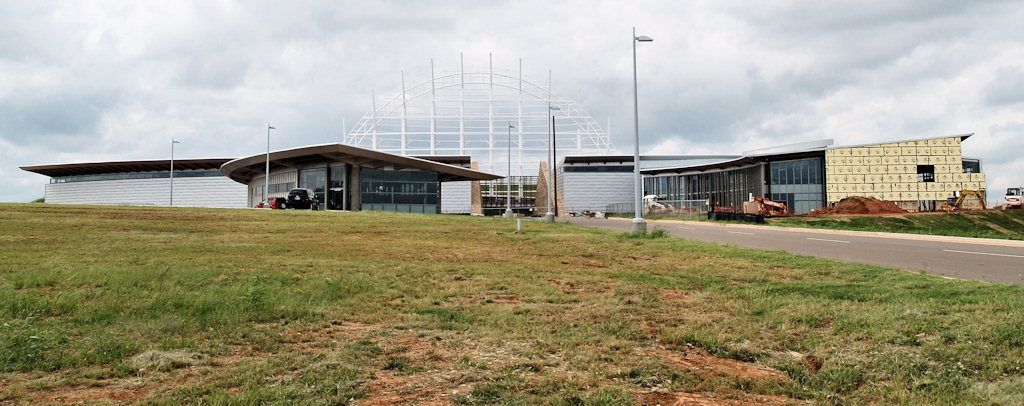
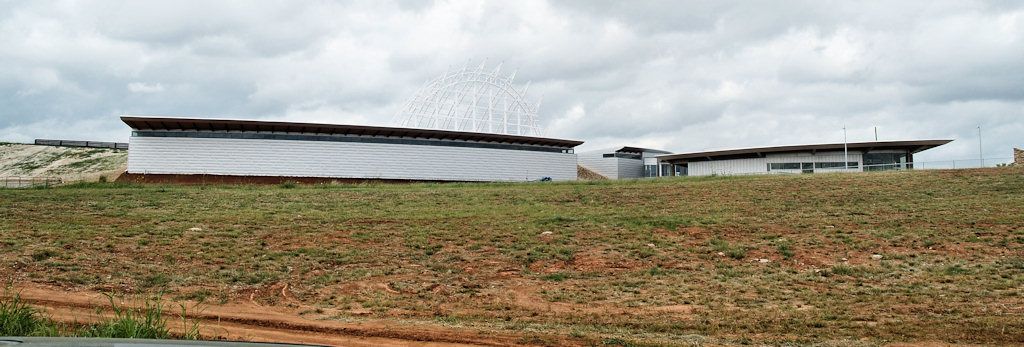
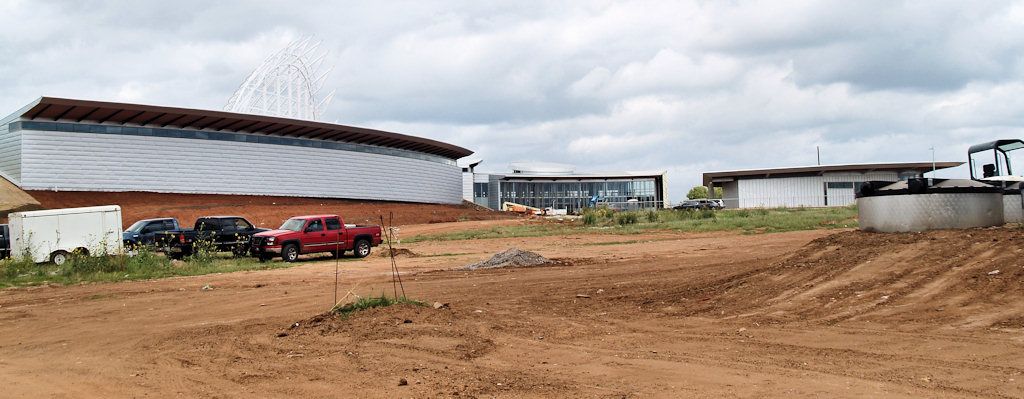
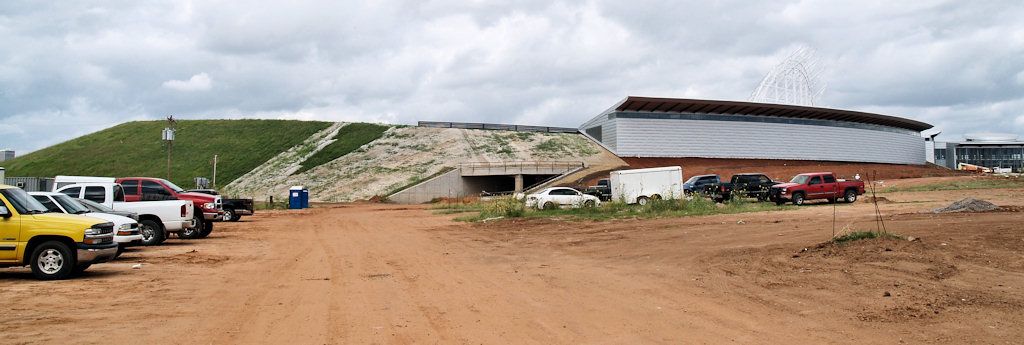
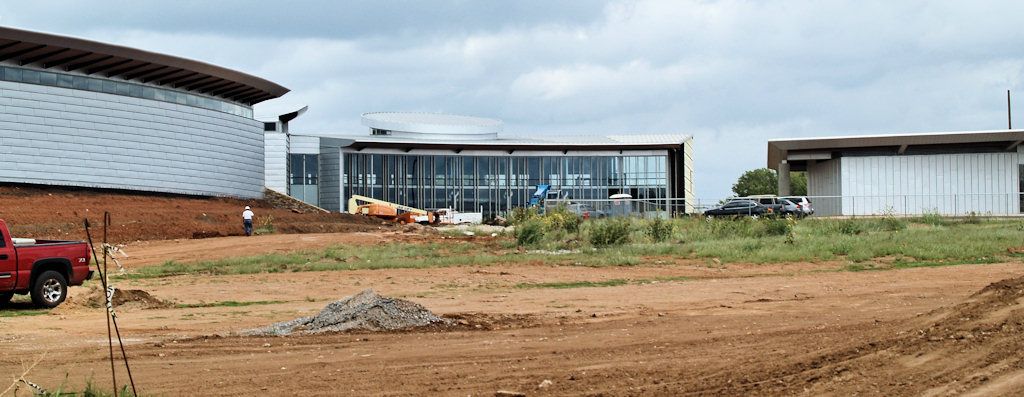
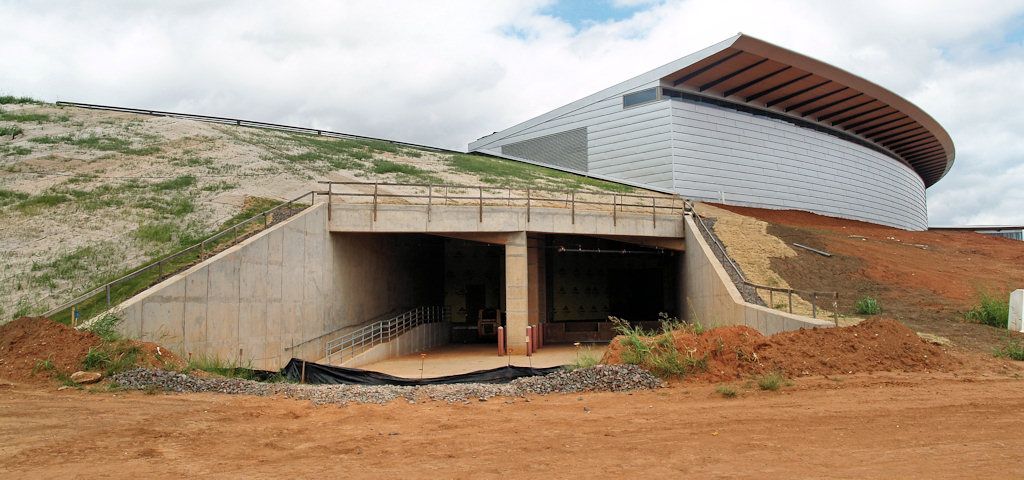
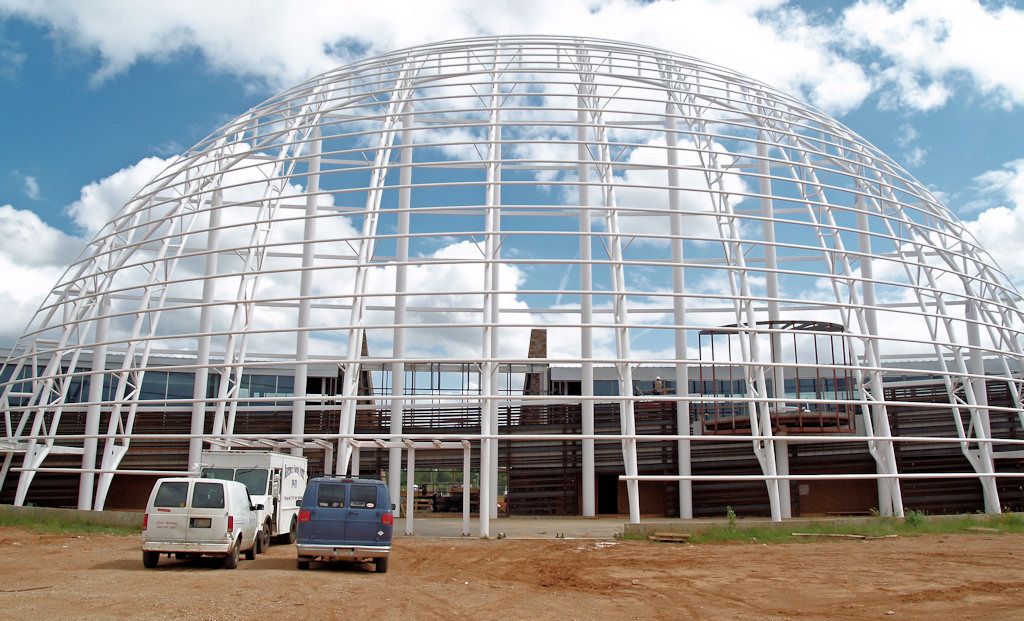
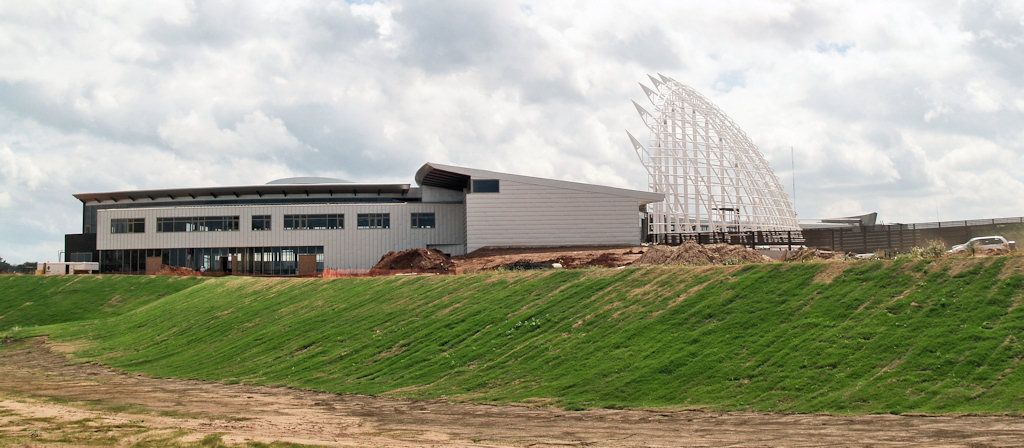
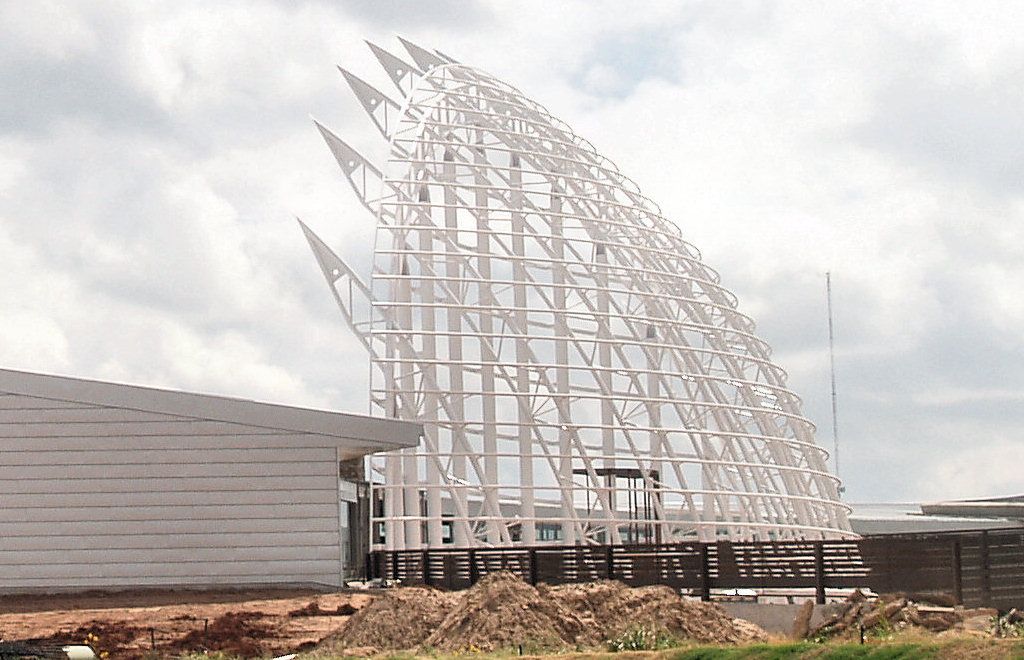
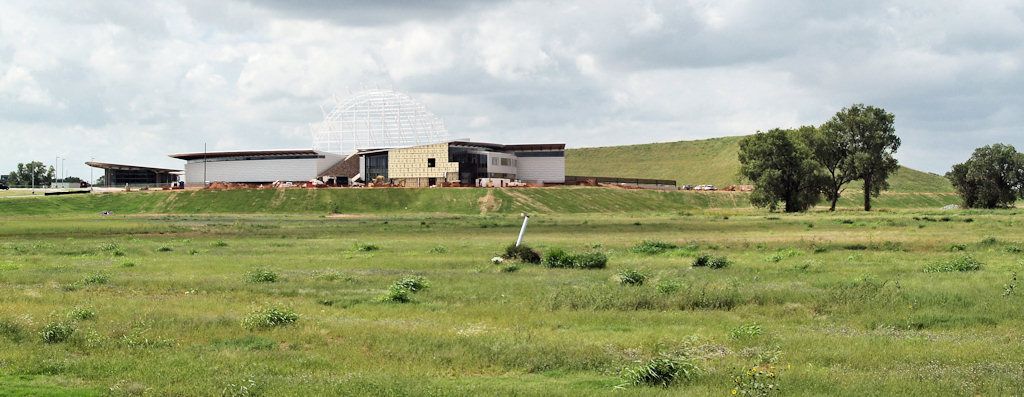
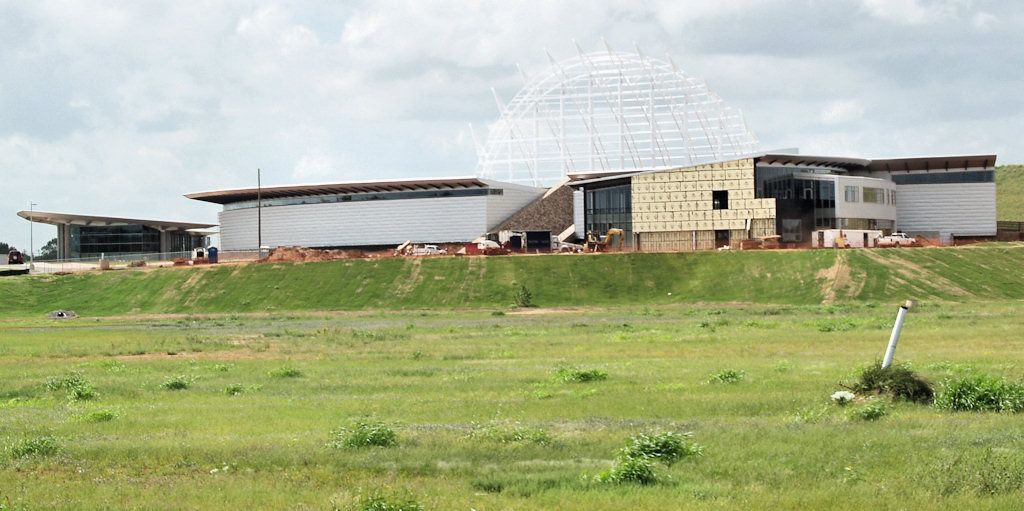
1. American Indian Cultural Center & Museum. Being constructed on a 300 acre tract that was once the site of 57 producing oil wells and financed by a mixture of state, federal, and private funding, this at least $177 million project has the potential of being the most important and culturally significant endeavor this state has ever known. The idea of the center was conceived in the 1970s but development into what we are seeing grow on the south side of the Oklahoma River at Eastern Avenue didn't come quickly. Many favored the present site as early as 1989 but it wasn't until 1998 that the location was finally determined. In 1994, the Legislature created the Native American Cultural and Educational Authority to build and operate a cultural center and museum to generate awareness and understanding of the history of tribes and their relationship to Oklahoma today. I'm not particularly developing that history here but you can learn much more at the organization's excellent web site. For an 11-minute video describing the project, click here.
A model for the plan was shown in the April 26, 2009, Oklahoman, as follows:
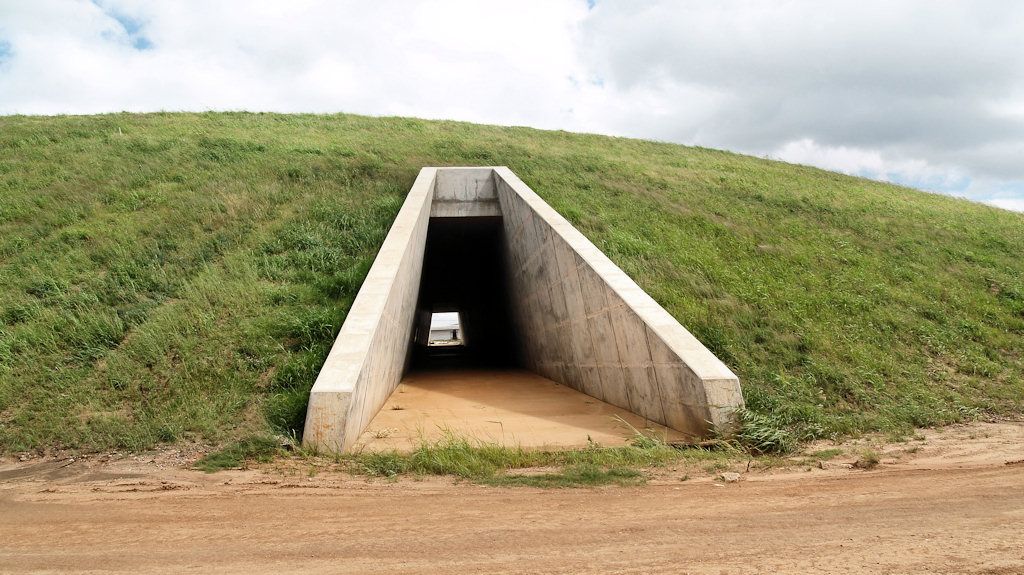
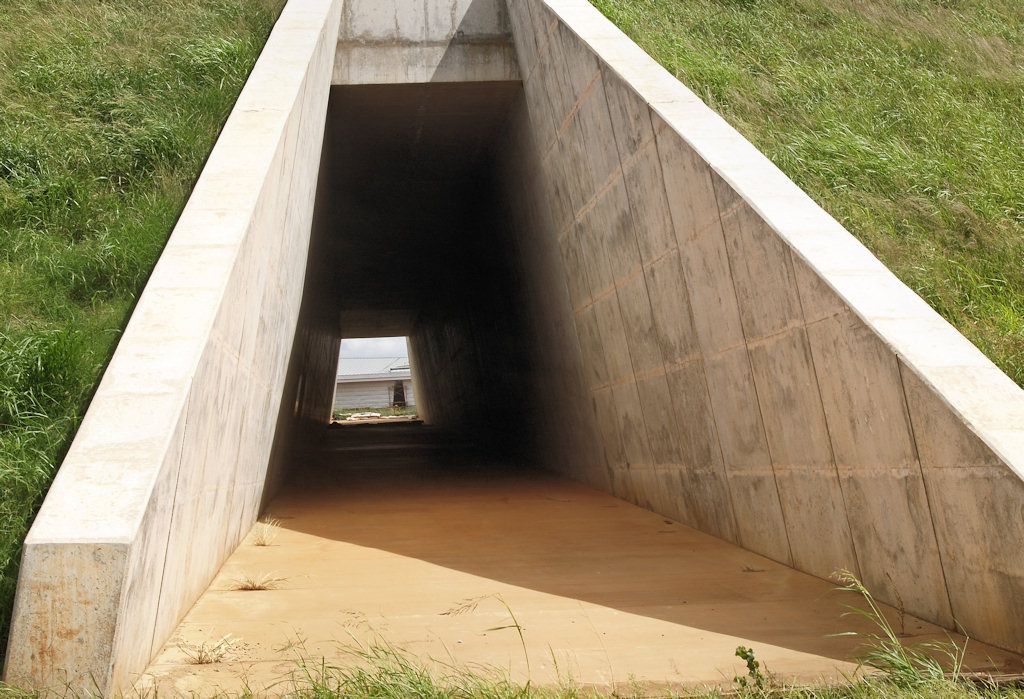
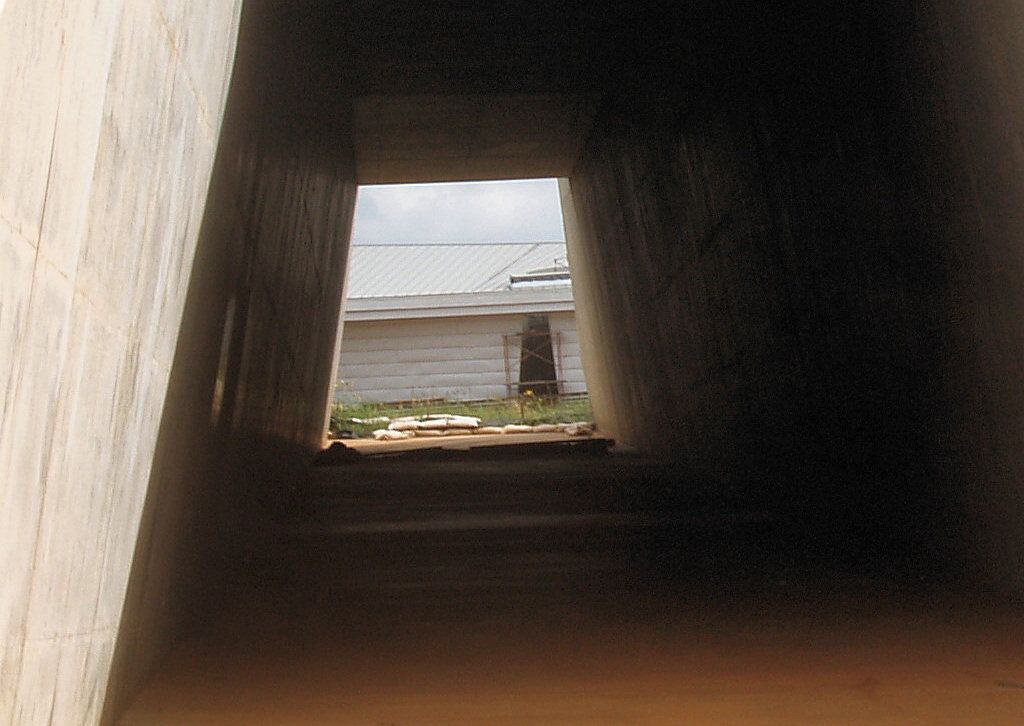
The large dirt mound we've seen when driving on I-40 near Eastern started to take form on the 300 acre tract in 2006 but its progress is and has been dependent upon continued state funding since the state is the source for the bulk of the expense. The 2010 spring term of the Legislature ended on May 28, 2010, with no funding provided for the project, and it was feared that the omission would result in work stopping when previously authorized funds were expended. The May 28, 2010, Oklahoman reported that when existing funds run out continued progress on the project will come to a stop. However, on September 30, 2010, Governor Brad Henry authorized $6 million in federal stimulus funds to be released to the center so that construction could continue through the fall 2010 session of the Legislature. How the 2010 fall legislative session handles the funding problem remains to be seen. At the time of that May 28 article, $82.8 million of the projected $125 million had been expended, $66.3 million from the state, $7.5 million from the federal government, $4.9 million from the city, and $4.2 million from private and tribal sources, the $6 million just released from the governor's discretionary fund being on top of that. In our Republican controlled Legislature, it's anyone's guess what will happen next but Republicans are not well known for largess when funding art-and-culturally related projects, if any money is willing to be spent by them for such purposes at all. Even so, I'm figuring that somehow, this magnificent project will finally get done but when that will happen is completely speculative and I'm not aware that even a target completion date presently exists. Had a bill in the spring legislative session been adopted (it never reached a vote), construction was projected in spring 2010 to have been completed in 2014, but as of this October 1, 2010, Oklahoman article, if all goes well with the upcoming legislative session the projected completion date is 2015.
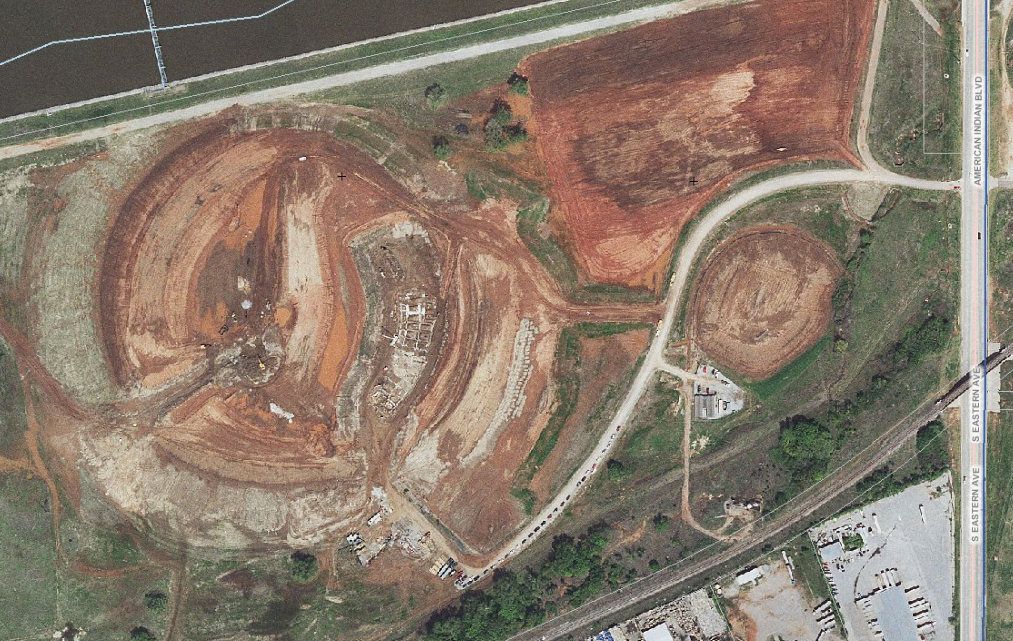
The big artificial mound at the intersection of I-40 and Eastern/MLK Jr. began taking shape in 2006. Compare the three images shown below:
Oklahoma County Assessor's April 19, 2007 Aerial
Aerial Photo Shown in the April 6, 2009, Oklahoman
Google Satellite 2010 Aerial
I took the following photos on September 23, 2010. I took a clockwise path around the large mound, beginning at the east point of entry. The following 15 images can be viewed in three sizes. Click a link below for views which are above 3000 pixels wide; click the image for a 1024 pixel wide view; the images shown in the pages here are 510 pixels wide.
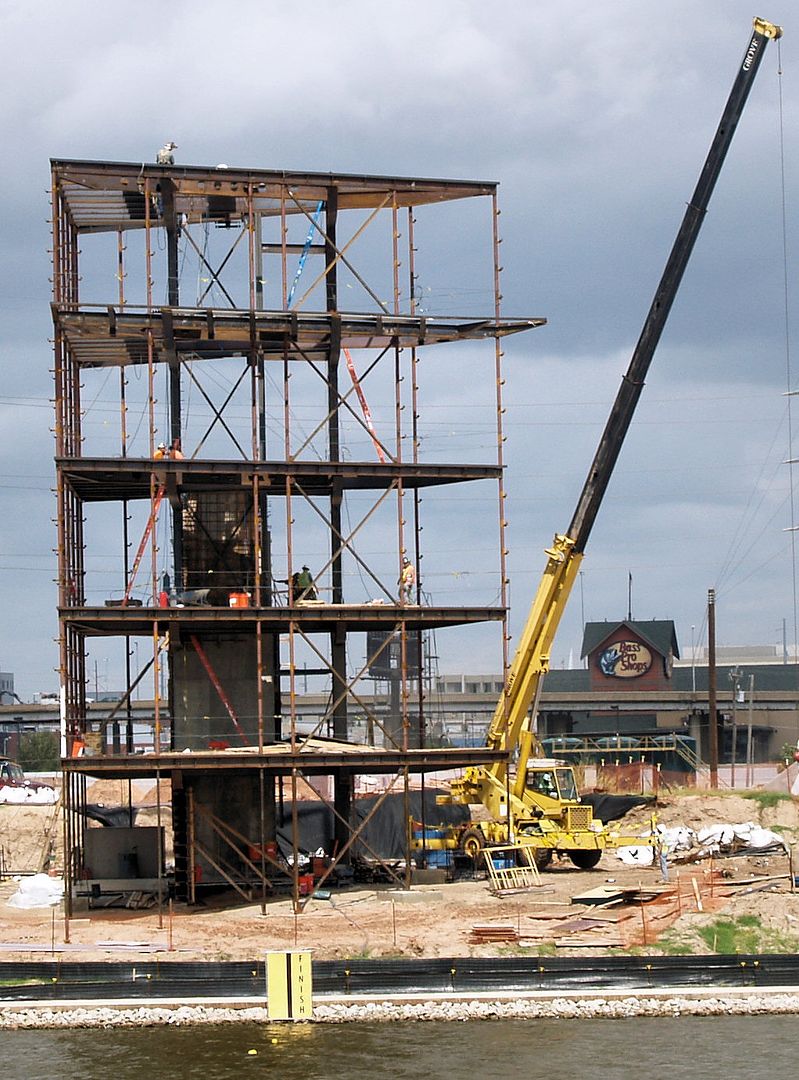
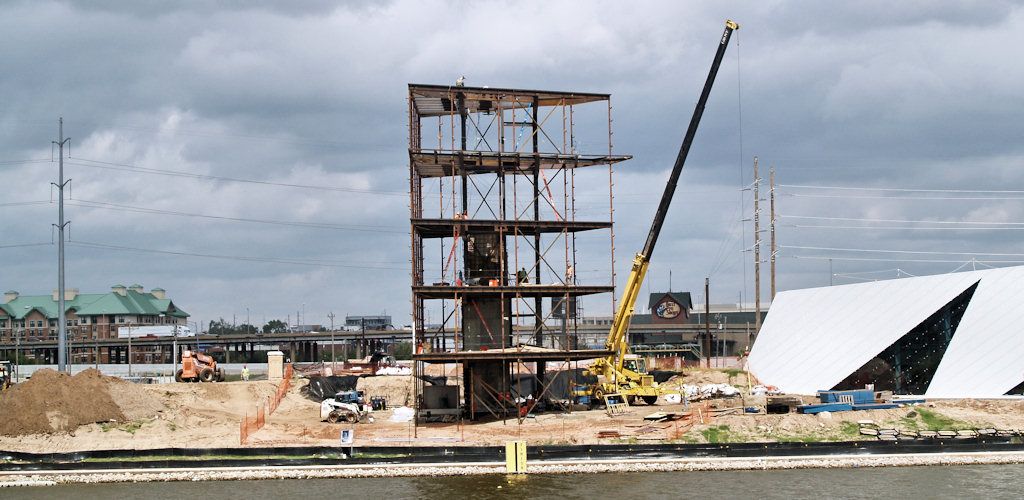
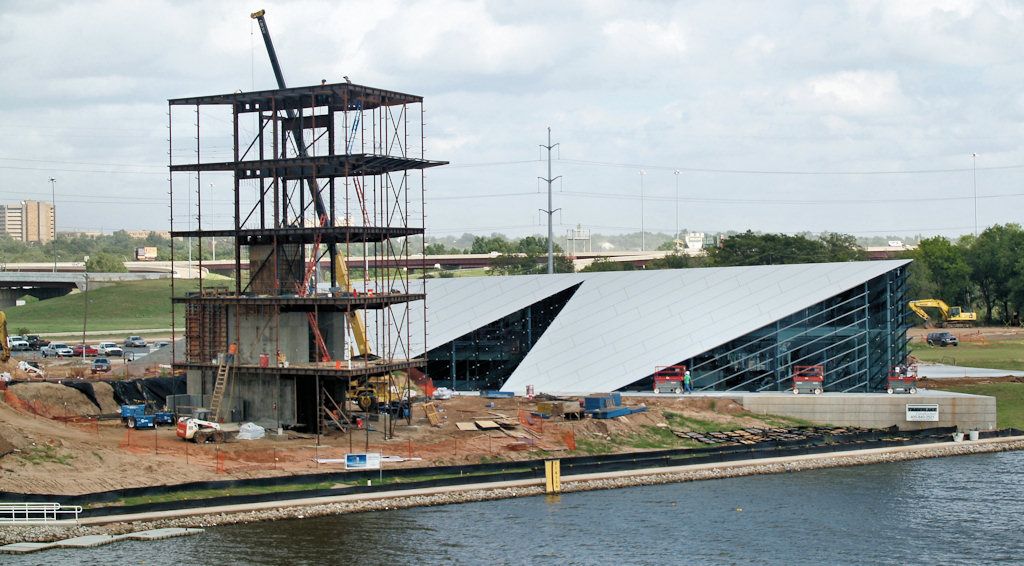
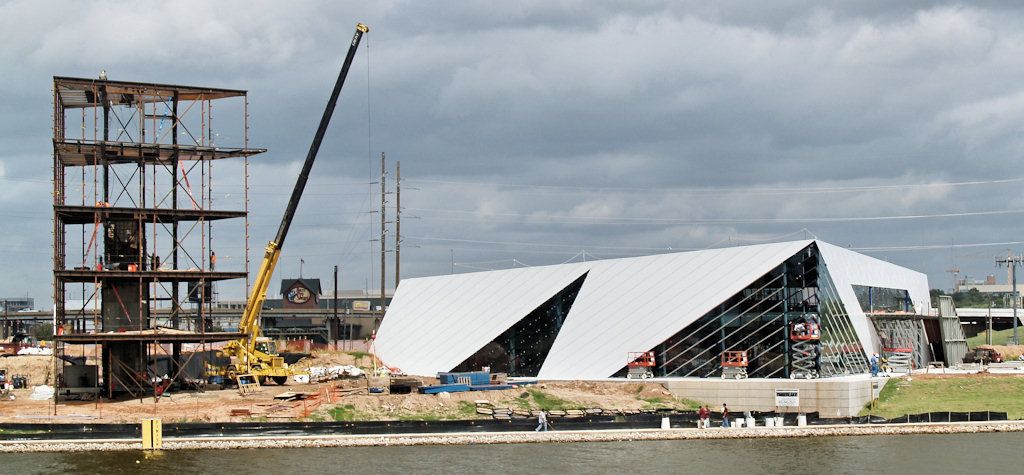
2. Chesapeake Finish Line Tower. Rand Elliott, who designed the Chesapeake Boathouse, is leaving quite a mark on the Oklahoma River. Not only is he the designer of the Chesapeake Finish Line Tower, he designed the Devon Boathouse, coming up next. This $5 million project is another gift to the city by Chesapeake Energy. In a May 22, 2009, Oklahoman article by Steve Lackmeyer, Aubrey McClendon, Chesapeake's CEO, is quoted as saying that the company wanted to make a gift to its hometown that would bring it closer to "becoming a truly world-class venue for rowing, canoeing, and kayaking training and competition." The article reported that the 4 levels of the tower serve different purposes: Level 1 - regatta organization and technology; Level 2 - Finish line jury and timing seats; Level 3 - commentary, media, and race control; and Level 4 - VIP penthouse and observation deck. The article notes that the tower is "designed to meet guidelines established by FISA, the international governing body for the sport of rowing."
I took the following photos on September 23, 2010. Click on any photo for a 1024 pixel wide view.
Completion is expected in early 2011. Other images are present in the Devon Boathouse section, below.
3. Devon Boathouse. Immediately east of Chesapeake's above project is the $10 million Devon Boathouse, Devon Energy Corporation contributing $5 million of the cost, but Chesapeake and others are contributors, also. The 33,000 square-foot facility will serve as home of Oklahoma City University's rowing teams. Formal opening of the project is set for October 7, 2010.
I took the following photos on September 23, 2010. Click on any photo for a 1024 pixel wide view.
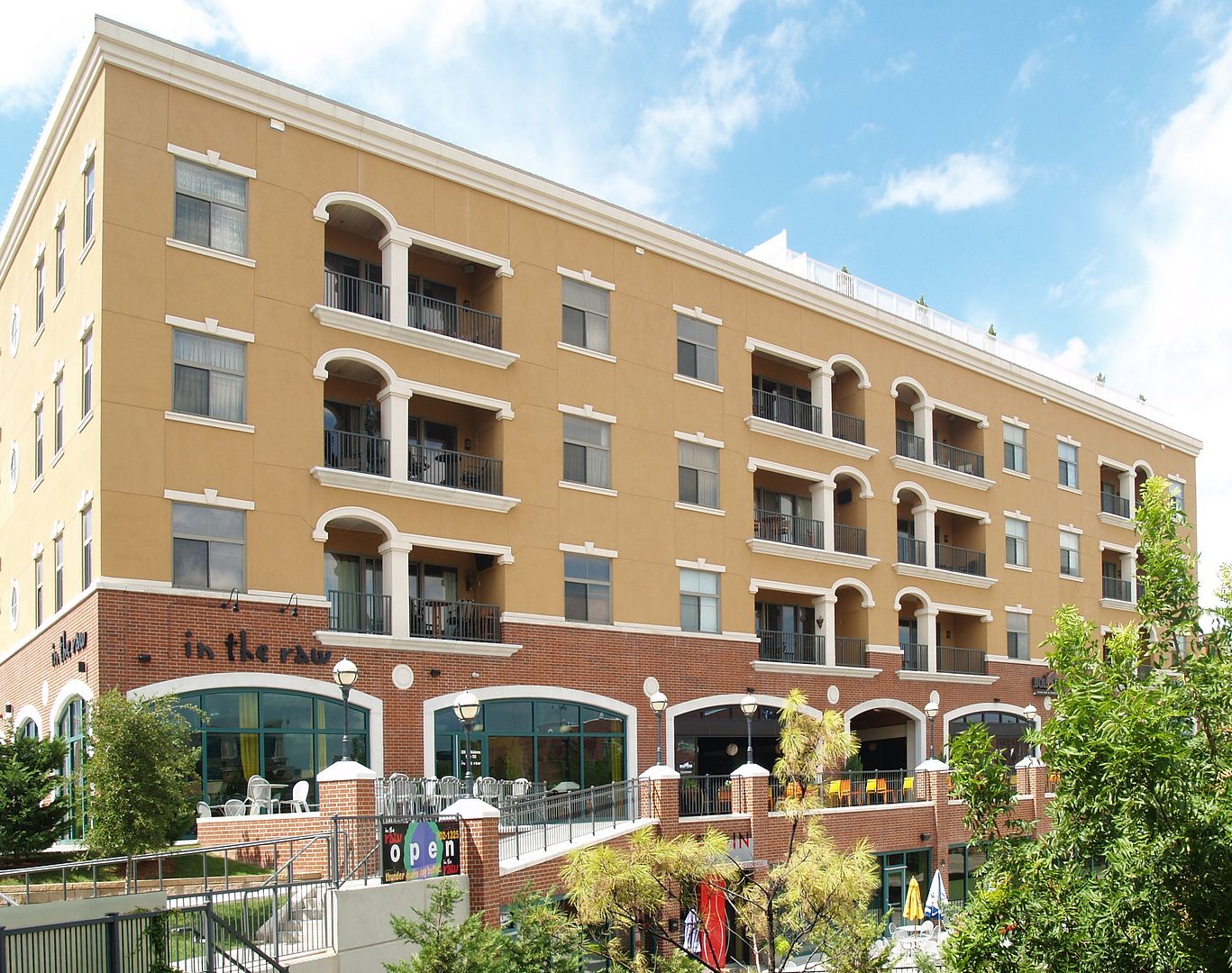
The past 3 ½ years saw a good bit of hope dashed, e.g., the economic recession doomed the Holiday Inn Express and at least one other hotel venture for the area, but it also saw a good bit of progress, as well. The small image at the right shows three of them even though they will not be particularly developed here: Red Dirt Emporium's owners opened a mini-mall, the Red Dirt Market Place, which gives a boost to retail development in Bricktown; the Banjo Museum; the University of Central Oklahoma's very successful Academy of Contemporary Music. Other items include the Chickasaw Nation's Tourism Center in the old Bunte Candy Factory facility as well as other comings and goings of night-life spots, e.g. Coyote Ugly. This article doesn't develop such items but merely notes that the following is not all that there is.
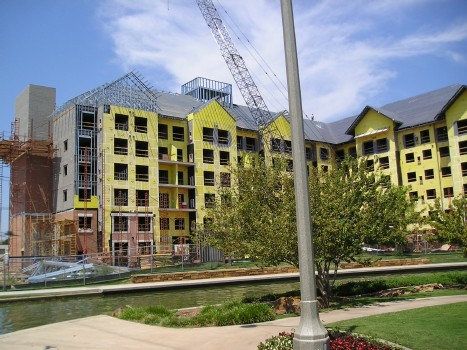
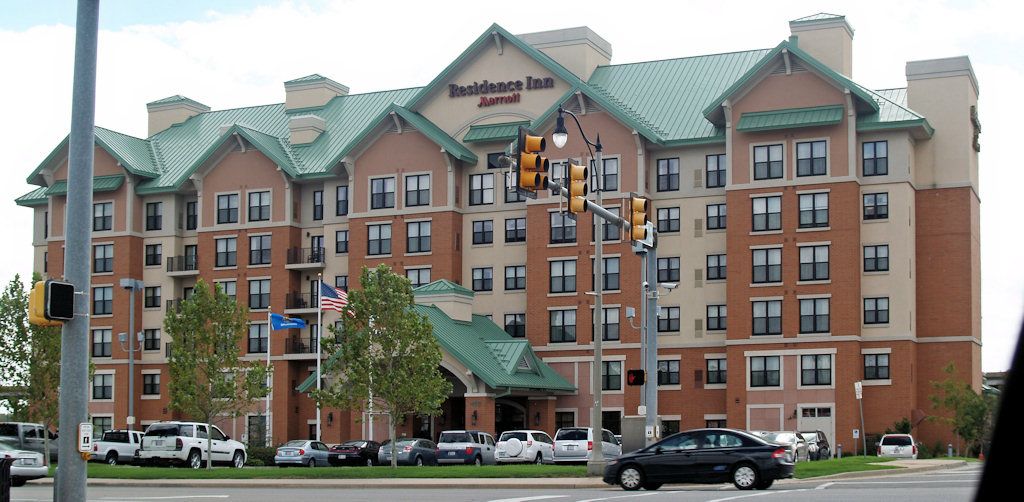
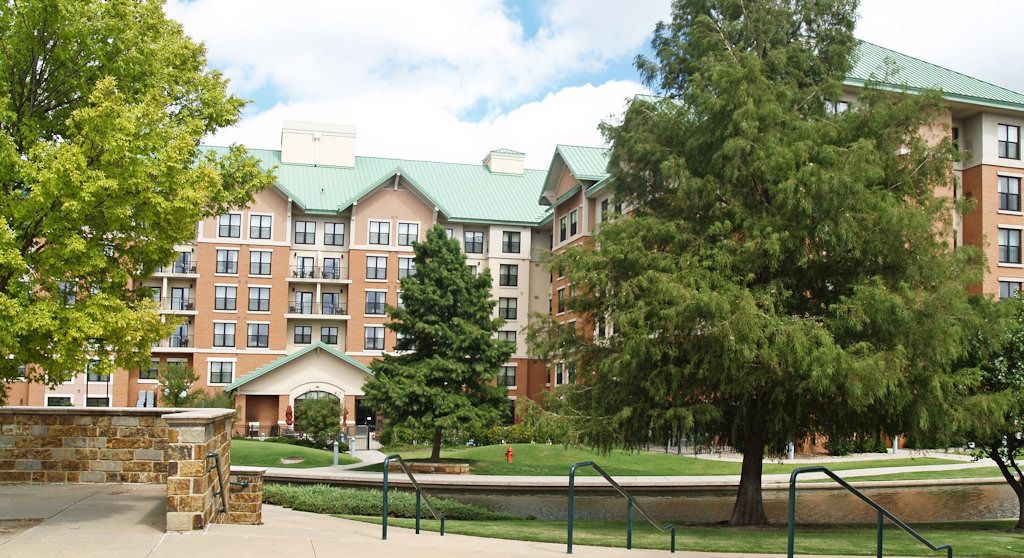
4. Marriott Residence Inn. This project was John Q. Hammonds' third Oklahoma City hotel project (the others being the Marriott Renaissance and the Courtyard Marriott). Construction commenced in the spring 2006 and the hotel opened in December 2006 around the time my original Oklahoma Rising video was put together. Below, the early photos were taken in May 2006 and the more recent on September 23, 2010.
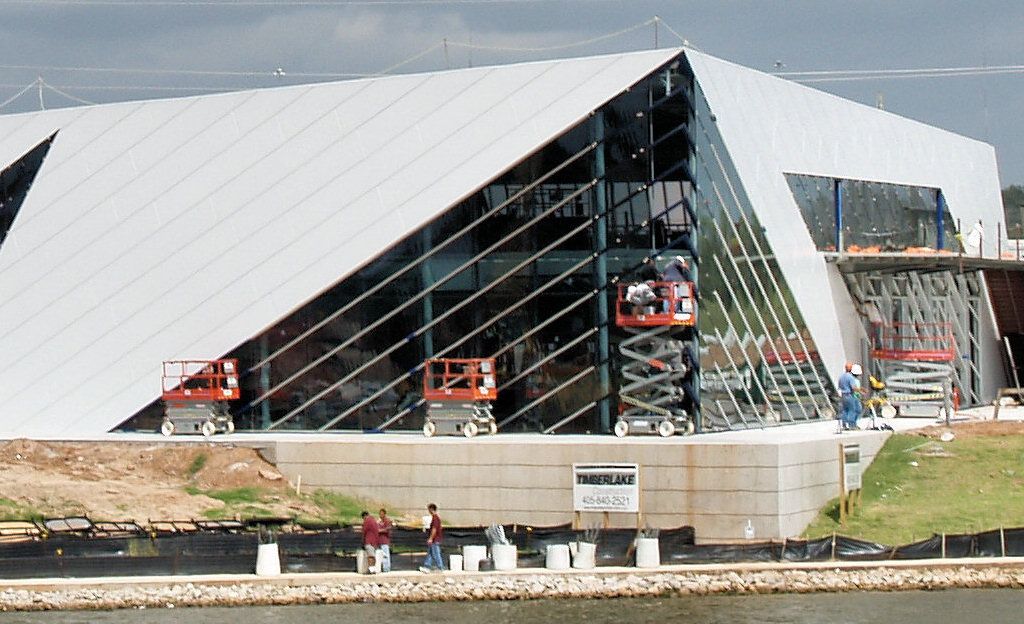
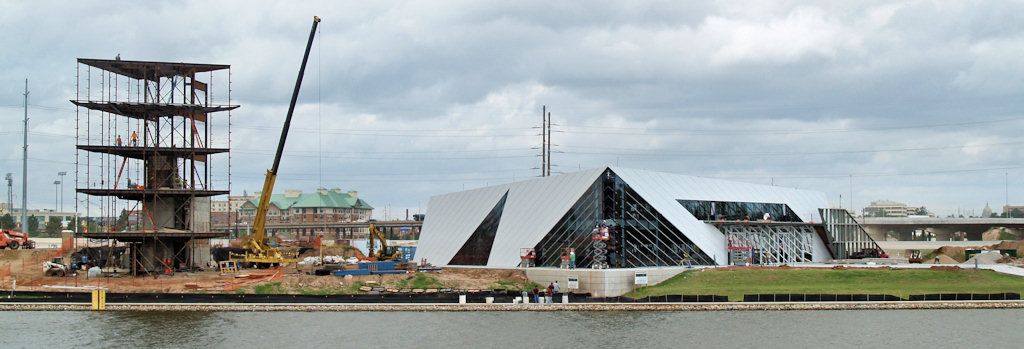
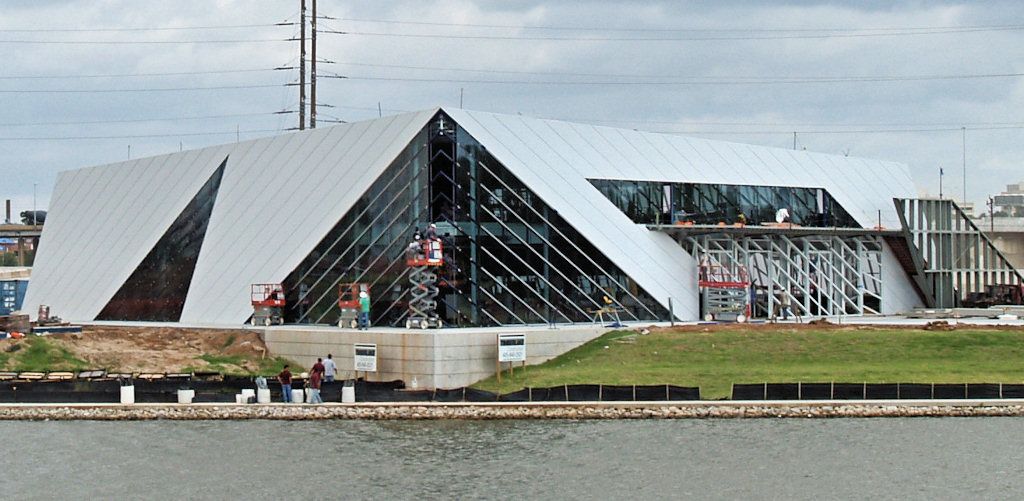
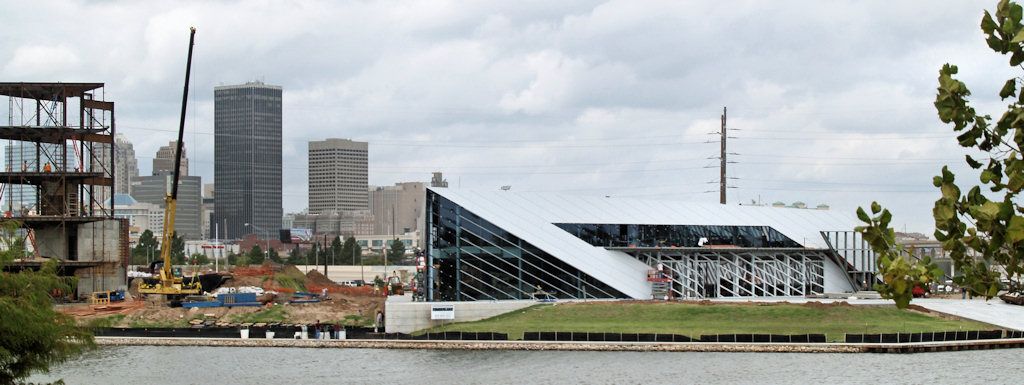
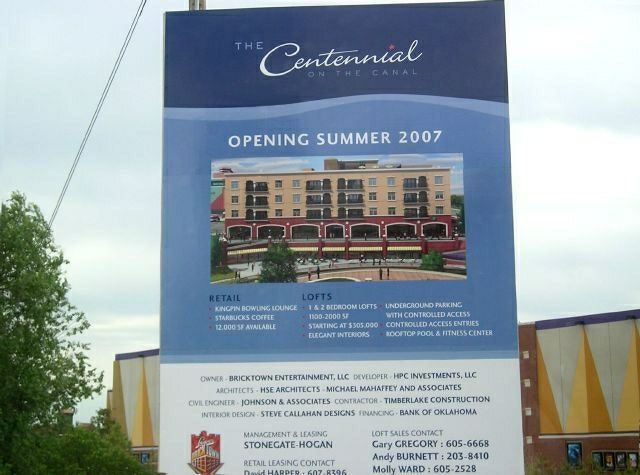
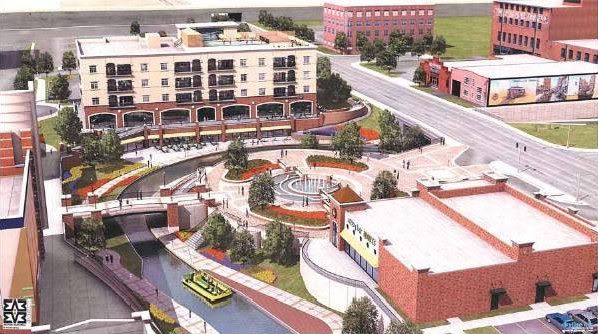
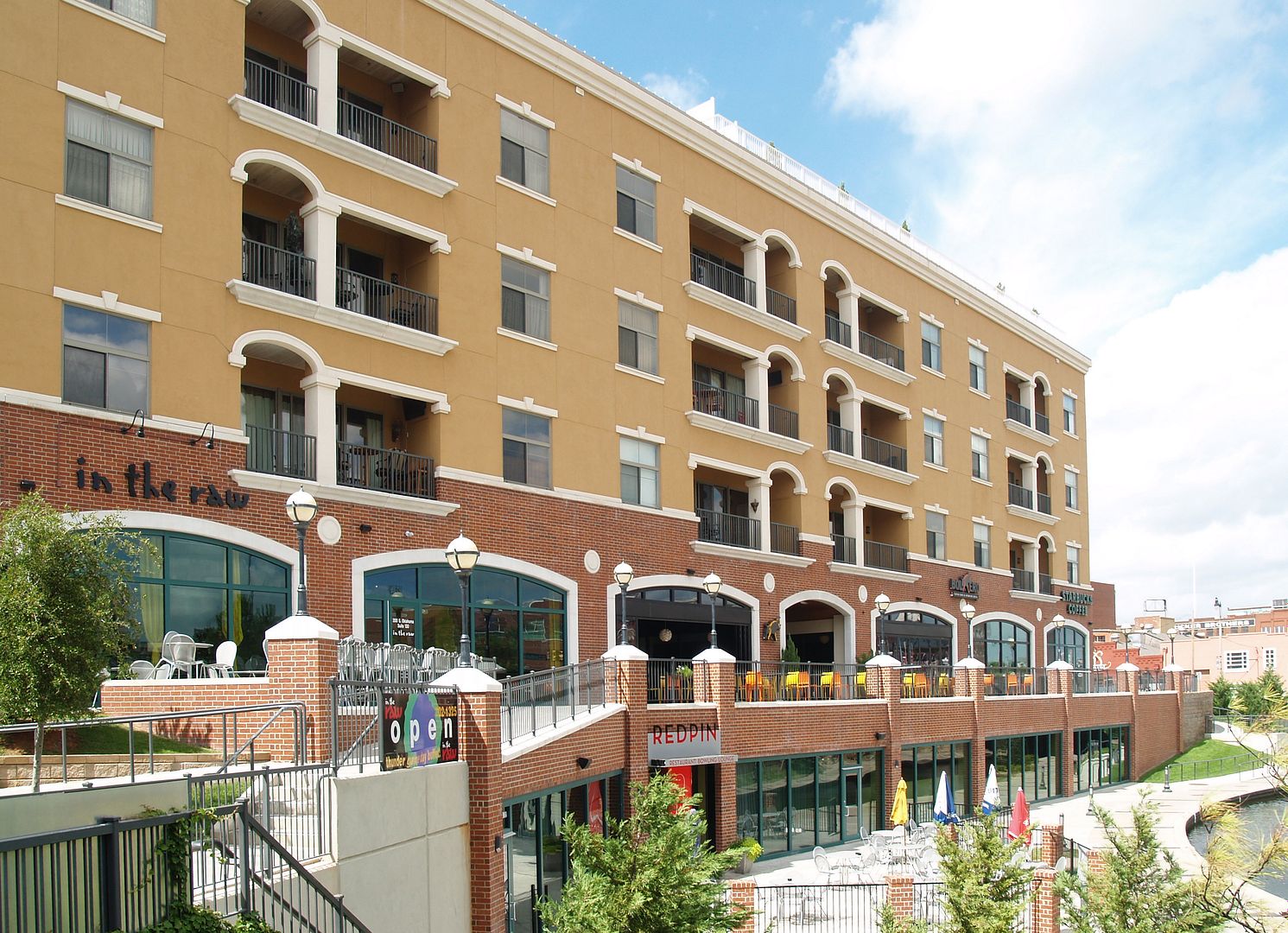
5. Centennial on The Canal. This $14.3 million project by Randy Hogan is located immediately west of the Harkins Cinema on the Bricktown canal. The two lower levels contain a few shops, notably the 10-lane Red Pin Bowling Lounge, and spaces for more, but the upper three levels contain thirty residential condominiums. The project commenced in 2006 and was finished in 2007. The lower photos were taken on September 23, 2010.
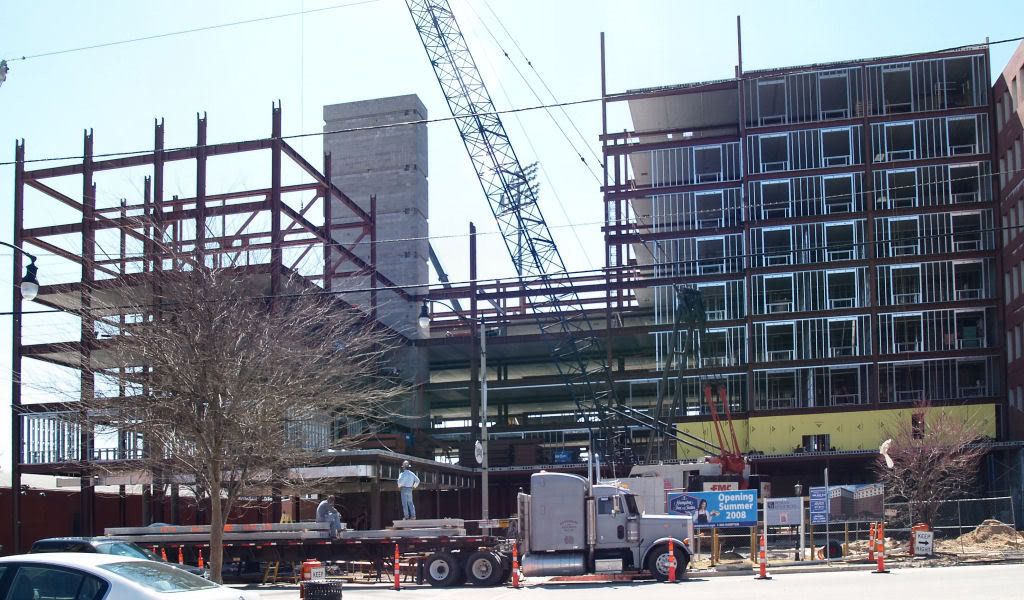
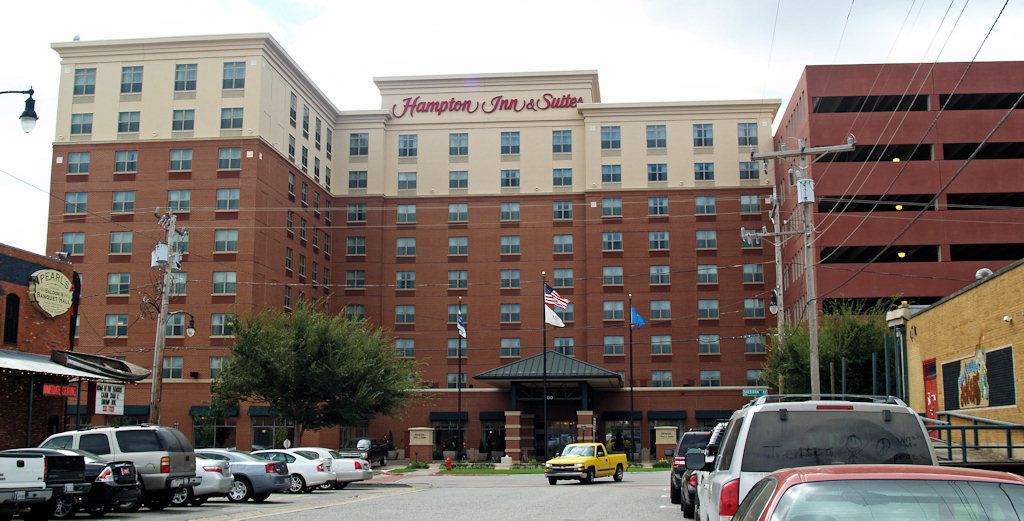
6. Bricktown Hampton Inn. The nifty photo at the right was taken by Oklahoman reporter Steve Lackmeyer in January 2009 shortly before its February 2009 opening and shows a view from an upper hotel room of the Bricktown Ballpark which is located immediately south of this 200 room hotel. This Marsh Pittman $25 million project was announced in 2005. Originally, it was to be a 10-story hotel but the design initially included EFIS (stucco) on the exterior of the top 2 floors which was disfavored by the Bricktown Review Committee. The final project came in at 9-stories to resolve cost issues for abating EFIS with something else -- a Bricktown height variance had been earlier granted. I took the top two photos below in 2007 and the last on September 23, 2010.
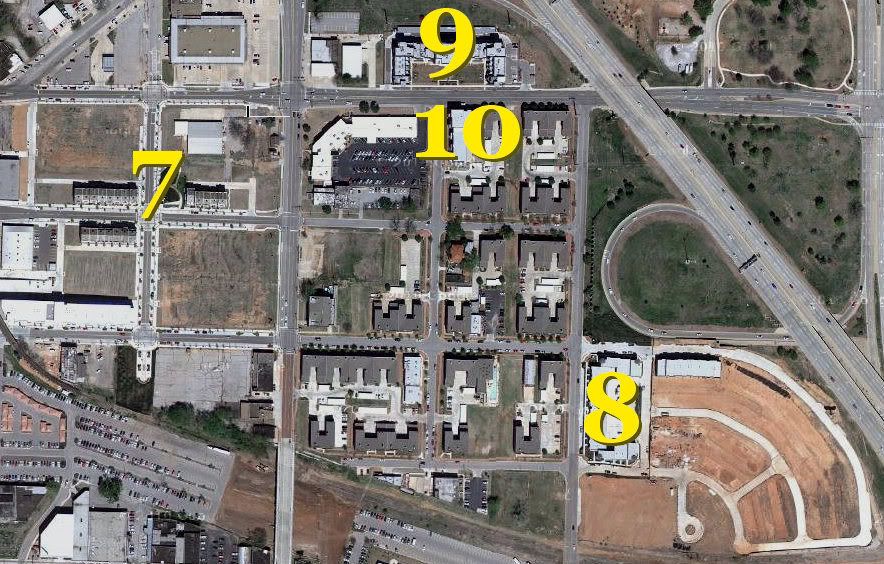
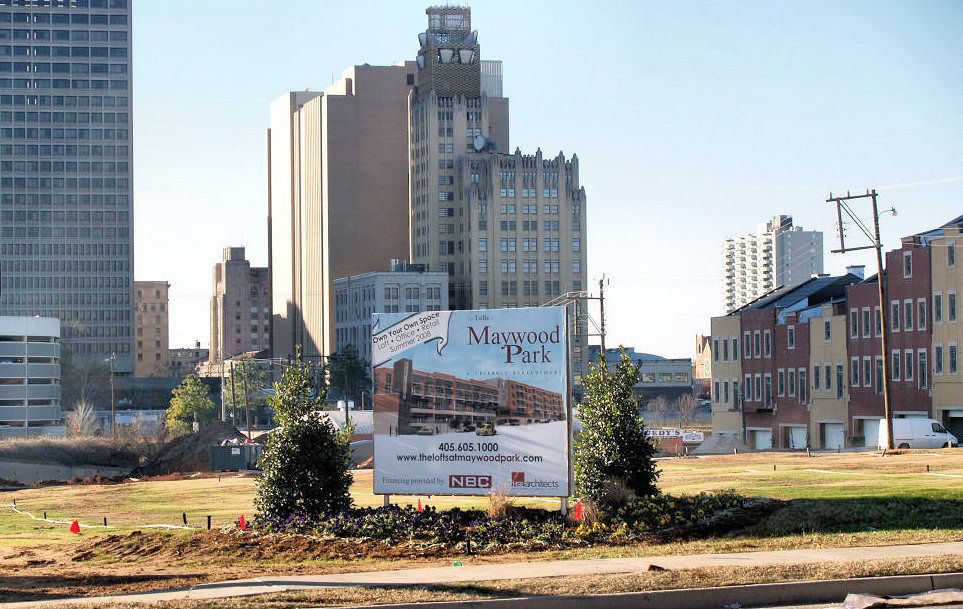
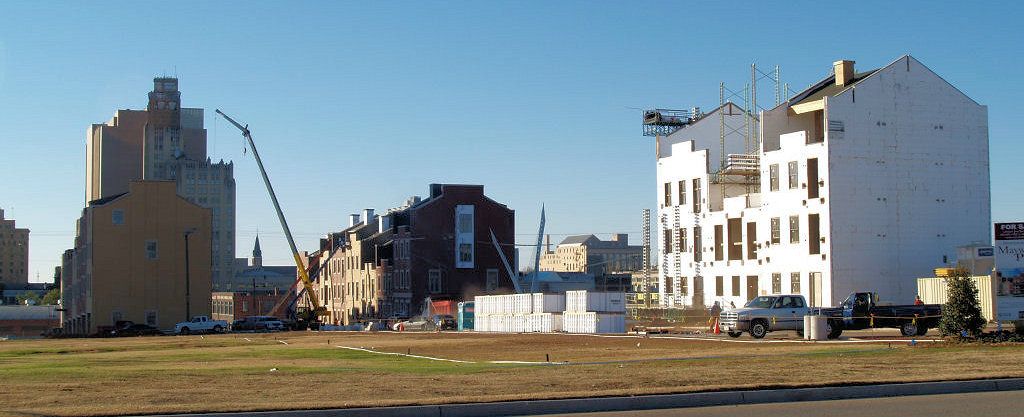
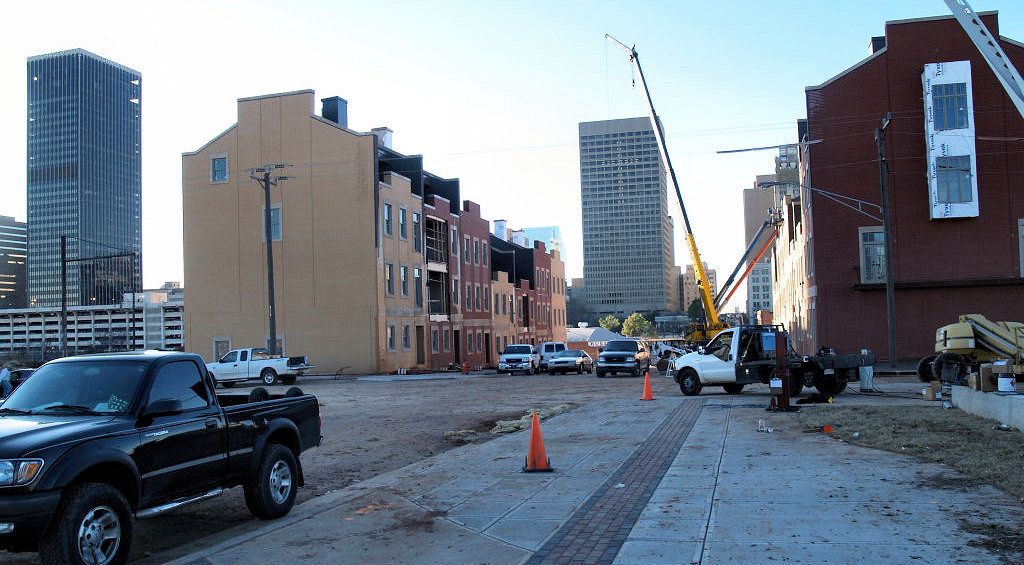
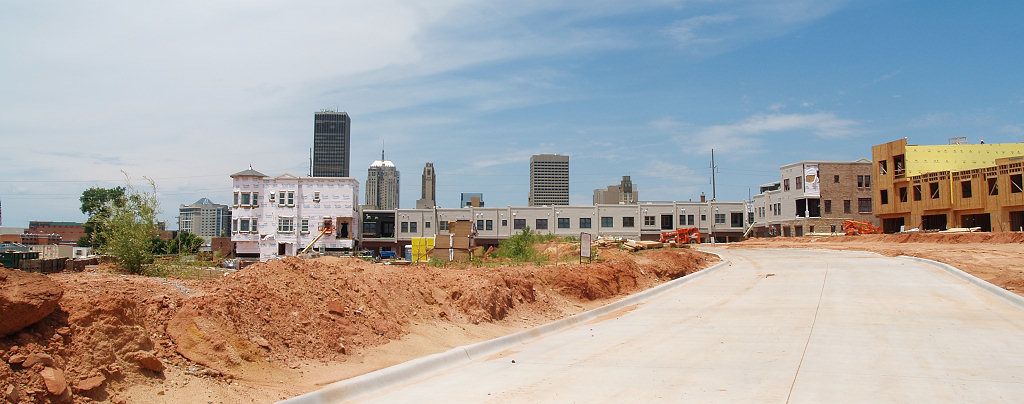
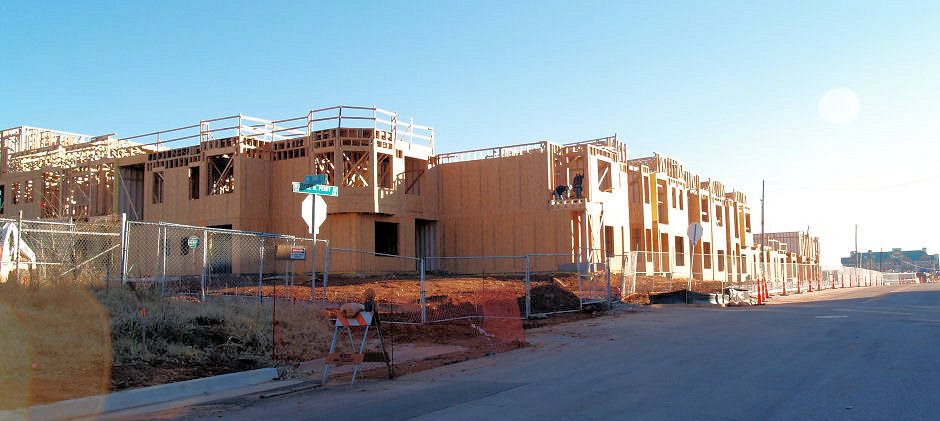
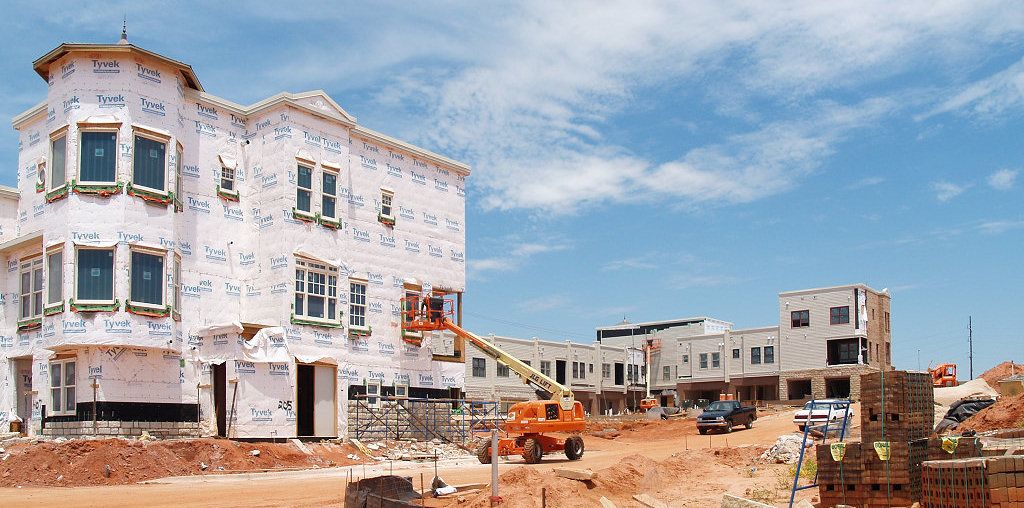
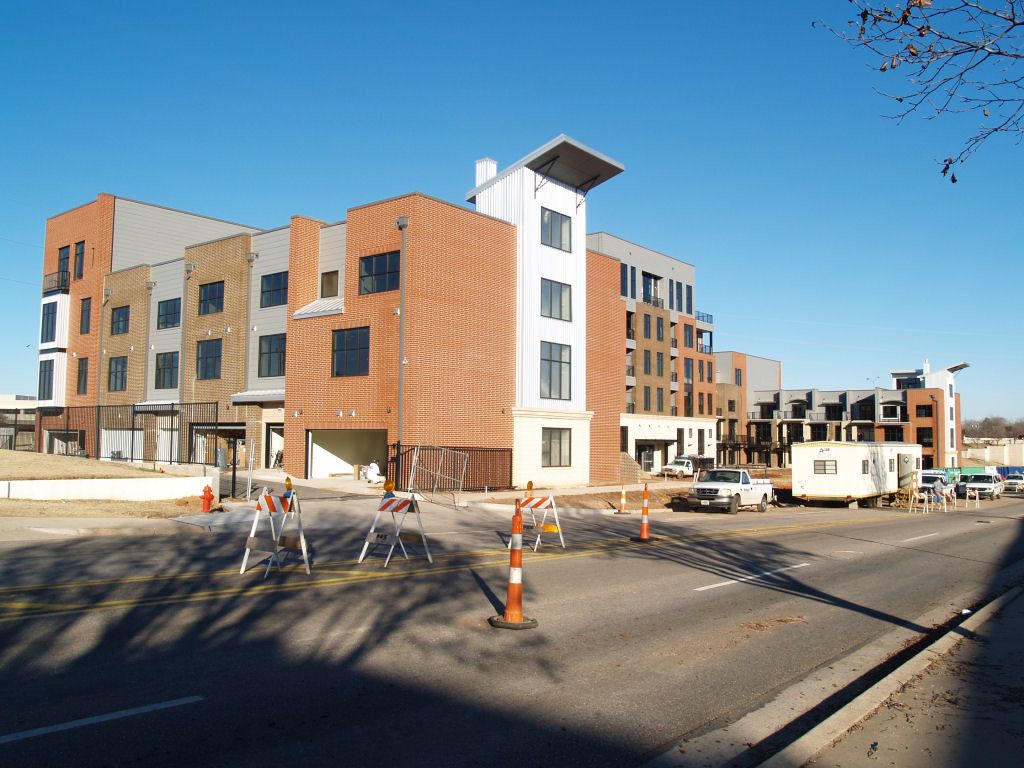
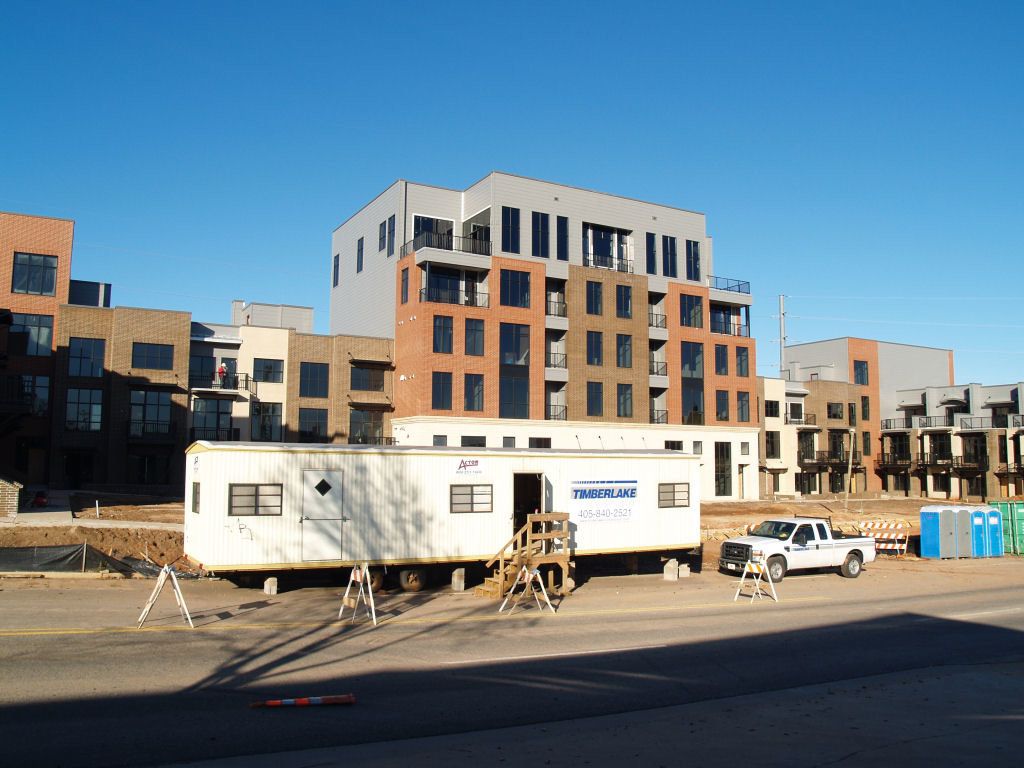
7. Maywood Park Condos. I'll fill in a little history later. The first set of photos below was taken of the Brownstones at Maywood Park on December 18, 2007, and the second on September 23, 2010.
Lofts at Maywood Park, photo taken October 6, 1010
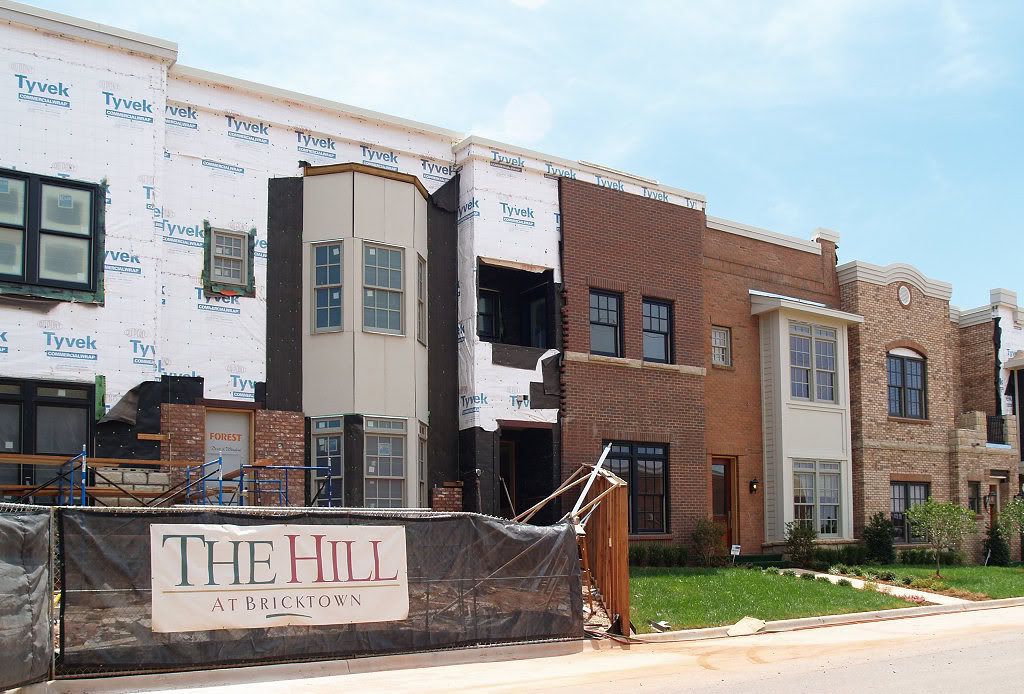
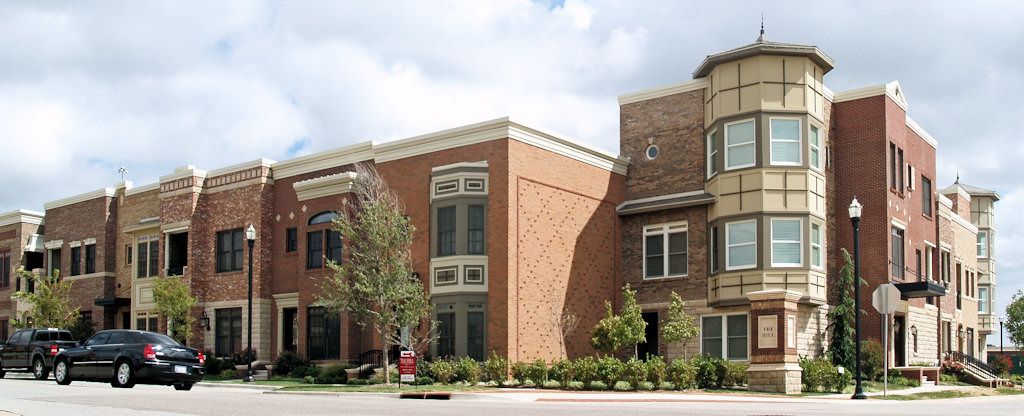
8. The Hill Condos. I'll add descriptive text later. The 1st and 3rd photos were taken June 21; the 2nd and 4th were taken on December 18, 2007; the 5th in August 2008; and the last was taken on September 23, 2010.
9. Block 42 Condos. I'll add descriptive text later. The first 4 photos were taken December 18, 2007, and the last on September 27, 2010. Block 42 is also in the background of some of the 444 N. Central photos following this section.
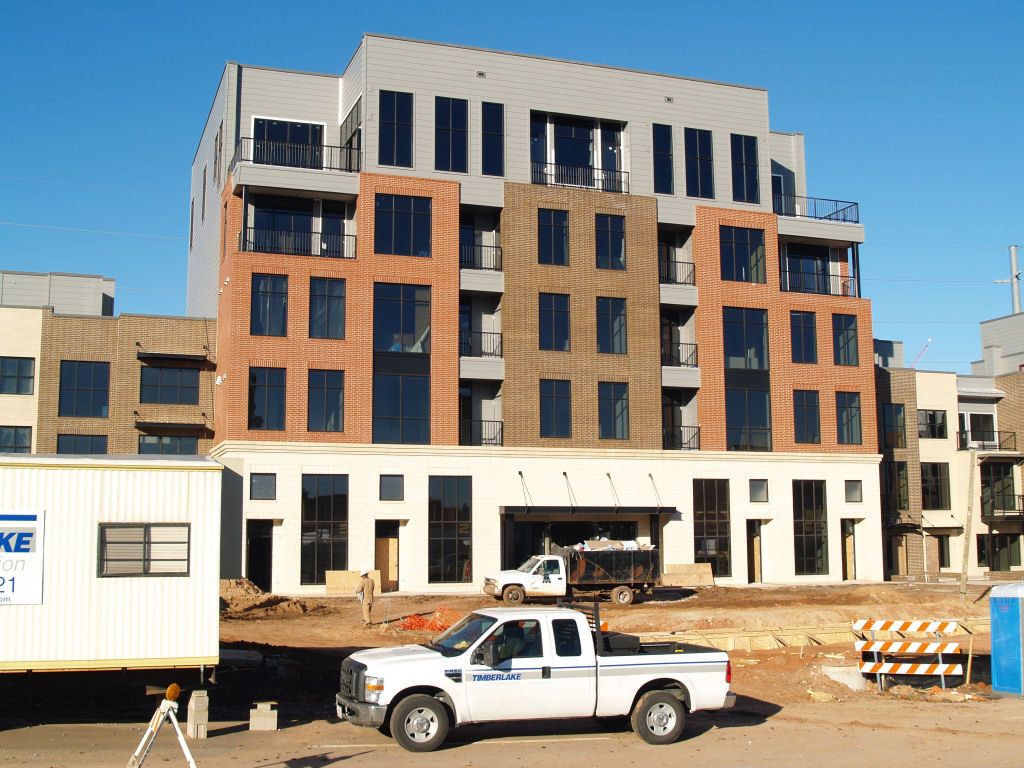
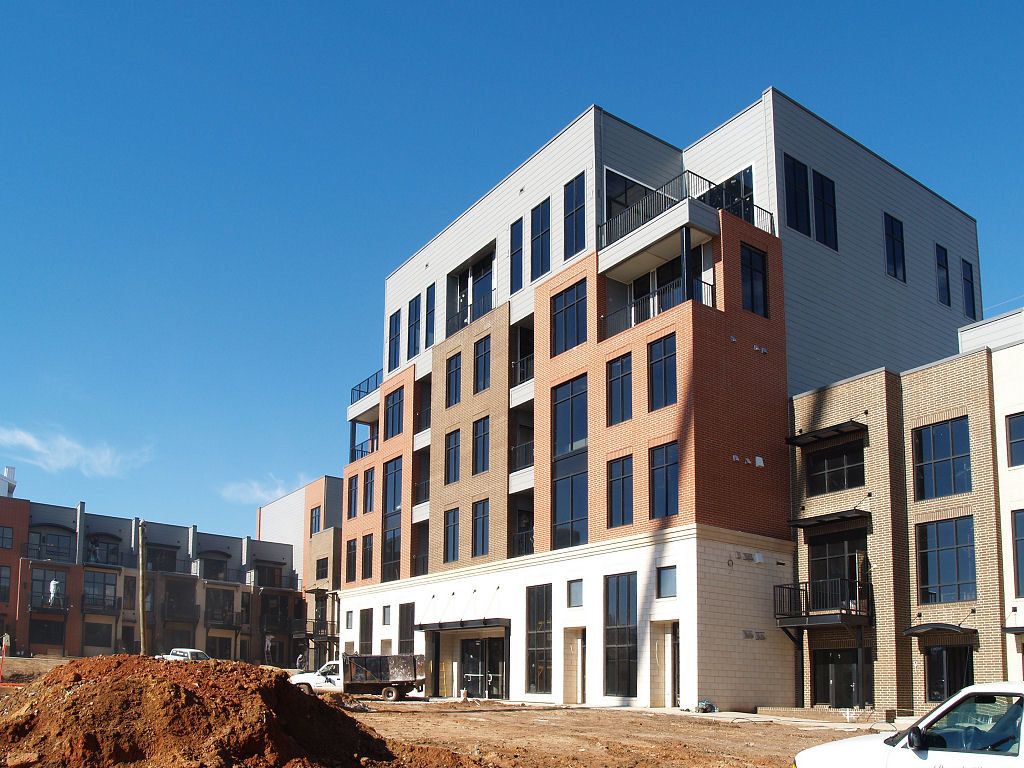
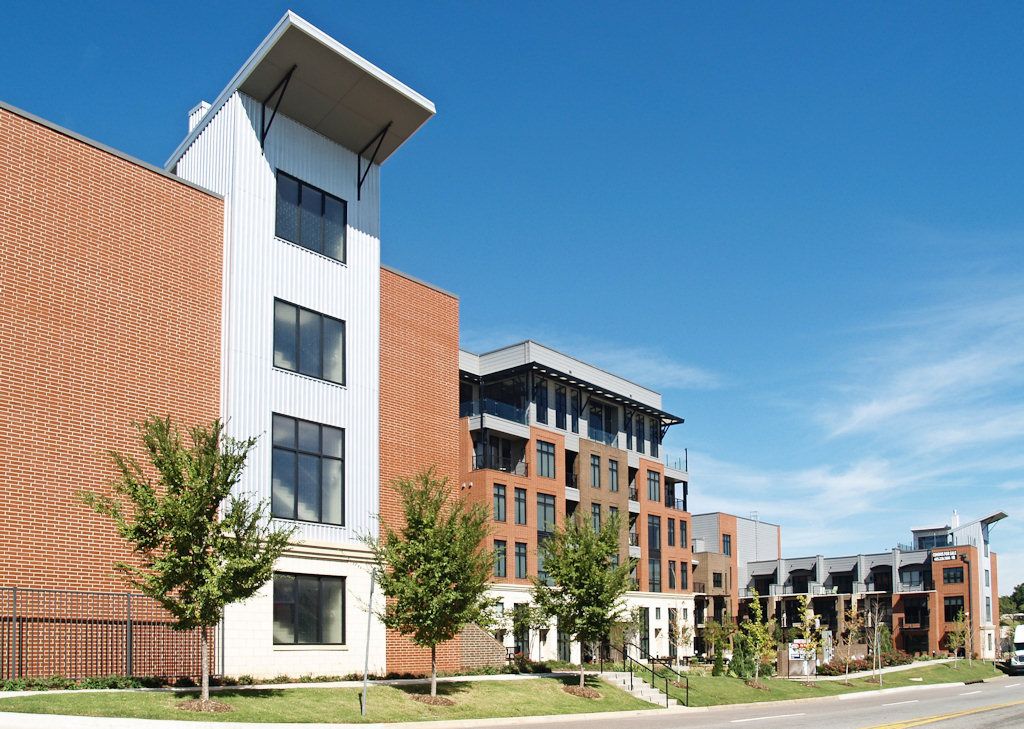
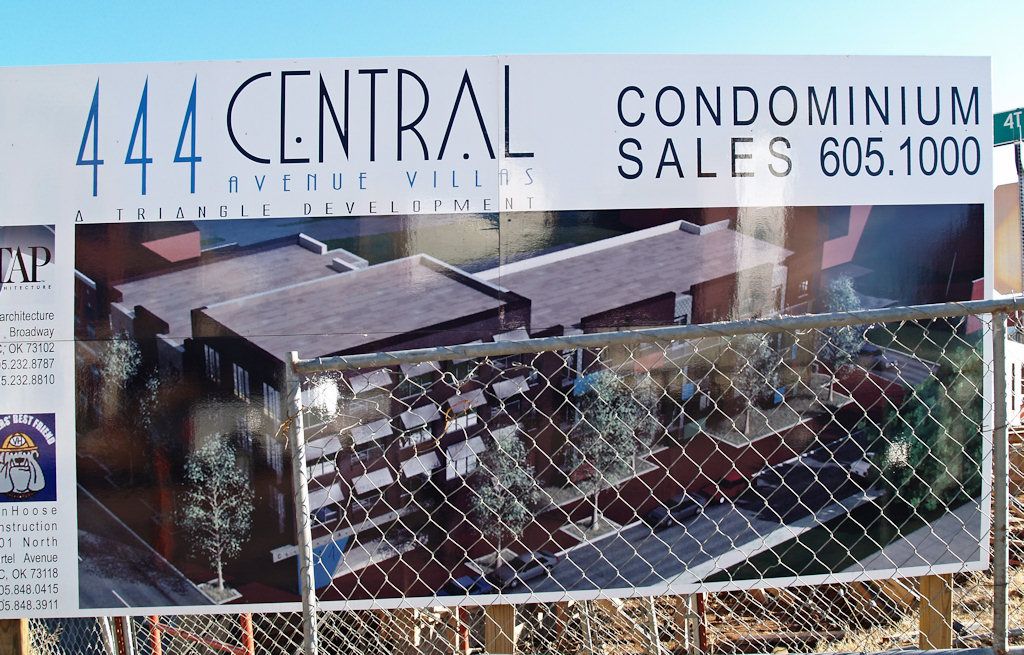
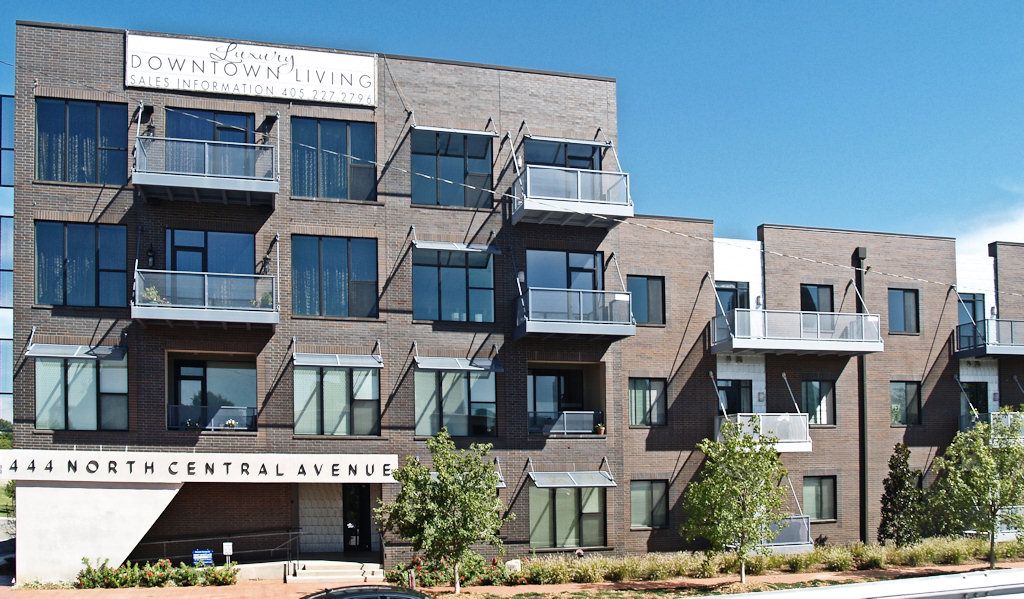
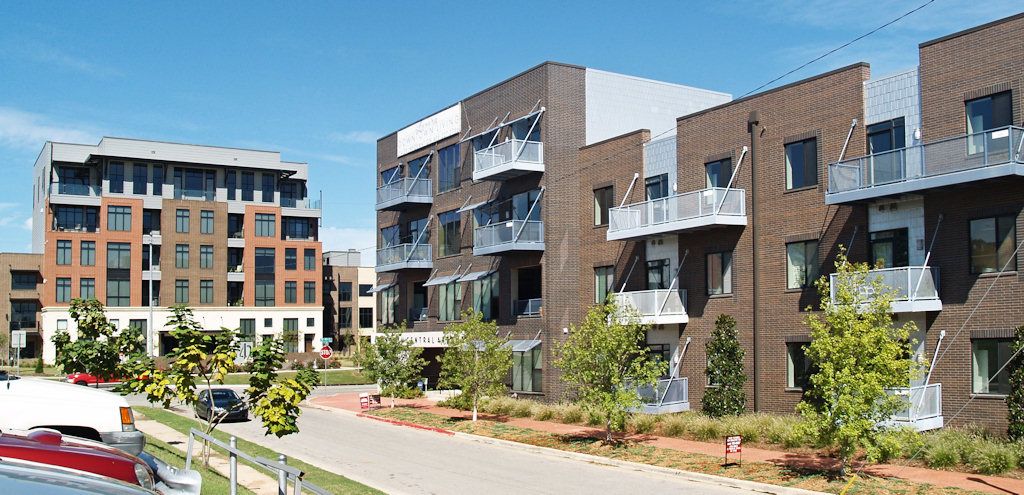
10. 444 N. Central/Central Avenue Villas. I'll add descriptive text later. The first photo(the sign) was taken in September 2007, and the next pair during construction on December 19, 2007. The last pair was taken on September 27, 2010.
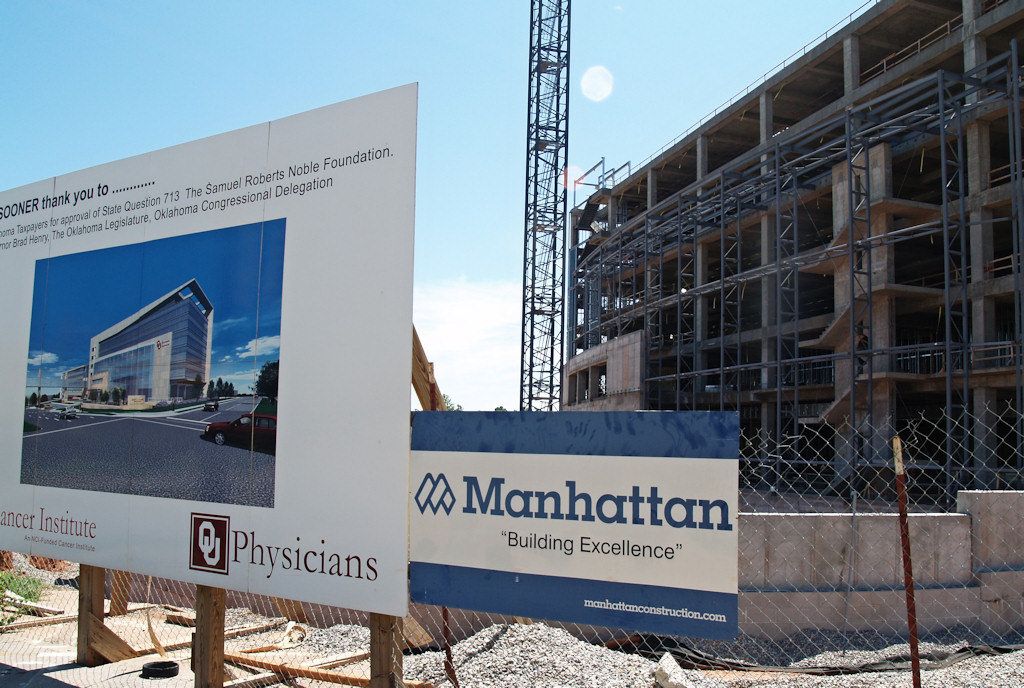
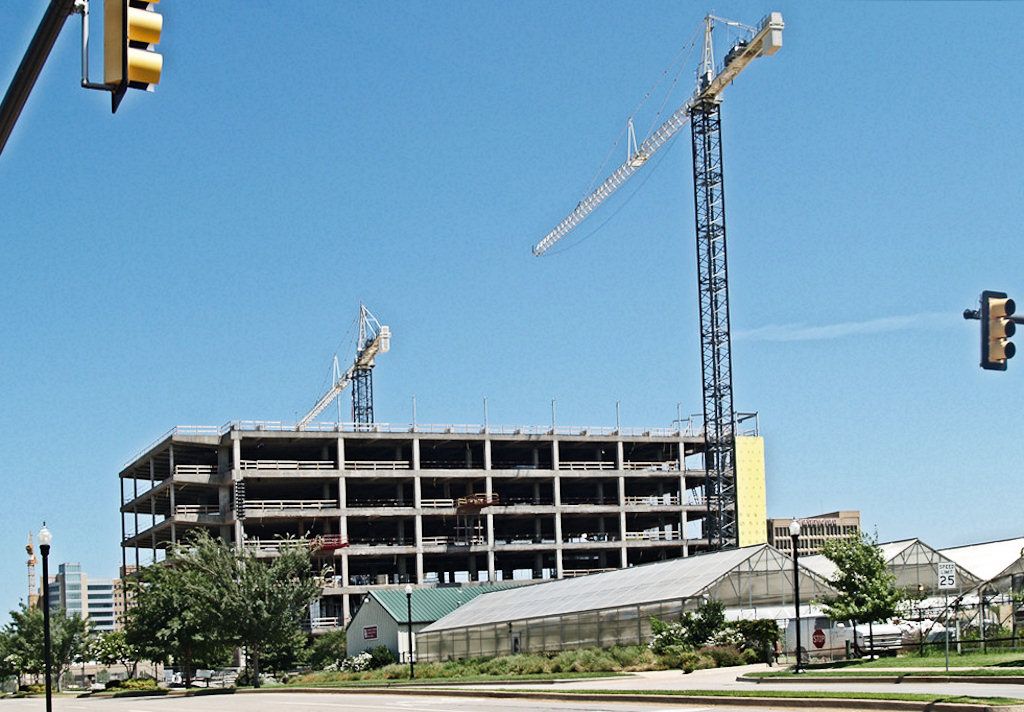
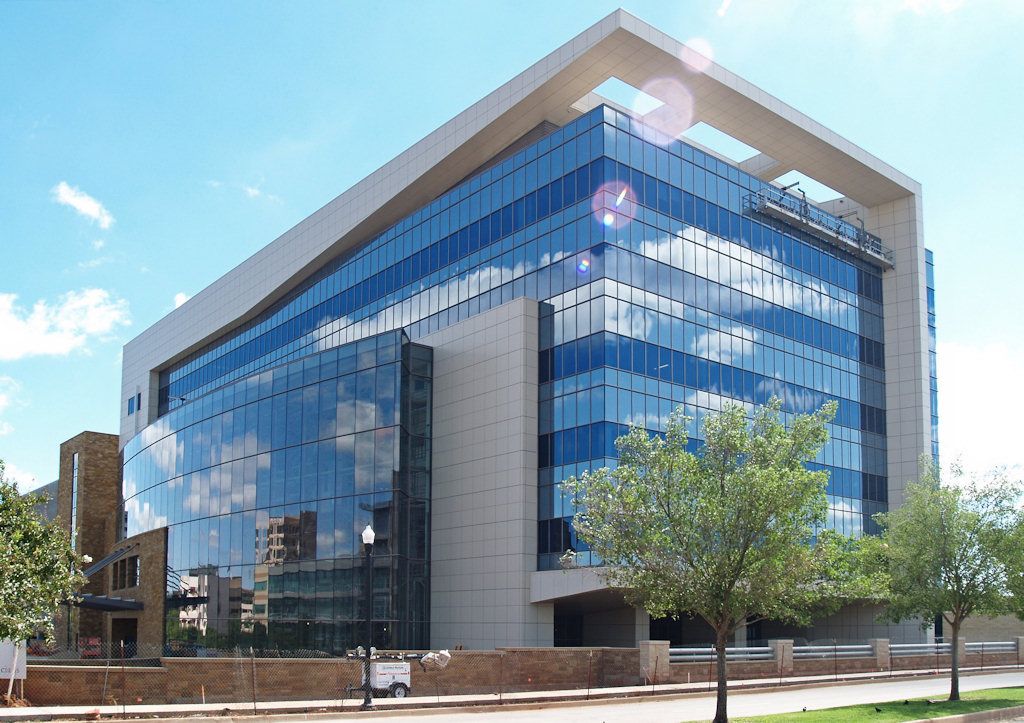
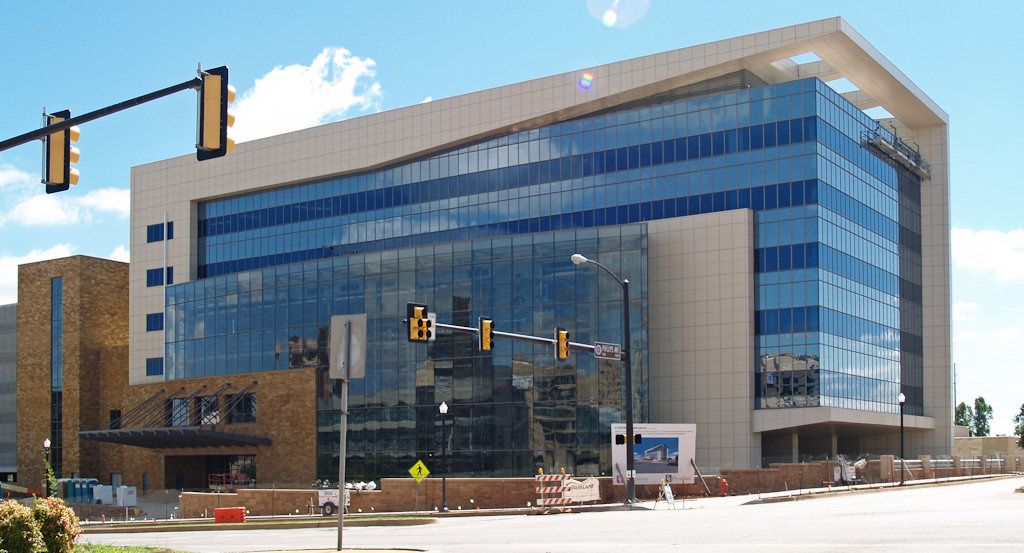
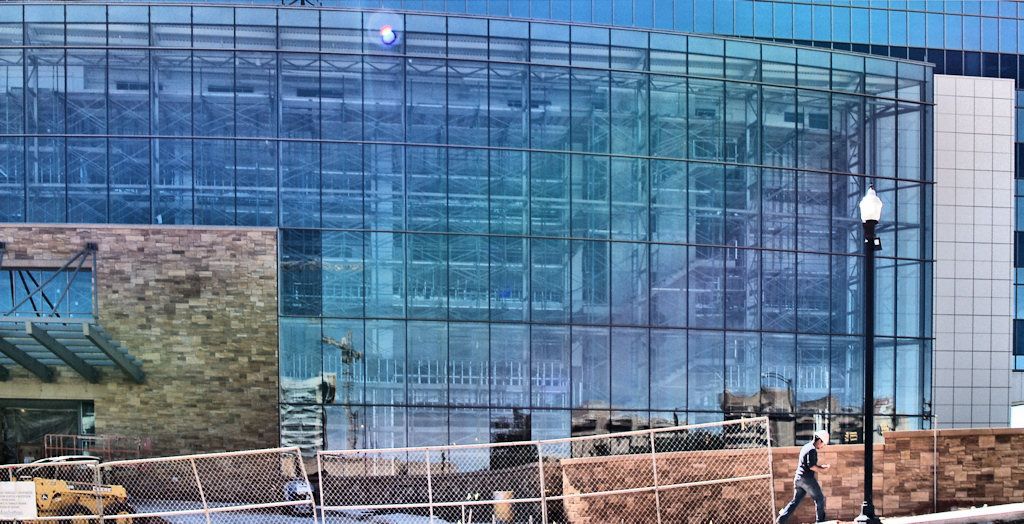
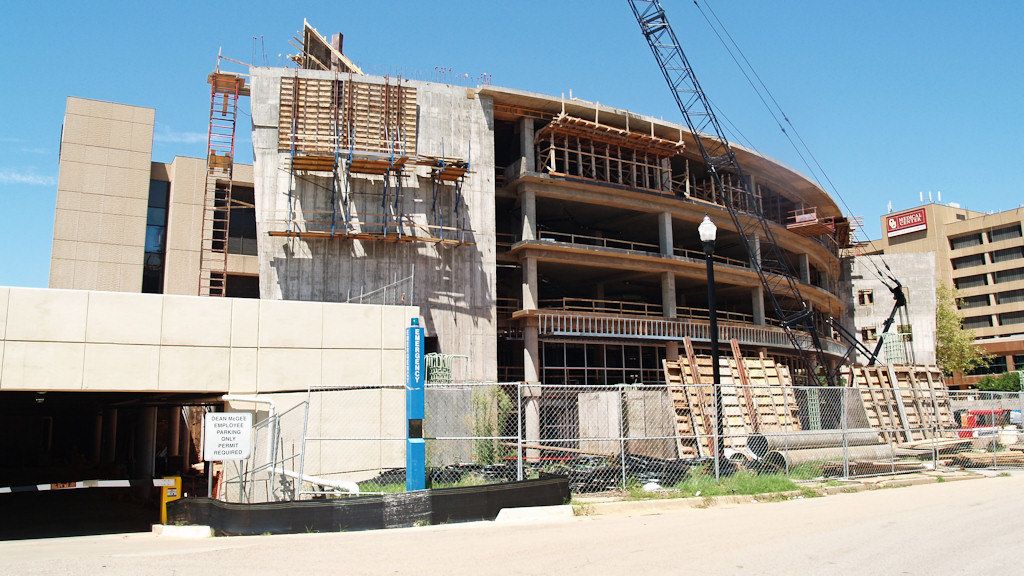
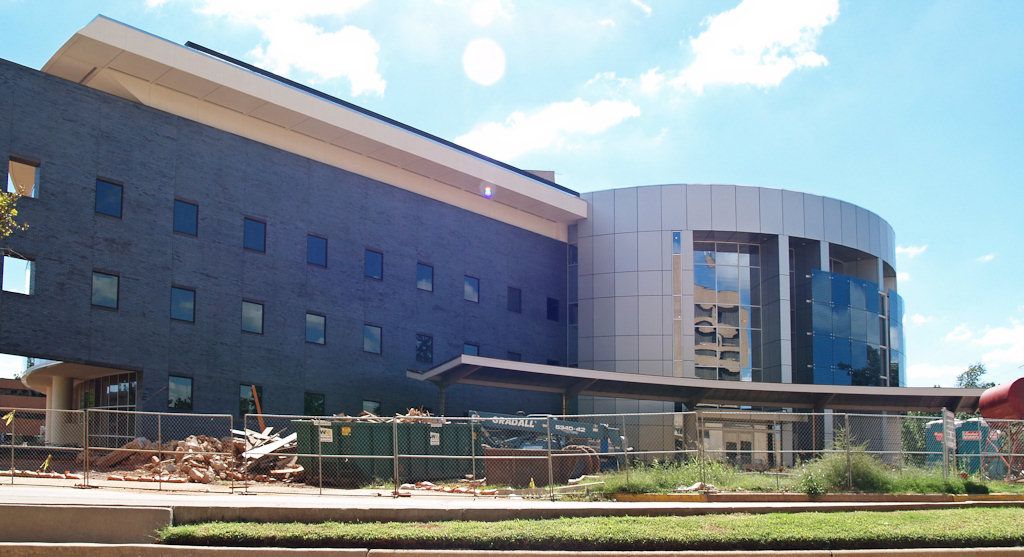
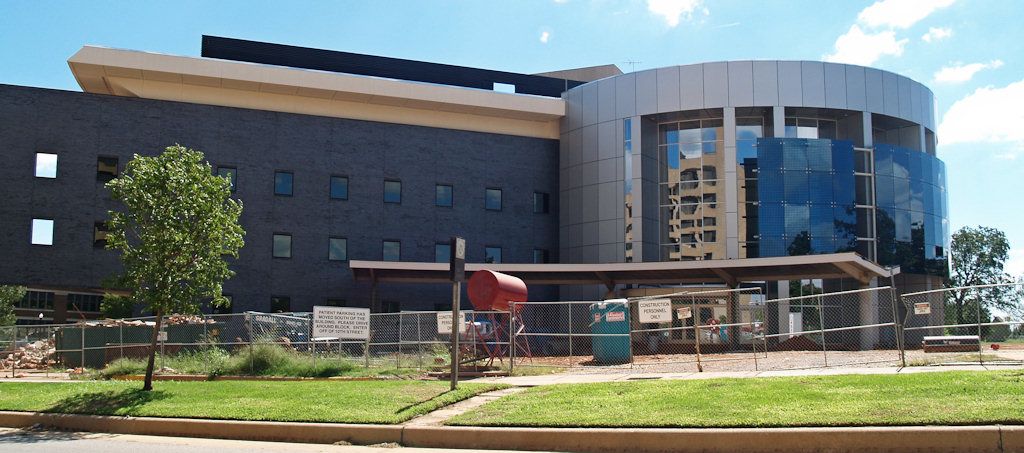
11. Cancer Institute. Text will follow shortly. The older photos below were taken on August 9, 2009. The photos at the bottom were taken on September 26 and 27, 2009.
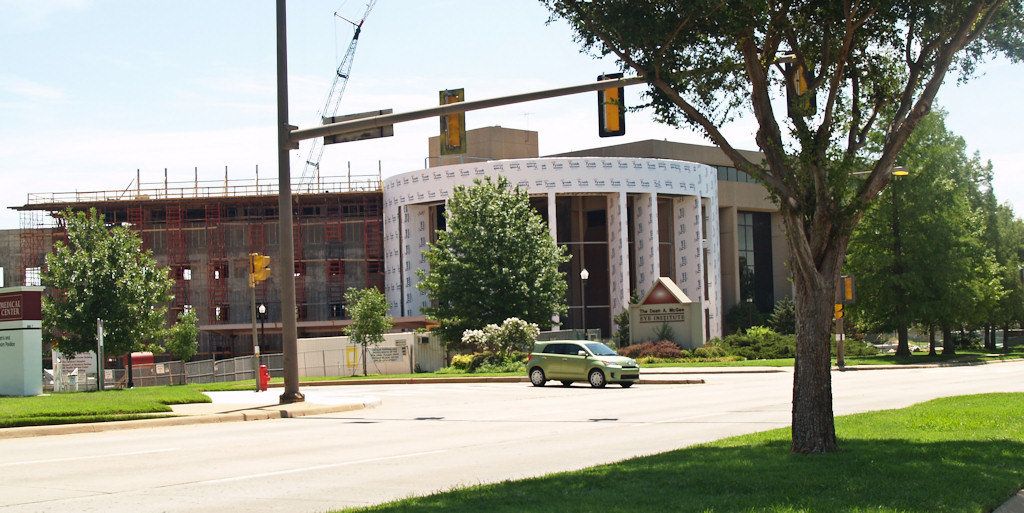
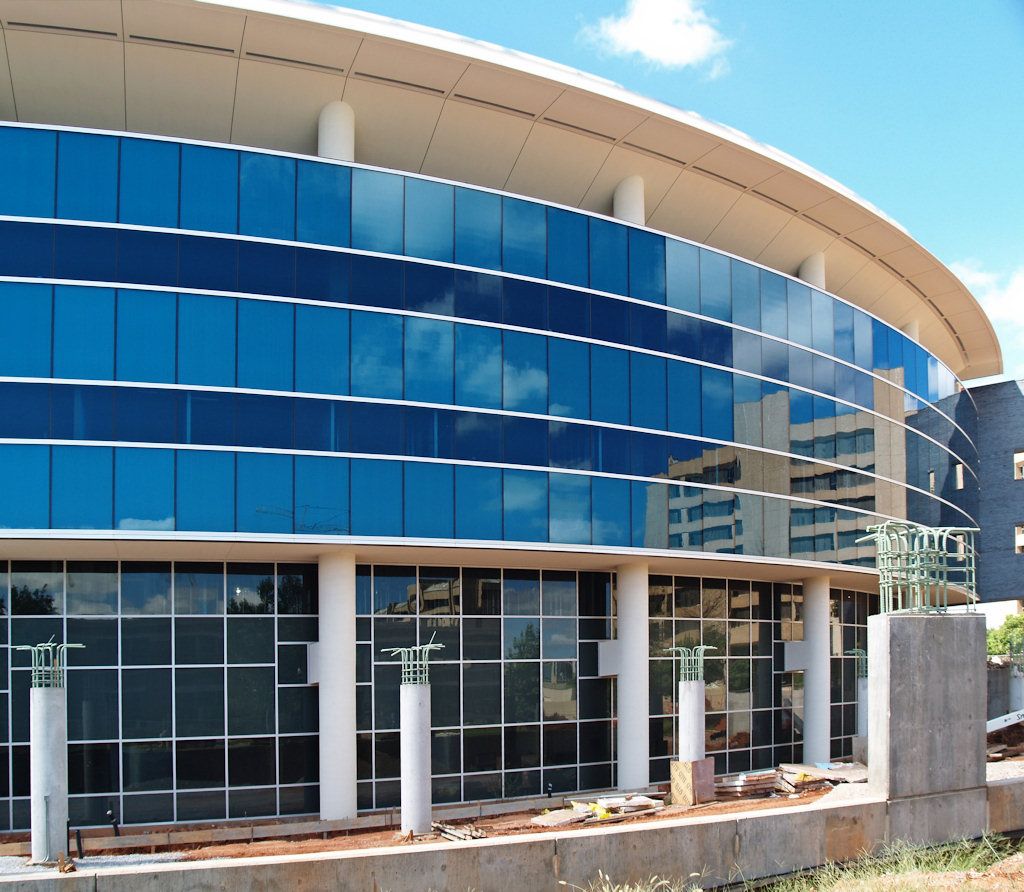
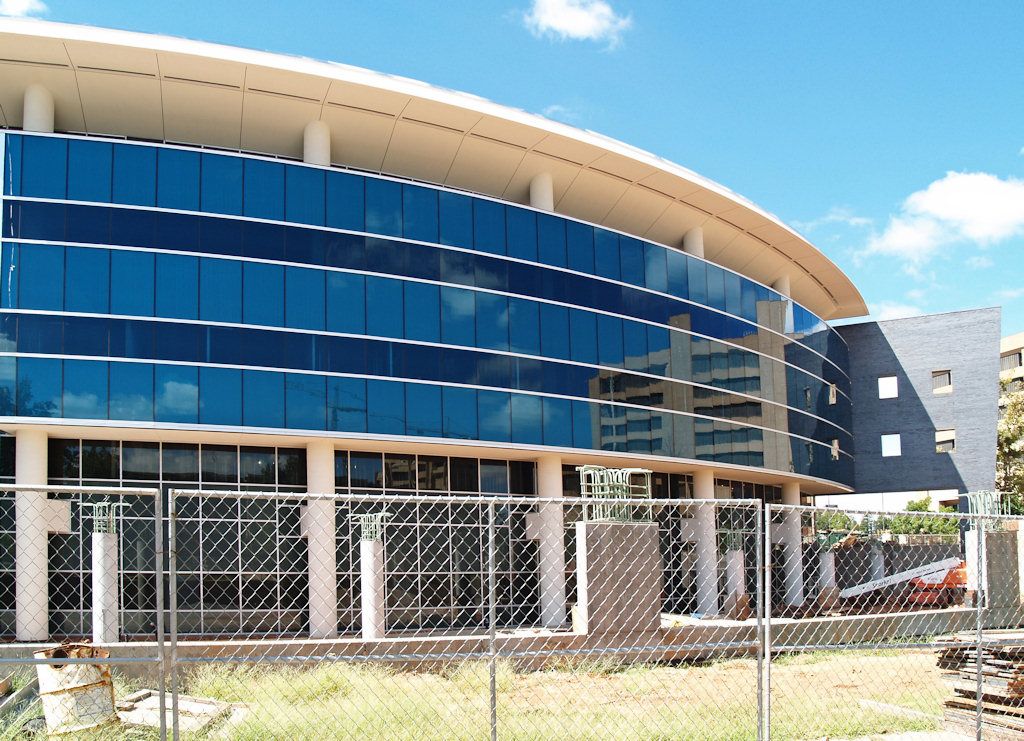
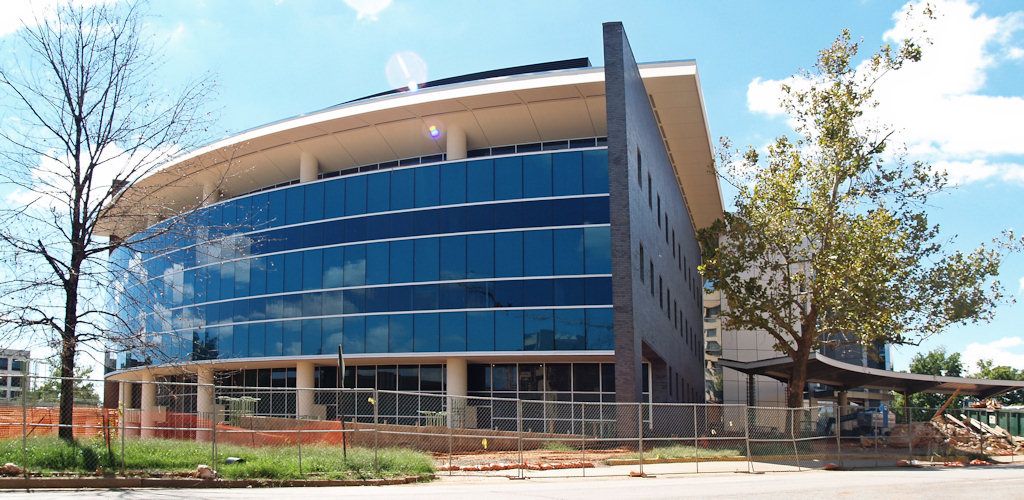
12. Dean A. McGee Eye Institute. I'll add text later. The older photos below were taken on August 9, 2009, and the newer photos were taken on September 26, 2010.
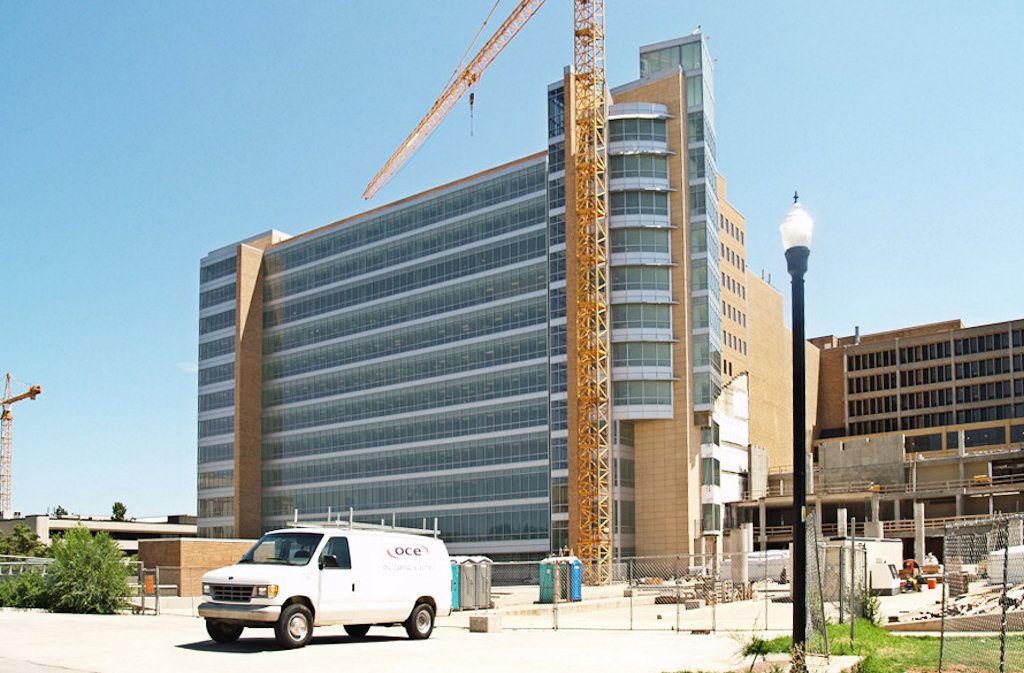
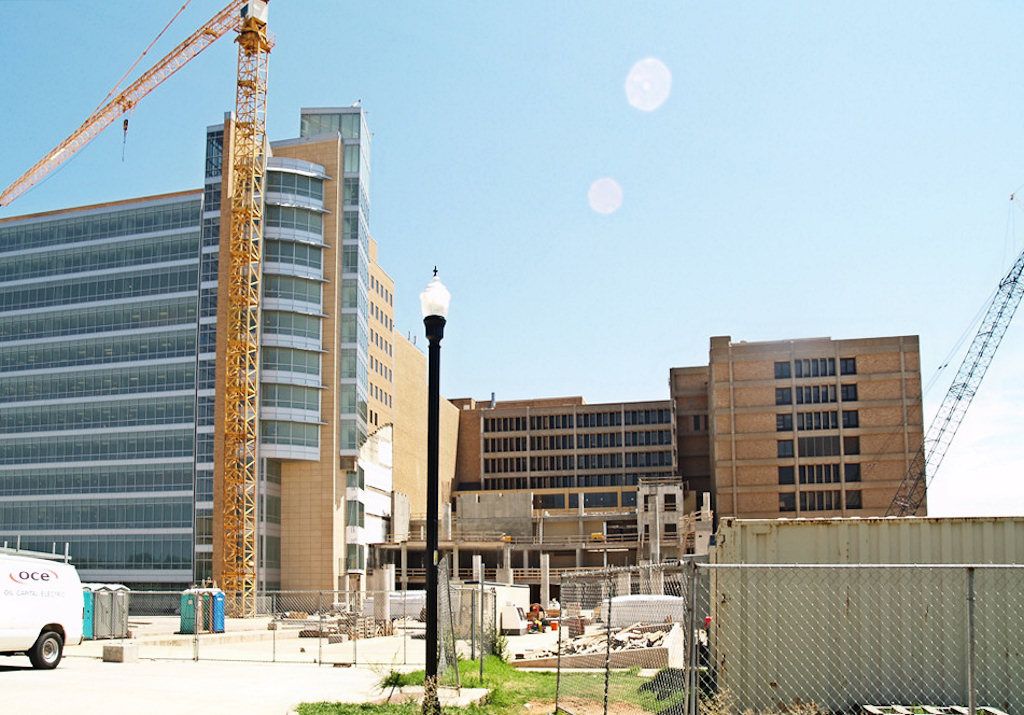
13. Children's Physicians Tower. Text about this item will come later. The older pair of images below were taken on 2009, and the newer photos were taken on September 26, 2010.
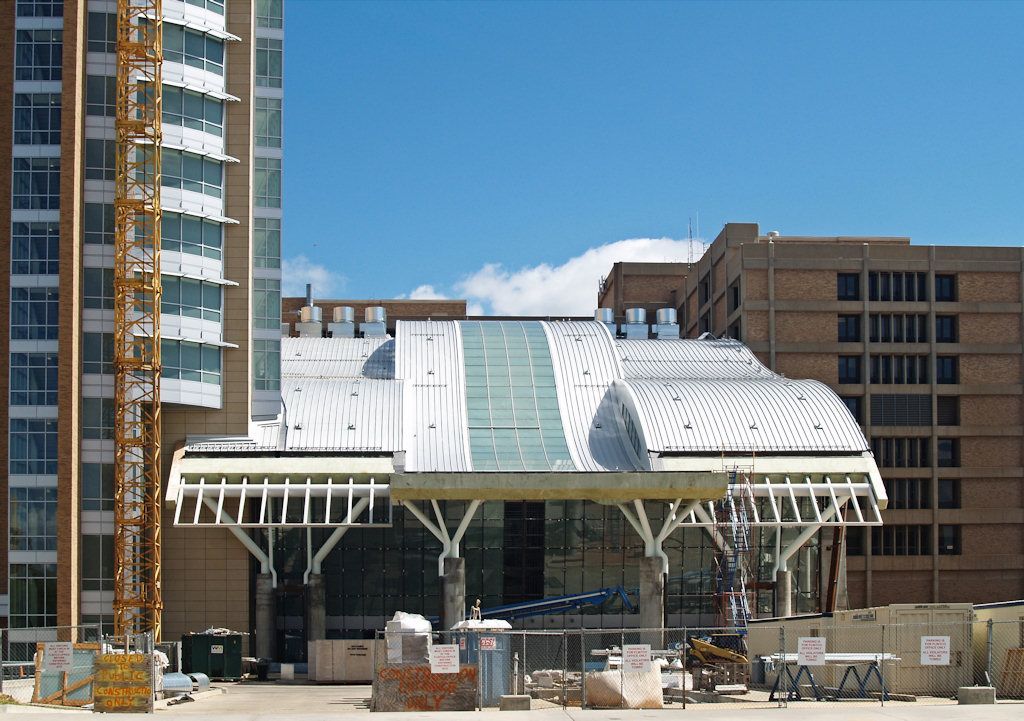
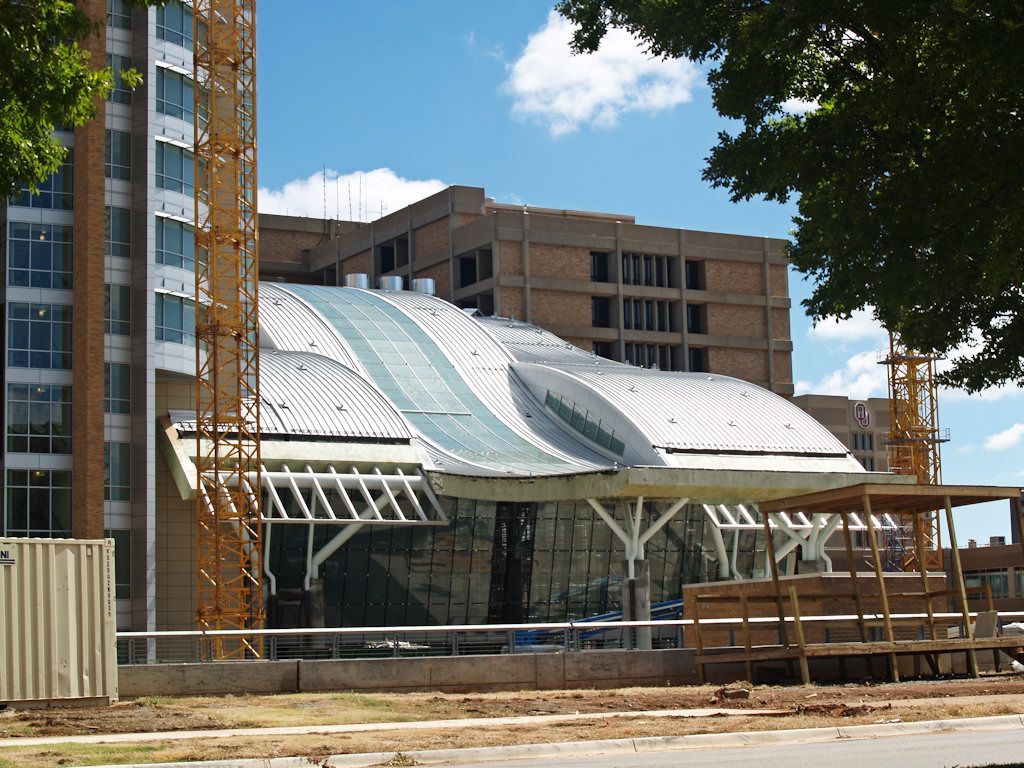
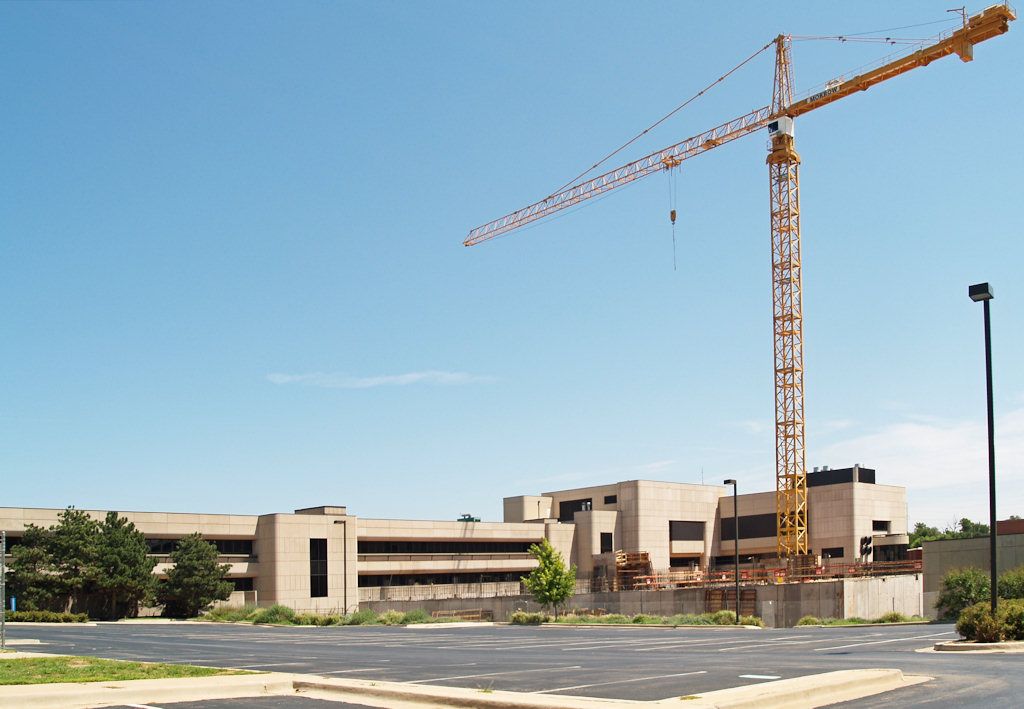
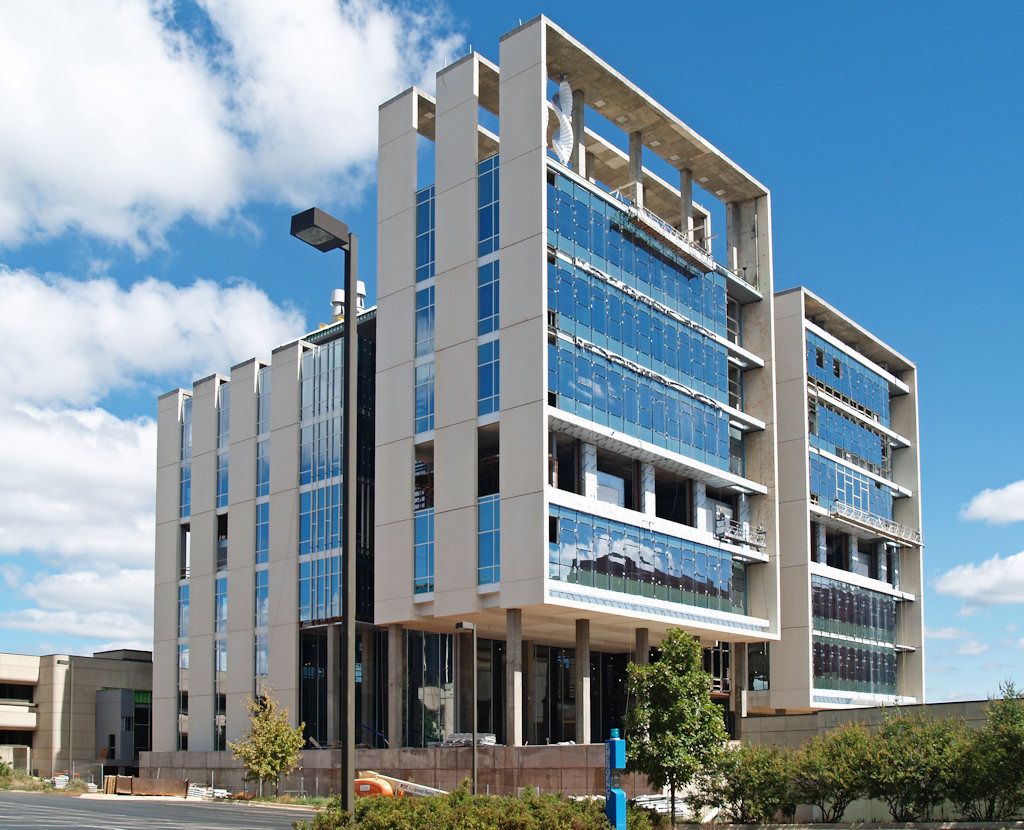
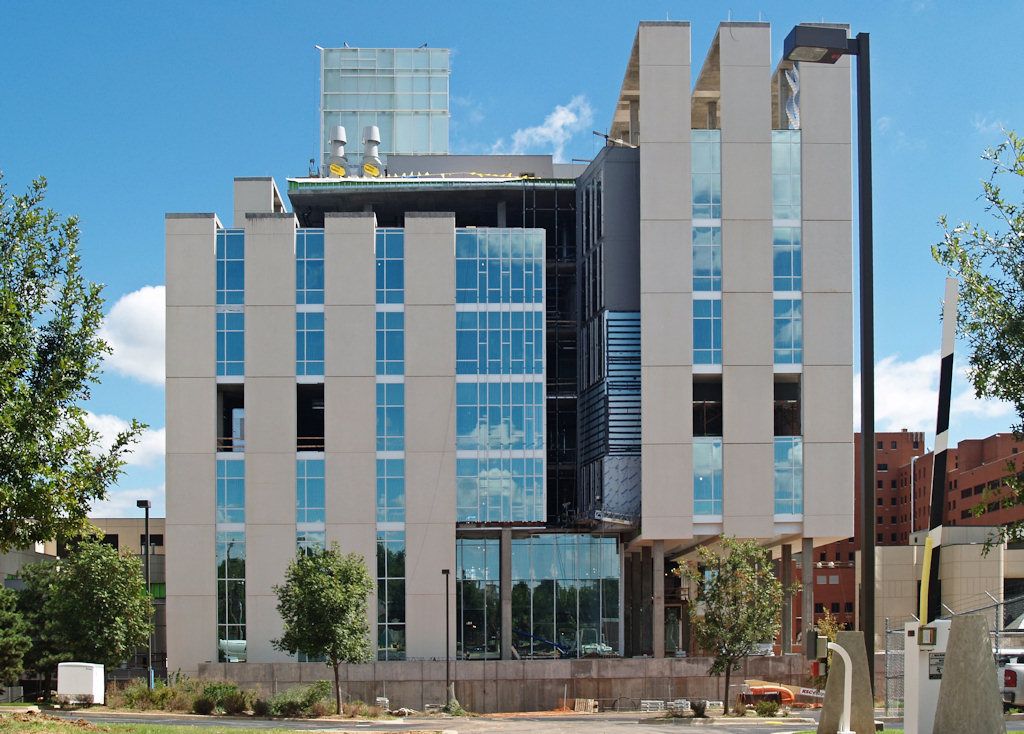
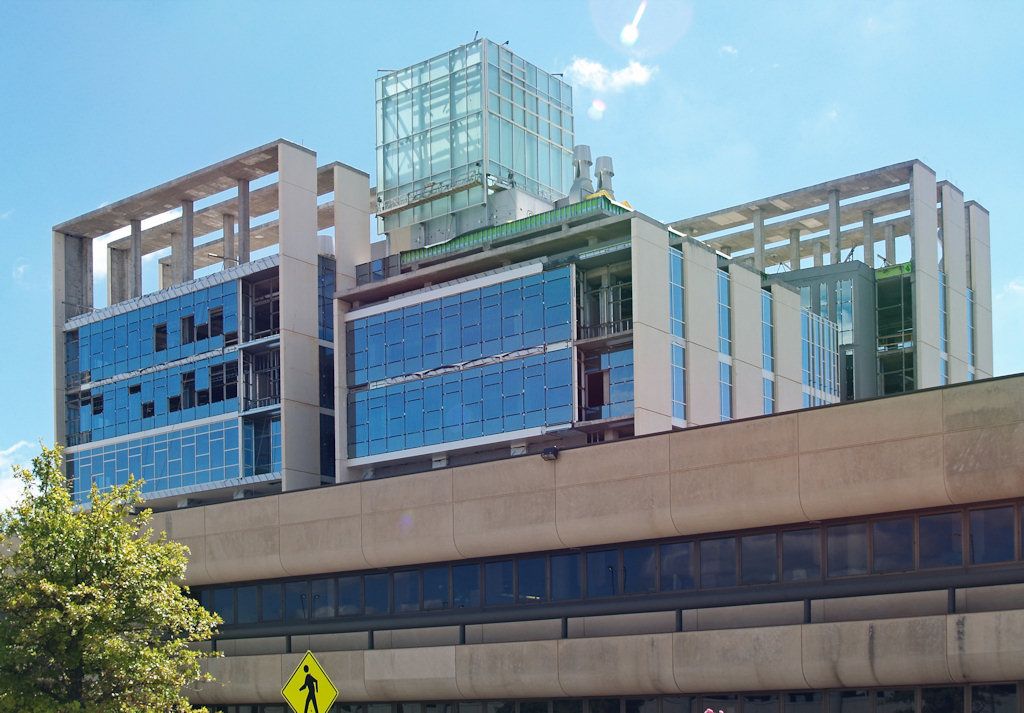
14. Oklahoma Medical Research Foundation. The image at right was taken on August 29, 2009, with only foundation and probably basement work done. The photos below were taken on September 27, 2010, only 13 months later. Additional text will be added later.
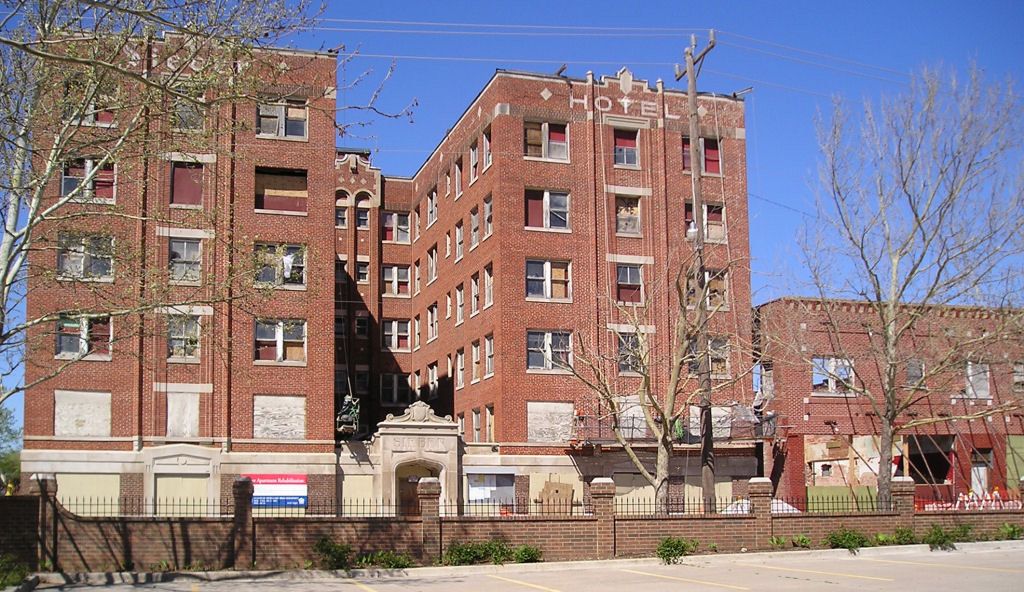
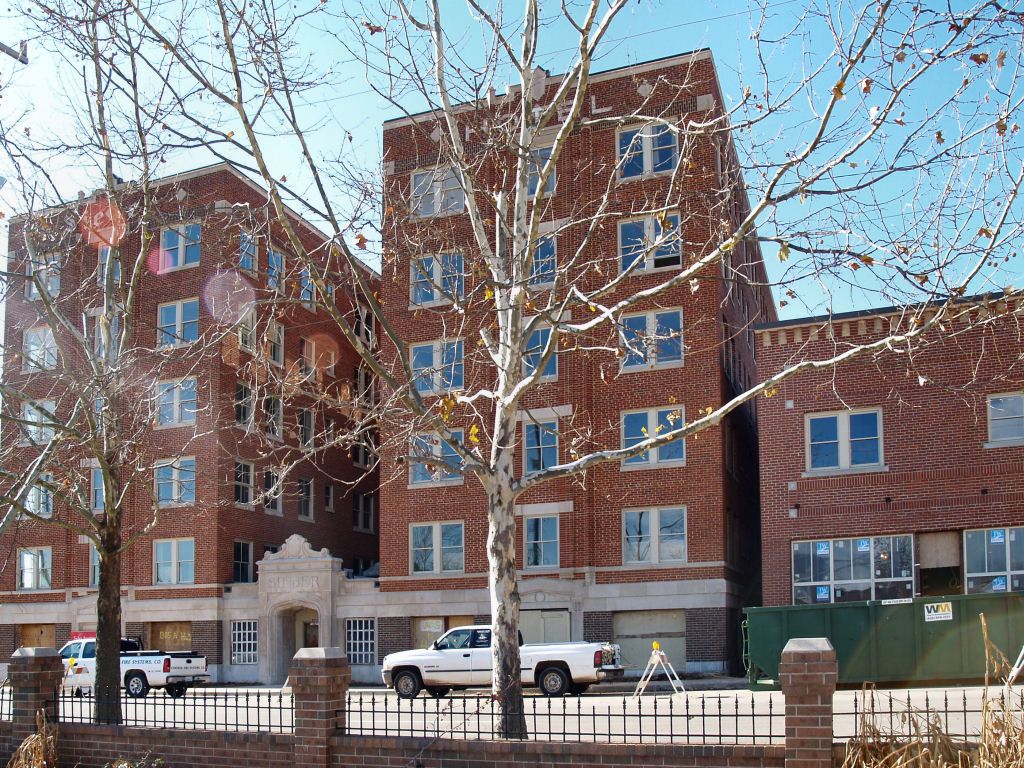
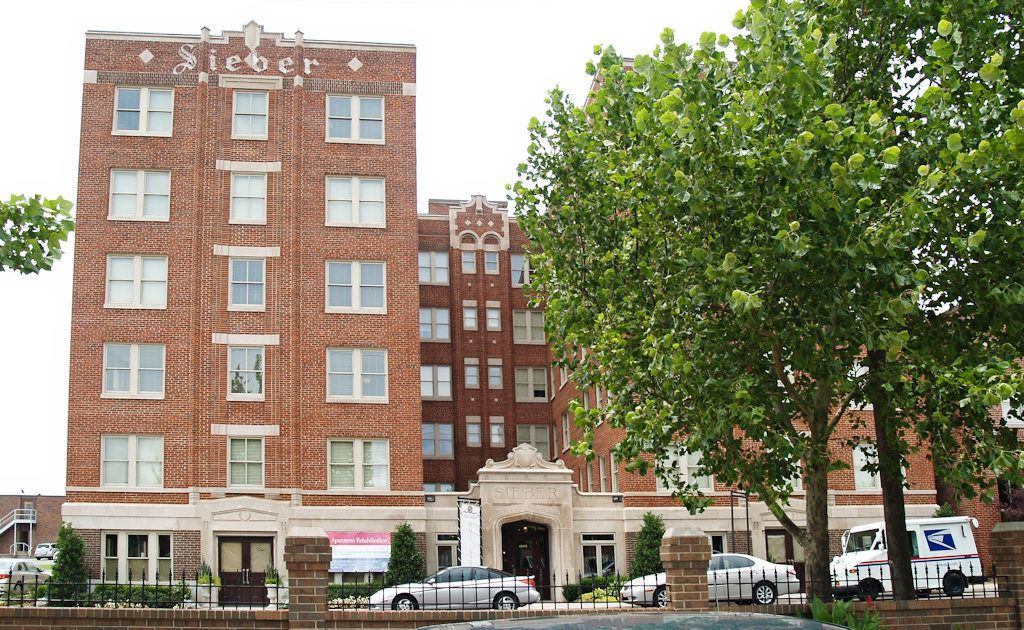
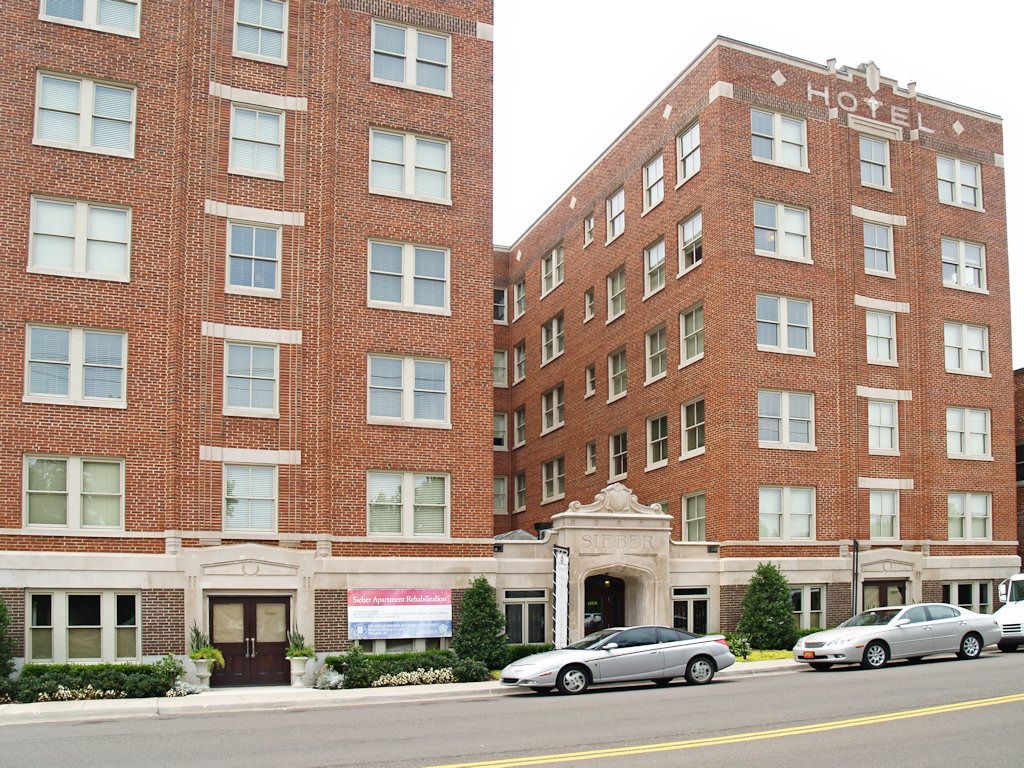
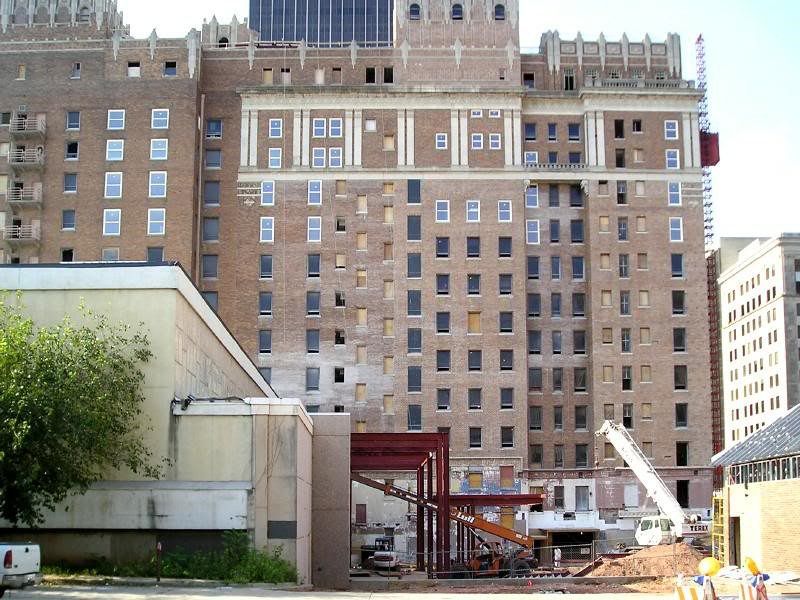
15. Sieber Apartment Hotel Restoration. The 2-story building north of the hotel proper was built in 1922 by Robert G. Sieber and was used as a butcher shop and grocery, his family living on the 2nd floor. From profits, the Sieber Hotel was built in 1928. By the early-1980s, the property deteriorated, its last tenants being in 1983 and it was eventually boarded up. The photo at right appeared in a June 7, 2002, Oklahoman article.
The property sat vacant after 1983. Despite several attempts to restore the property between 1983 and 1997, all failed and resulted in foreclosures. A 3-alarm fire in March 1997 probably caused by a transient sleeping on a mattress on the 5th floor substantially damaged that floor, and a similar fire occurred in January 2000 on the second floor, also by a transient, probably unintentionally in an effort to cook food or provide warmth.
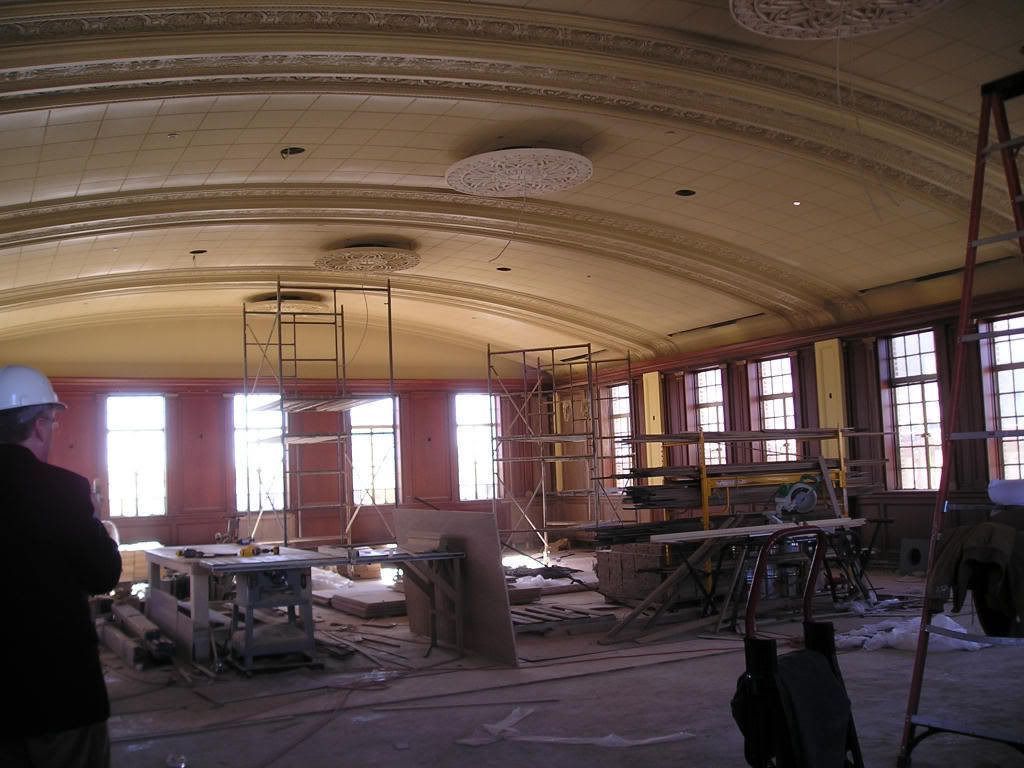
In late 1997 or early 1998, Marva Ellard and Robert Magrini became a co-owners of the property with plans to restore and convert the property to rental units and perhaps shops and a restaurant. Those plans did not move quickly, however. After negotiations with the city beginning in 2002, in 2003, the city approved an intent to loan Ellard and Magrini $1.5 million from the federally established Murrah Revitalization Fund. In 2005 the owners said that they were ready to proceed and the city council approved the actual loan in January 2006. Cost of renovations were estimated to be around $8.5 million. Construction began in 2006 and the 38 unit Sieber was finally done in late 2008 or early 2009. The pair of photos above and below were taken by Paul B. Southerland and appeared in a January 2009 Oklahoman article.
The photo below appeared in a September 7, 2006, Oklahoman article by Steve Lackmeyer. Co-owner Marva Ellard is reviewing the progress of restoring the entry foyer and reception area.
Below are photos that I took in April 2007; the next on December 19, 2007; and the last two in July 2010.
Below, July 15, 2010, at Retro Metro OKC Debut Party
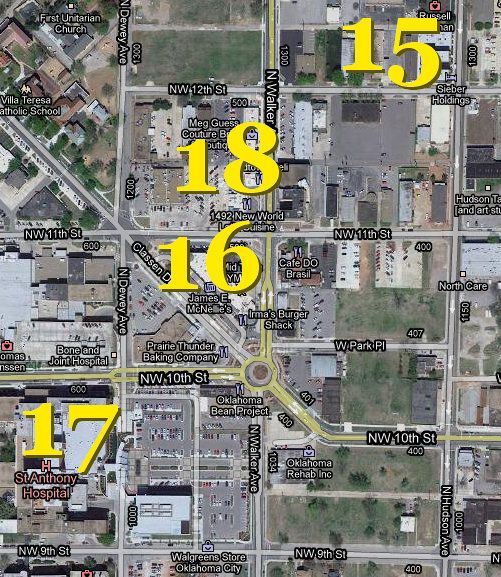
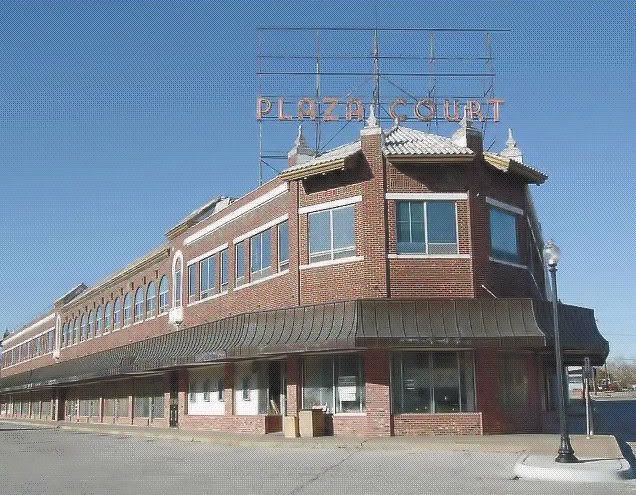
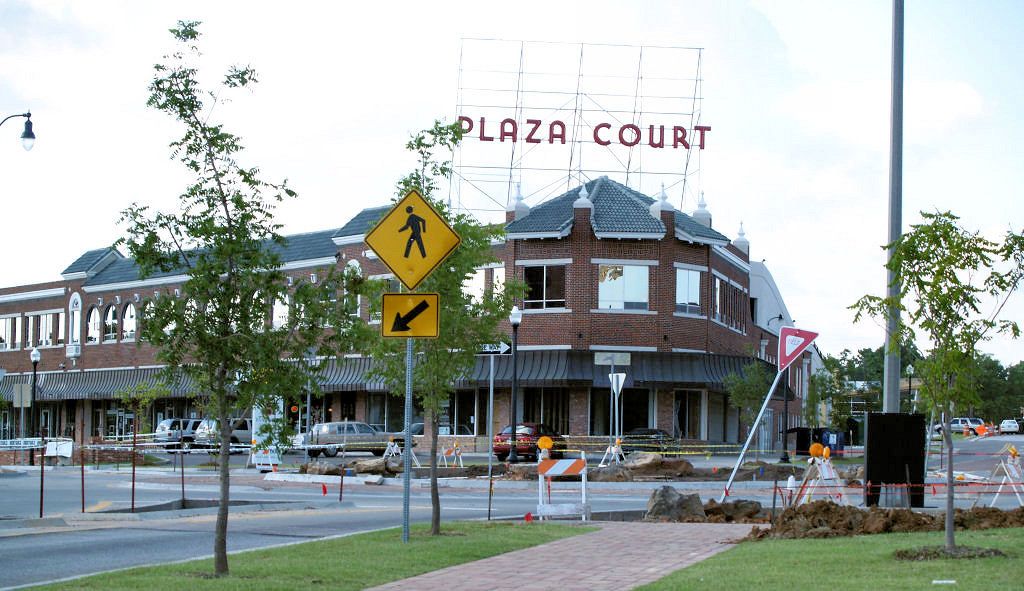
16. Plaza Court Renovation. Plaza Court as it stood on January 15, 2002, is shown by the photo at right taken by Nate Billings for an Oklahoman article on that date. The 1927 Plaza Court was the city's first residential shopping center. An initial tenant was the Crescent Market grocery and a later tenant was WKY Radio, the city's 1st radio station. By 2002, however, the once prestigious property looked like that shown at right and was substantially if not completely empty.
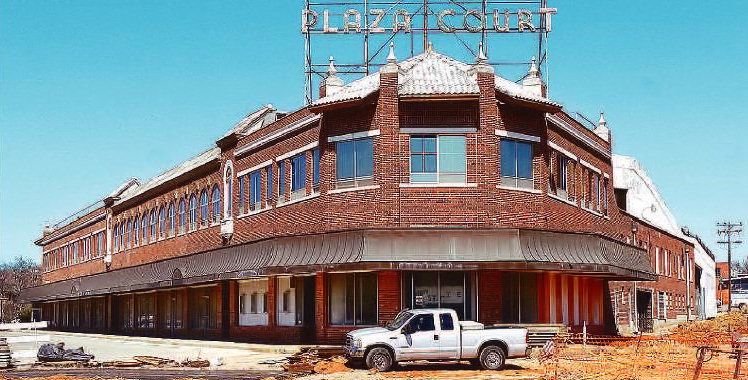
Corsair-Coogan LLC purchased the vacant property in 2005 and began renovations as shown by the Paul B. Southerland photo for a November 5, 2005, Oklahoman article, shown below.
Greg Banta purchased Plaza Court in May 2006 but in August 2008 Banta sold his interest in the Midtown properties to Bob Howard and Mickey Clagg, his financial backers from the beginning of Banta's acquisition of 30 or more Midtown properties. It was Banta who substantially completed the already begun renovation and who lined up the 1st tenants -- Irma's Burger Shack (July 21, 2007), Prairie Thunder bakery, and McNellies' Public House, even though the latter tenant did not begin occupancy until July 2008. In February 2008 the YMCA opened a branch on the second floor. The "final" tenant was only recently resolved as a result of a contest for a space next door to the bakery -- in exchange for the 1st year's rent being forgiven in a 3-year lease and a 1-year membership in the Greater Oklahoma City Chamber of Commerce, the winner would get the spot. And the winner in September 2010 was ... Desmond Mason, as an artist, a fan-favorite basketball player for the New Orleans/Oklahoma City Hornets and then the Thunder between 2006-2009.
I took the following photos on July 20, 2007, and June 8, 2008.
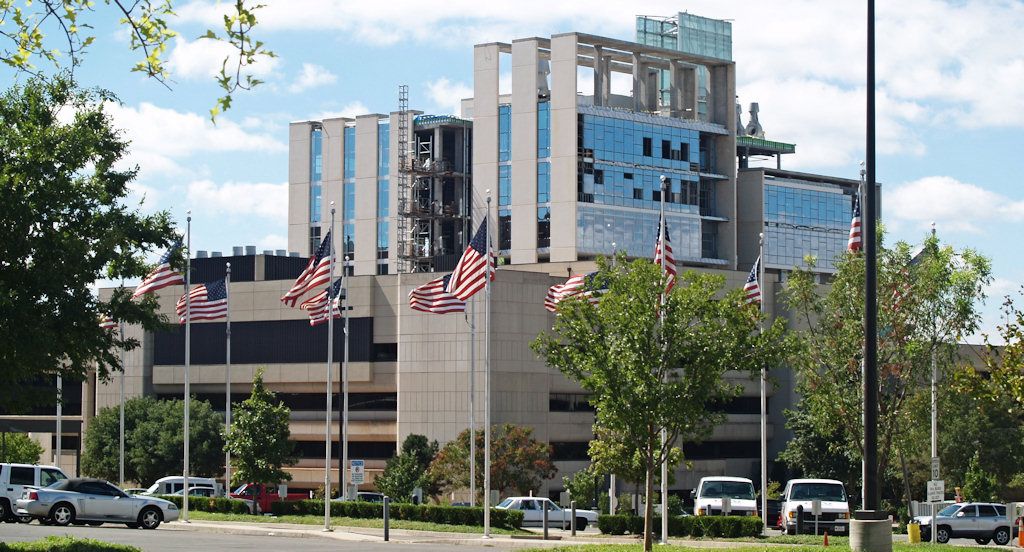
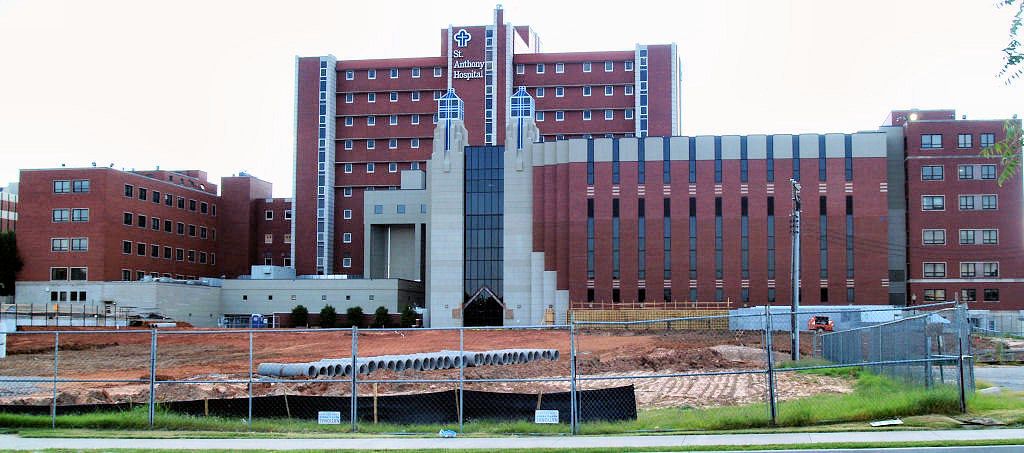
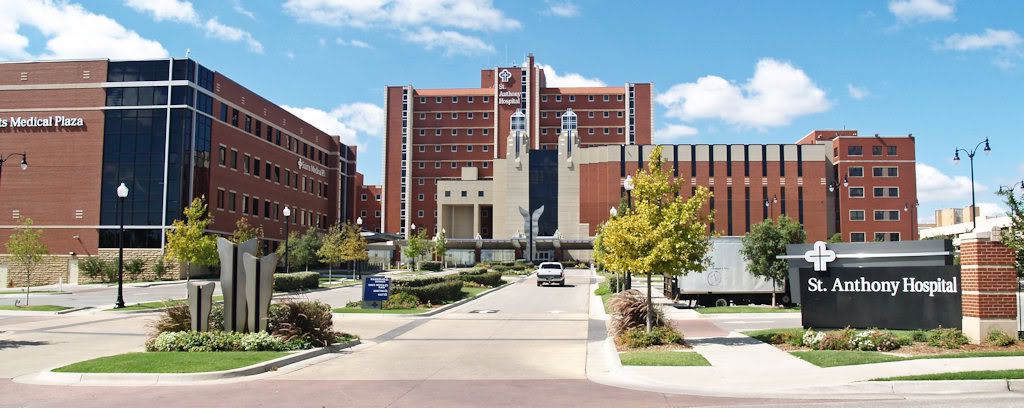
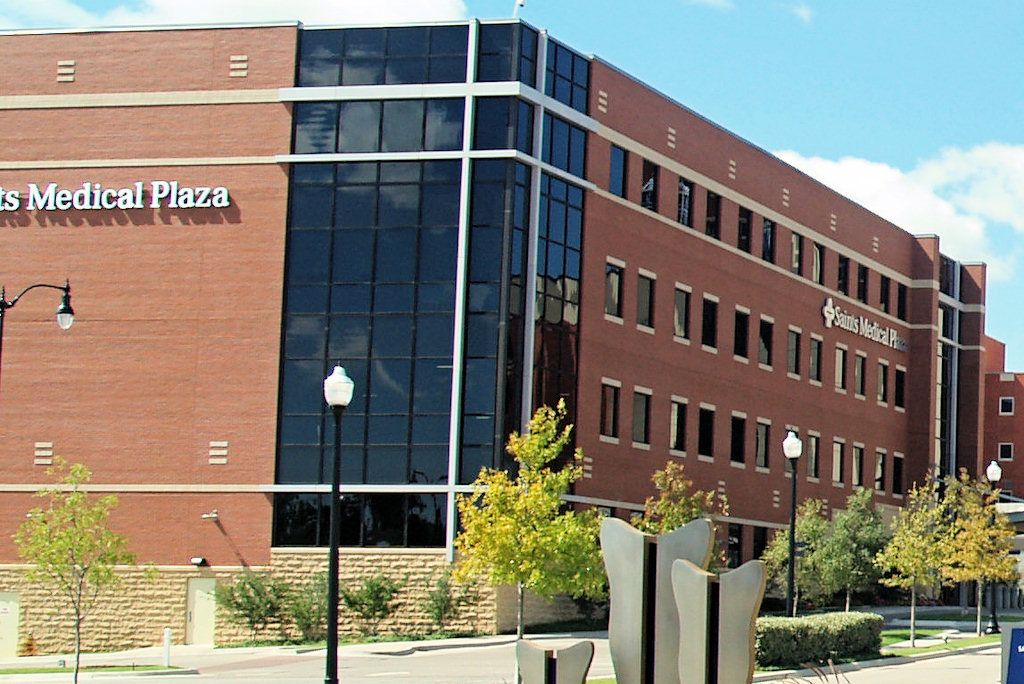
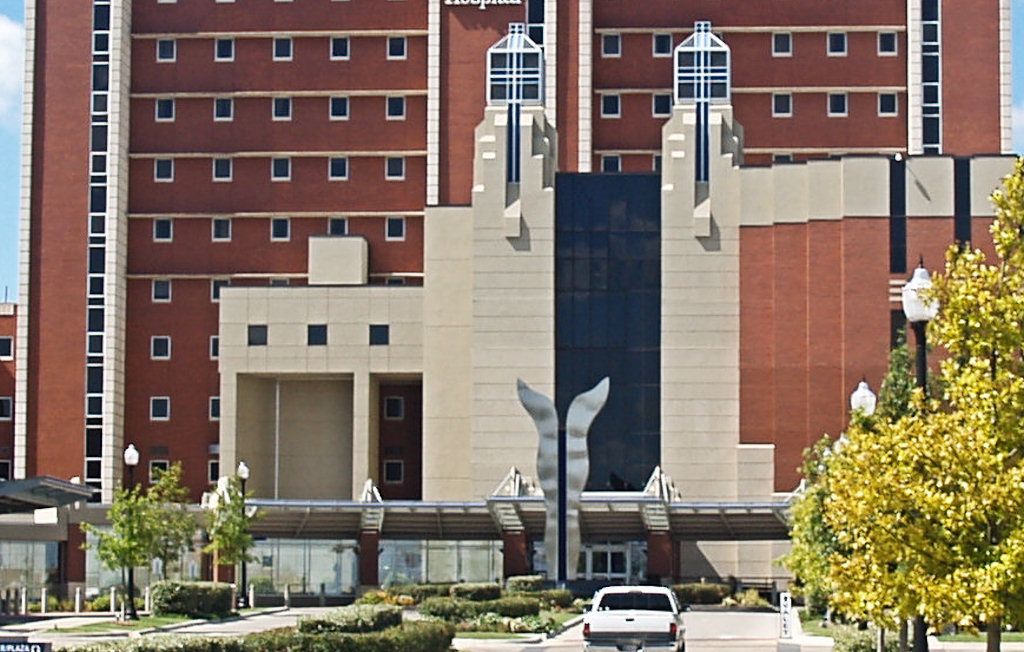
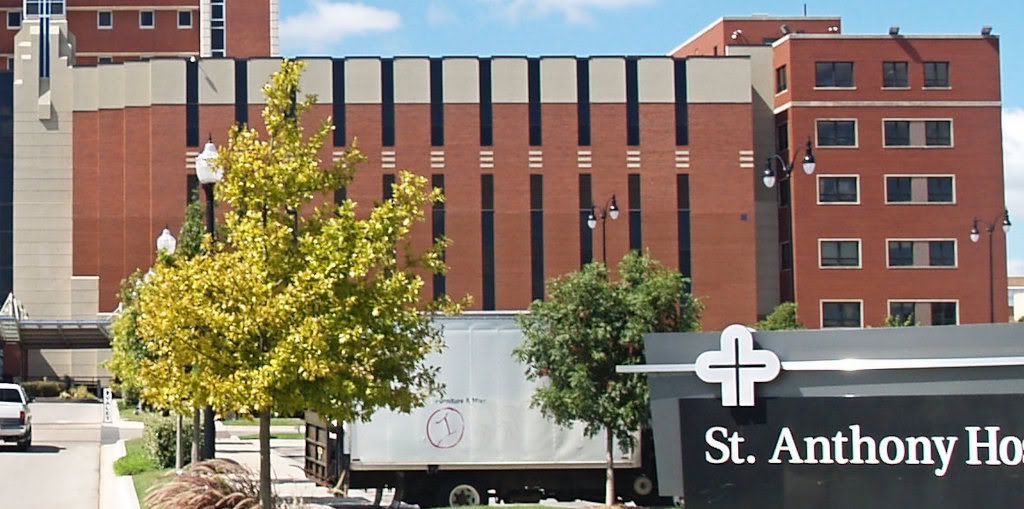
17. St. Anthony's Hospital Expansion. St. Anthony's hospital, established in 1898, was the city's first permanent hospital, and served the city well during good times and bad (e.g., the 1930s Great Depression). In 2002-2003, a substantial chance was present that the venerable Midtown institution would leave its historic home for a new location well away from downtown. In 2003, an accord was reached with the city which insured the hospital's continued home in Midtown and in July 2004 construction began on the $180-$200 million expansion and improvement project of the city's largest hospital. For more about that, see this 2007 article. The first photo below, taken on March 19, 2008, shows the considerable expansion progress made at that time. The second photo (and the cropped images therefrom) was taken on September 26, 2010, after much but not all of the project was done.
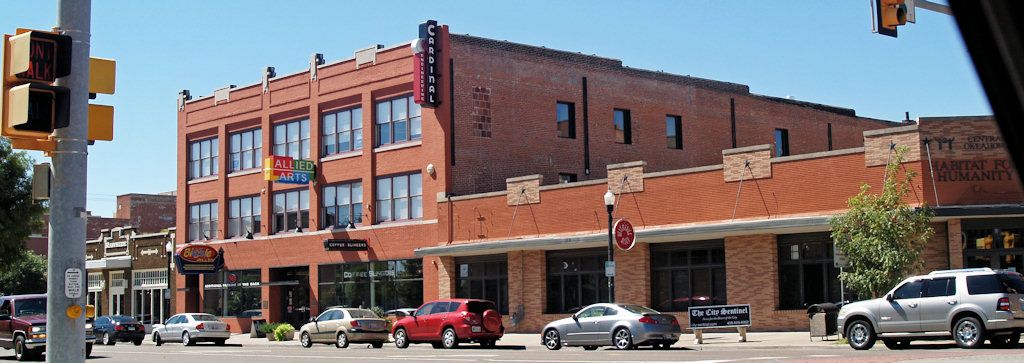
18. Other Midtown Developments. Several projects in the Midtown area are poised either to begin or get done or are waiting for tenants to bring them to life. Most of the Midtown projects were initiated by Greg Banta. Banta sold his interest in the Midtown properties in August 2008 to Bob Howard and Mickey Clagg who had been his financial partners from the beginning. It was Mid-Town Renaissance, Mickey Clagg, President, that completed them. For a video tour of many more projects than are presented here, see this video by the Midtown Renaissance Company.
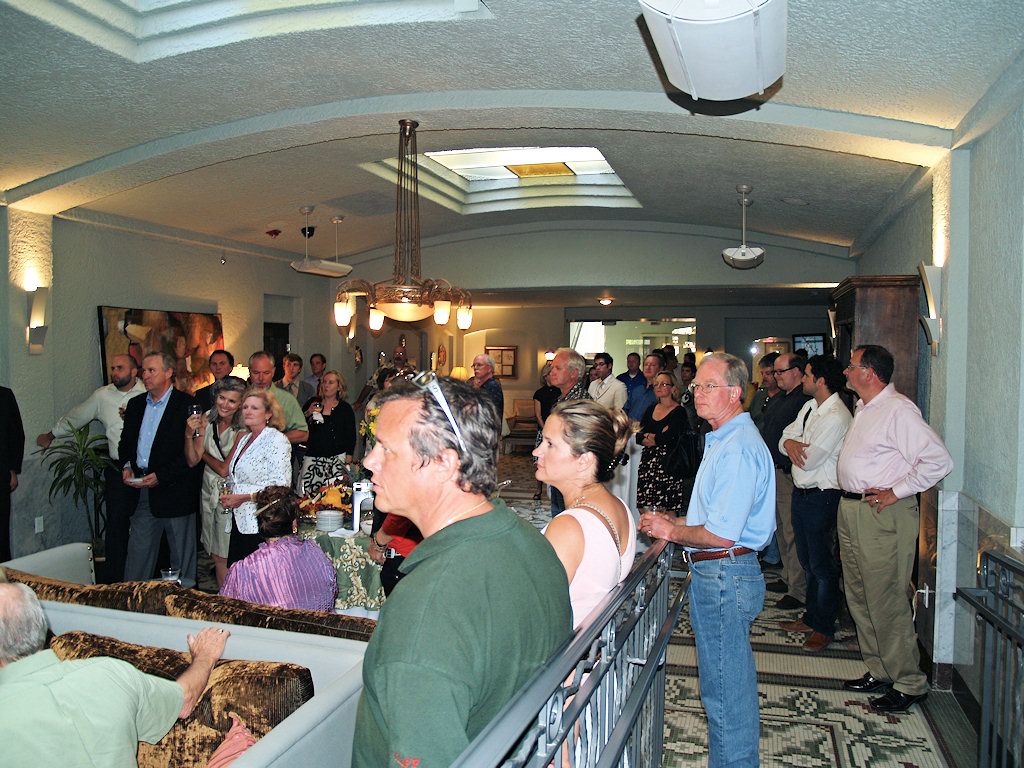
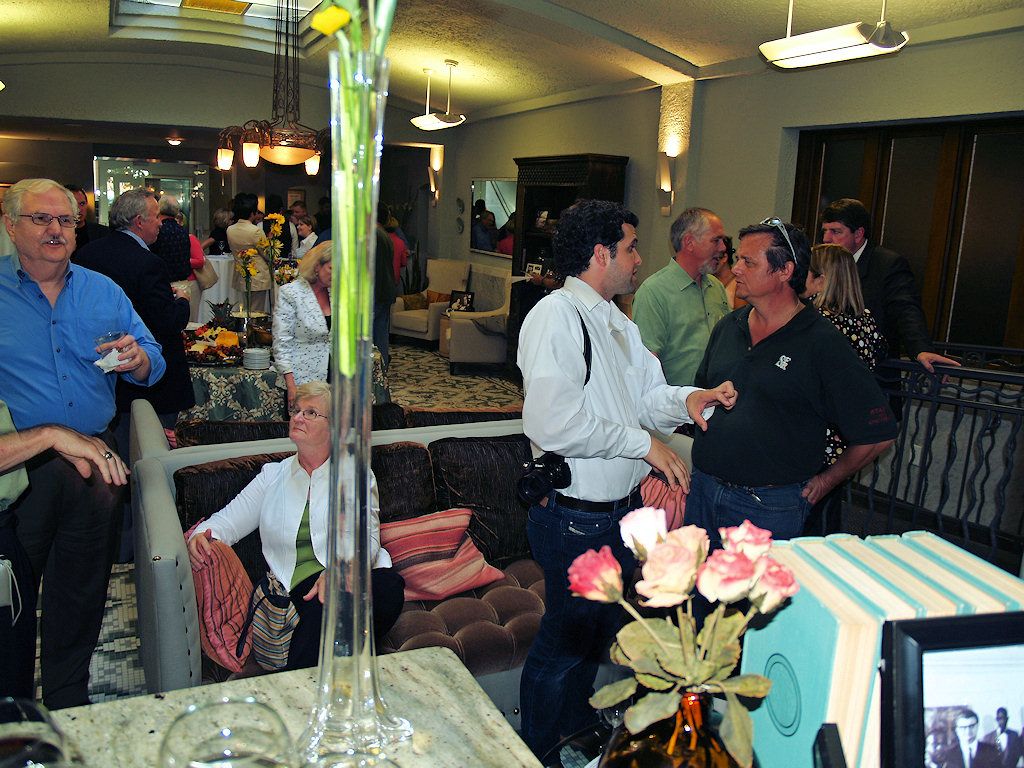
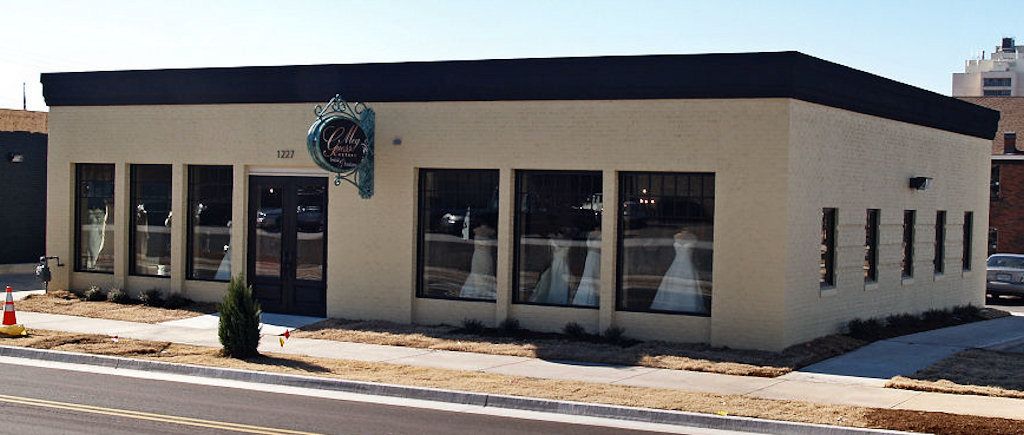
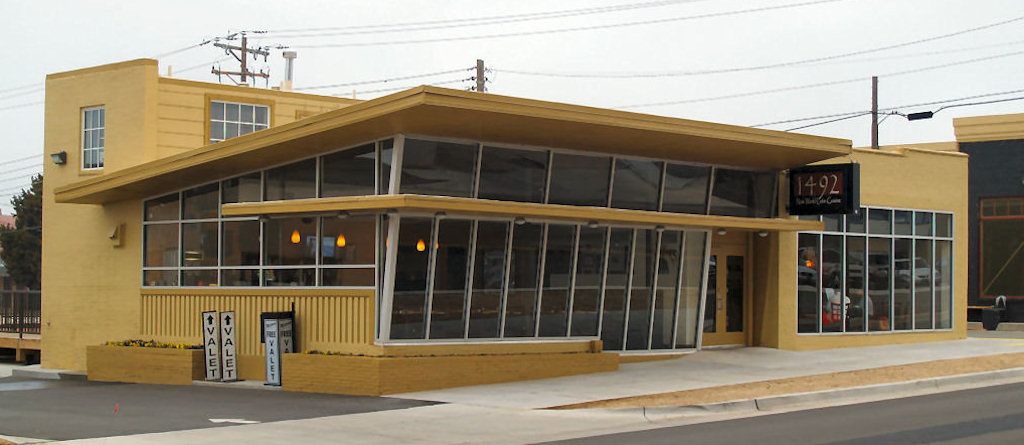
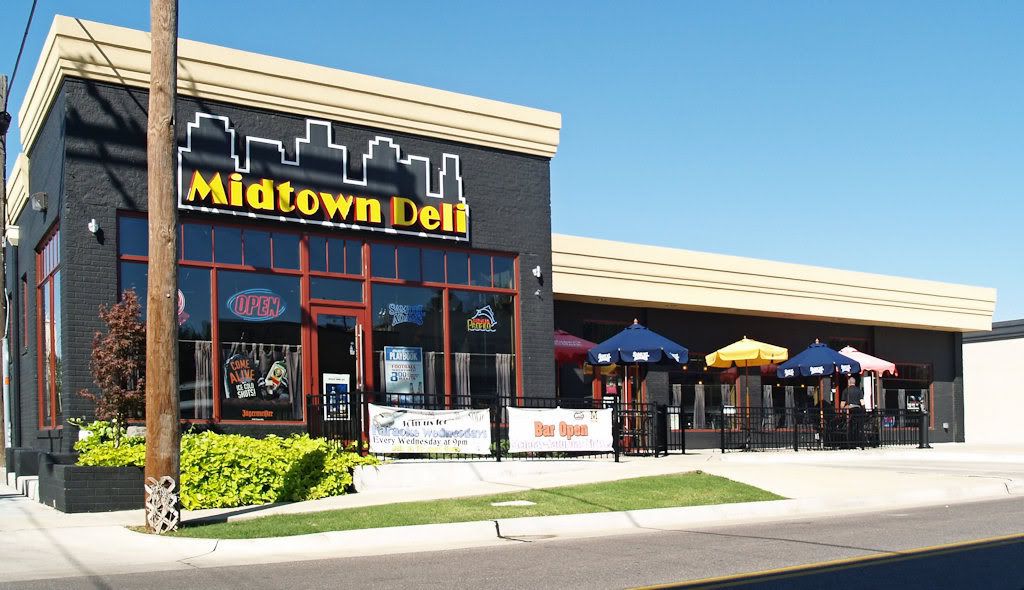
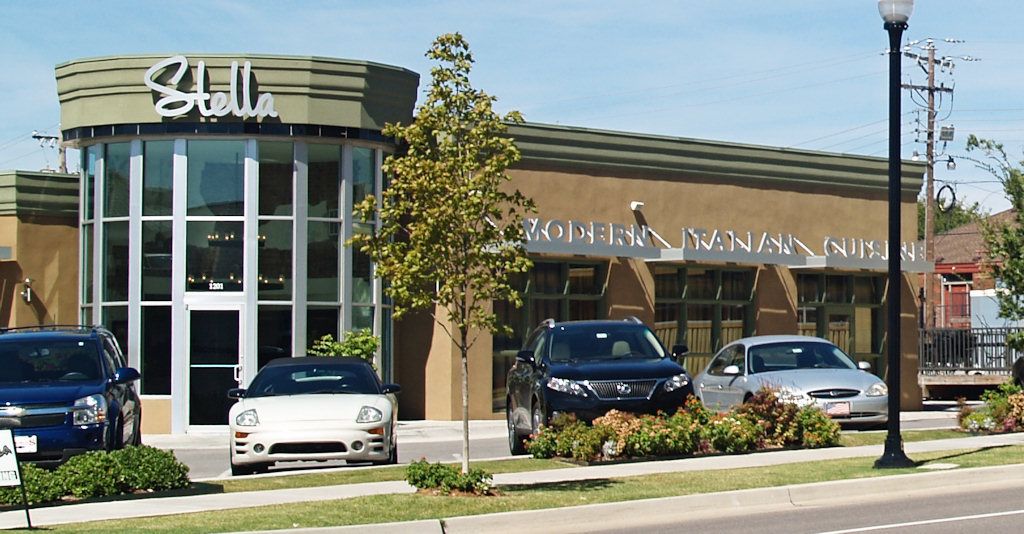
Of those projects which have actually come to final fruition by being occupied by tenants, the most significant in my estimation is the block-long development of four vacant buildings on the west side of Walker between NW 11th and NW 12 Streets. Taken together, these relatively small projects are today something of a mini-destination. Three are places to eat, one is a place for elegant wedding gowns. In the order of occupancy, these businesses are (1) Meg Guess Couture Bridal & Boutique, (2) 1492 New World Latin Cuisine, (3) Midtown Deli, and (4), most recently, Stella Modern Italian Cuisine restaurant. They are shown below in that order. Beverly's Chicken-In-The-Rough aficionados would want to know that the 1492 restaurant originally housed the Beverly's Gridiron in days gone by. The photo above right was taken by Oklahoman reporter Steve Lackmeyer for an article appearing on December 5, 2006, before these projects were begun. I took the following photos between December 19, 2007 and September 27, 2010.
Where IS Automobile Alley? Good question. According to Oklahoma City, the Automobile Alley district is the area shown above left ... bounded by 13th Street on the north, 4th Street on the South, ½ block west of Broadway Avenue on the west, and I-235 on the east. To me, that's more than a bit of a stretch ... at most, the eastern boundary should be the BNSF railroad tracks ... at least, that's the definition that I'm using in this article, shown at the right.
Now, I'm by no means perfect, so ... show me a historic auto dealearship or related services east of the BNSF railroad tracks and I'll gladly stand corrected.
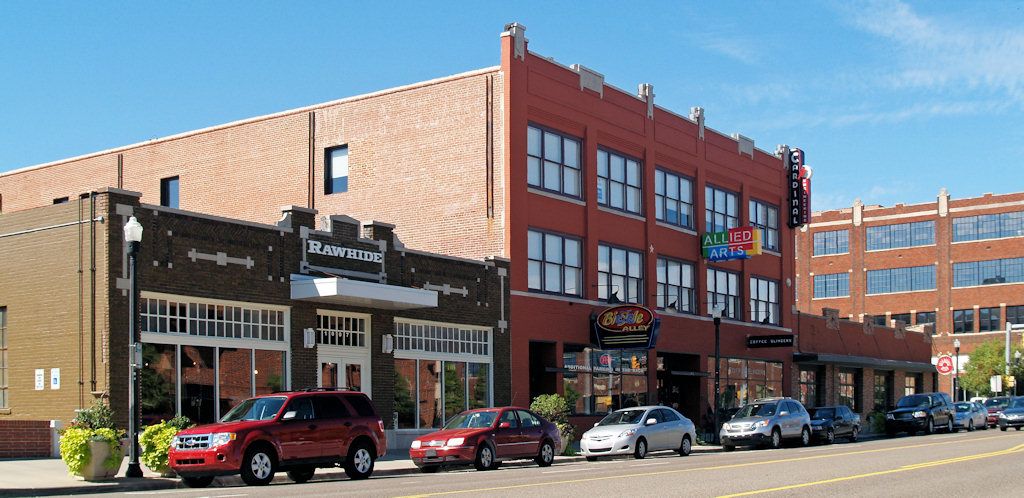
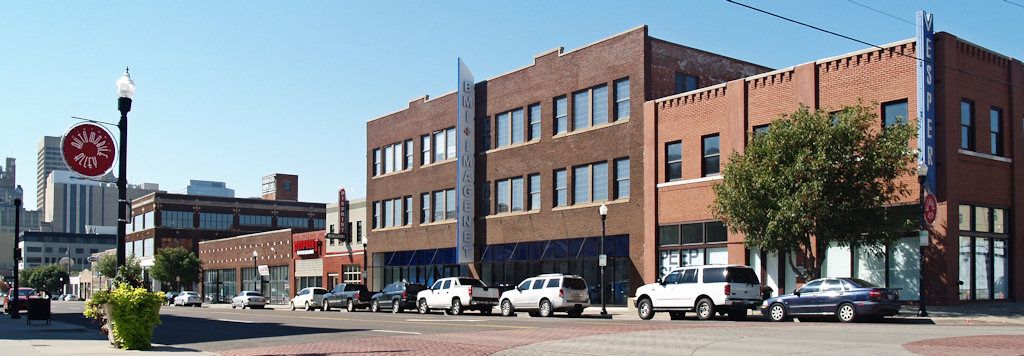
19. Automobile Alley. Several developments have occurred during the last 3 ½ years which are not included in this description, such as the Beatnix Cafe on NW 13th as well as several properties which have been redeveloped on Broadway and are merely awaiting tenants.
When I was a younger man, in the early 1990s, a friend, J.D. Lobb, had acquired many of the properties along Broadway with an early dream of converting what is now called Automobile Alley into a fine corridor of shops and business properties along the east side of downtown on Broadway. But, like Neal Horton in his more publicized Bricktown development, J.D., too, was ahead of his time. The Oil Bust and resulting Penn Square Bank collapse doomed his efforts, along with Horton's.
That was then, and this is now. As this article is written, the Automobile Alley area is bustling and is full of realistic promise. Perhaps the most striking development, if it can be called that, is nothing particularly "physical" at all but is a development which represents the "spirit" of the corridor ... Broadway during Christmas. Beginning in 2009, merchants and owners decided to spiff up Broadway with an array of thousands of electric lights, and the same is planned for Christmas's each year. A collage of photos I took in December 2009 reflects the change in spirit.
More tangible developments are shown by the following two photos taken on September 27, 2010, of the area south of NW 10th and Broadway, and a third taken October 6, 2010, looking south on Broadway.
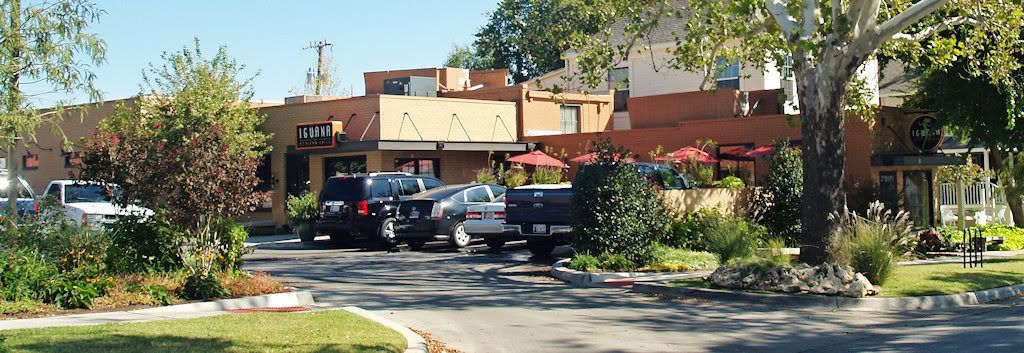
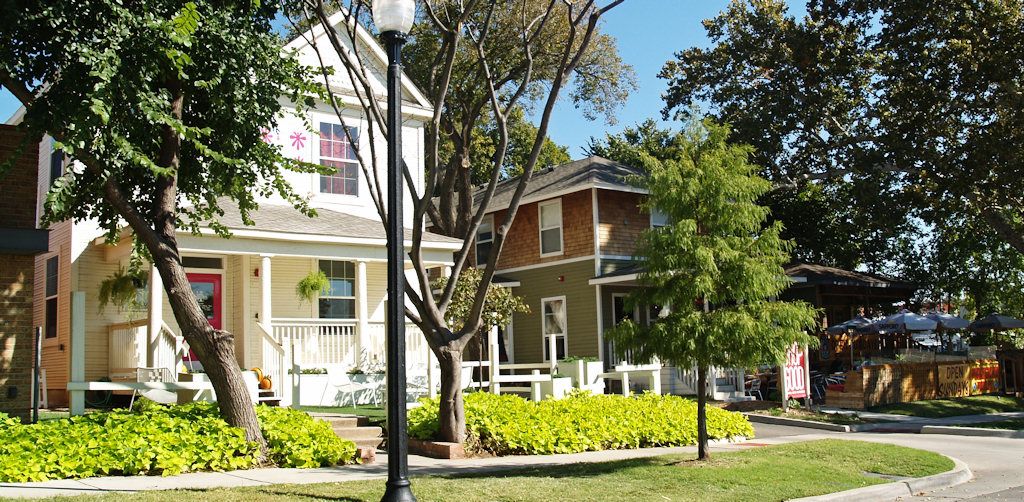
Unless you've been there, it is easy to miss small but fine developments on the streets intersecting with Broadway, such as the pair below which shows the Iguana Grill, Sara Sara Cupcakes, and other ventures on NW 9th Street, east of Broadway.
20. Oklahoma City Community Foundation. This organization founded in 1969 is the source of a multitude of grants to Oklahoma City ventures. Earlier located at 1300 N. Broadway, in November 2005 it announced plans to build a new $2 million headquarters at the northeast corner of NW 10th and Broadway. Construction began around June 2006 and was completed sometime in 2007. This building was the first new office building built on Broadway in 40 years. The photos below were taken on June 17, 2006, and September 27, 2010.
21. Skirvin Hilton Restoration. The full background of this development is much too much to state in this snapshot version of developments. In a nutshell, this $50.4 million 238 room project developed over a period of many years but it all came to fruition with the grand opening of the Skirvin Hilton on February 26, 2007. A few of the pics are shown below but many many more, as well as much more history, are available in a chained system of posts, beginning here.
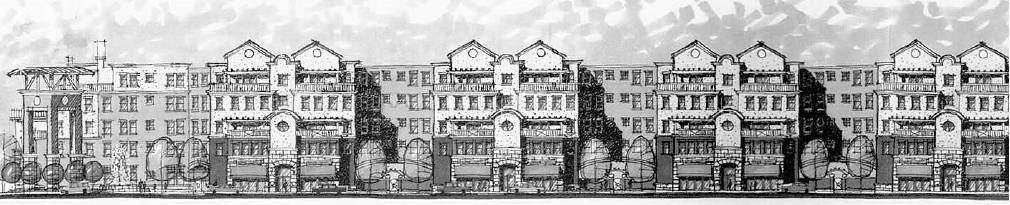
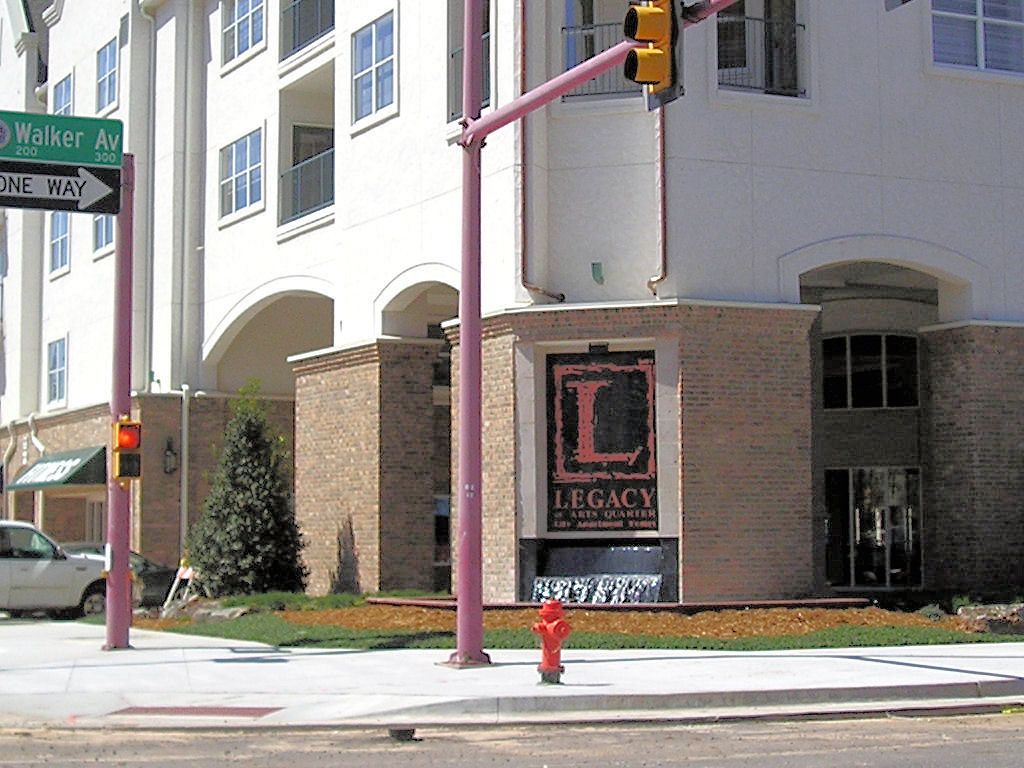
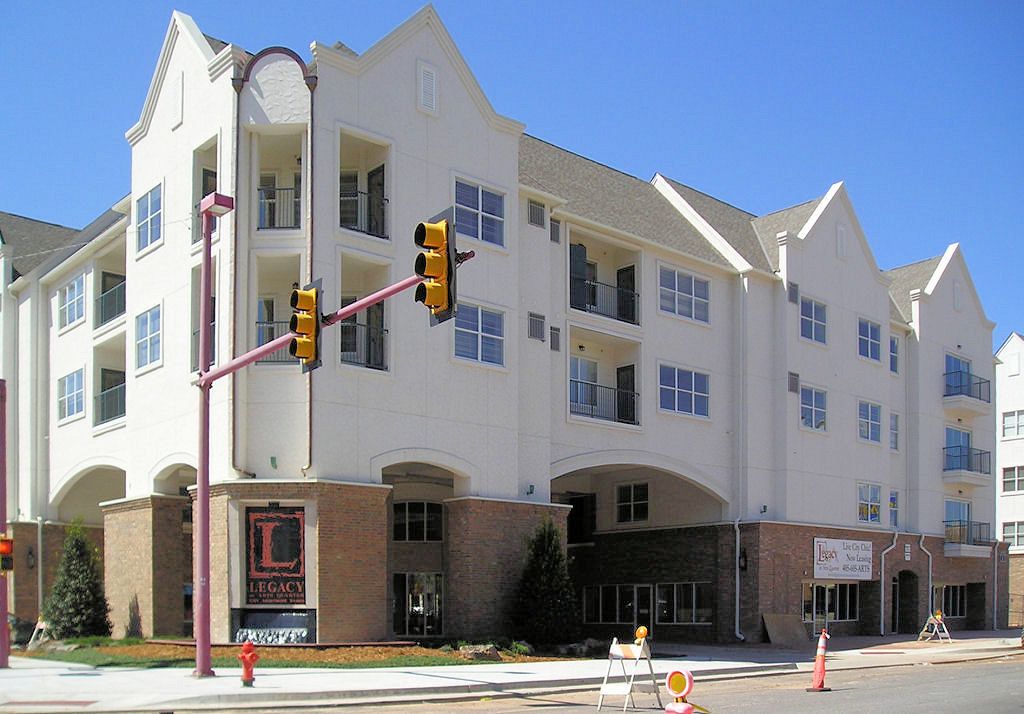
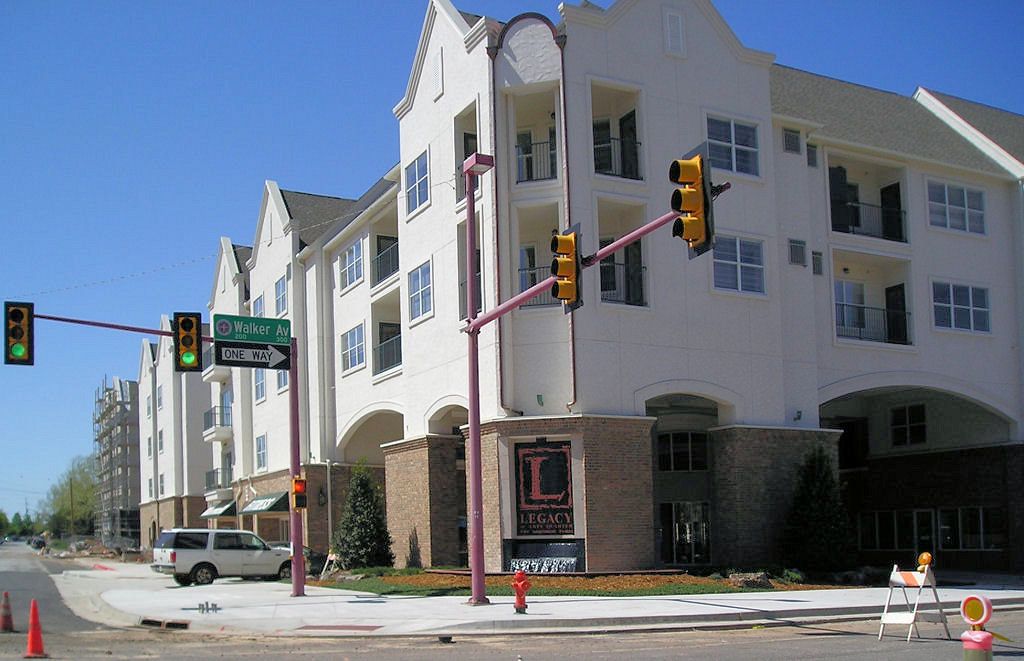
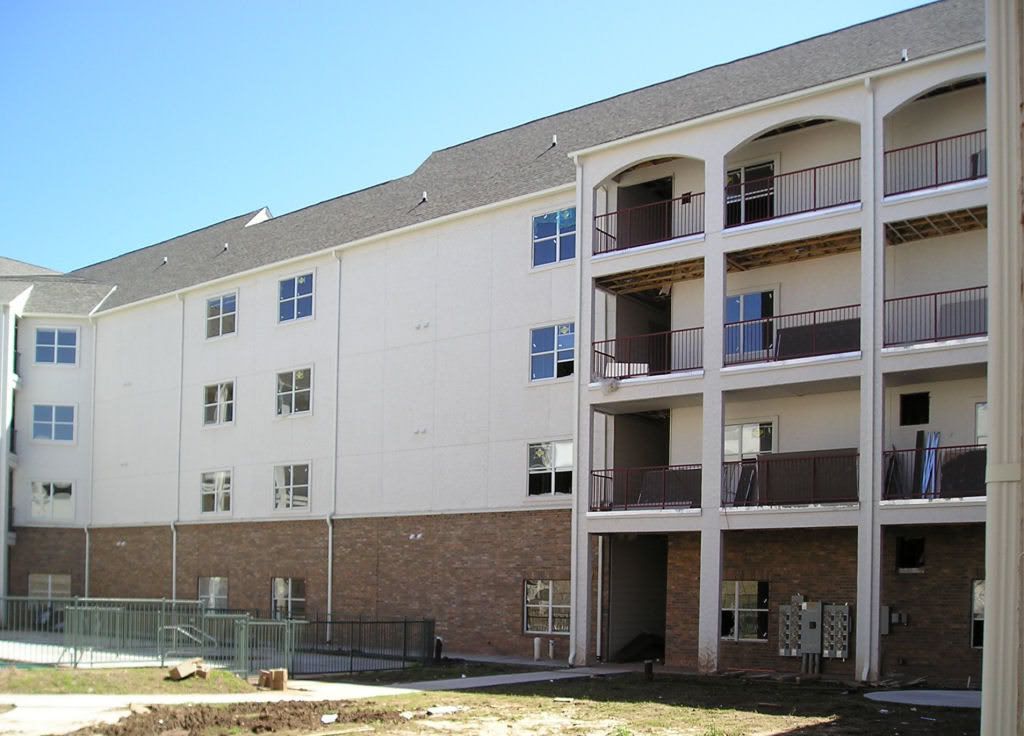
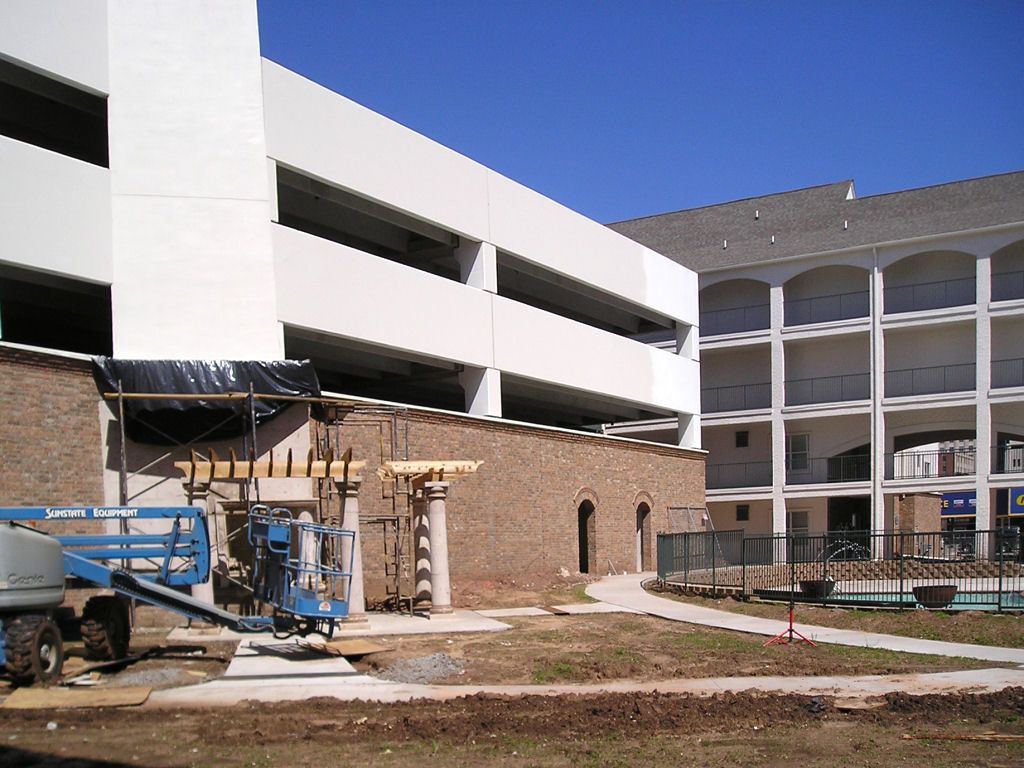
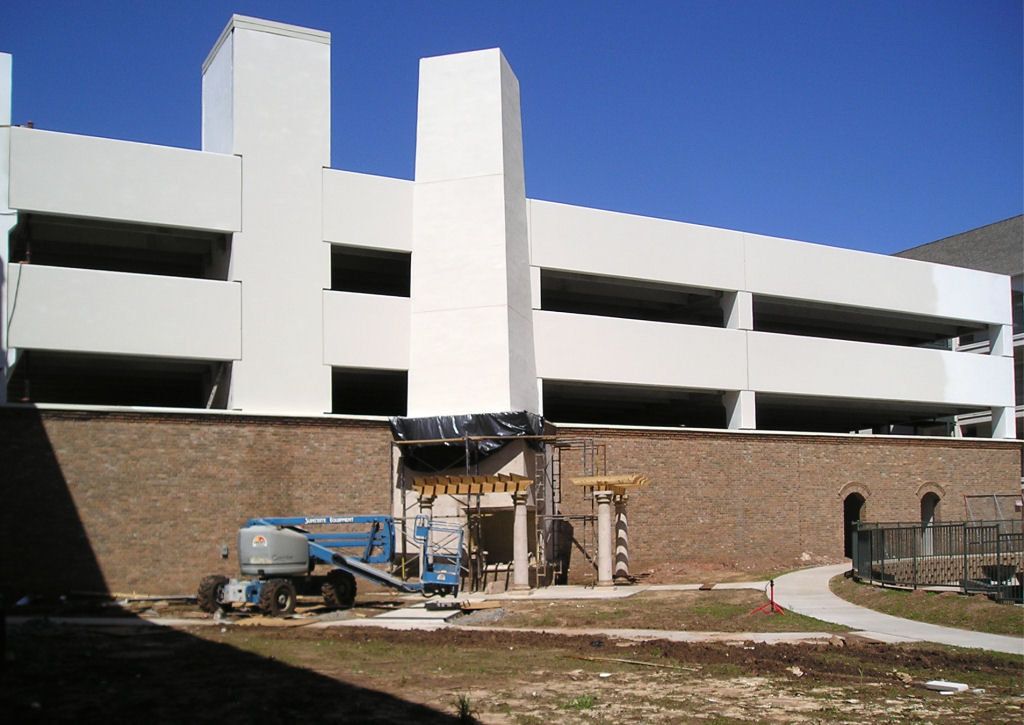
22. Legacy At Arts Quarter. Originally named, "Legacy At Arts Central," Mike Henderson submitted his plan for a 5-story $33.3 million 303-apartment complex for the 2-square block area (NW 4th to NW 6th, Walker to Dewey) to the Oklahoma City Urban Renewal Authority (which owned the land) in September 2002 and his plan was selected on December 9, 2002. The architectural drawing by the designer, Architecture Design Group, looked like this:
It was hoped that construction would begin in 2003, however final design approval by OCURA didn't occur until March 2004. By then, the project had become a 4-story project with a model looking like this:
At that time, construction was expected to begin in summer 2004. For some reason that I didn't explore carefully yet another "final" approval was given by OCURA on October 21, 2004. By August 2005, construction had not begun. Frustrated by the granting of previous extensions being granted but to no avail, on October 19, 2005, OCURA declared Henderson to be in default and he had 60 days to fix the default and get started. That time passed, too. Finally, on January 18, 2006, he was given 2 more days, that being the amount of time he needed to wrap up his financing. Whether it happened within the 2 day period or not, construction finally began in January 2006.
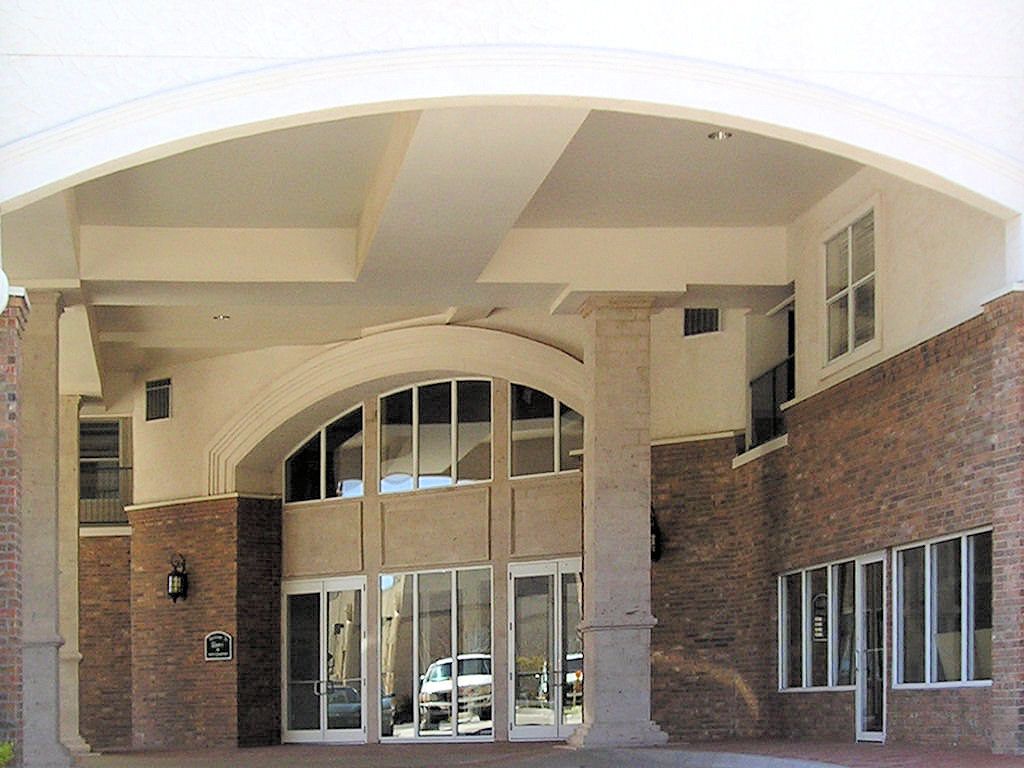
On April 1, 2007, I took the following photos on the premises which by then was well under way.
Formal opening of Legacy At Arts Quarter occurred on May 3, 2007, a month after the above pictures were taken.
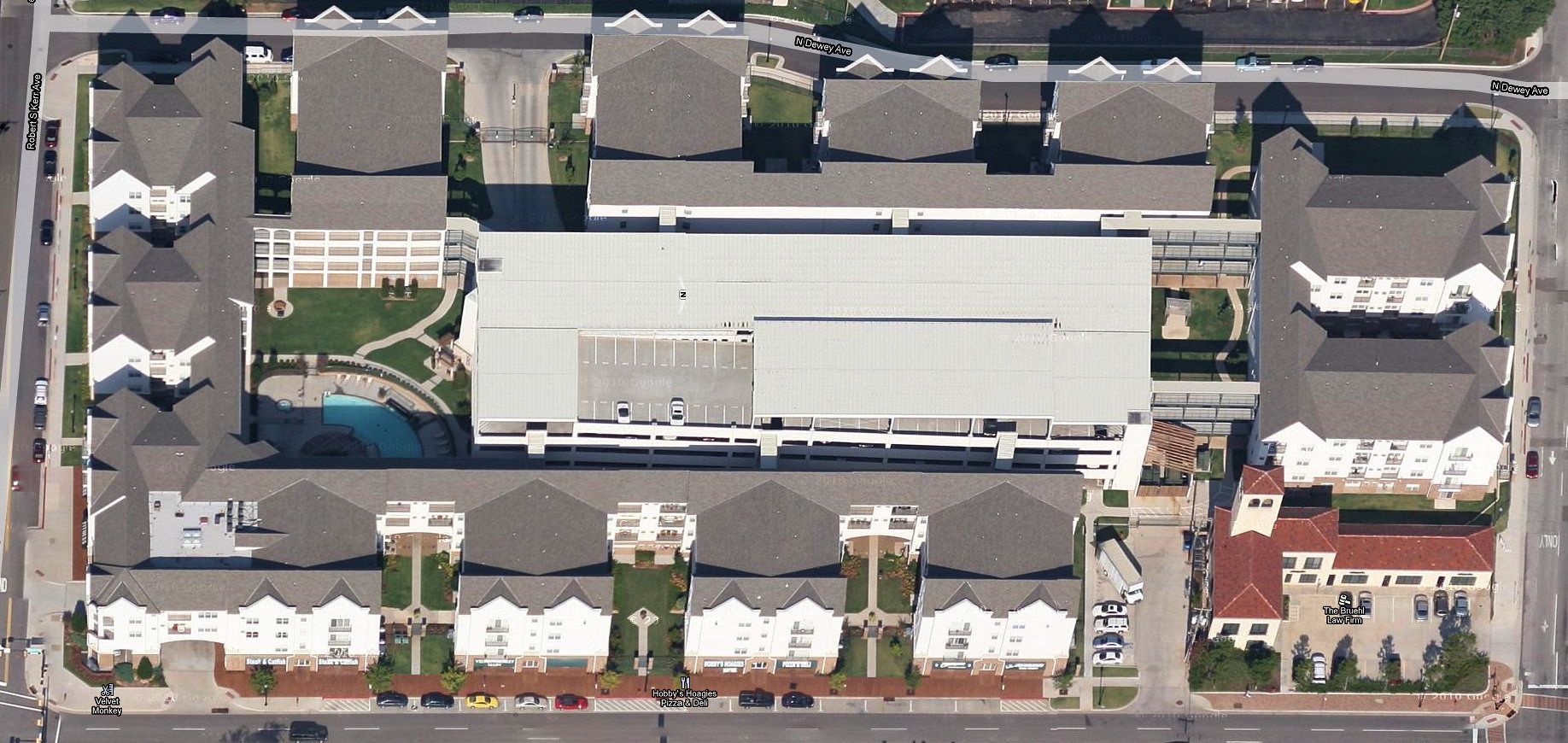
A Google map 2010 aerial view of the entire project is shown below.
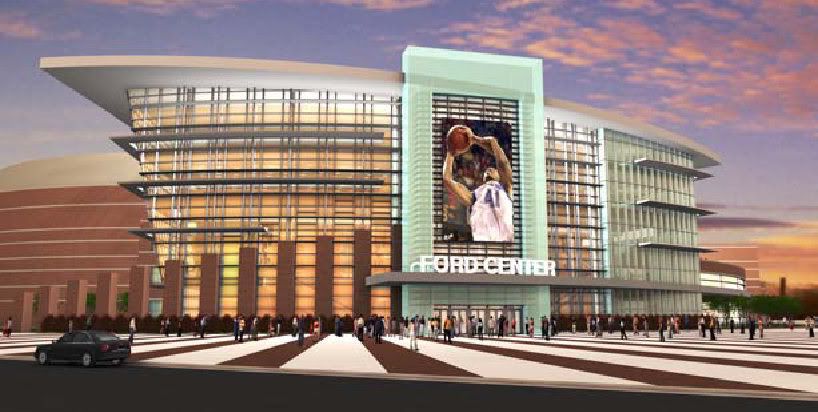
23. Ford Center Remodel & The Thunder. Well, what can I say that I've not already said in numerous articles here on this topic. To summarize, after two seasons of ownership of the Sonics while in Seattle by Basketball Club LLC, and Clay Bennett having publicly laid down the terms of staying there more than 2 years earlier, neither Seattle nor Washington state had acted by October 31, 2007, to pony up the funds or even come up with a plan to build a new arena and enter into a new contract with the Basketball Club LLC. In early November, Clay Bennett, the group's chief executive and spokesperson, submitted the group's application to the NBA Board of Governors to move its team from Seattle to Oklahoma City. Following that action, on December 20, 2007, Mayor Cornett unveiled his plan to submit to the City Council his vision for taking Oklahoma City to the "next level" by his proactive ... and preemptive ... initiative to extend the M.A.P.S. penny sales tax for 12 or 15 months (the practice facility was on a separate ballot and that was the time variable) to improve Oklahoma City's Ford Center to high-end NBA specifications and build a new practice facility, altogether totaling about $121 million. On January 2, 2008, a more specific proposal was submitted to the City Council and it unanimously decided to submit the matter to a vote of the Oklahoma City citizens on March 4, 2008, about a month before the time for decision by the NBA Board of Governors upon the pending application by Basketball Club LLC's application to relocate the teams (at least the Sonics) from Seattle to Oklahoma City as soon as possible -- the Storm, the women's WNBA team, was shortly sold to local interests in Washington so that became a non-factor. See this article for more about the proposed improvements and practice facility.
In my estimation, this was our mayor's finest hour. Of course, his initiative was undertaken against the backdrop of unresolved federal court litigation pending in Washington which could either delay the move or prevent it altogether. Our mayor and council didn't wait to see how that litigation might get resolved. Years of lethargy in Seattle were countered by a swift and powerful rejoinder in Oklahoma City once the opportunity presented itself, and all credit is due to Mayor Cornett for seizing the moment. The ball was in Oklahoma City's court to determine what it would do about Ford Center improvements and the state of the art practice facility for an NBA team, should the NBA Board of Governors approve the move of the Sonics to our fair city. In a whirlwind and highly publicized campaign led by the mayor and the Greater Oklahoma City Chamber of Commerce, the game was afoot to do in 3 months what Seattle had failed to do in at least that same number of years.
I did my small part, too, such as shown by the following video which demonstrated and drew upon our amazing support and affection for the New Orleans/Oklahoma City Hornets during their two-year stay here. After that experience, Oklahoma City had tasted the NBA pie; the Hornets were gone; and the city missed the NBA experience and wanted it to return ... at least, this voter did. Among other things, I put together the following video ...
But, would the vote pass? Seattle voters and Washington state officials had not taken care of its own business, and no one likes to be taxed, generally, so no tax initiative is ever a sure thing. Up the turnpike, we've seen what can happen in Tulsa which has typically disapproved of taxation for sweeping public improvements. You can tell by the smile on Mick Cornett's face at the March 4 Vote watch party, and his grandson's, that all went well. On March 4, the results were glorious. By a vote of 62% to 38%, Oklahoma City voters had done their part. The rest is history -- the NBA Board of Governors approved the move; the litigation was resolved by compromise on July 2; and, on July 3, 2008, those culminating events gave rise to the front page news:
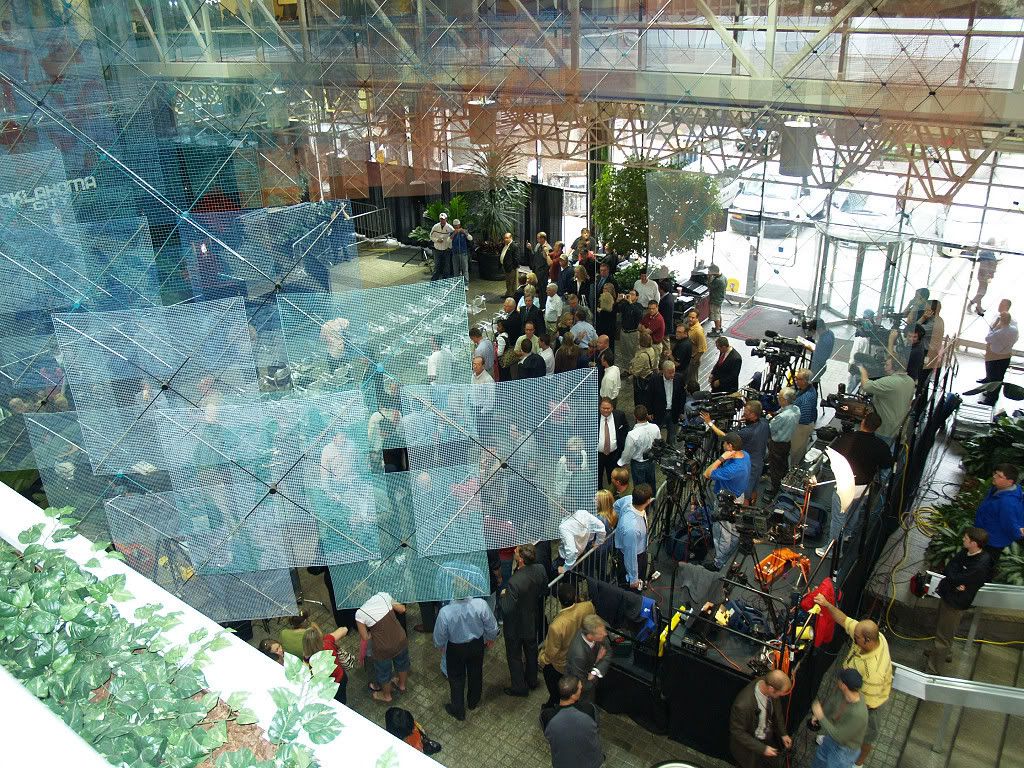
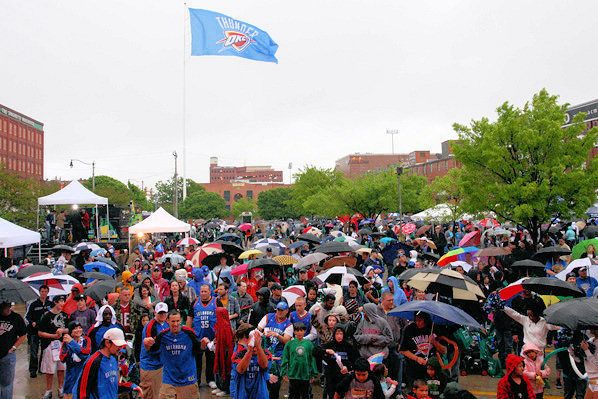
Shortly after that, on September 3, 2008, in a public ceremony in Leadership Square, the team from the northwest was renamed and reborn as the Oklahoma City Thunder.
As this is written, quite a number of internal improvements to the Ford Center have already been made although the exterior improvements on the south side, to become the main entrance, have not. The new $3.9 million scoreboard is shown at right.
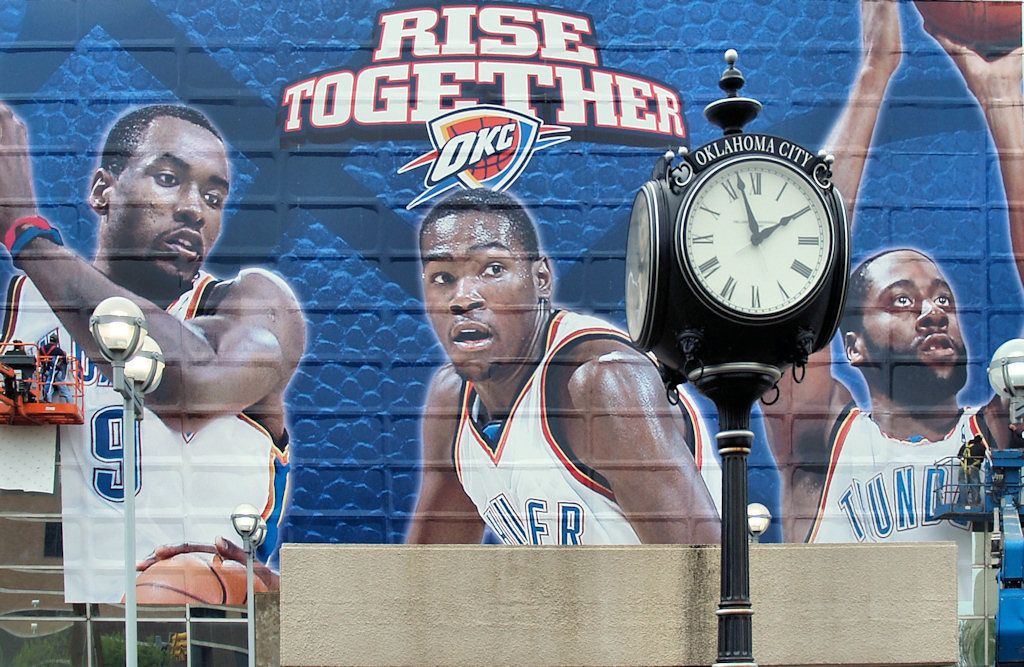
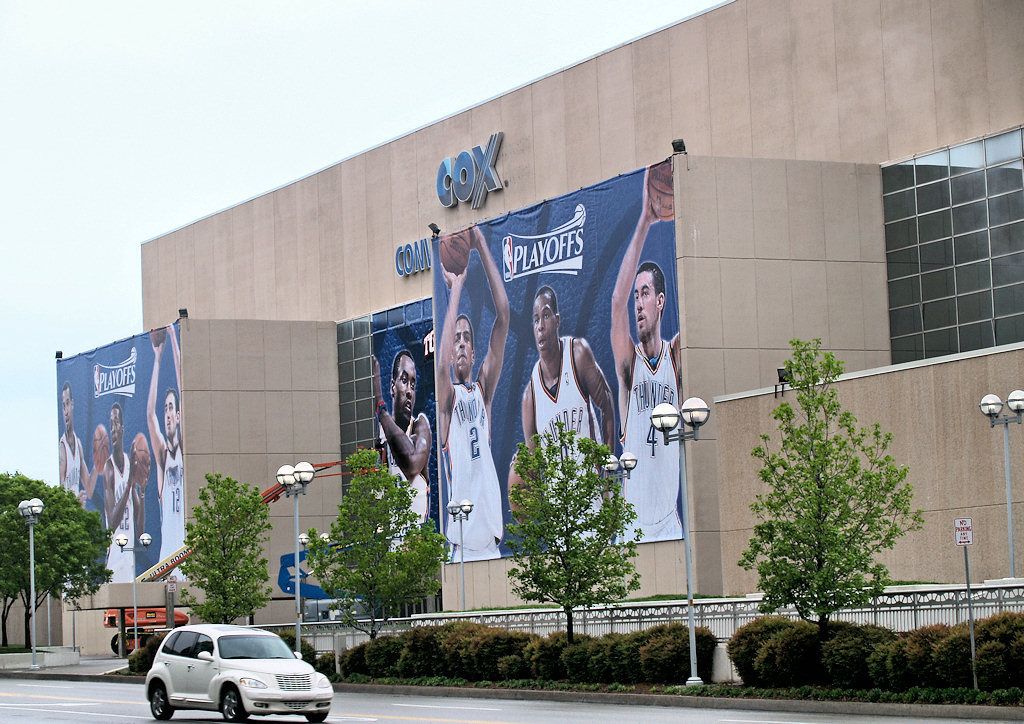
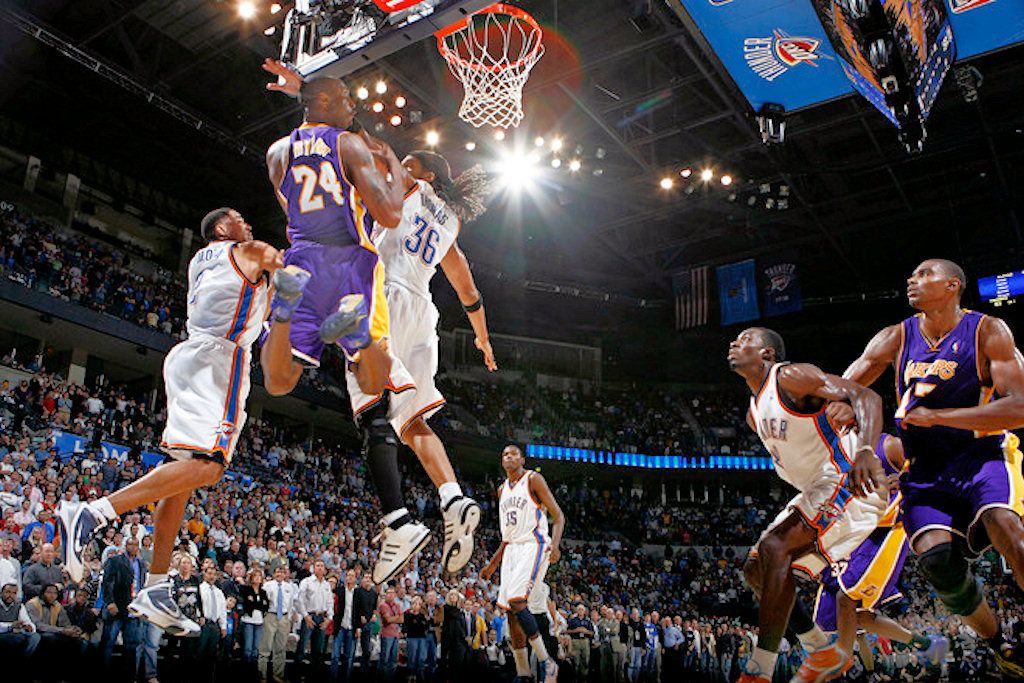
The Oklahoma City Thunder now have 2 seasons under their belt and are about to enter the 3rd with an exciting team -- one which has captured the fancy of much of that part of the country that cares about NBA things. The Thunder is here to stay. After showing a few images from the playoffs time period last season and an earlier game with the Lakers, I'll be done.
24. Myriad Gardens Makeover. This fast moving project began in spring 2010 and is scheduled to be completed by spring 2011. This brief explanation tells how this development came to be.
In the October 9, 2009, Oklahoman, Steve Lackmeyer explained:
With construction of the new [Devon] headquarters set at $750 million, Nichols surprised many downtown observers by asking that the tax increment financing (TIF) proceeds from the project not be used for amenities for the corporate campus, but rather to improve the surrounding downtown neighborhood. ¶ The Myriad Gardens is the biggest single beneficiary of the TIF, with $35 million dedicated to making it a people place by adding amenities requested by residents.
It is fitting, I think, that Dean A. McGee's favorite downtown project is being updated and brought into greater glory by another of the city's generous city-minded oil and gas men, Larry Nichols vis a vis Devon Energy Corporation.
Except for Crystal Bridge, the remainder of funding for the Myriad Gardens project is part of Project 180, the name which the above TIF came to have. For a bit more about that, see the next section.
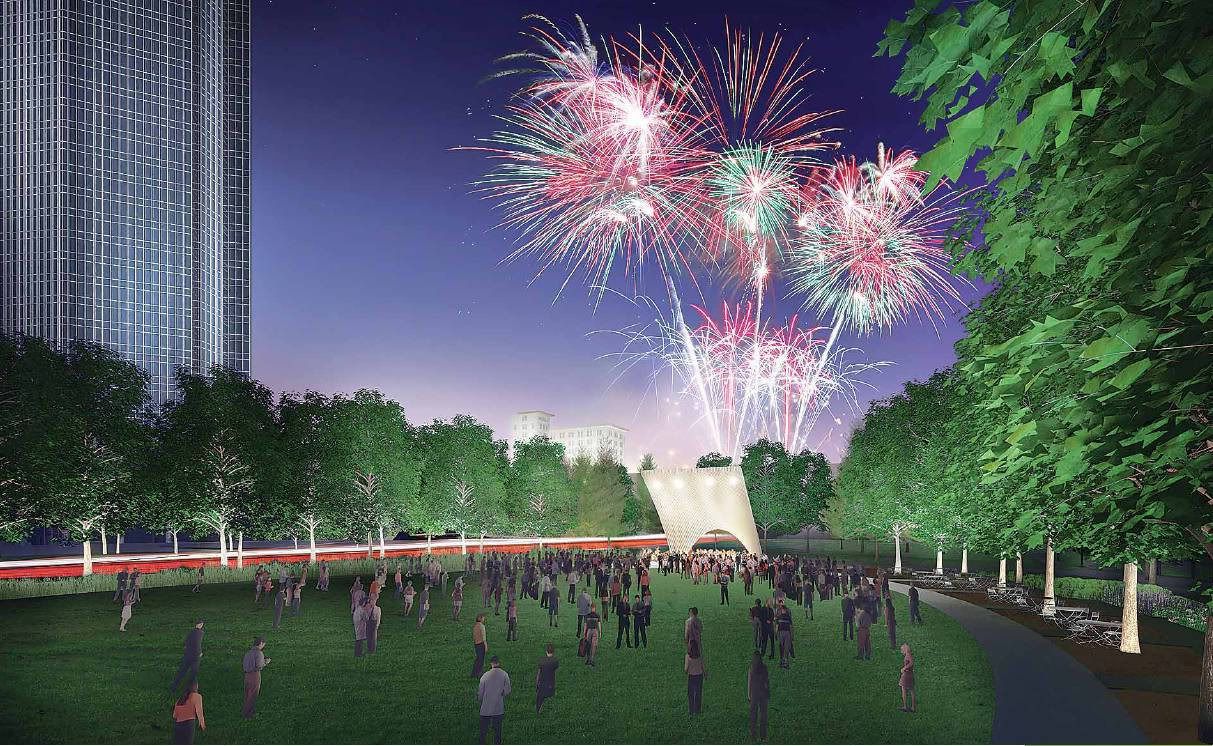
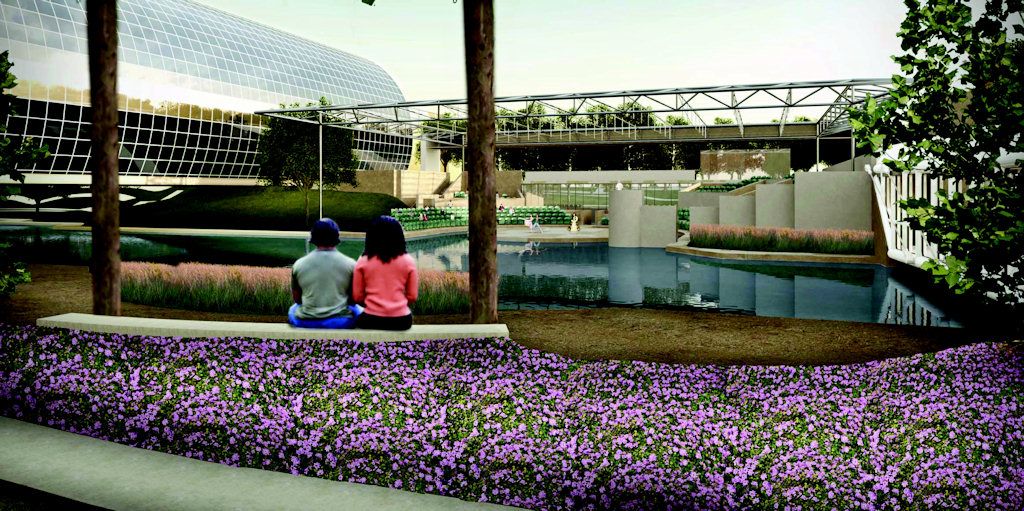
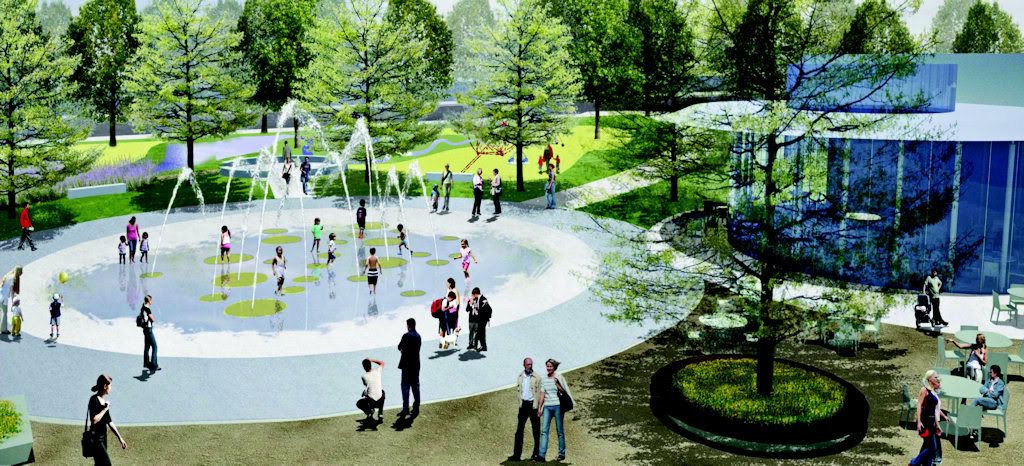
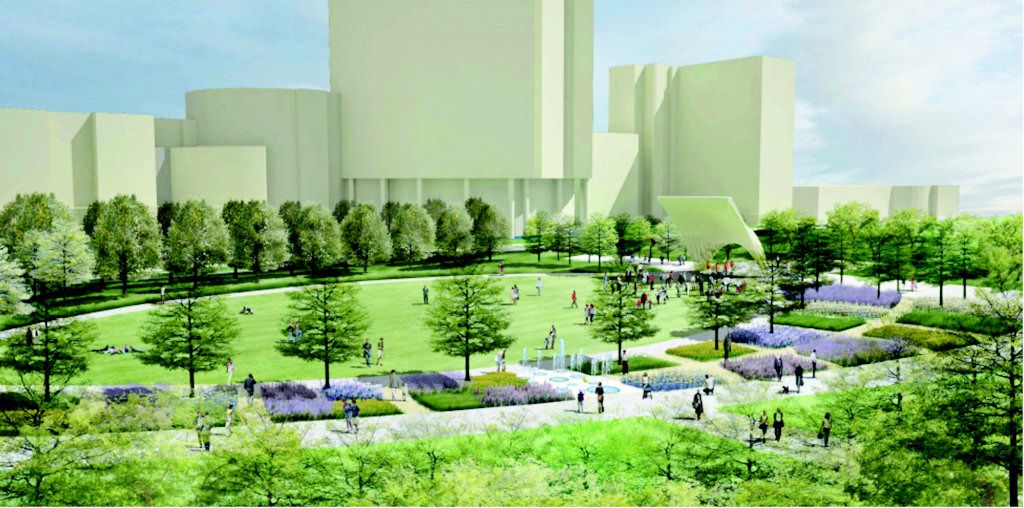
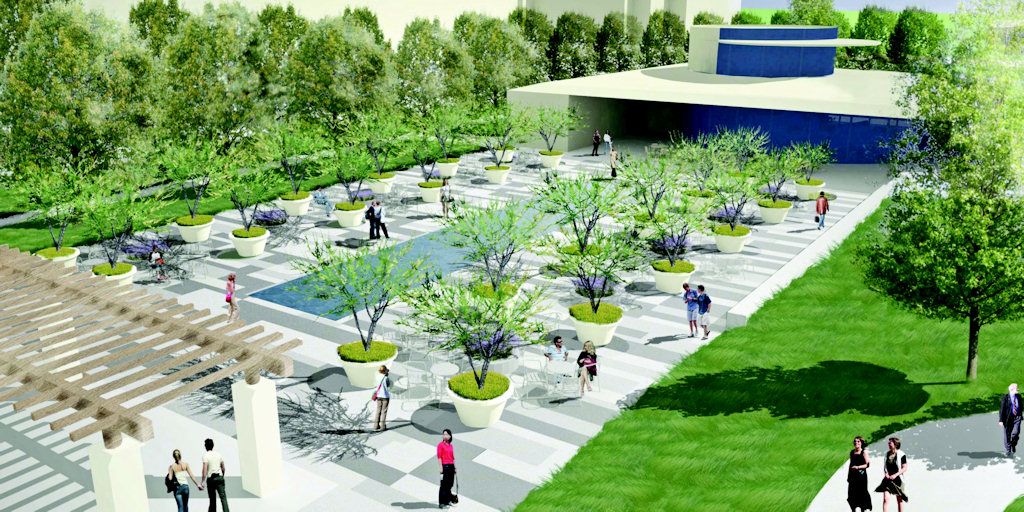
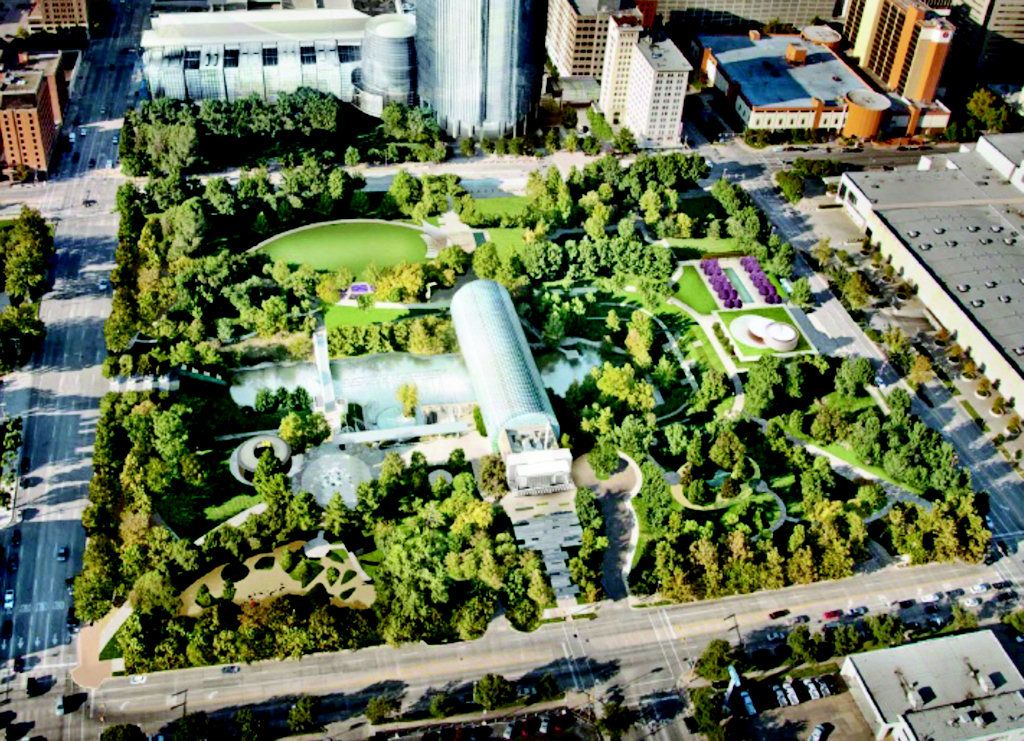
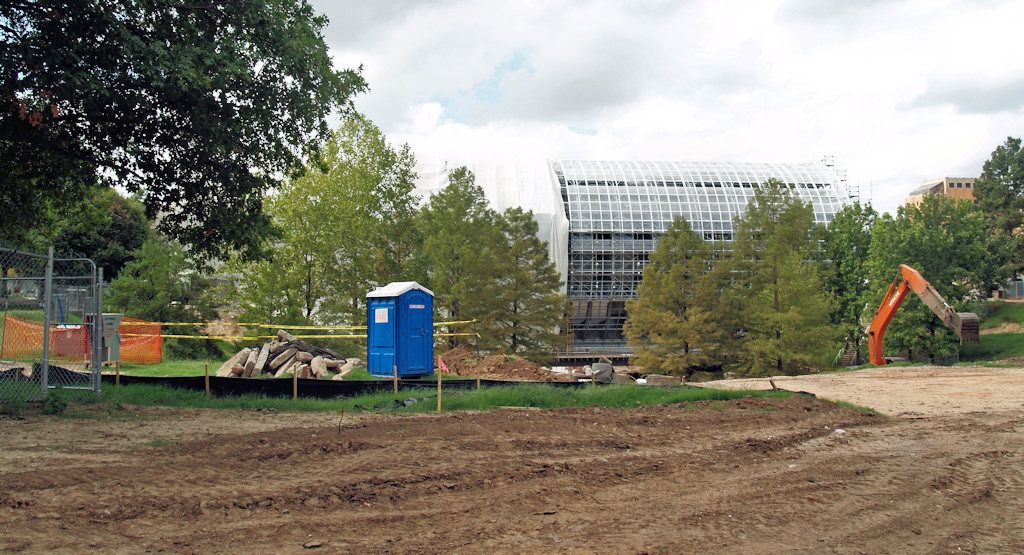
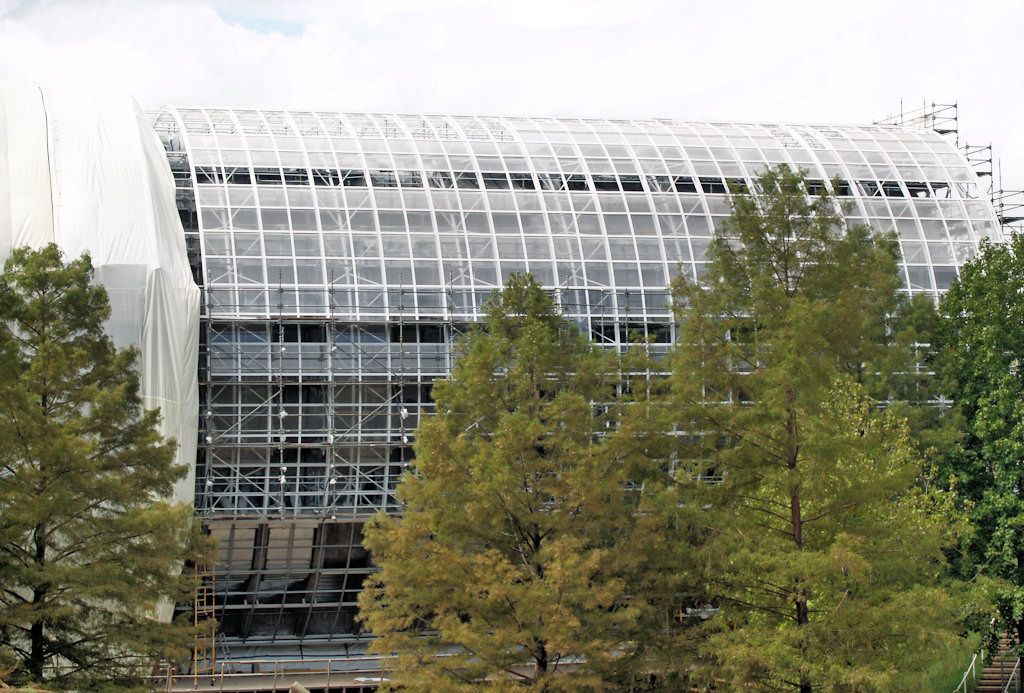
Replacement and refurbishing the Crystal Bridge is funded from a 2007 voter approved $8.75 million for replacement of the botanical garden's 3,028 glass panes. The makeover being funded by Devon's beneficence is the extreme makeover of the park itself, including a restaurant, café, kiosks for renting model boats and bicycles, a children's play area, an ice skating rink and an iconic amphitheater and grand lawn. Renderings provided by the city are shown below.
I took a few photos from inside the gardens on September 23, 2010, and they are shown below.
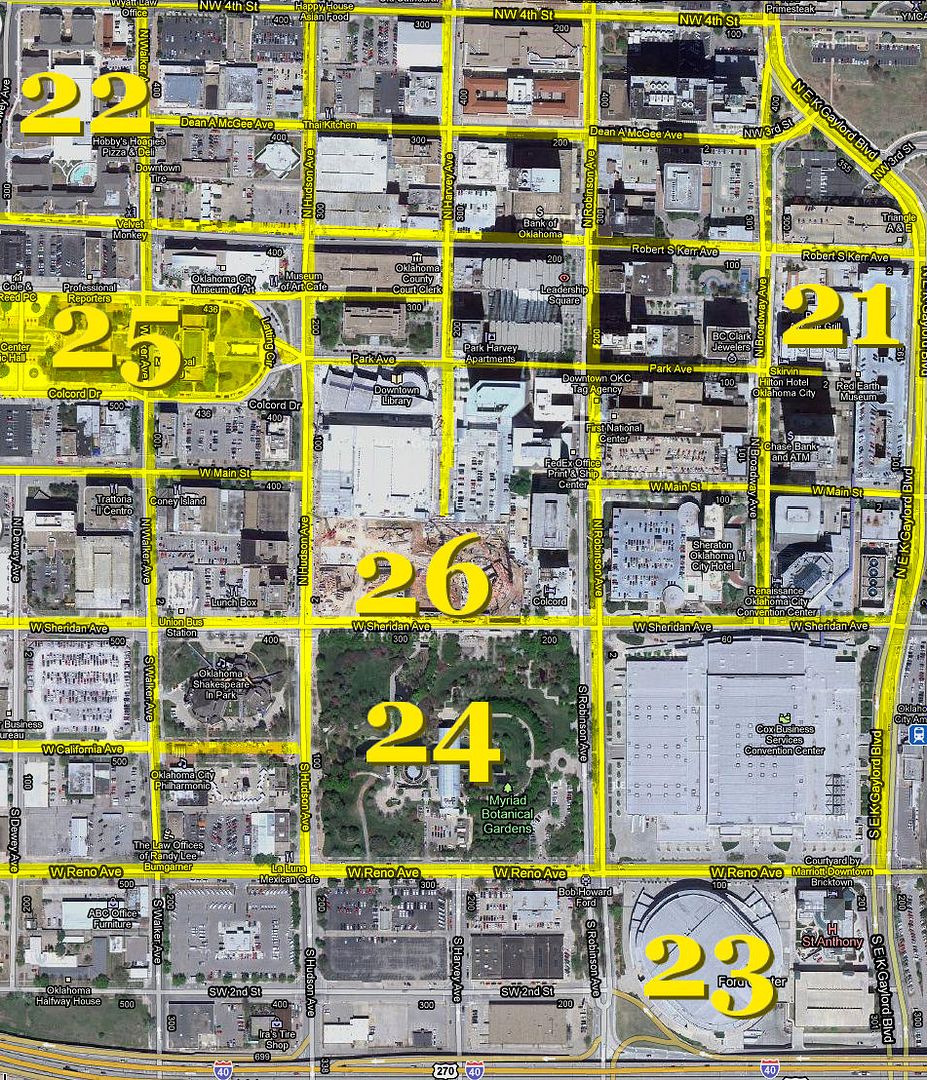
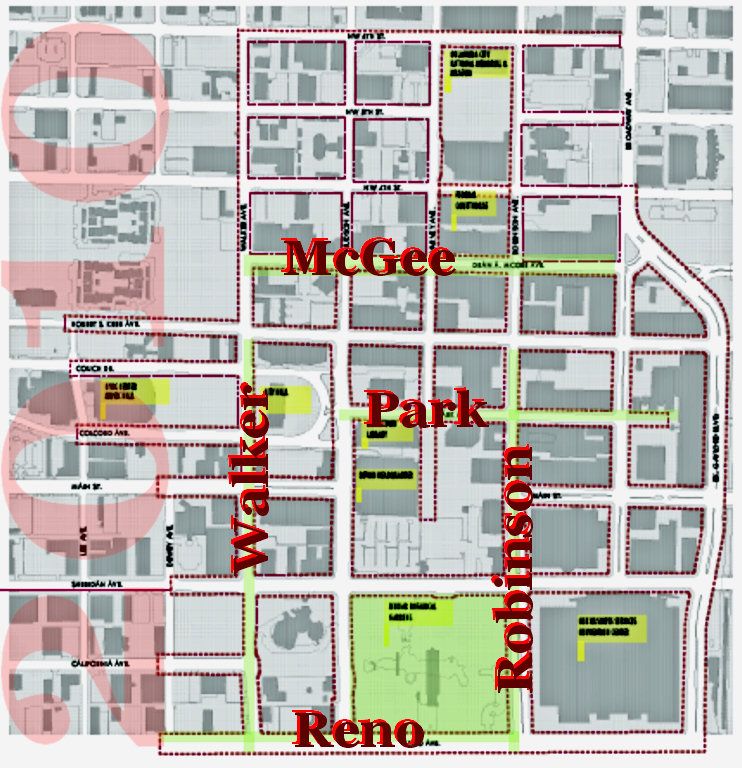
25. Project 180 Streetscapes & Parks. Project 180 is so named since it affects 180 acres of downtown city blocks. According to this November 9, 2009, PDF file at the city's Project 180 website and the December 17, 2009, video presentation by Assistant City Engineer Laura Story, the project ...
will cost $141 million, $26 million of which derives from a 2007 bond election and $115 million of which derives from Devon Energy's generous allowance that its entitlement to TIF funds (which Devon would otherwise be entitled to use on aspects of its new Devon Tower) would instead be used on downtown streets, parks, and sidewalk improvements -- in fact, Devon loaned to the city the TIF amount which Devon would be entitled to receive over time so that the city would have the funds to proceed immediately on the Project 180 downtown makeover -- what a remarkable corporate citizen of Oklahoma City Devon Energy is
will affect 8.5 miles of downtown city streets
will make all downtown streets two-way
includes 100 downtown blocks between Lee on the west, Gaylord on the east, NW 6th on the north, and SW 2nd on the south
includes redesign of Myriad Gardens (see above), Bicentennial Park (east of Civic Center Music Hall), and City Hall Plaza (east of City Hall)
includes bike lanes and bike parking
will add about 1000 street parking places
will include new (and possibly rearranged) public art
will include extensive landscaping, benches, etc., intended to make downtown more walkable and beautiful
is a fast-moving project intended to be completed by January 2014.
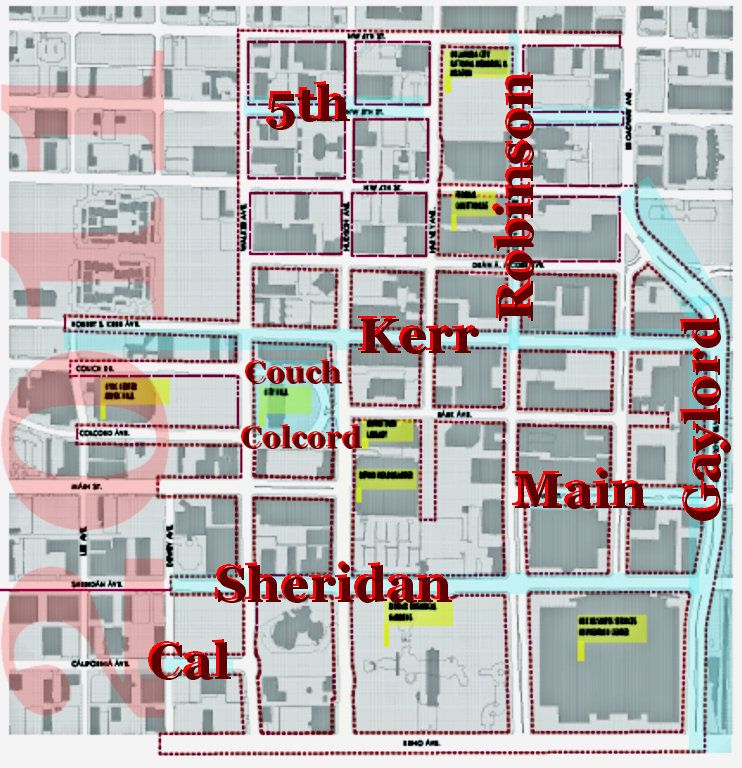
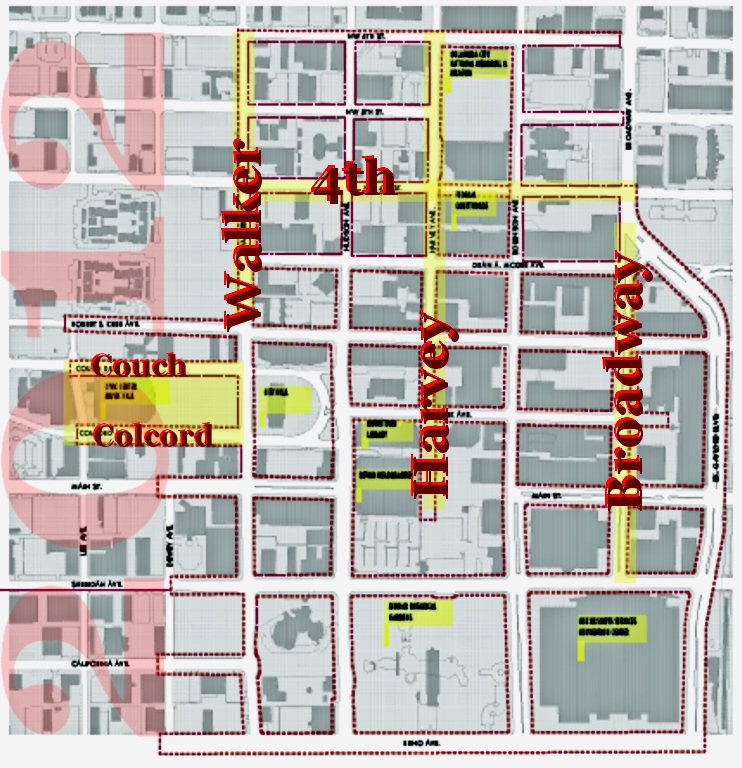
The city's website doesn't contain a huge amount of detail so I'm not able to be particularly specific. The November 2009 PDF shows the following order of street, sidewalk, and landscaping progression ... I've added large notes on the maps for easier viewing ...
Projects To Be Done In 2010
Projects To Be Done In 2011
Projects To Be Done In 2012
Whether the prioritization may have changed since the PDF file was published, I don't know. I also note that some elements of the development are not shown in the PDF file at all, e.g., NW 6th while shown is not shown in the markup maps as to when changes will be made, and the area south of Reno down to SW 2nd is not shown at all.
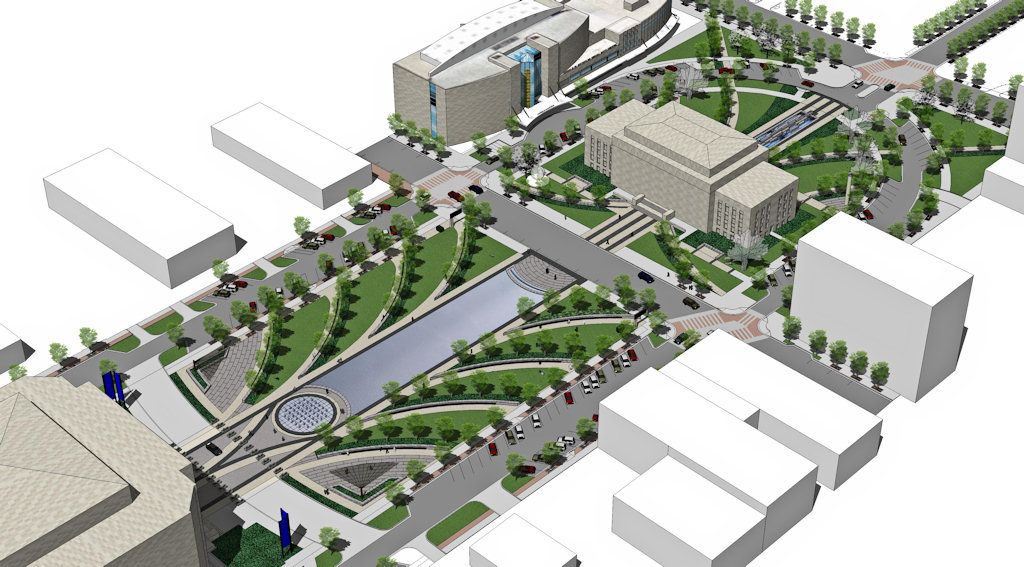
By way of update, Oklahoman reporter Steve Lackmeyer reported on October 7, 2010, that a $3.5 million plan to redo and perhaps rename Bicentennial Park east of the Civic Center Music Hall had been received. It's not clear whether the plan is a done deal, but Steve furnished the following image at his OkcCentral.com blog on October 8:
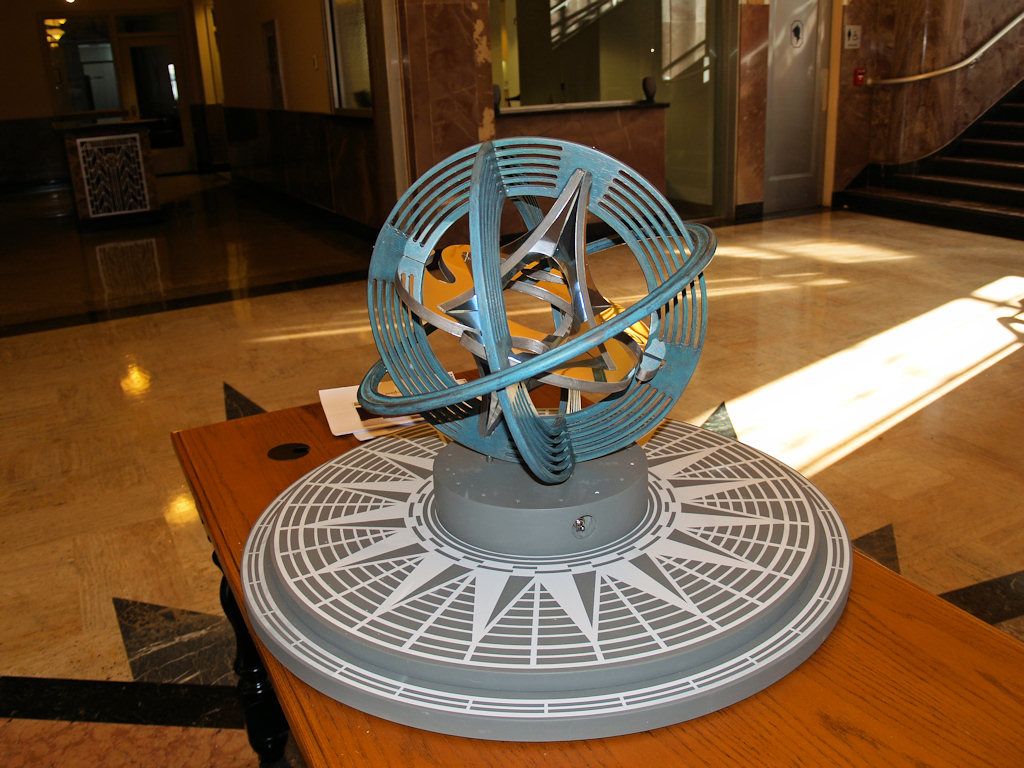
Quite evidently, the existing Bicentennial Park public art in today's Bicentennial Park doesn't appear to fit in with such a plan. The nifty $350,000 Compass Rose which City Council authorized and funded in March 2010 isn't shown in the plan either even though the intent was to place it somewhere in the Bicentennial Park area. See the things promised discussion at the end of this article. As of this writing, October 9, 2010, nothing appears about this development in the city's Project 180 website.
Right now, city streets which are presently being dug out and recreated make travel difficult but not impossible. When this project is done, downtown streetscapes will not look at all like they do today.
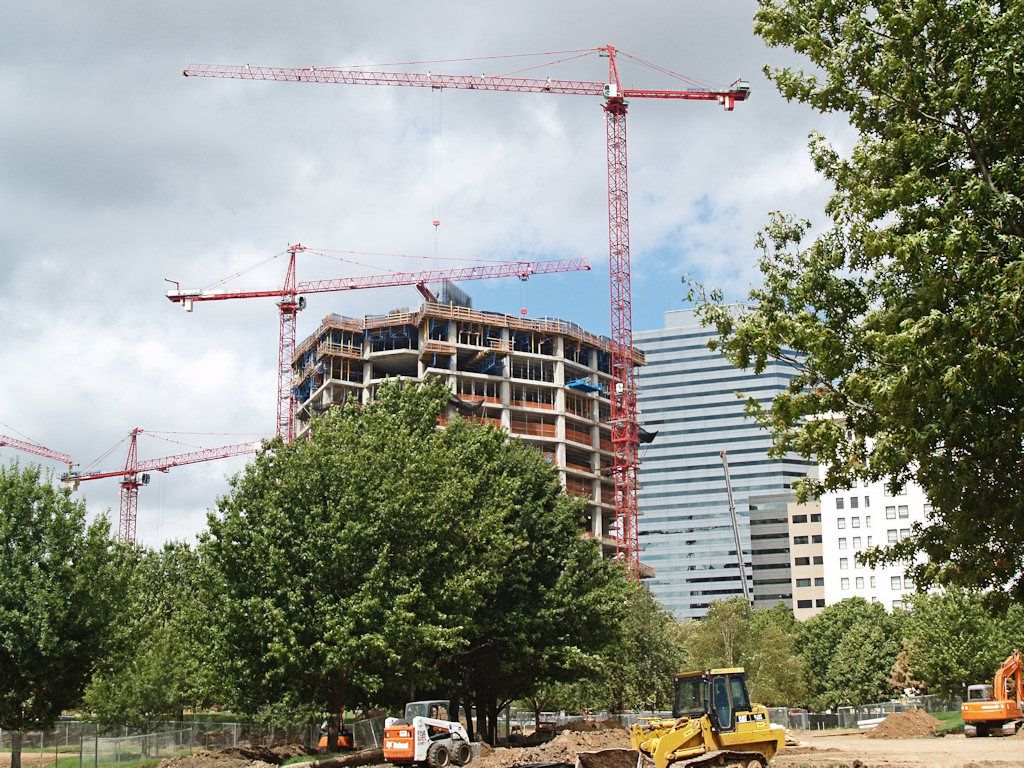
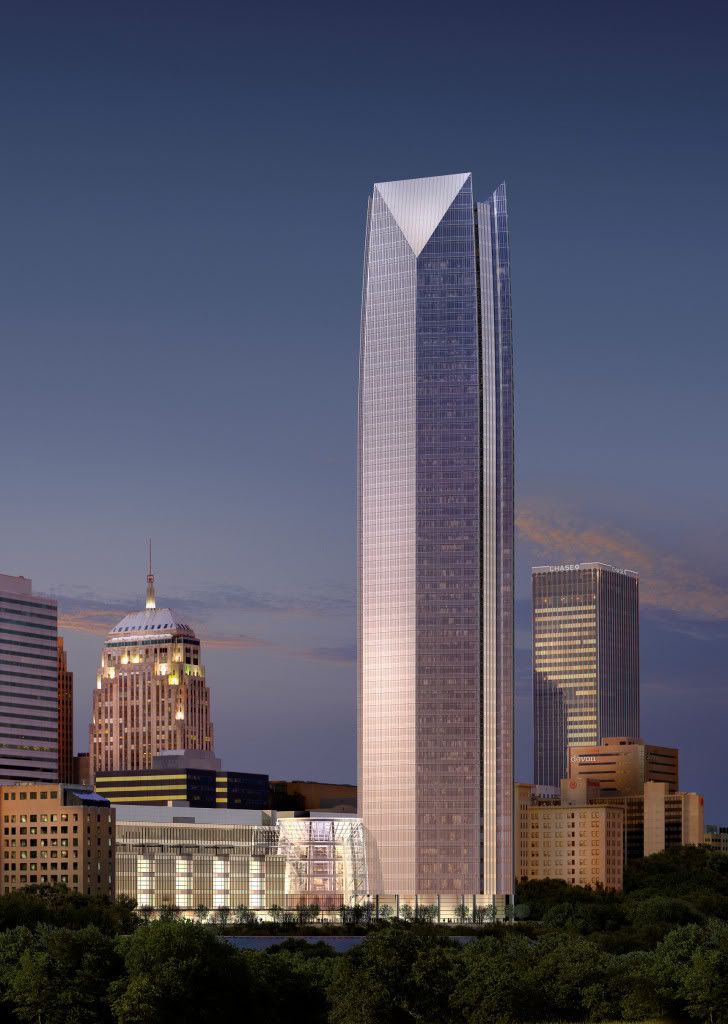
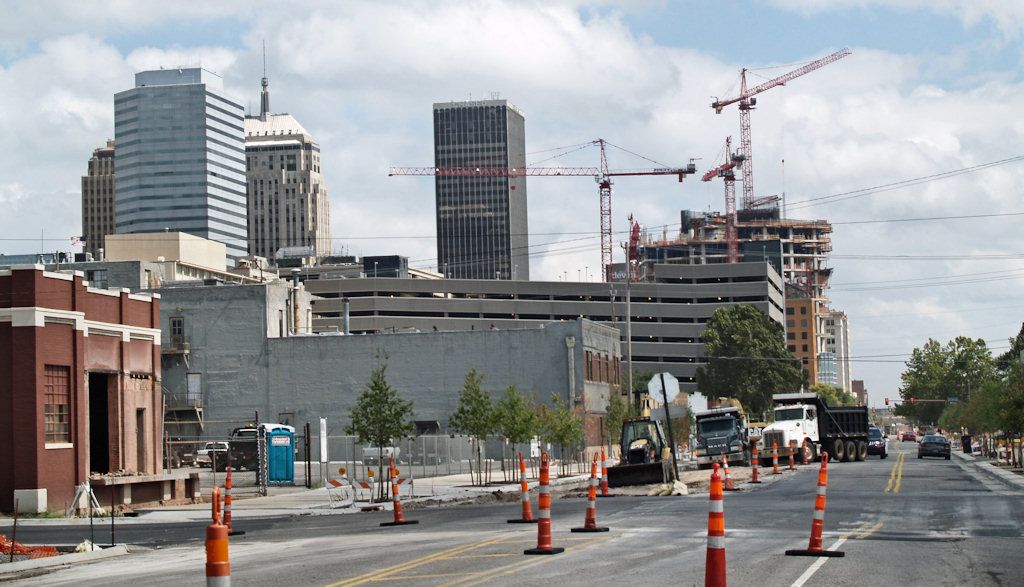
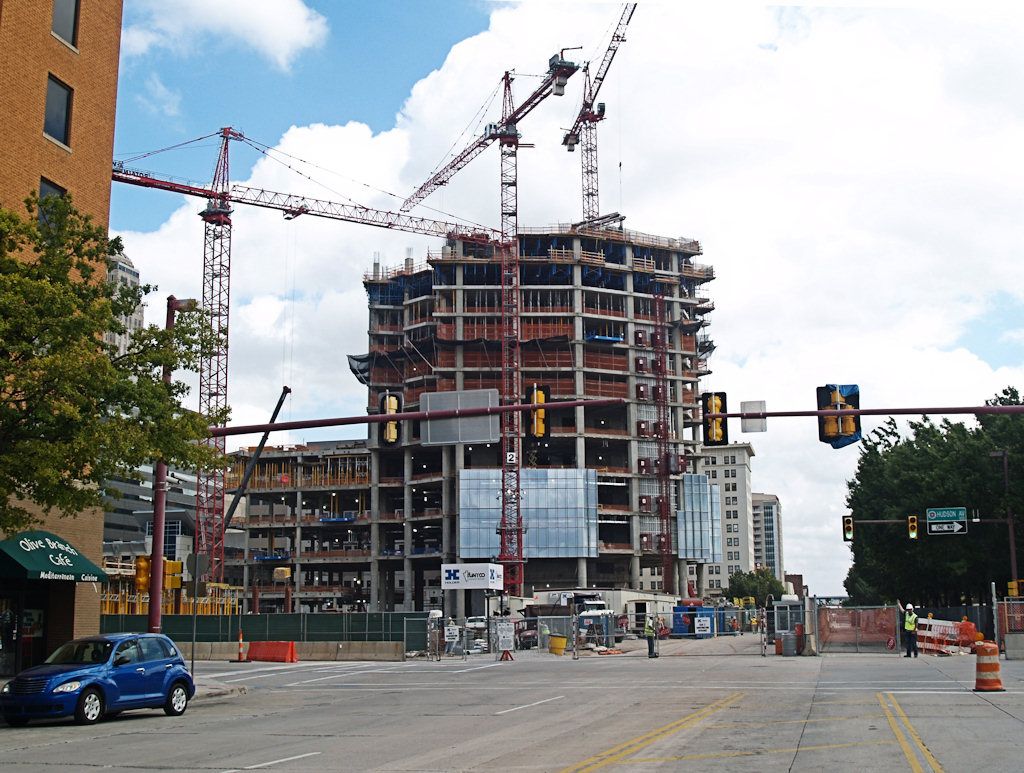
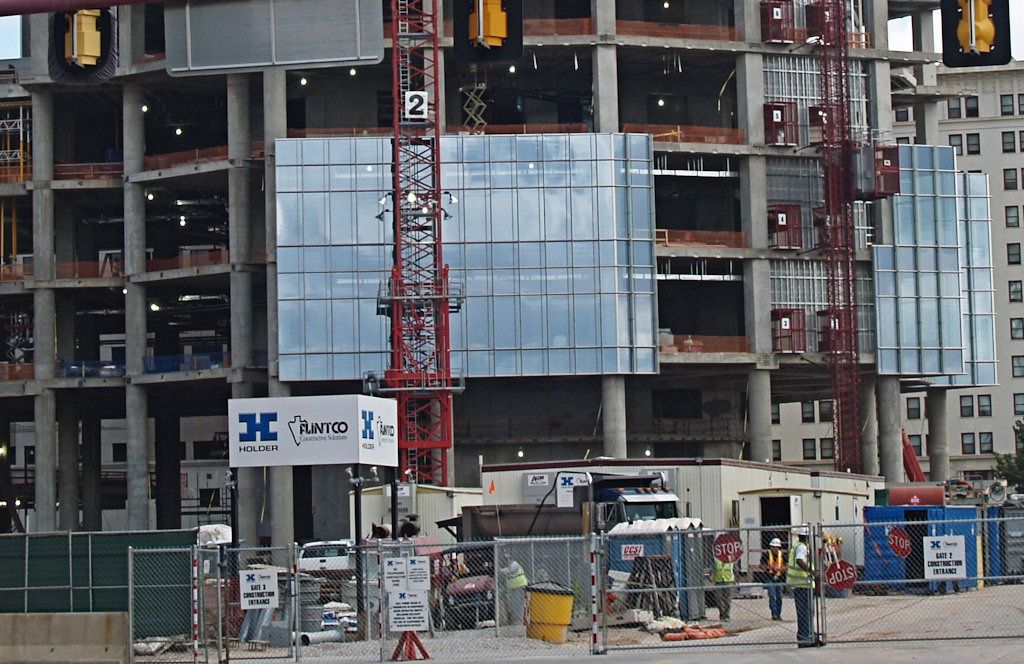
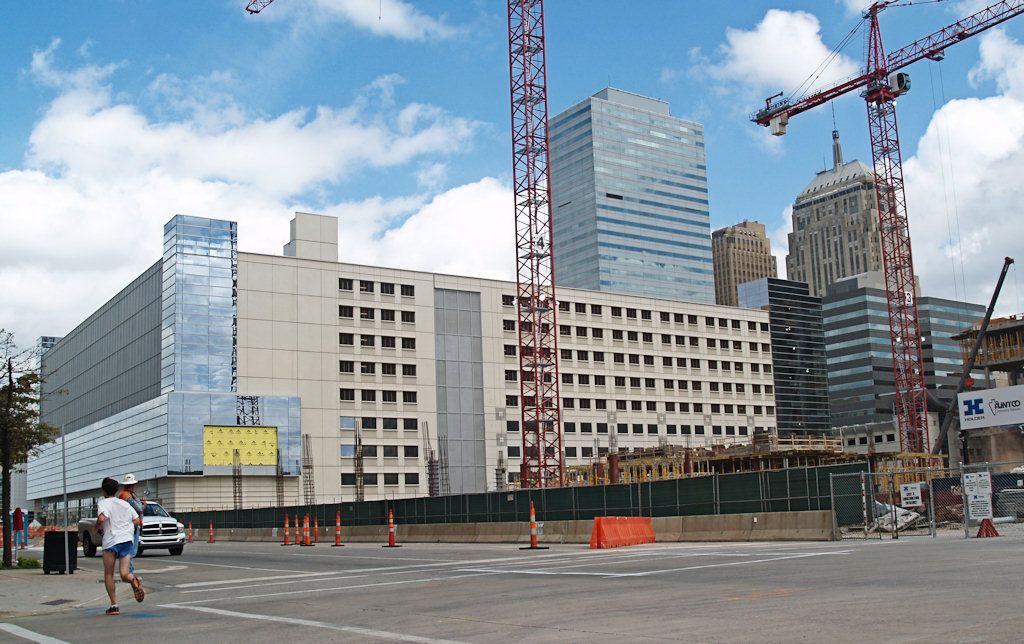
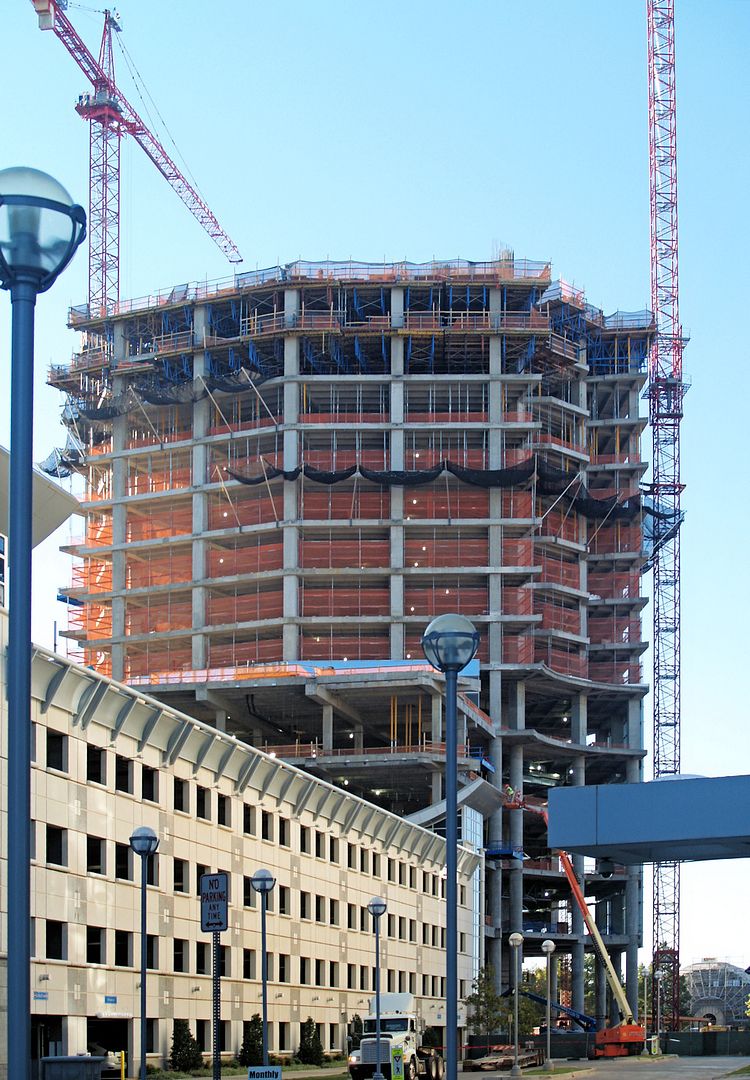
26. Devon Tower. On August 20, 2008, Devon Energy Corporation unveiled and presented its plan to the Oklahoma City Urban Renewal Authority to build, for its new corporate headquarters, a 54-story 925-feet $750 million dazzling beauty, which plan was promptly approved. See this article for much more about the announcement and OCURA meeting. A decision to locate its data center to a separate facility for security reasons resulted in a reduced height to 50-stories and 850 feet.
Note that, as discussed above in the Myriad Gardens and Project 180 sections, Devon Energy made a gift to the city by requesting that its TIF entitlements be used for the beautification and improvement of downtown instead of for its own corporate campus. That's a separate $115 million gift to downtown (not to mention Devon's contributions to the Oklahoma River), to you and me. Oklahoma Citians owe Devon Energy an enormous thank you.
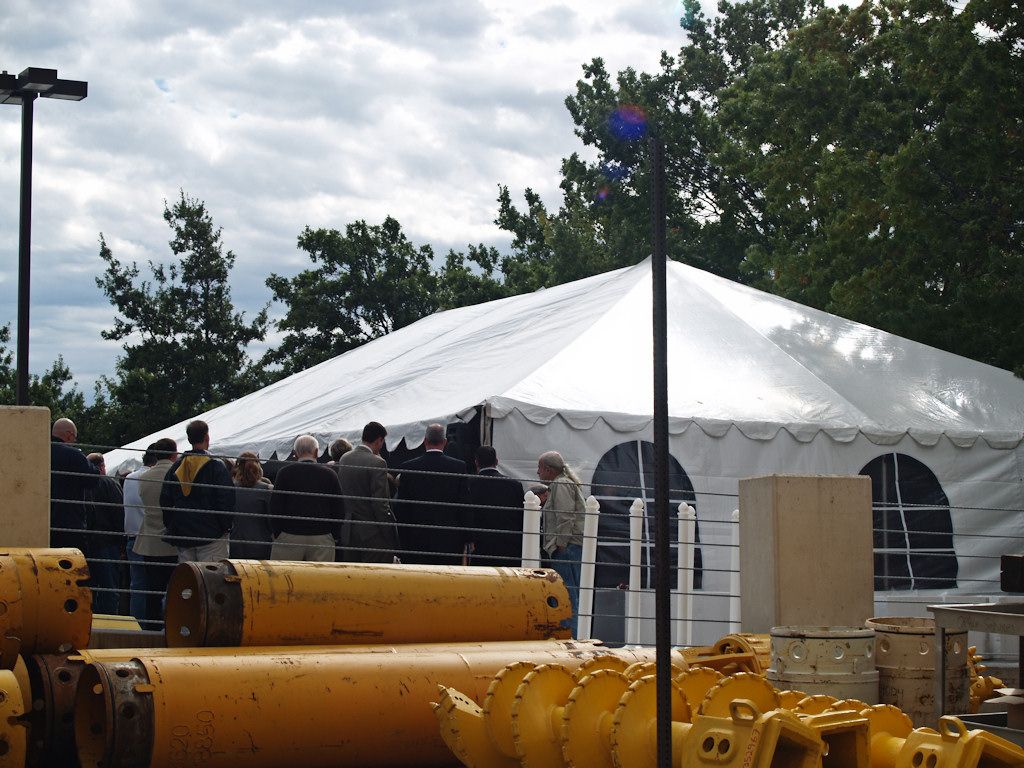
Groundbreaking occurred on October 4, 2009, and the project has proceeded at an amazing pace with construction to be completed in early 2012.
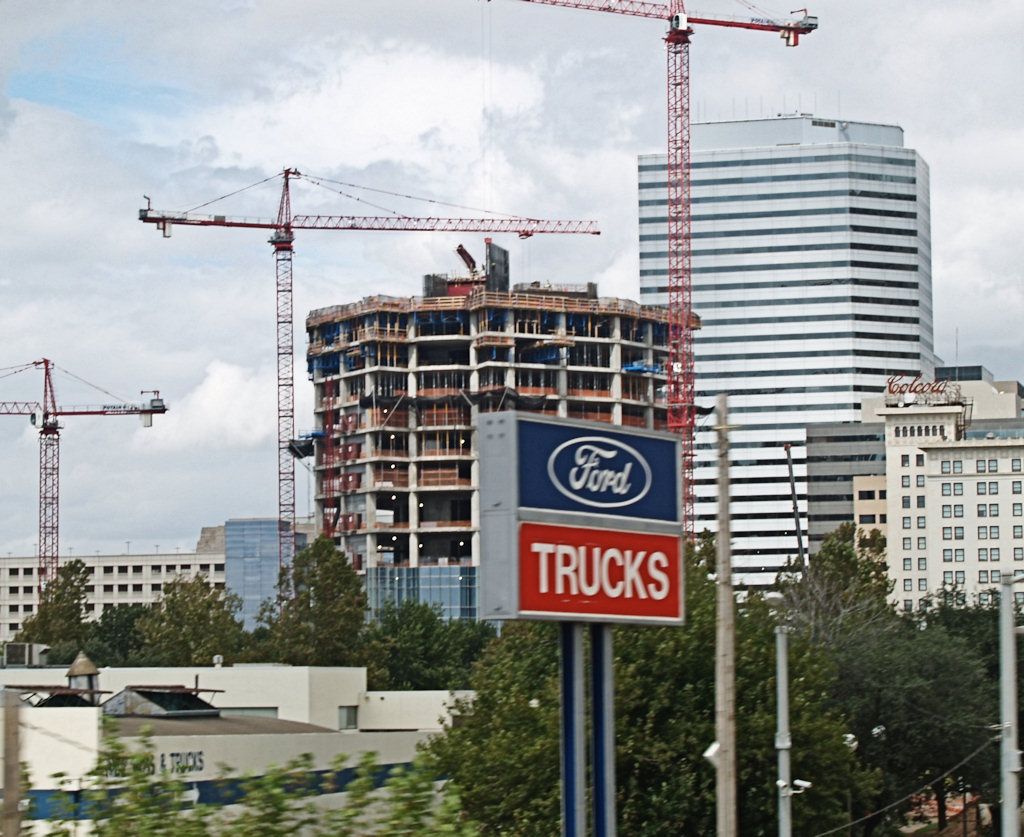
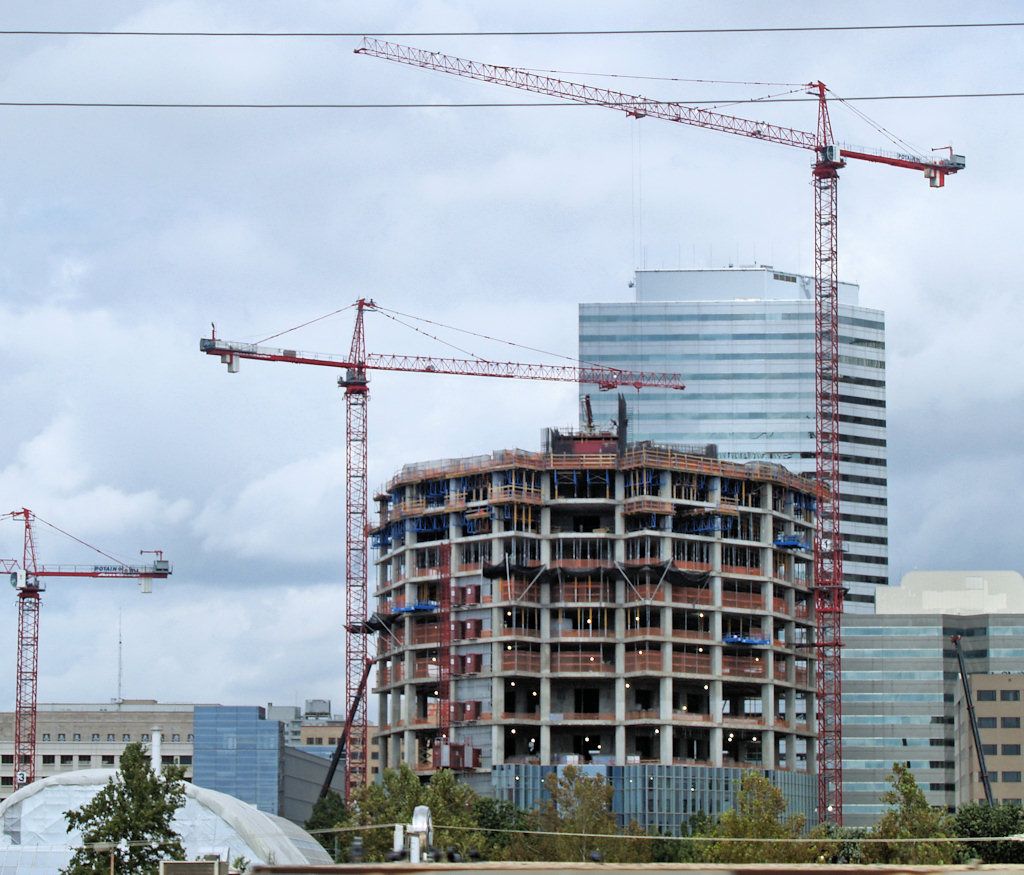
Here are some construction progress photos which I took on September 23, 2010.
Taken From I-40 Westbound
Taken from Sheridan Eastbound
Glass Begins To Be Added
Looking Northeast From Hudson & Sheridan
A View From Inside Myriad Gardens
A View From Park Avenue
One floor is being added about every 8 days and, as of October 8, 2010, upward growth is at the 14th floor. You can keep up with the progress by viewing the webcam set up by www.OkcTalk.com here and hundreds of photos taken by many good photographers are in the same website at this location ... but be forewarned ... you'll need to be prepared to stuff your feelings when you see a few idiotic posts, e.g., one poster laments that the tower is not something along the height of buildings built in Dubai. But, if you can sift through the chaff, some gorgeous photos of construction progress which have been taken by several posters are presented in that thread.
Items Promised But Not Begun. Although this article is not about things planned but not yet started, two downtown public projects which have been funded will be mentioned.
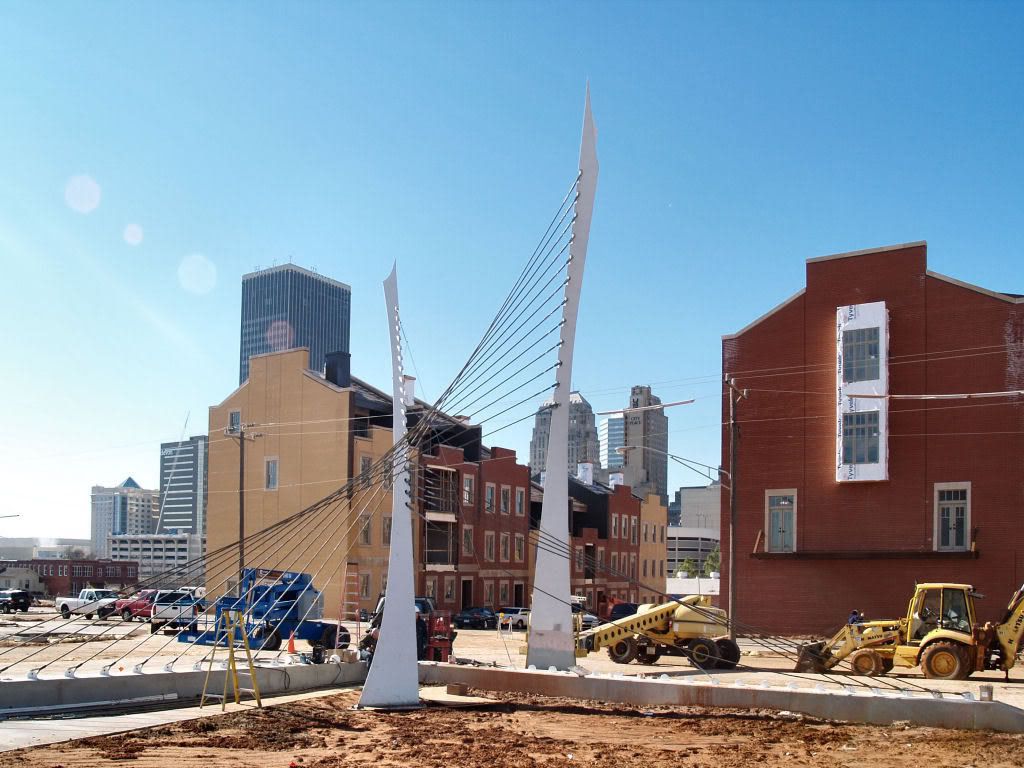
Skydance Pedestrian Bridge
This pedestrian bridge design was selected in September 2008 to transverse the new I-40 Crosstown and the BN&SF railroad tracks at what would be Harvey Avenue.
Designed by Hans Butzer and inspired by Oklahoma's state bird, the scissor tail, the bridge will be 30 feet wide and 440 feet long. In September 2008, construction was expected to begin in March 2010 but I'm not aware that that happened. For more about this project, go here.
Compass Rose
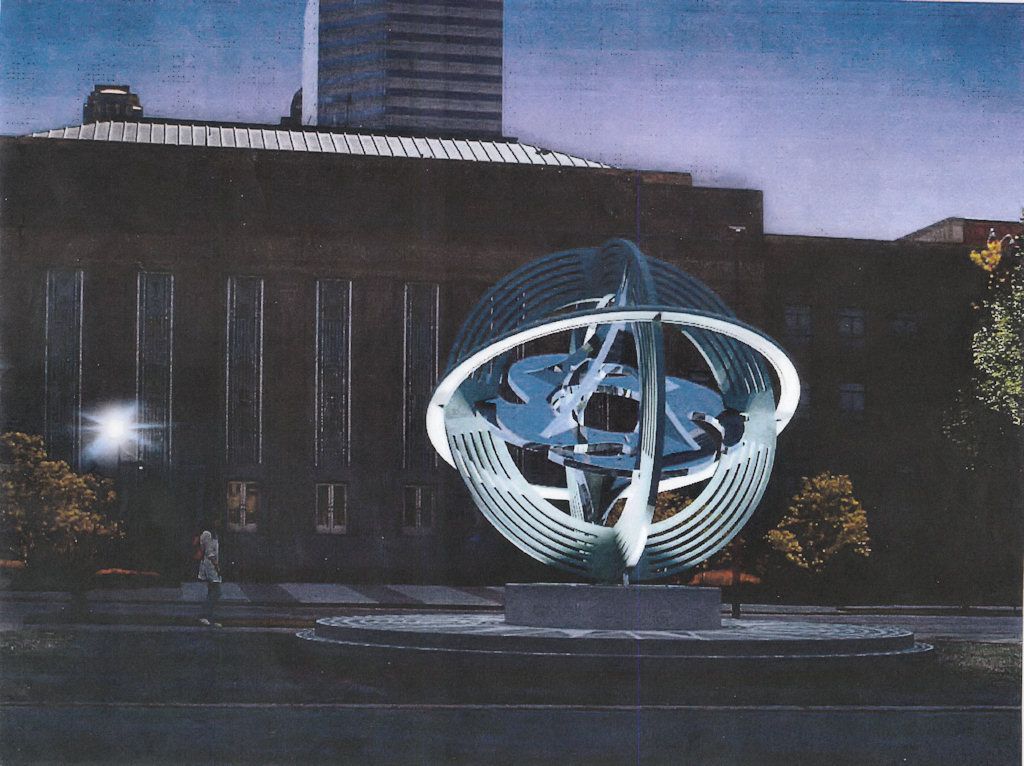
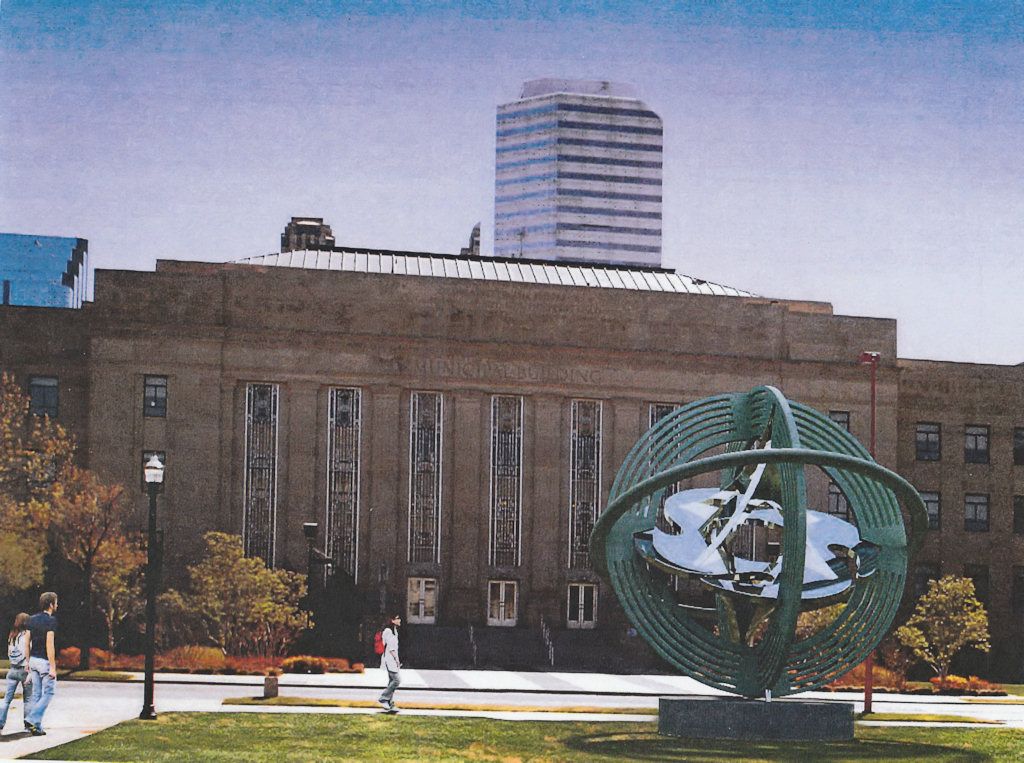
This project was mentioned in Project 180 discussion, above. On March 30, 2010, the Oklahoma City Council approved a plan being 100% funded by a $350,000 grant from the Inasmuch Foundation to construct and install the the 30-foot diameter sculpture named "Compass Rose." The sculptor is New York artist Owen Morrel.
The stated intention was to place the sculpture in Bicentennial Park east of the Civic Center Music Hall, but that may change depending on what happens in Project 180's ultimate makeover of that same park. Below, the rendering shows the sculpture near Walker looking east to City Hall.
Operation Scissortail - Our Latest Book!
-
[image: devon book cover]
We are very happy to announce the release of our latest book, "Operation
Scissortail," a narative history of the construction o...
Saturday in the Park..on a 113 degree day
-
For those who don't know, there is a reason I've gone very quiet at such a
pivotal moment for Downtown OKC. I accepted a position in Cleveland, Ohio
and I...























 The past 3 ½ years saw a good bit of hope dashed, e.g., the economic recession doomed the Holiday Inn Express and at least one other hotel venture for the area, but it also saw a good bit of progress, as well. The small image at the right shows three of them even though they will not be particularly developed here: Red Dirt Emporium's owners opened a mini-mall, the Red Dirt Market Place, which gives a boost to retail development in Bricktown; the Banjo Museum; the University of Central Oklahoma's very successful Academy of Contemporary Music. Other items include the Chickasaw Nation's Tourism Center in the old Bunte Candy Factory facility as well as other comings and goings of night-life spots, e.g. Coyote Ugly. This article doesn't develop such items but merely notes that the following is not all that there is.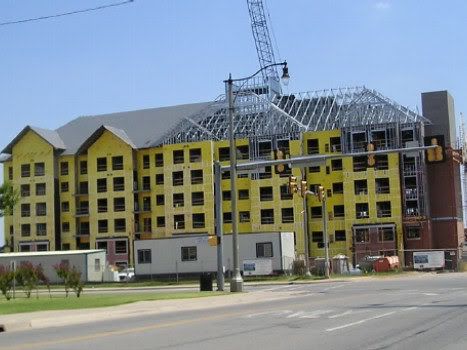

 6. Bricktown Hampton Inn. The nifty photo at the right was taken by Oklahoman reporter Steve Lackmeyer in January 2009 shortly before its February 2009 opening and shows a view from an upper hotel room of the Bricktown Ballpark which is located immediately south of this 200 room hotel. This Marsh Pittman $25 million project was announced in 2005. Originally, it was to be a 10-story hotel but the design initially included EFIS (stucco) on the exterior of the top 2 floors which was disfavored by the Bricktown Review Committee. The final project came in at 9-stories to resolve cost issues for abating EFIS with something else -- a Bricktown height variance had been earlier granted. I took the top two photos below in 2007 and the last on September 23, 2010.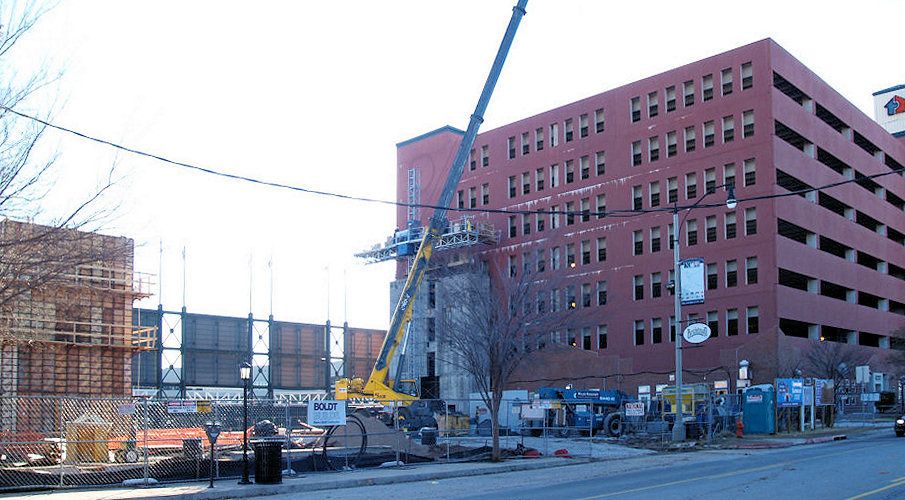










 In late 1997 or early 1998, Marva Ellard and Robert Magrini became a co-owners of the property with plans to restore and convert the property to rental units and perhaps shops and a restaurant. Those plans did not move quickly, however. After negotiations with the city beginning in 2002, in 2003, the city approved an intent to loan Ellard and Magrini $1.5 million from the federally established Murrah Revitalization Fund. In 2005 the owners said that they were ready to proceed and the city council approved the actual loan in January 2006. Cost of renovations were estimated to be around $8.5 million. Construction began in 2006 and the 38 unit Sieber was finally done in late 2008 or early 2009. The pair of photos above and below were taken by Paul B. Southerland and appeared in a January 2009 Oklahoman article.


 Of those projects which have actually come to final fruition by being occupied by tenants, the most significant in my estimation is the block-long development of four vacant buildings on the west side of Walker between NW 11th and NW 12 Streets. Taken together, these relatively small projects are today something of a mini-destination. Three are places to eat, one is a place for elegant wedding gowns. In the order of occupancy, these businesses are (1) Meg Guess Couture Bridal & Boutique, (2) 1492 New World Latin Cuisine, (3) Midtown Deli, and (4), most recently, Stella Modern Italian Cuisine restaurant. They are shown below in that order. Beverly's Chicken-In-The-Rough aficionados would want to know that the 1492 restaurant originally housed the Beverly's Gridiron in days gone by. The photo above right was taken by Oklahoman reporter Steve Lackmeyer for an article appearing on December 5, 2006, before these projects were begun. I took the following photos between December 19, 2007 and September 27, 2010.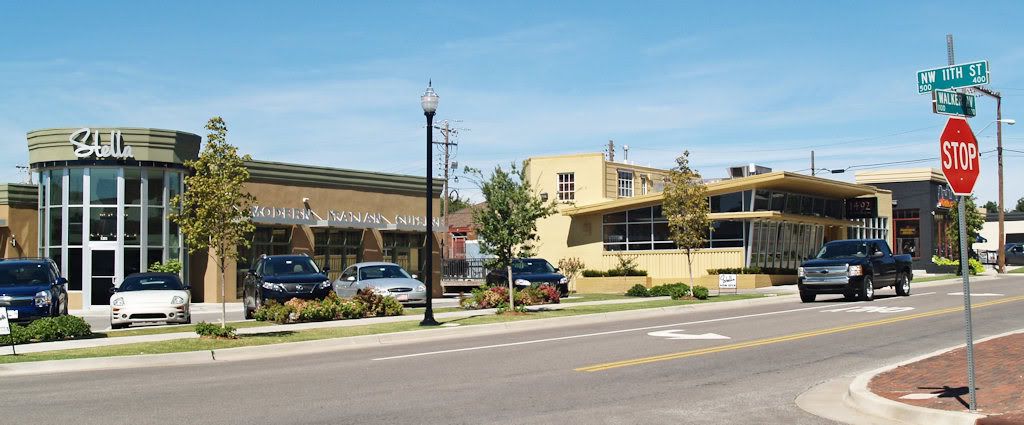













 Posts
Posts


